


Wydawcy
Katalog tematyczny
- Archeologia (109)
- Ekonomia, finanse, business (13704)
- Filozofia (1445)
- Historia (3040)
- Języki i językoznawstwo (2356)
- Lifestyle, hobby i rozrywka (475)
- Medycyna (9704)
- Nauki humanistyczne (4)
- Nauki o Ziemi i środowisku (2638)
- Nauki ścisłe (20412)
- Nauki społeczne (8486)
- Nauki techniczne (13450)
- Prawo (1696)
- Publikacje informacyjne i interdyscyplinarne (1288)
- Religia i wierzenia (917)
- Technika komputerowa (4067)
- Zdrowie, relacje międzyludzkie i rozwój osobisty (657)





Informacje szczegółowe o książce
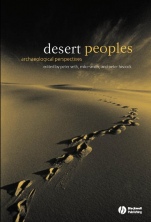
Desert Peoples: Archaeological Perspectives
ISBN 9781405100908
Autor: Peter Veth, Mike Smith, Peter Hiscock
Wydawca: Wiley
Dostępność: 3-6 tygodni
Cena: 600,60 zł
Przed złożeniem zamówienia prosimy o kontakt mailowy celem potwierdzenia ceny.
ISBN13: |
9781405100908 |
ISBN10: |
1405100907 |
Autor: |
Peter Veth, Mike Smith, Peter Hiscock |
Oprawa: |
Hardback |
Rok Wydania: |
2004-11-10 |
Ilość stron: |
318 |
Wymiary: |
254x179 |
Tematy: |
HD |
Desert Peoples: Archaeological Perspectives provides an overview of hunter–gatherers in desert landscapes. Written by an international roster of experts, this volumeexamines the key concepts vital to understanding human adaptation to marginal environments and the behavioral and belief systems that underpin these concepts. Desert Peoples brings together studies from deserts as diverse as the sand dunes of Australia, the US Great Basin, the coastal and high altitude deserts of South America, and the core deserts of Africa. Ultimately, Desert Peoples’ comparative approach profiles current understandings and debates about cultural and ecological processes affecting hunter–gatherer societies in deserts.
Spis treści:
Notes on Contributors.
1. Global Deserts in Perspective: Mike Smith, Peter Veth, Peter Hiscock and Lynley A. Wallis (National Museum of Australia; Australian Institute of Aboriginal and Torres Strait Islander Studies; The Australian National University; The Australian National University).
Part I: Frameworks:.
2. Theoretical Shifts in the Anthropology of Desert Hunter–Gatherers: Thomas Widlok (University of Heidelberg).
3. Pleistocene Settlement of Deserts from an Australian Perspective: Peter Hiscock and Lynley A. Wallis (both at The Australian National University).
4. Arid Paradises of Dangerous Landscapes: A Review of Explanations for Paleolithic Assemblage Change in Arid Australia and Africa: Peter Hiscock and Sue O’Connor (both at The Australian National University).
Part II: Dynamics:.
5. Evolutionary and Ecological Understandings of the Economics of Desert Societies: Comparing the Great Basin USA and the Australian Deserts: Douglas W. Bird and Rebecca Bliege Bird (both at University of Maine).
6. Cycles of Aridity and Human Mobility: Risk Minimization amongst Late Pleistocene Foragers of the Western Desert, Australia: Peter Veth (Aust
ralian Institute of Aboriginal and Torres Strait Islander Studies).
7. Archaic Faces to Head–Dresses: The Changing Role of Rock Art across the Arid Zone: Jo McDonald (Jo McDonald Cultural Heritage Management Pty Ltd).
8. The Archaeology of the Patagonia Deserts: Hunter–Gatherers in a Cold Desert: Luis Alberto Borrero (Consejo Nacional de Investigaciones Cientificas y Tecnicas and the Universidad de Buenos Aires, Argentina).
Part III: Interactions:.
9. Perspectives on Later Stone Age Hunter–Gatherer Archaeology in Arid Southern Africa: Anne I. Thackeray (University of the Witwatersrand, Johannesburg, South Africa).
10. Long Term Transitions in Hunter–Gatherers of Coastal Northwest Australia: Kathryn Przywolnik (Department of Environment and Conservation (NSW), Sydney, Australia).
11. Hunter–Gatherers and Herders of the Kalahari during the Late Holocene: Karim Sadr (University of the Witwatersrand, Johannesburg, South Africa).
12. Desert Archaeology, Linguistic Stratigraphy, and the Spread of the Western Desert Language: Mike Smith (National Museum of Australia).
13. People of the Coastal Atacama Desert: Living between Sand Dunes and Waves of the Pacific Ocean: Calogera M. Santoro, Bernardo T. Arriaza, Vivien G. Standen, and Pablo A. Marquet (Universidad de Tarapacá Arica, Chile; University of Nevada, Las Vegas; Universidad de Tarapacá Arica, Chile; Pontificia Universidad Católica de Chile, Santiago).
14. Desert Solitude: The Evolution of Ideologies amongst Pastoralists and Hunter–Gatherers in Arid North Africa: Andrew B. Smith (University of Capetown, Rondebosch, South Africa).
15. Hunter–Gatherer Interactions with Sheep and Cattle Pastoralists from the Australian Arid Zone: Alistair Paterson (University of Western Australia).
16. Conclusion: Major Themes and Future Research Directions: Peter Veth (Australian Institute of Aboriginal and Torres Strait Islander Studies).General Index.
Index of Archaelogical Features and Subjects
Nota biograficzna:
Peter Veth is Director of Research at the Australian Institute of Aboriginal and Torres Strait Islander Studies, Canberra. He is the author of over 100 articles and books on the archaeology of arid zone hunter–gatherers.
Mike Smith is Director of Research and Development at the National Museum of Australia. He pioneered research into late Pleistocene settlement in the Australian desert and has worked extensively across the arid zone attempting to piece together its human and environmental history.
Peter Hiscock is a Reader in the School of Archaeology and Anthropology at the Australian National University.
Okładka tylna:
Desert Peoples: Archaeological Perspectives provides an overview of hunter–gatherers in desert landscapes. Written by an international roster of experts, this volumeexamines the key concepts vital to understanding human adaptation to marginal environments and the behavioral and belief systems that underpin these concepts. Desert Peoples brings together studies from deserts as diverse as the sand dunes of Australia, the US Great Basin, the coastal and high altitude deserts of South America, and the core deserts of Africa. Ultimately, Desert Peoples’ comparative approach profiles current understandings and debates about cultural and ecological processes affecting hunter–gatherer societies in deserts.
Koszyk
Książek w koszyku: 0 szt.
Wartość zakupów: 0,00 zł
Informacje


Kontakt
Gambit
Centrum Oprogramowania
i Szkoleń Sp. z o.o.
Al. Pokoju 29b/22-24
31-564 Kraków
Siedziba Księgarni
ul. Kordylewskiego 1
31-542 Kraków
+48 12 410 5991
+48 12 410 5987
+48 12 410 5989
Subskrypcje
Administratorem danych osobowych jest firma Gambit COiS Sp. z o.o. Na podany adres będzie wysyłany wyłącznie biuletyn informacyjny.
Autoryzacja płatności

Informacje na temat autoryzacji płatności poprzez PayU.

© Copyright 2012: GAMBIT COiS Sp. z o.o. Wszelkie prawa zastrzeżone.
Projekt i wykonanie: Alchemia Studio Reklamy