


Wydawcy
Katalog tematyczny
- Archeologia (109)
- Ekonomia, finanse, business (13704)
- Filozofia (1445)
- Historia (3040)
- Języki i językoznawstwo (2356)
- Lifestyle, hobby i rozrywka (475)
- Medycyna (9704)
- Nauki humanistyczne (4)
- Nauki o Ziemi i środowisku (2638)
- Geografia (299)
- Nauki o Ziemi (1661)
- Geologia (414)
- Hydrologia (237)
- Meteorologia i klimatologia (114)
- Paleontologia (33)
- Wulkanologia i sejsmologia (44)
- Planowanie przestrzenne (53)
- Środowisko (607)
- Nauki ścisłe (20412)
- Nauki społeczne (8486)
- Nauki techniczne (13450)
- Prawo (1696)
- Publikacje informacyjne i interdyscyplinarne (1288)
- Religia i wierzenia (917)
- Technika komputerowa (4067)
- Zdrowie, relacje międzyludzkie i rozwój osobisty (657)





Informacje szczegółowe o książce
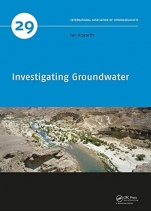
Investigating Groundwater
ISBN 9781138542495
Autor: Ian Acworth
Wydawca: CRC Press
Dostępność: 3-6 tygodni
Cena: 849,45 zł
Przed złożeniem zamówienia prosimy o kontakt mailowy celem potwierdzenia ceny.
ISBN13: |
9781138542495 |
ISBN10: |
1138542490 |
Autor: |
Ian Acworth |
Oprawa: |
Hardback |
Rok Wydania: |
2019-03-28 |
Ilość stron: |
586 |
1 Groundwater environments 1.1 Early human movements based upon groundwater availability 1.2 Geological time span and types of rock 1.3 Groundwater in Australia 1.4 Groundwater in fractured rocks 1.5 Groundwater in basalt terrains 1.6 Groundwater in unconsolidated surficial deposits 1.7 Groundwater in limestone and chalk systems 1.8 Groundwater on oceanic islands 1.9 Groundwater terminology 2 Surface water and the atmosphere 2.1 Introduction 2.2 Properties of water 2.3 Radiation 2.4 Atmospheric and ocean circulations of water 2.5 Meteorological measurements 2.6 Rainfall 2.7 Streamflow measurement 2.8 Evaporation measurement 2.9 Estimates of evaporation from open water 2.10 Evapotranspiration estimates 3 Recharge, discharge and surface water groundwater connectivity 3.1 Introduction 3.2 Groundwater recharge 3.3 Recharge estimates 3.4 Groundwater discharge 3.5 Connectivity of surface water and groundwater 3.6 Groundwater dependent ecosystems 4 Physical properties of soil and the hydraulic head 4.1 Physical properties of soil 4.2 Water content 4.3 Water potential 4.4 Hydraulic head 4.5 Signal analysis techniques 4.6 Sea water intrusion in coastal aquifers 5 Hydraulic conductivity and Darcy's Law 5.1 Introduction to Darcy's Law 5.2 Limitations of the Darcian approach 5.3 Flow in fractured rocks 5.4 Relationship between grain-size distribution and hydraulic conductivity 5.5 Laboratory measurement of hydraulic conductivity 5.6 Field measurement of hydraulic conductivity 6 Transport equations and steady-state flow 6.1 Transport equations 6.2 Groundwater transport 6.3 Steady-State Flow 6.4 Numerical solution to the steady-state flow equation 6.5 Analogies to groundwater flow 7 Aquifer storage and abstraction impacts 7.1 Water storage in the unsaturated zone 7.2 Confined aquifer storage 7.3 Effective stress in a saturated system 7.4 Undrained response to natural loading 7.5 Derivation of specific storage from records of hydraulic head in confined aquifers 7.6 Derivation of specific storage - A linear poroelastic approach 8 Geophysical investigation techniques: seismic 8.1 Introduction to seismic methods 8.2 Cross-hole seismic method 8.3 Surface refraction methods 8.4 Seismic Refraction: Delay-time or plus-minus method 9 Geophysical investigation techniques: electrical 9.1 Electrical methods 9.2 Complex conductivity 9.3 Electrical potential theory 9.4 Continuous separation traversing (CST) 9.5 Vertical electrical sounding (VES) 9.6 Electrical conductivity imaging (ECI) 9.7 Induced potential (IP) measurements 9.8 Modelling of ECI data 9.9 Examples of ECI application: Black cotton soils 9.10 Coastal groundwater studies 9.11 ECI over fractured rock 9.12 IP Measurements 9.13 Electromagnetic profiling 10 Geophysical investigation techniques: gravity 10.1 Gravity Theory 10.2 Earth tides 10.3 General field procedures for a gravity survey of an area 10.4 Gravity corrections to gobs 10.5 Modeling gravity data 10.6 Analysing gravity anomalies 10.7 Applications of the gravity method 11 Geophysical investigation techniques: heat 11.1 Introduction 11.2 Geothermal heat flow 11.3 Underground heat storage in the soil 11.4 Thermal imagery 11.5 Field measurement of temperature 11.6 Thermal properties 11.7 Fourier's Law and differential equations for heat flow 11.8 Heat as a tracer 12 Drilling and sampling techniques 12.1 Cable-tool (percussion) drilling 12.2 Rotary Methods 12.3 Sampling methods 13 Geophysical logging 13.1 Introduction 13.2 Caliper logs 13.3 Verticality logs 13.4 Fluid property logs 13.5 Fundamentals of nuclear geophysics 13.6 Neutron logs 13.7 Resistivity and electromagnetic logging 13.8 Logging via pushed or hammered sondes 13.9 Log interpretation 14 Hydrochemistry and groundwater isotopes 14.1 Introduction 14.2 Basic aquatic chemistry 14.3 Origin of solutes 14.4 Geochemical modelling 14.5 Example of hydrochemical analysis 14.6 Isotopes 14.7 Example: Use of radioactive and stable isotopes in a sand aquifer at Hat Head, NSW 14.8 Example: The use of stable isotopes of water from the Maules Creek Catchment in northern NSW 14.9 Carbon isotopes 14.10 Chlorine-36 15 Well hydraulics, radial flow modelling and single well tests 15.1 Introduction 15.2 Review of definitions 15.3 Groundwater flow equations 15.4 Analytical solution methods to the radial flow equation 15.5 Numerical Solutions to the Radial Flow Equation 15.6 Radial Flow Model Results 15.7 Non-Darcy flow close to an abstraction well 15.8 Specific capacity 15.9 Interpretation of step-test data A The international system of units - SI
Koszyk
Książek w koszyku: 0 szt.
Wartość zakupów: 0,00 zł
Informacje


Kontakt
Gambit
Centrum Oprogramowania
i Szkoleń Sp. z o.o.
Al. Pokoju 29b/22-24
31-564 Kraków
Siedziba Księgarni
ul. Kordylewskiego 1
31-542 Kraków
+48 12 410 5991
+48 12 410 5987
+48 12 410 5989
Subskrypcje
Administratorem danych osobowych jest firma Gambit COiS Sp. z o.o. Na podany adres będzie wysyłany wyłącznie biuletyn informacyjny.
Autoryzacja płatności

Informacje na temat autoryzacji płatności poprzez PayU.

© Copyright 2012: GAMBIT COiS Sp. z o.o. Wszelkie prawa zastrzeżone.
Projekt i wykonanie: Alchemia Studio Reklamy