


Wydawcy
Katalog tematyczny
- Archeologia (109)
- Ekonomia, finanse, business (13704)
- Filozofia (1445)
- Historia (3040)
- Języki i językoznawstwo (2356)
- Lifestyle, hobby i rozrywka (475)
- Medycyna (9704)
- Nauki humanistyczne (4)
- Nauki o Ziemi i środowisku (2638)
- Nauki ścisłe (20412)
- Nauki społeczne (8486)
- Edukacja (229)
- Kryminologia, opieka spełeczna (284)
- Obronność (10)
- Polityka (1389)
- Psychologia (777)
- Socjologia (410)
- Społeczeństwo i kultura (187)
- Nauki techniczne (13450)
- Prawo (1696)
- Publikacje informacyjne i interdyscyplinarne (1288)
- Religia i wierzenia (917)
- Technika komputerowa (4067)
- Zdrowie, relacje międzyludzkie i rozwój osobisty (657)





Informacje szczegółowe o książce
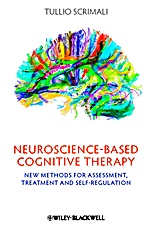
Neuroscience–based Cognitive Therapy: New Methods for Assessment, Treatment, and Self–Regulation
ISBN 9781119993759
Autor: Tullio Scrimali
Wydawca: Wiley
Dostępność: 3-6 tygodni
Cena: 481,95 zł
Przed złożeniem zamówienia prosimy o kontakt mailowy celem potwierdzenia ceny.
ISBN13: |
9781119993759 |
ISBN10: |
111999375X |
Autor: |
Tullio Scrimali |
Oprawa: |
Hardback |
Rok Wydania: |
2012-04-10 |
Ilość stron: |
256 |
Wymiary: |
234x163 |
Tematy: |
JC |
Neuroscience is the most powerful emerging force in the contemporary landscape of psychotherapy. In
Neuroscience–based Cognitive Therapy, Tullio Scrimali explores recent advances in neuroscience, showing how they can be applied in practice to improve the effectiveness of cognitive therapy for clients with a wide range of diagnoses, including mood disorders, anxiety disorders, eating disorders and schizophrenia.
Taking a hands–on approach to a topic that has previously been treated only theoretically, Scrimali provides a thorough evaluation of both old and new techniques. He introduces new technologies, including portable devices that allow clinicians for the first time to directly assess changes in brain activity within the clinical setting. He then explains how therapists can improve outcomes by using those neuroscientific findings in the ongoing therapeutic process.
With its wide–ranging explication of theories and their applications, Neuroscience–based Cognitive Therapy making cutting–edge developments accessible to clinicians in their practices, as well as providing valuable tools for further research
Foreword by Arthur Freeman xiii
Preface xix
Acknowledgments xxi
List of Abbreviations xxiii
Introduction 1
Part I Neuroscience in Context
1 Neuroscience, Clinical Psychology, and Cognitive Therapy 5
2 The Mind Brain Problem 11
3 Motor Theories of Mind and a Complex Biocybernetic Model in Neuroscience 20
4 Complexity, Chaos, and Dynamical Systems 27
4.1 Introduction 27
4.2 Complexity 27
4.3 Chaos Theory 29
4.4 Complex Systems 30
4.5 From Complexity to a Neuroscience–based Cognitive Therapy 32
5 Modular and Gradiental Brain, Coalitional Mind 35
5.1 Introduction 35
5.2 The Modular and Gradiental Brain 37
5.3 The Social Brain 41
5.4 The Central Nervous System, Neurovegetative Nervous System, and Visceral Brain 44
5.4.1 The Neurovegetative Nervous System 44
5.4.2 The Visceral Brain 46
5.5 Paleognosis and Neognosis in theMind of Homo sapiens 47
5.6 Memory 48
5.7 Internal Representational Systems 51
5.7.1 Imagery 52
5.7.2 Internal Dialog 54
5.8 Knowledge Processes 54
5.9 Coalitional Processes 62
6 Phylogenesis of the Brain and Ontogenesis of the Mind: Biological and Cultural Evolutionism 70
6.1 The Reptilian Brain: The Archipallium 76
6.2 The Limbic System: The Paleopallium 76
6.3 Brain Structures of Less Evolved Mammals: The Neopallium 77
6.4 Specialized Frontal Lobes 77
Part II Clinical Psychophysiology and its Parameters
7 Psychophysiology and Clinical Psychophysiology 83
8 Electroencephalography and Quantitative Electroencephalography 86
8.1 Electroencephalography 86
8.2 Quantitative Electroencephalography 91
9 Electrodermal Activity and Quantitative Electrodermal Activity 96
9.1 Electrodermal Activity and its Recording 96
9.2 Computer–Aided Analysis of Electrodermal Activity and Quantitative Electrodermal Activity 103
9.3 Reference Database 107
9.4 Evoked Electrodermal Responses 111
9.5 Effects of Psychoactive Drugs on Electrodermal Activity 111
10 Complex Psychological Diagnosis and Instrumental Psychodiagnostics 116
10.1 Introduction 116
10.2 Functional Diagnosis 118
10.3 Instrumental Psychodiagnostics 120
10.4 The Contribution of Neuroscience to a Complex Diagnosis 120
Part III Neuroscience–basedMethods in the Clinical Setting
11 Complex Psychological Diagnosis with Quantitative Electroencephalography 125
11.1 Introduction 125
11.2 Dementia 126
11.3 Schizophrenia 129
11.4 Depression 132
11.5 Mania 133
11.6 Attention Deficit Hyperactivity Disorder 133
11.7 Obsessive–Compulsive Disorder 133
12 Complex Psychological Diagnosis with Quantitative Electrodermal Activity 135
12.1 General Aspects 135
12.2 Data Regarding Specific Clinical Disorders 139
13 Sets and Settings when Applying a Neuroscience–based Clinical Methodology 145
14 Multimodal Assessment of Family Process and the Family Strange Situation 152
14.1 The Family Strange Situation Procedure 154
15 Biofeedback, Neurofeedback, and Psychofeedback 156
15.1 Theoretical Foundation and Historical Development 156
15.2 Physiological and Psychophysiological Biofeedback 163
15.3 Biofeedback and Cognitive Therapy 165
15.4 MindLAB Set–based Coping Skills Training 168
15.5 Relaxation, Self–Control, Self–Regulation 168
16 Meditation, Mindfulness, and Biofeedback–based Mindfulness (BBM) 171
16.1 Meditation 171
16.1.1 Types of Meditation 171
16.2 Mindfulness 175
16.3 Biofeedback–Based Mindfulness 177
17 Neurofeedback and Cognitive Therapy 180
17.1 Insomnia 180
17.2 Obsessive–Compulsive Disorder 183
17.3 Attention Deficit Hyperactivity Disorder 186
17.4 Depression 187
17.5 Mania 187
17.6 Drug Dependency 187
18 Psychofeedback and Cognitive Therapy 189
18.1 Mental Disorders 190
18.2 Psychosomatic Disorders 192
18.3 Meditation, Mindfulness, Music Therapy 193
19 Monitoring theWarning Signs of Relapse in Schizophrenia and Bipolar Disorder, and Coping with Them 194
19.1 Introduction 194
19.2 Schizophrenia 194
19.3 Bipolar Disorder 196
19.4 Coping with Prodromal Symptoms of Relapse in Psychosis 196
20 Get Started with Neuroscience–based Cognitive Therapy 197
References 199
Index 217
Professor Tullio Scrimali is a pioneer of clinical psychophysiology and cognitive therapy, recognized for his contribution to the discipline worldwide. He was a founding fellow of the Academy of Cognitive Therapy (ACT), and obtained the first Chair of Cognitive Therapyat the University of Catania, Sicily, where he currently directs the European School of Cognitive Therapy (ALETEIA International).
Koszyk
Książek w koszyku: 0 szt.
Wartość zakupów: 0,00 zł
Informacje


Kontakt
Gambit
Centrum Oprogramowania
i Szkoleń Sp. z o.o.
Al. Pokoju 29b/22-24
31-564 Kraków
Siedziba Księgarni
ul. Kordylewskiego 1
31-542 Kraków
+48 12 410 5991
+48 12 410 5987
+48 12 410 5989
Subskrypcje
Administratorem danych osobowych jest firma Gambit COiS Sp. z o.o. Na podany adres będzie wysyłany wyłącznie biuletyn informacyjny.
Autoryzacja płatności

Informacje na temat autoryzacji płatności poprzez PayU.

© Copyright 2012: GAMBIT COiS Sp. z o.o. Wszelkie prawa zastrzeżone.
Projekt i wykonanie: Alchemia Studio Reklamy