


Wydawcy
Katalog tematyczny
- Archeologia (109)
- Ekonomia, finanse, business (13704)
- Filozofia (1445)
- Historia (3040)
- Języki i językoznawstwo (2356)
- Lifestyle, hobby i rozrywka (475)
- Medycyna (9704)
- Nauki humanistyczne (4)
- Nauki o Ziemi i środowisku (2638)
- Nauki ścisłe (20412)
- Nauki społeczne (8486)
- Nauki techniczne (13450)
- Prawo (1696)
- Publikacje informacyjne i interdyscyplinarne (1288)
- Religia i wierzenia (917)
- Technika komputerowa (4067)
- Zdrowie, relacje międzyludzkie i rozwój osobisty (657)





Informacje szczegółowe o książce
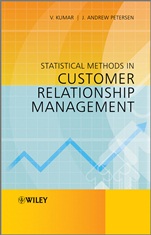
Statistical Methods in Customer Relationship Management
ISBN 9781119993209
Autor: V. Kumar, J. Andrew Petersen
Wydawca: Wiley
Dostępność: 3-6 tygodni
Cena: 426,30 zł
Przed złożeniem zamówienia prosimy o kontakt mailowy celem potwierdzenia ceny.
ISBN13: |
9781119993209 |
ISBN10: |
1119993202 |
Autor: |
V. Kumar, J. Andrew Petersen |
Oprawa: |
Hardback |
Rok Wydania: |
2012-09-28 |
Ilość stron: |
286 |
Wymiary: |
238x156 |
Tematy: |
KM |
Statistical Methods in Customer Relationship Managementfocuses on the quantitative and modeling aspects of customermanagement strategies that lead to future firm profitability, withemphasis on developing an understanding of Customer RelationshipManagement (CRM) models as the guiding concept for profitablecustomer management. To understand and explore the functioning ofCRM models, this book traces the management strategies throughout acustomer s tenure with a firm. Furthermore, the book exploresin detail CRM models for customer acquisition, customer retention,customer acquisition and retention, customer churn, and customerwin back.
Statistical Methods in Customer RelationshipManagement:
Provides an overview of a CRM system, introducing key conceptsand metrics needed to understand and implement these models. Focuses on five CRM models: customer acquisition, customerretention, customer churn, and customer win back with supportingcase studies. Explores each model in detail, from investigating the need forCRM models to looking at the future of the models. Presents models and concepts that span across the introductory,advanced, and specialist levels.Academics and practitioners involved in the area of CRM as wellas instructors of applied statistics and quantitative marketingcourses will benefit from this book.
Preface ix
1 Customer relationship management 1
1.1 Introduction 1
1.2 What is CRM? 2
1.3 What is needed to implement CRM strategies? 3
1.3.1 Database 3
1.3.2 Technology 6
1.3.3 Metrics 7
1.4 Analytical methods 9
1.5 Conclusion 9
References 10
2 CRM in action 11
2.1 Introduction 11
2.2 The importance of customer acquisition 13
2.3 The significance of customer retention 15
2.4 The impact of customer churn 17
2.5 The benefits of customer win–back 18
2.6 Conclusion 20
References 20
3 Customer acquisition 22
3.1 Introduction 22
3.1.1 Data for empirical examples 27
3.2 Response probability 28
3.2.1 Empirical example: Response probability 32
3.2.2 How do you implement it? 34
3.3 Number of newly acquired customers and initial orderquantity 35
3.3.1 Empirical example: Number of newly acquired customers37
3.3.2 How do you implement it? 38
3.3.3 Empirical example: Initial order quantity 39
3.3.4 How do you implement it? 42
3.4 Duration/time 42
3.4.1 Empirical example: Duration/time 44
3.4.2 How do you implement it? 46
3.5 Firm s performance (LTV, CLV, and CE) 47
3.5.1 Empirical example: Firm s performance 49
3.5.2 How do you implement it? 52
3.6 Chapter summary 52
Customer acquisition SAS code 53
Customer acquisition SAS output 55
References 61
4 Customer retention 63
4.1 Introduction 63
4.1.1 Data for empirical examples 66
4.2 Repurchase or not (stay or leave) 69
4.2.1 Will a customer repurchase? 69
4.2.2 When will a customer no longer repurchase? 71
4.2.3 Empirical example: Repurchase or not (stay or leave)73
4.2.4 How do you implement it? 78
4.3 Lifetime duration 78
4.3.1 Empirical example: Lifetime duration 83
4.3.2 How do you implement it? 85
4.4 Order quantity and order size 85
4.4.1 How much (in $) will a customer order? 85
4.4.2 How many items will a customer order? 86
4.4.3 What is the average order size? 87
4.4.4 Empirical example: Order quantity 87
4.4.5 How do you implement it? 91
4.5 Cross–buying 91
4.5.1 Empirical example: Cross–buying 92
4.5.2 How do you implement it? 97
4.6 SOW 97
4.6.1 Empirical example: SOW 98
4.6.2 How do you implement it? 101
4.7 Profitability (CLV) 102
4.7.1 Empirical example: Profitability (CLV) 103
4.7.2 How do you implement it? 105
4.8 Chapter summary 105
Customer retention SAS code 106
Customer retention SAS output 111
References 119
5 Balancing acquisition and retention 121
5.1 Introduction 121
5.1.1 Data for empirical examples 122
5.2 Acquisition and retention 124
5.2.1 Empirical example: Balancing acquisition and retention128
5.3 Optimal resource allocation 137
5.3.1 How do you implement it? 140
5.4 Chapter summary 141
Balancing acquisition and retention SAS code 142
Balancing acquisition and retention SAS output 144
References 147
6 Customer churn 149
6.1 Introduction 149
6.1.1 Data for empirical examples 150
6.2 Customer churn 151
6.2.1 Empirical example: Customer churn 156
6.2.2 How do you implement it? 161
6.3 Chapter summary 161
Customer churn SAS code 162
Customer churn SAS output 163
References 164
7 Customer win–back 166
7.1 Introduction 166
7.1.1 Data for empirical examples 167
7.2 Customer win–back 168
7.2.1 Empirical example: Customer win–back 169
7.2.2 How do you implement it? 178
7.3 Chapter summary 179
Customer win–back SAS code 180
Customer win–back SAS output 182
References 185
8 Implementing CRM models 186
8.1 Introduction 186
8.2 CLV measurement approach 187
8.3 CRM implementation at IBM 190
8.3.1 IBM background 190
8.3.2 Implementing a CLV management framework at IBM 191
8.4 CRM implementation at a B2C firm 202
8.4.1 The focal firm background 202
8.4.2 Implementing the CLV management framework at a fashionretailer 202
8.4.3 Process to implement the CLV management framework at afashion retailer 203
8.5 Challenges in implementing the CLV management framework219
8.5.1 Challenges in data collection and internal collaboration219
8.5.2 Challenges in implementing the customer–centric approach220
References 222
9 The future of CRM 223
9.1 Introduction 223
9.2 Social media 223
9.3 Mobile marketing 226
9.4 Customized marketing campaigns 227
9.5 Conclusion 229
References 229
Appendix A: Maximum likelihood estimation 230
Appendix B: Log–linear model an introduction 232
Appendix C: Vector autoregression modeling 235
Appendix D: Accelerated lifetime model 241
Appendix E: Type–1 Tobit model 244
Appendix F: Multinomial logit model 246
Appendix G: Survival analysis an introduction 249
Appendix H: Discrete–time hazard 252
Appendix I: Proportional hazards model 254
Appendix J: Random intercept model 257
Appendix K: Poisson regression model 260
Appendix L: Negative binomial regression 262
Appendix M: Estimation of Tobit model with selection 265
Index 267
Academics and practitioners involved in the area of CRMas well as instructors of applied statistics and quantitativemarketing courses will benefit from this book. (Zentralblatt MATH, 1 May 2013)
Koszyk
Książek w koszyku: 0 szt.
Wartość zakupów: 0,00 zł
Informacje


Kontakt
Gambit
Centrum Oprogramowania
i Szkoleń Sp. z o.o.
Al. Pokoju 29b/22-24
31-564 Kraków
Siedziba Księgarni
ul. Kordylewskiego 1
31-542 Kraków
+48 12 410 5991
+48 12 410 5987
+48 12 410 5989
Subskrypcje
Administratorem danych osobowych jest firma Gambit COiS Sp. z o.o. Na podany adres będzie wysyłany wyłącznie biuletyn informacyjny.
Autoryzacja płatności

Informacje na temat autoryzacji płatności poprzez PayU.

© Copyright 2012: GAMBIT COiS Sp. z o.o. Wszelkie prawa zastrzeżone.
Projekt i wykonanie: Alchemia Studio Reklamy