


Wydawcy
Katalog tematyczny
- Archeologia (109)
- Ekonomia, finanse, business (13704)
- Filozofia (1445)
- Historia (3040)
- Języki i językoznawstwo (2356)
- Lifestyle, hobby i rozrywka (475)
- Medycyna (9704)
- Nauki humanistyczne (4)
- Nauki o Ziemi i środowisku (2638)
- Nauki ścisłe (20412)
- Nauki społeczne (8486)
- Nauki techniczne (13450)
- Budownictwo lądowe (1045)
- Chemia przemysłowa (2258)
- Elektronika i telekomunikacja (3287)
- Energetyka (1122)
- Inne nauki stosowane (363)
- Inżynieria biochemiczna (507)
- Inżynieria transportu (232)
- Mechanika i materiały (3316)
- Nauka o środowisku (321)
- Rolnictwo (507)
- Technika, ogólnie (475)
- Prawo (1696)
- Publikacje informacyjne i interdyscyplinarne (1288)
- Religia i wierzenia (917)
- Technika komputerowa (4067)
- Zdrowie, relacje międzyludzkie i rozwój osobisty (657)





Informacje szczegółowe o książce
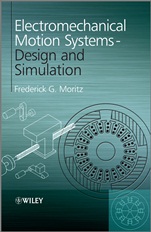
Electromechanical Motion Systems: Design and Simulation
ISBN 9781119992745
Autor: Frederick G. Moritz
Wydawca: Wiley
Dostępność: 3-6 tygodni
Cena: 533,40 zł
Przed złożeniem zamówienia prosimy o kontakt mailowy celem potwierdzenia ceny.
ISBN13: |
9781119992745 |
ISBN10: |
1119992745 |
Autor: |
Frederick G. Moritz |
Oprawa: |
Hardback |
Rok Wydania: |
2014-01-03 |
Ilość stron: |
308 |
Wymiary: |
250x171 |
Tematy: |
TG |
An introductory reference covering the devices, simulations and limitations in the control of servo systems Linking theoretical material with real–world applications, this book provides a valuable introduction to motion system design. The book begins with an overview of classic theory, its advantages and limitations, before showing how classic limitations can be overcome with complete system simulation. The ability to efficiently vary system parameters (such as inertia, friction, dead–band, and damping), and quickly determine their effect on performance, stability, and efficiency, is also described. The author presents a detailed review of major component characteristics and limitations as they relate to system design and simulation. The use of computer simulation throughout the book will familiarize the reader as to how this contributes to efficient system design, avoids potential design flaws, and saves both time and expense throughout the design process. The comprehensive coverage of topics makes the book ideal for professionals who need to apply theory to real–world situations, as well as students who wish to enhance their understanding of the topic. Covers both theory and practical information at an introductory level, allowing readers to advance to further topics having obtained a strong grounding in the subject Provides a connection between classic servo technology and the evolution of computer control and simulation Accompanying website at www.wiley.com/go/moritz
1. Introduction 1.1 Targeted Readership 1.2 Motion System History 1.3 Suggested Library for Motion System Design 2. Control Theory Overview 2.1 Classic Diff./Int Equation Approach 2.2 LaPlace Transform – The S Domain 2.3 The Transfer Function 2.4 Open vs. Closed Loop Control 2.5 Stability 2.6 Basic Mechanical & Electrical Equations and Constants 2.7 Sampled Data Systems – Digital Control 3. System Components 3.1 Motors and Amplifiers 3.1.1 Review of Motor Theory 3.1.2 The Brush Motor 3.1.2.1 Armature Control 3.1.2.2 Field Control 3.1.2.3 Series Control 3.1.3 The “H” Drive PWM Amplifier 3.1.4 The Brushless Motor 3.1.4.1 Construction 3.1.4.2 Winding Configuration 3.1.5 Speed/Torque Curves 3.1.6 Thermal Effects 3.1.6.1 Heat Sources 3.1.6.2 Thermal Paths 3.1.6.3 Thermal Resistance and Thermal Time Constant 3.1.6.4 Temperature Limits 3.1.6.5 Actual Resistance Increase 3.1.6.6 Thermal Runaway 3.1.6.7 Thermal Model 3.1.6.8 Time Constant Effects 3.1.6.9 Motor/gearhead Assembly 3.1.7 Motor Constant 3.1.7.1 Brush Motors 3.1.7.2Brushless Motors 3.1.8 Linear Motors 3.1.8.1 Flat Linear Motor–iron 3.1.8.3 Flat Linear Motor–Ironless 3.1.8.3 Tubular Linear Motor 3.1.8.4 Voice coil Linear Motor 3.1.9 Stepper Motors 3.1.9.1 Variable Reluctance Stepper Motor 3.1.9.2 Permanent Magnet Stepper Motor 3.1.9.3 Hybrid Stepper Motor 3.1.9.4 Coil and Drive Configurations 3.1.9.5 Voltage/Chopper Control 3.1.9.6 Series/Parallel Control 3.1.9.7 Variable Supply Control 3.1.9.8 PWM Control 3.1.9.9 Resonance 3.1.9.10 Damping 3.1.9.11Microstepping 3.1.10 Induction Motor 3.1.10.1 Motor Construction 3.1.10.2 Basic Operation 3.1.10.3 Speed/torque Curves 3.1.10.4 Voltage/Frequency–V/Hz Control 3.1.10.5 Vector or Field Oriented Control 3.1.10.6 The Slip Model 3.2 Gearheads 3.2.1 Spur Gearhead 3.2.2 Planetary Gearhead 3.2.3 Hybrid Gearhead 3.2.4 Worm Gearhead 3.2.5 Harmonic Gearhead 3.2.6 Gearhead Sizing–Continuous Operation 3.2.7 Gearhead Sizing–Intermittent Operation 3.2.8 Axial and Radial Load 3.2.9 Backlash and Stiffness 3.2.10 Temperature/Thermal resistance 3.2.11 Planetary/Spur Gearhead Comparison 3.3 Leadscrews/Ballscrews 3.3.1 Leadscrew Specifications 3.3.2 Ballscrew Specifications 3.3.3 Critical Speed 3.3.4 Column Strength 3.3.4.1 Example 1 3.3.4.2 Example 2 3.3.5 Start, Pitch, lead 3.3.6 Encoder/Lead 3.3.7 Accuracy 3.3.8 Backdrive–Self–Locking 3.3.9 3.3.9 Assemblies 3.4 Belt & Pulley 3.4.1 Belt 3.4.2 Guidance/Alignment 3.4.3 Belt and Pulley vs. Ballscrew 3.5 Rack & Pinion 3.5.1 Design Highlights 3.5.2 Backlash 3.5.3 Dynamics 3.6 Clutches & Brakes 3.6.1 Clutch/brake types 3.6.1.1 Friction 3.6.1.2 Magnetic Particle 3.6.1.3 Eddy Current 3.6.1.4 Hysteresis 3.6.2 Velocity Rating 3.6.3 Torque rating 3.6.4 Duty Cycle/Temperature Limits 3.6.5 Timing 3.6.6 Control 3.6.6.1 Manual–Open Loop 3.6.6.2 Time Based–Open Loop 3.6.6.3 Sensor Based–Closed Loop/Fixed 3.6.6.4 Sensor Based–Closed Loop/Adaptive 3.6.7 Brake/System timing 3.6.8 Soft Start/Stop 3.7 Couplings 3.7.1 Inertia 3.7.2 Velocity 3.7.3 Torque 3.7.4 Compliance 3.7.5 Misalignment 3.7.6 Coupling Types 3.7.6.1 Rigid 3.7.6.2 Oldham 3.7.6.3 Jaws 3.7.6.4 Beal or Helical 3.7.6.5 Disc 3.7.6.6 Bellows 3.7.6.7 3.8 Feedback Devices 3.8.1 Optical Encoders 3.8.1.1 Incremental Optical Encoders 3.8.1.2 Absolute Optical Encoders 3.8.1.3 Range/Multi–Turn 3.8.1.4 Encoder Specification summary 3.8.1.5 Interface/Data Transmission 3.8.1.6 Driver/receiver Circuits 3.8.1.7 Signal Frequency/Shaft Velocity/Resolution 3.8.2 Magnetic Encoders 3.8.3 Capacitive Encoders 3.8.4 Magnetostrictive/Acoustic Encoders 3.8.5 Resolvers 3.8.5.1 Resolver Excitation 3.8.5.2 Resolver to Digital Conversion 3.8.5.3 Range/Multi–Turn 3.8.5.4 Accuracy vs. Resolution 3.8.5.5 Resolver Specification summary 3.8.5.6 Converter Specification Summary 3.8.6 Inductosyn 3.8.6.1 Inductosyn Specification summary 3.8.7 Potentiometers 3.8.7.1 Wire Wound Potentiometers 3.8.7.2 Plastic Potentiometers 3.8.7.3 Noise 3.8.7.4 Tolerance 3.8.7.5 Loading 3.8.7.6 Potentiometer Specification Summary 3.8.8 Tachometers 3.8.8.1 DC Brush Tachometer 3.8.8.2 DC Brushless Tachometer 4. System Design 4.1 Position, Resolution, Accuracy, Repeatability Velocity, Acceleration, Jerk 4.1.1 Position 4.1.1.1 Resolution 4.1.1.2 Accuracy 4.1.1.3 Repeatability 4.1.2 Velocity 4.1.3 Acceleration 4.1.4 Jerk 4.2 Three Basic Loops – Current, Velocity, Position 4.2.1 Current/Voltage Loop 4.2.1.1 Voltage Drive 4.2.1.2 Current Drive 4.2.1.3 Current vs. Voltage Drive 4.2.2 Velocity Loop 4.2.3 Position Loop 4.3 The Velocity Profile – Trapezoidal, Hyperbolic, “S” 4.3.1 Preface 4.3.2 Incremental Motion 4.3.2.1 The Trapezoidal Profile 4.3.2.2 The “S” or Cosine Profile 4.3.2.3 The Parabolic Profile 4.3.3 Constant Motion 4.3.3.1 Equal Distance During Acceleration 4.3.3.2 Equal Accelerate Time During Acceleration 4.3.3.3 Equal Peak Accelerate During Acceleration 4.3.4 Profile Simulation 4.3.4.1 Trapezoid 4.3.4.2 Cosine 4.3.4.3 Parabola 4.4 Feed Forward 4.5 Inertia/Inertial Matching 4.5.1 Preface 4.5.2 Motor selection 4.5.3 Reflected Inertia–Gearhead 4.5.4 Torque vs. Optimum ration–Gearhead 4.5.5 Power vs. Optimum Ration–Gearhead 4.5.6 Optimal conditions 4.6 Shaft Compliance 4.6.1 Basic Equations 4.6.2 System Components 4.6.3 Initial Simulation–Lumped Inertia 4.6.4 Second Simulation–Inclusion of shaft Dynamics 4.6.5 Third Simulation–Compensation 4.7 Compensation 4.7.1 Routh–Hurwitz 4.7.2 Nyquist 4.7.3 Bode 4.7.4 Root Locus 4.7.5 Phase Plane 4.7.6 PID 4.7.7 Notch Filter 4.8 Non–Linear Effects 4.8.1 Coulomb Friction 4.8.2 Stiction 4.8.3 Limit 4.8.4 Deadband 4.8.5 Backlash 4.8.6 Hysteresis 4.9 The Eight Basic Building Blocks 4.9.1 Rotary Motion – Direct 4.9.2 Rotary Motion– Gearhead 4.9.3 Rotary Motion– Belt & Pulley 4.9.4 Linear Motion– Ball Screw/Lead Screw 4.9.5 Linear Motion– Belt & Pulley 4.9.6 Linear Motion– Rack & Pinion 4.9.7 Linear Motion– Roll Feed 4.9.8 Linear Motion– Linear Motor 5. System Examples – Design & Simulation 5.1 Linear Motor Drive 5.2 Print Cylinder Control 5.3 Conveyor System–Clutch/Brake 5.4 Bang–Bang Servo (Slack Loop) 5.5 Wafer Spinner 6. Appendix 6.1 Brushless Motor Speed/Torque Curves 6.2 Inertia Calculation – Excel Program 6.3 Time Constants vs. Damping Factor 6.4 Current Drive Review 6.5 Conversion Factors 6.6 Work & Power 6.7 I2R Losses 6.8 Copper Resistivity 7. Index
Koszyk
Książek w koszyku: 0 szt.
Wartość zakupów: 0,00 zł
Informacje


Kontakt
Gambit
Centrum Oprogramowania
i Szkoleń Sp. z o.o.
Al. Pokoju 29b/22-24
31-564 Kraków
Siedziba Księgarni
ul. Kordylewskiego 1
31-542 Kraków
+48 12 410 5991
+48 12 410 5987
+48 12 410 5989
Subskrypcje
Administratorem danych osobowych jest firma Gambit COiS Sp. z o.o. Na podany adres będzie wysyłany wyłącznie biuletyn informacyjny.
Autoryzacja płatności

Informacje na temat autoryzacji płatności poprzez PayU.

© Copyright 2012: GAMBIT COiS Sp. z o.o. Wszelkie prawa zastrzeżone.
Projekt i wykonanie: Alchemia Studio Reklamy