


Wydawcy
Katalog tematyczny
- Archeologia (109)
- Ekonomia, finanse, business (13704)
- Filozofia (1445)
- Historia (3040)
- Języki i językoznawstwo (2356)
- Lifestyle, hobby i rozrywka (475)
- Medycyna (9704)
- Nauki humanistyczne (4)
- Nauki o Ziemi i środowisku (2638)
- Nauki ścisłe (20412)
- Astronomia (294)
- Biologia (5119)
- Chemia (6540)
- Chemia analityczna (361)
- Chemia fizyczna (346)
- Chemia nieorganiczna (137)
- Chemia organiczna (535)
- Krystalografia (27)
- Minerologia (46)
- Fizyka (3309)
- Matematyka (4574)
- Nauki ścisłe, ogólnie (503)
- Nauki społeczne (8486)
- Nauki techniczne (13450)
- Prawo (1696)
- Publikacje informacyjne i interdyscyplinarne (1288)
- Religia i wierzenia (917)
- Technika komputerowa (4067)
- Zdrowie, relacje międzyludzkie i rozwój osobisty (657)





Informacje szczegółowe o książce
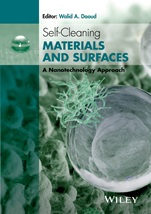
Self–Cleaning Materials and Surfaces: A Nanotechnology Approach
ISBN 9781119991779
Autor: Walid A. Daoud
Wydawca: Wiley
Dostępność: 3-6 tygodni
Cena: 736,05 zł
Przed złożeniem zamówienia prosimy o kontakt mailowy celem potwierdzenia ceny.
ISBN13: |
9781119991779 |
ISBN10: |
1119991773 |
Autor: |
Walid A. Daoud |
Oprawa: |
Hardback |
Rok Wydania: |
2013-09-10 |
Ilość stron: |
366 |
Wymiary: |
250x172 |
Tematy: |
PN |
Inspired by the structure of a lotus leaf, self–cleaning surfaces are based on the hydrophobic effect, which causes water droplets to roll off, carrying away dirt and debris. Similar microstructures exist on butterfly wings, and moths eyes. Hydrophilic self–cleaning, also known as the photocatalytic effect, uses photoactive substances to decompose dirt and pollutants under light exposure. Hydrophilic self–cleaning materials offer additional properties such as antimicrobial and deodorization. This book describes the underlying concepts, potential applications, recent and future development of self–cleaning technologies, and their potential hazards and environmental impacts. It includes: Self–cleaning cementitious coatings, glasses, roofing tiles, fibers and fabrics Self–cleaning materials for plastic and plastic–containing substrates Bactericide textiles Nanoscale coatings with self–cleaning properties Pulsed laser deposition of surfaces with tunable wettability Fabrication of antireflective self–cleaning surfaces With increasing demand for hygienic, self–disinfecting and contamination–free surfaces, there is much interest in self–cleaning protective materials with applications in medicine, building, environment, optics, aeronautics and space. Self–cleaning road signals, solar panels, car headlights, food packaging, paint, and tents are just some of the possibilities.
List of Contributors xiii Preface xv PART I CONCEPTS OF SELF–CLEANING SURFACES 1 Superhydrophobicity and Self–Cleaning 3 Paul Roach and Neil Shirtcliffe 1.1 Superhydrophobicity 3 1.2 Self–Cleaning on Superhydrophobic Surfaces 12 1.3 Materials and Fabrication 25 1.4 Future Perspectives 27 References 28 PART II APPLICATIONS OF SELF–CLEANING SURFACES 2 Recent Development on Self–Cleaning Cementitious Coatings 35 Daniele Enea 2.1 Introduction 35 2.2 Atmospheric Pollution: Substances and Laws 36 2.3 Heterogeneous Photocatalysis 38 2.4 Self–Cleaning Surfaces 39 2.5 Main Applications 44 2.6 Test Methods 46 2.7 Future Developments 53 References 54 3 Recent Progress on Self–Cleaning Glasses and Integration with Other Functions 57 Baoshun Liu, Qingnan Zhao and Xiujian Zhao 3.1 Introduction 57 3.2 Theoretical Fundamentals for Self–Cleaning Glasses 58 3.3 Self–Cleaning Glasses Based on Photocatalysis and Photoinduced Hydrophilicity 62 3.4 Inorganic Hydrophobic Self–Cleaning Glasses 75 3.5 Self–Cleaning Glasses Modified by Organic Molecules 79 3.6 The Functionality of Self–Cleaning Glasses 80 References 84 4 Self–Cleaning Surface of Clay Roofing Tiles 89 Jonjaua Ranogajec and Miroslava Radeka 4.1 Clay Roofing Tiles and Their Deterioration Phenomena 89 4.2 Protective and Self–Cleaning Materials for Clay Roofing Tiles 105 References 123 5 Self–Cleaning Fibers and Fabrics 129 Wing Sze Tung and Walid A. Daoud 5.1 Introduction 129 5.2 Photocatalysis 130 5.3 Photocatalytic Self–Cleaning Surface Functionalization of Fibrous Materials 134 5.4 Application of Photocatalytic Self–Cleaning Fibers 142 5.5 Limitations 144 5.6 Future Prospects 146 5.7 Conclusions 147 References 147 6 Self–Cleaning Materials for Plastic and Plastic–Containing Substrates 153 Houman Yaghoubi 6.1 Introduction 153 6.2 TiO2 Thin Films on Polymers: Sol–Gel–Based Wet Coating Techniques 155 6.3 TiO2–Polymer Nanocomposites Review: Casting (Mixing) Techniques 181 6.4 TiO2 Sputter–Coated Films on Polymer Substrates 187 6.5 TiO2 Thin Films on PET and PMMA by Nanoparticle Deposition Systems (NPDS) 189 6.6 Photo–Responsive Discharging Effect of Static Electricity on TiO2–Coated Plastic Films 191 6.7 Recent Achievements 192 Acknowledgements 194 References 194 PART III ADVANCES IN SELF–CLEANING SURFACES 7 Self–Cleaning Textiles Modified by TiO2 and Bactericide Textiles Modified by Ag and Cu 205 John Kiwi and Cesar Pulgarin 7.1 Introduction 205 7.2 Self–Cleaning Textiles: RF–Plasma Pretreatment to Increase the Binding of TiO2 206 7.3 Self–Cleaning Mechanism for Colorless and Colored Stains on Textiles 208 7.4 Self–Cleaning Textiles: Vacuum–UVC Pretreatment to Increase the Binding of TiO2 209 7.5 XPS to Follow Stain Discoloration on Cotton Modified with TiO2 and Characterization of the TiO2 Coating 212 7.6 Bactericide /Ag/Textiles Prepared by Pretreatment with Vacuum–UVC 214 7.7 DC–Magnetron Sputtering of Textiles with Ag Inactivating Airborne Bacteria 217 7.8 Inactivation of E. coli by CuO in Suspension in the Dark and Under Visible Light 218 7.9 Inactivation of E. coli by Pretreated Cotton Textiles Modified with Cu/CuO at the Solid/Air Interface 220 7.10 Direct Current Magnetron Sputtering (DC and DCP) of Nanoparticulate Continuous Cu–Coatings on Cotton Textile Inducing Bacterial Inactivation in the Dark and Under Light Irradiation 220 7.11 Future Trends 223 References 224 8 Liquid Flame Spray as a Means to Achieve Nanoscale Coatings with Easy–to–Clean Properties 229 Mikko Aromaa, Joe A. Pimenoff and Jyrki M. Makela 8.1 Gas–Phase Synthesis of Nanoparticles 229 8.2 Aerosol Reactors 233 8.3 Liquid Flame Spray 237 8.4 Liquid Flame Spray in Synthesis of Easy–to–Clean Antimicrobial Coatings 243 8.5 Summary 249 References 249 9 Pulsed Laser Deposition of Surfaces with Tunable Wettability 253 Evie L. Papadopoulou 9.1 Introduction 253 9.2 Basic Theory of Wetting Properties of Surfaces 254 9.3 Roughening a Flat Surface 256 9.4 Switchable Wettability 263 9.5 Concluding Remarks 270 References 271 10 Fabrication of Antireflective Self–Cleaning Surfaces Using Layer–by–Layer Assembly Techniques 277 Yu–Min Yang 10.1 Introduction 277 10.2 Antireflective Coatings 278 10.3 Solution–Based Layer–by–Layer (LbL) Assembly Techniques 280 10.4 Mechanisms of Self–Cleaning 283 10.5 Fabrication of Antireflective Self–Cleaning Surfaces Using Electrostatic Layer–by–Layer (ELbL) Assembly of Nanoparticles 285 10.6 Fabrication of Superhydrophobic Self–Cleaning Surfaces Using LB Assembly of Micro–/Nanoparticles 297 10.7 Characterization of As–Fabricated Surfaces 300 10.8 Challenges and Future Development 306 10.9 Conclusion 307 References 307 PART IV POTENTIAL HAZARDS AND LIMITATIONS OF SELF–CLEANING SURFACES 11 The Environmental Impact of a Nanoparticle–Based Reduced Need of Cleaning Product and the Limitation Thereof 315 L. Reijnders 11.1 Introduction 315 11.2 Titania and Amorphous Silica Nanoparticles and Carbon Nanotubes Can Be Hazardous and May Pose a Risk 319 11.3 Environmental Impact of a Reduced Need of Cleaning Product 323 11.4 Limiting the Direct Environmental Impact of a Nanoparticle–Based Reduced Need of Cleaning Product, Including Limitation of Risks Following from Exposure to Nanoparticles 330 11.5 Conclusion 331 References 331 Index
Koszyk
Książek w koszyku: 0 szt.
Wartość zakupów: 0,00 zł
Informacje


Kontakt
Gambit
Centrum Oprogramowania
i Szkoleń Sp. z o.o.
Al. Pokoju 29b/22-24
31-564 Kraków
Siedziba Księgarni
ul. Kordylewskiego 1
31-542 Kraków
+48 12 410 5991
+48 12 410 5987
+48 12 410 5989
Subskrypcje
Administratorem danych osobowych jest firma Gambit COiS Sp. z o.o. Na podany adres będzie wysyłany wyłącznie biuletyn informacyjny.
Autoryzacja płatności

Informacje na temat autoryzacji płatności poprzez PayU.

© Copyright 2012: GAMBIT COiS Sp. z o.o. Wszelkie prawa zastrzeżone.
Projekt i wykonanie: Alchemia Studio Reklamy