


Wydawcy
Katalog tematyczny
- Archeologia (109)
- Ekonomia, finanse, business (13704)
- Filozofia (1445)
- Historia (3040)
- Języki i językoznawstwo (2356)
- Lifestyle, hobby i rozrywka (475)
- Medycyna (9704)
- Nauki humanistyczne (4)
- Nauki o Ziemi i środowisku (2638)
- Nauki ścisłe (20412)
- Nauki społeczne (8486)
- Nauki techniczne (13450)
- Budownictwo lądowe (1045)
- Chemia przemysłowa (2258)
- Elektronika i telekomunikacja (3287)
- Energetyka (1122)
- Inne nauki stosowane (363)
- Inżynieria biochemiczna (507)
- Inżynieria transportu (232)
- Mechanika i materiały (3316)
- Nauka o środowisku (321)
- Rolnictwo (507)
- Technika, ogólnie (475)
- Prawo (1696)
- Publikacje informacyjne i interdyscyplinarne (1288)
- Religia i wierzenia (917)
- Technika komputerowa (4067)
- Zdrowie, relacje międzyludzkie i rozwój osobisty (657)





Informacje szczegółowe o książce
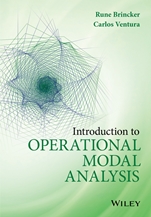
Introduction to Operational Modal Analysis
ISBN 9781119963158
Autor: Rune Brincker, Carlos Ventura
Wydawca: Wiley
Dostępność: 3-6 tygodni
Cena: 535,50 zł
Przed złożeniem zamówienia prosimy o kontakt mailowy celem potwierdzenia ceny.
ISBN13: |
9781119963158 |
ISBN10: |
111996315X |
Autor: |
Rune Brincker, Carlos Ventura |
Oprawa: |
Hardback |
Rok Wydania: |
2015-09-04 |
Ilość stron: |
372 |
Wymiary: |
244x170 |
Tematy: |
TG |
Introduction to Operational Modal Analysis
Rune Brincker Aarhus University, Denmark
Carlos Ventura – University of British Columbia, Canada
Operational Modal Analysis (OMA) is the technology of estimating modal properties of structures from the operating response. Over the last decade this technology has become more widely used as a supplementary tool to traditional experimental modal analysis where a controlled test is performed and both input and response is known.
Introduction to Operational Modal Analysis comprehensively covers the basic principles and practice of OMA. It presents an overall picture of the OMA technology, and covers all important aspects that are needed to understand why OMA is a practical tool for modal testing.
It is organized into four main sections. Part one covers basic concepts and theories needed for a clear understanding of OMA, including probability modelling, matrix theory and regression, transforms theory and measurement technology. Part two offers a review of concepts of classical structural dynamics covering general damping and discrete time solutions, and part three presents concepts associated with random modelling, including random vibration theory and signal processing. Finally part four reviews identification techniques that are commonly used in practical applications, such as the frequency domain decomposition and the poly reference techniques.
Key features:
Introduction to Operational Modal Analysis is an ideal textbook for graduate–level courses on modal testing of structures, and is a useful reference for researchers and practitioners working in the field of OMA.
Rune Brincker is a civil engineer and received his M.Sc and Ph.D. from the Technical University of Denmark in 1977 and 1981, respectively. Since then he has been conducting research on various aspects of structural mechanics. Rune has been employed as associate and full professor at several Danish universities. Presently he is a Professor of Structural Dynamics at Aarhus University, Denmark. During the last 30 years his research has been focused on operational modal analysis (OMA), and one of his major contributions to this field has been the development of the frequency domain decomposition (FDD) identification technique, which has been used in many practical applications of OMA. Rune Brincker is a co–founder of Structural Vibration Solutions (SVS) founded in 1999; and he is the founding chair of the International Operational Modal Analysis Conference (IOMAC) which started in 2005.
Carlos Ventura is a Civil Engineer with specializations in structural dynamics and earthquake engineering. He has been a faculty member of the Department of Civil Engineering at the University of British Columbia (UBC) in Canada since 1992. He is currently the Director of the Earthquake Engineering Research Facility (EERF) at UBC, and is the author of more than 450 papers and reports on earthquake engineering, structural dynamics and modal testing. He has conducted research about earthquakes and structural dynamics for more than thirty years. In addition to his academic activities, Carlos Ventura is a recognized international consultant on structural vibrations and safety of large Civil Engineering structures. He is a member of the Canadian Academy of Engineering and Fellow of Engineers Canada, also a member of several national and international professional societies, advisory committees and several building and bridge code committees.
Koszyk
Książek w koszyku: 0 szt.
Wartość zakupów: 0,00 zł
Informacje


Kontakt
Gambit
Centrum Oprogramowania
i Szkoleń Sp. z o.o.
Al. Pokoju 29b/22-24
31-564 Kraków
Siedziba Księgarni
ul. Kordylewskiego 1
31-542 Kraków
+48 12 410 5991
+48 12 410 5987
+48 12 410 5989
Subskrypcje
Administratorem danych osobowych jest firma Gambit COiS Sp. z o.o. Na podany adres będzie wysyłany wyłącznie biuletyn informacyjny.
Autoryzacja płatności

Informacje na temat autoryzacji płatności poprzez PayU.

© Copyright 2012: GAMBIT COiS Sp. z o.o. Wszelkie prawa zastrzeżone.
Projekt i wykonanie: Alchemia Studio Reklamy