


Wydawcy
Katalog tematyczny
- Archeologia (109)
- Ekonomia, finanse, business (13704)
- Filozofia (1445)
- Historia (3040)
- Języki i językoznawstwo (2356)
- Lifestyle, hobby i rozrywka (475)
- Medycyna (9704)
- Nauki humanistyczne (4)
- Nauki o Ziemi i środowisku (2638)
- Nauki ścisłe (20412)
- Nauki społeczne (8486)
- Nauki techniczne (13450)
- Prawo (1696)
- Publikacje informacyjne i interdyscyplinarne (1288)
- Religia i wierzenia (917)
- Technika komputerowa (4067)
- Zdrowie, relacje międzyludzkie i rozwój osobisty (657)





Informacje szczegółowe o książce
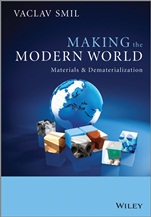
Making the Modern World: Materials and Dematerialization
ISBN 9781119942535
Autor: Vaclav Smil
Wydawca: Wiley
Dostępność: 3-6 tygodni
Cena: 200,55 zł
Przed złożeniem zamówienia prosimy o kontakt mailowy celem potwierdzenia ceny.
ISBN13: |
9781119942535 |
ISBN10: |
1119942535 |
Autor: |
Vaclav Smil |
Oprawa: |
Paperback |
Rok Wydania: |
2013-11-22 |
Ilość stron: |
242 |
Wymiary: |
239x173 |
Tematy: |
KM |
How much further should the affluent world push its material consumption? Does relative dematerialization lead to absolute decline in demand for materials? These and many other questions are discussed and answered in Making the Modern World: Materials and Dematerialization. Over the course of time, the modern world has become dependent on unprecedented flows of materials. Now even the most efficient production processes and the highest practical rates of recycling may not be enough to result in dematerialization rates that would be high enough to negate the rising demand for materials generated by continuing population growth and rising standards of living. This book explores the costs of this dependence and the potential for substantial dematerialization of modern economies. Making the Modern World: Materials and Dematerialization considers the principal materials used throughout history, from wood and stone, through to metals, alloys, plastics, and silicon, describing their extraction and production as well as their dominant applications. The evolving productivities of material extraction, processing, synthesis, finishing, and distribution, and the energy costs and environmental impact of rising material consumption are examined in detail. The book concludes with an outlook for the future, discussing the prospects for dematerialization and potential constraints on materials. This interdisciplinary text will provide useful perspectives for readers with backgrounds including resource economics, environmental studies, energy analysis, mineral geology, industrial organization, manufacturing, and material science.
Preface: Why and How ix 1. What Gets Included 1 2. How We Got Here 7 2.1 Materials Used by Organisms 8 2.2 Materials in Prehistory 11 2.3 Ancient and Medieval Materials 15 2.4 Materials in the Early Modern Era 22 2.5 Creating Modern Material Civilization 27 2.6 Materials in the Twentieth Century 34 3. What Matters Most 45 3.1 Biomaterials 46 3.2 Construction Materials 52 3.3 Metals 57 3.4 Plastics 62 3.5 Industrial Gases 65 3.6 Fertilizers 70 3.7 Materials in Electronics 72 4. How the Materials Flow 77 4.1 Material Flow Accounts 79 4.2 America’s Material Flows 83 4.3 European Balances 87 4.4 Materials in China’s Modernization 90 4.5 Energy Cost of Materials 94 4.6 Life–Cycle Assessments 103 4.7 Recycling 111 5. Are We Dematerializing? 119 5.1 Apparent Dematerializations 120 5.2 Relative Dematerializations: Specific Weight Reductions 122 5.3 Consequences of Dematerialization 129 5.4 Relative Dematerialization in Modern Economies 137 5.5 Declining Energy Intensities 143 5.6 Decarbonization and Desulfurization 150 6. Material Outlook 157 6.1 Natural Resources 158 6.2 Wasting Less 165 6.3 New Materials and Dematerialization 168 6.4 Chances of Fundamental Departures 173 Appendix A Units and Unit Multiples 181 Appendix B US Material Production, GDP and Population, 1900–2005 183 Appendix C Global Population, Economic Product, and Production of Food, Major Materials, and Fuels 1900–2010 185 Appendix D Global Energy Cost of Major Materials in 2010 187 Appendix E 189 References 191 Index 223
VACLAV SMIL, Distinguished Professor Emeritus, University of Manitoba, Canada
Koszyk
Książek w koszyku: 0 szt.
Wartość zakupów: 0,00 zł
Informacje


Kontakt
Gambit
Centrum Oprogramowania
i Szkoleń Sp. z o.o.
Al. Pokoju 29b/22-24
31-564 Kraków
Siedziba Księgarni
ul. Kordylewskiego 1
31-542 Kraków
+48 12 410 5991
+48 12 410 5987
+48 12 410 5989
Subskrypcje
Administratorem danych osobowych jest firma Gambit COiS Sp. z o.o. Na podany adres będzie wysyłany wyłącznie biuletyn informacyjny.
Autoryzacja płatności

Informacje na temat autoryzacji płatności poprzez PayU.

© Copyright 2012: GAMBIT COiS Sp. z o.o. Wszelkie prawa zastrzeżone.
Projekt i wykonanie: Alchemia Studio Reklamy