


Wydawcy
Katalog tematyczny
- Archeologia (109)
- Ekonomia, finanse, business (13704)
- Filozofia (1445)
- Historia (3040)
- Języki i językoznawstwo (2356)
- Lifestyle, hobby i rozrywka (475)
- Medycyna (9704)
- Nauki humanistyczne (4)
- Nauki o Ziemi i środowisku (2638)
- Nauki ścisłe (20412)
- Nauki społeczne (8486)
- Nauki techniczne (13450)
- Budownictwo lądowe (1045)
- Chemia przemysłowa (2258)
- Elektronika i telekomunikacja (3287)
- Energetyka (1122)
- Inne nauki stosowane (363)
- Inżynieria biochemiczna (507)
- Inżynieria transportu (232)
- Mechanika i materiały (3316)
- Nauka o środowisku (321)
- Rolnictwo (507)
- Technika, ogólnie (475)
- Prawo (1696)
- Publikacje informacyjne i interdyscyplinarne (1288)
- Religia i wierzenia (917)
- Technika komputerowa (4067)
- Zdrowie, relacje międzyludzkie i rozwój osobisty (657)





Informacje szczegółowe o książce
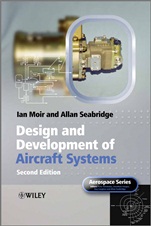
Design and Development of Aircraft Systems
ISBN 9781119941194
Autor: Ian Moir, Allan Seabridge
Wydawca: Wiley
Dostępność: 3-6 tygodni
Cena: 519,75 zł
Przed złożeniem zamówienia prosimy o kontakt mailowy celem potwierdzenia ceny.
ISBN13: |
9781119941194 |
ISBN10: |
1119941199 |
Autor: |
Ian Moir, Allan Seabridge |
Oprawa: |
Hardback |
Rok Wydania: |
2012-12-07 |
Numer Wydania: |
2nd Edition |
Ilość stron: |
334 |
Wymiary: |
251x176 |
Tematy: |
TG |
In the second edition of Design and Development of Aircraft Systems , Ian Moir and Allan Seabridge provide a straightforward introduction to how aircraft systems are designed and evolved, explaining to the reader the means by which the systems of a complex aircraft emerge from a customer requirement and become reality as individual sub–systems; as an integrated overall system; and as a complete fit–for–purpose aircraft. This edition has been updated with extensive new material on unmanned air vehicles, together with updates to all chapters to bring them in line with current design practice and technologies. For many engineers, the design and development activity takes place at a single domain level—the fuel system, the hydraulic system, flight control system, etc. Increasingly, however, there is a need to consider how these domains integrate into the bigger picture: for example, the engineer designing the display system will need to consider the entire weapons system. Concentrating on the product life cycle, the design and development process, and the skills required to develop a product as complex as an aircraft, Design and Development of Aircraft Systems, 2nd edition is a book for people who want to understand how industry develops a fully integrated, tested, and qualified product that is safe to fly and fit for purpose. Key features: Provides a holistic view of aircraft system design describing the interaction between all subsystems such as fuel systems, navigation, flight control, etc. Covers all aspects of design including systems engineering; design drivers; systems architectures; systems integration; modelling of systems; practical considerations and systems examples. Incorporates essential new material on Unmanned Aircraft Systems (UAS). Commercial and military aerospace engineers, designers, operators, maintenance crew and those studying to become part of the aerospace industry will find Design and Development of Aircraft Systems, 2nd edition an invaluable resource.
About the Authors xiii Series Preface xv Acknowledgements xvi Glossary xvii 1 Introduction 1 1.1 General 1 1.2 Systems Development 3 1.3 Skills 7 1.4 Overview 9 References 11 Further Reading 11 2 The Aircraft Systems 13 2.1 Introduction 13 2.2 Definitions 13 2.3 Everyday Examples of Systems 14 2.4 Aircraft Systems of Interest 17 2.4.1 Airframe Systems 22 2.4.2 Vehicle Systems 22 2.4.3 Interface Characteristics of Vehicle Systems 24 2.4.4 Avionics Systems 25 2.4.5 Characteristics of Vehicle and Avionics Systems 26 2.4.6 Mission Systems 26 2.4.7 Interface Characteristics of Mission Systems 27 2.5 Ground Systems 27 2.6 Generic System Definition 28 References 31 Further Reading 31 3 The Design and Development Process 33 3.1 Introduction 33 3.2 Definitions 34 3.3 The Product Life Cycle 35 3.4 Concept Phase 39 3.4.1 Engineering Process 40 3.4.2 Engineering Skills 42 3.5 Definition Phase 43 3.5.1 Engineering Process 43 3.5.2 Engineering Skills 44 3.6 Design Phase 47 3.6.1 Engineering Process 47 3.6.2 Engineering Skills 48 3.7 Build Phase 49 3.7.1 Engineering Process 49 3.7.2 Engineering Skills 49 3.8 Test Phase 50 3.8.1 Engineering Process 50 3.8.2 Engineering Skills 50 3.9 Operate Phase 51 3.9.1 Engineering Process 51 3.9.2 Engineering Skills 52 3.10 Disposal or Retirement Phase 52 3.10.1 Engineering Process 52 3.10.2 Engineering Skills 53 3.11 Refurbishment Phase 53 3.11.1 Engineering Process 53 3.11.2 Engineering Skills 53 3.12 Whole Life Cycle Tasks 54 Exercises 55 References 55 Further Reading 56 4 Design Drivers 57 4.1 Introduction 57 4.2 Design Drivers in the Business Environment 59 4.2.1 Customer 59 4.2.2 Market and Competition 60 4.2.3 Capacity 61 4.2.4 Financial Issues 61 4.2.5 Defence Policy 61 4.2.6 Leisure and Business Interests 62 4.2.7 Politics 62 4.2.8 Technology 63 4.3 Design Drivers in the Project Environment 63 4.3.1 Standards and Regulations 63 4.3.2 Availability 64 4.3.3 Cost 65 4.3.4 Programme 65 4.3.5 Performance 65 4.3.6 Skills and Resources 66 4.3.7 Health, Safety and Environmental Issues 66 4.3.8 Risk 67 4.4 Design Drivers in the Product Environment 67 4.4.1 Functional Performance 67 4.4.2 Human/Machine Interface 68 4.4.3 Crew and Passengers 68 4.4.4 Stores and Cargo 69 4.4.5 Structure 69 4.4.6 Safety 70 4.4.7 Quality 70 4.4.8 Environmental Conditions 70 4.5 Drivers in the Product Operating Environment 71 4.5.1 Heat 71 4.5.2 Noise 72 4.5.3 RF Radiation 72 4.5.4 Solar Energy 73 4.5.5 Altitude 73 4.5.6 Temperature 74 4.5.7 Contaminants/Destructive Substances 74 4.5.8 Lightning 75 4.5.9 Nuclear, Biological and Chemical 75 4.5.10 Vibration 75 4.5.11 Shock 76 4.6 Interfaces with the Sub–System Environment 76 4.6.1 Physical Interfaces 76 4.6.2 Power Interfaces 77 4.6.3 Data Communication Interfaces 77 4.6.4 Input/Output Interfaces 78 4.6.5 Status/Discrete Data 78 4.7 Obsolescence 78 4.7.1 The Threat of Obsolescence in the Product Life Cycle 79 4.7.2 Managing Obsolescence 84 References 85 Further Reading 85 5 Systems Architectures 87 5.1 Introduction 87 5.2 Definitions 88 5.3 Systems Architectures 88 5.3.1 General Systems 92 5.3.2 Avionic Systems 92 5.3.3 Mission Systems 92 5.3.4 Cabin Systems 92 5.3.5 Data Bus 92 5.4 Architecture Modelling and Trade–off 93 5.5 Example of a Developing Architecture 95 5.6 Evolution of Avionics Architectures 96 5.6.1 Distributed Analogue Architecture 98 5.6.2 Distributed Digital Architecture 100 5.6.3 Federated Digital Architecture 101 5.6.4 Integrated Modular Architecture 103 References 106 Further Reading 106 6 Systems Integration 107 6.1 Introduction 107 6.2 Definitions 109 6.3 Examples of Systems Integration 109 6.3.1 Integration at the Component Level 109 6.3.2 Integration at the System Level 110 6.3.3 Integration at the Process Level 117 6.3.4 Integration at the Functional Level 120 6.3.5 Integration at the Information Level 123 6.3.6 Integration at the Prime Contractor Level 123 6.3.7 Integration Arising from Emergent Properties 124 6.4 System Integration Skills 126 6.5 Management of Systems Integration 128 6.5.1 Major Activities 128 6.5.2 Major Milestones 129 6.5.3 Decomposition and Definition Process 131 6.5.4 Integration and Verification Process 131 6.5.5 Component Engineering 131 6.6 Highly Integrated Systems 132 6.6.1 Integration of Primary Flight Control Systems 134 6.7 Discussion 135 References 137 Further Reading 137 7 Verification of System Requirements 139 7.1 Introduction 139 7.2 Gathering Qualification Evidence in the Life Cycle 140 7.3 Test Methods 143 7.3.1 Inspection of Design 143 7.3.2 Calculation 143 7.3.3 Analogy 144 7.3.4 Modelling and Simulation 144 7.3.5 Test Rigs 158 7.3.6 Environmental Testing 159 7.3.7 Integration Test Rigs 159 7.3.8 Flight Test 161 7.3.9 Trials 162 7.3.10 Operational Test 163 7.3.11 Demonstrations 163 7.4 An Example Using a Radar System 163 References 166 Further Reading 166 8 Practical Considerations 167 8.1 Introduction 167 8.2 Stakeholders 167 8.2.1 Identification of Stakeholders 167 8.2.2 Classification of Stakeholders 169 8.3 Communications 170 8.3.1 The Nature of Communication 171 8.3.2 Examples of Organisation Communication Media 173 8.3.3 The Cost of Poor Communication 174 8.3.4 A Lesson Learned 174 8.4 Giving and Receiving Criticism 177 8.4.1 The Need for Criticism in the Design Process 177 8.4.2 The Nature of Criticism 178 8.4.3 Behaviours Associated with Criticism 178 8.4.4 Conclusions 179 8.5 Supplier Relationships 179 8.6 Engineering Judgement 181 8.7 Complexity 181 8.8 Emergent Properties 182 8.9 Aircraft Wiring and Connectors 183 8.9.1 Aircraft Wiring 183 8.9.2 Aircraft Breaks 183 8.9.3 Wiring Bundle Definition 185 8.9.4 Wiring Routing 185 8.9.5 Wiring Sizing 186 8.9.6 Aircraft Electrical Signal Types 187 8.9.7 Electrical Segregation 188 8.9.8 The Nature of Aircraft Wiring and Connectors 189 8.9.9 Use of Twisted Pairs and Quads 190 8.10 Bonding and Grounding 192 References 194 Further Reading 194 9 Configuration Control 195 9.1 Introduction 195 9.2 Configuration Control Process 195 9.3 A Simple Portrayal of a System 196 9.4 Varying System Configurations 197 9.4.1 System Configuration A 198 9.4.2 System Configuration B 199 9.4.3 System Configuration C 200 9.5 Forwards and Backwards Compatibility 201 9.5.1 Forwards Compatibility 202 9.5.2 Backwards Compatibility 202 9.6 Factors Affecting Compatibility 203 9.6.1 Hardware 203 9.6.2 Software 203 9.6.3 Wiring 204 9.7 System Evolution 205 9.8 Configuration Control 206 9.8.1 Airbus A380 Example 208 9.9 Interface Control 210 9.9.1 Interface Control Document 210 9.9.2 Aircraft Level Data Bus Data 213 9.9.3 System Internal Data Bus Data 213 9.9.4 Internal System Input/Output Data 213 9.9.5 Fuel Component Interfaces 214 10 Aircraft System Examples 215 10.1 Introduction 215 10.2 Design Considerations 215 10.3 Safety and Economic Considerations 217 10.4 Failure Severity Categorisation 218 10.5 Design Assurance Levels 218 10.6 Redundancy 219 10.6.1 Architecture Options 220 10.6.2 System Examples 223 10.7 Integration of Aircraft Systems 226 10.7.1 Engine Control System 228 10.7.2 Flight Control System 229 10.7.3 Attitude Measurement System 230 10.7.4 Air Data System 231 10.7.5 Electrical Power System 232 10.7.6 Hydraulic Power System 233 10.8 Integration of Avionics Systems 233 References 237 11 Power Systems Issues 239 11.1 Introduction 239 11.2 Electrical System Description 239 11.3 Electrical Power Distribution System 241 11.3.1 Power Generation 241 11.3.2 Primary Power Distribution 242 11.3.3 Power Conversion 242 11.3.4 Secondary Power Distribution 242 11.4 Electrical System Design Issues 243 11.4.1 Engine Power Off–Takes 244 11.4.2 The Generator 244 11.4.3 Power Feeders 244 11.4.4 Generation Control 245 11.4.5 Power Switching 245 11.5 Hydraulic System Description 246 11.5.1 Engine–Driven Pump (EDP) 246 11.5.2 Hydraulic Accumulator 247 11.5.3 System Users 247 11.5.4 Power Transfer Unit 247 11.6 Hydraulic System Design Considerations 248 11.6.1 Hydraulic Power Generation 248 11.6.2 System Level Issues 249 11.6.3 Hydraulic Fluid 249 11.7 Aircraft System Energy Losses 250 11.8 Electrical System Power Dissipation 252 11.8.1 Constant Frequency System 253 11.8.2 Variable Frequency System 254 11.9 Hydraulic System Power Dissipation 254 11.9.1 Hydraulic Power Calculations 256 11.9.2 Operating Pressure 256 11.9.3 Rated Delivery Capacity 258 11.9.4 Boeing 767 – Entry into Service: 1982 (United Airlines) 258 11.9.5 Boeing 787 – Entry into Service: 2011 [All Nippon Airways] 258 11.9.6 Simple Hydraulic Power Models 259 11.10 More–Electric Aircraft Considerations 261 References 263 12 Key Characteristics of Aircraft Systems 265 12.1 Introduction 265 12.2 Aircraft Systems 267 12.3 Avionic Systems 280 12.4 Mission Systems 287 12.5 Sizing and Scoping Systems 292 12.6 Analysis of the Fuel Penalties of Aircraft Systems 294 12.6.1 Introduction 294 12.6.2 Basic Formulation of Fuel Weight Penalties of Systems 295 12.6.3 Application of Fuel Weight Penalties Formulation to Multi–Phase Flight 297 12.6.4 Analysis of Fuel Weight Penalties Formulation for Multi–Phase Flight 298 12.6.5 Use of Fuel Weight Penalties to Compare Systems 298 12.6.6 Determining Input Data for Systems Weight Penalties Analysis 299 Nomenclature Used 302 References 303 13 Conclusions 305 A Historical Footnote 306 References 307 Index 309
“The book is aimed at aerospace engineers, educational establishments from high school, through college and university undergraduate or postgraduate level. It would also be a good reference book for short courses, e.g. continuous professional development for industry professionals.” ( The Aeronautical Journal , 1 November 2013)
Koszyk
Książek w koszyku: 0 szt.
Wartość zakupów: 0,00 zł
Informacje


Kontakt
Gambit
Centrum Oprogramowania
i Szkoleń Sp. z o.o.
Al. Pokoju 29b/22-24
31-564 Kraków
Siedziba Księgarni
ul. Kordylewskiego 1
31-542 Kraków
+48 12 410 5991
+48 12 410 5987
+48 12 410 5989
Subskrypcje
Administratorem danych osobowych jest firma Gambit COiS Sp. z o.o. Na podany adres będzie wysyłany wyłącznie biuletyn informacyjny.
Autoryzacja płatności

Informacje na temat autoryzacji płatności poprzez PayU.

© Copyright 2012: GAMBIT COiS Sp. z o.o. Wszelkie prawa zastrzeżone.
Projekt i wykonanie: Alchemia Studio Reklamy