


Wydawcy
Katalog tematyczny
- Archeologia (109)
- Ekonomia, finanse, business (13704)
- Filozofia (1445)
- Historia (3040)
- Języki i językoznawstwo (2356)
- Lifestyle, hobby i rozrywka (475)
- Medycyna (9704)
- Nauki humanistyczne (4)
- Nauki o Ziemi i środowisku (2638)
- Nauki ścisłe (20412)
- Astronomia (294)
- Biologia (5119)
- Chemia (6540)
- Chemia analityczna (361)
- Chemia fizyczna (346)
- Chemia nieorganiczna (137)
- Chemia organiczna (535)
- Krystalografia (27)
- Minerologia (46)
- Fizyka (3309)
- Matematyka (4574)
- Nauki ścisłe, ogólnie (503)
- Nauki społeczne (8486)
- Nauki techniczne (13450)
- Prawo (1696)
- Publikacje informacyjne i interdyscyplinarne (1288)
- Religia i wierzenia (917)
- Technika komputerowa (4067)
- Zdrowie, relacje międzyludzkie i rozwój osobisty (657)







Informacje szczegółowe o książce
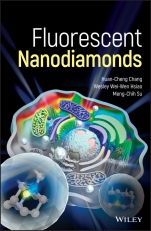
Fluorescent Nanodiamonds
ISBN 9781119477082
Autor: Huan–Cheng Chang, Wesley Wei–Wen Hsiao, Meng–Chih Su
Wydawca: Wiley
Dostępność: 3-6 tygodni
Cena: 656,25 zł
Przed złożeniem zamówienia prosimy o kontakt mailowy celem potwierdzenia ceny.
ISBN13: |
9781119477082 |
ISBN10: |
1119477085 |
Autor: |
Huan–Cheng Chang, Wesley Wei–Wen Hsiao, Meng–Chih Su |
Oprawa: |
Hardback |
Rok Wydania: |
2018-11-16 |
Ilość stron: |
296 |
Wymiary: |
249x170 |
Tematy: |
PN |
The most comprehensive reference on fluorescent nanodiamond physical and chemical properties and contemporary applications
Fluorescent nanodiamonds (FNDs) have drawn a great deal of attention over the past several years, and their applications and development potential are proving to be manifold and vast. The first and only book of its kind, Fluorescent Nanodiamonds is a comprehensive guide to the basic science and technical information needed to fully understand the fundamentals of FNDs and their potential applications across an array of domains. In demonstrating the importance of FNDs in biological applications, the authors bring together all relevant chemistry, physics, materials science and biology.
Nanodiamonds are produced by powerful cataclysmic events such as explosions, volcanic eruptions and meteorite impacts. They also can be created in the lab by high–pressure high–temperature treatment of graphite or detonating an explosive in a reactor vessel. A single imperfection can give a nanodiamond a specific, isolated color center which allows it to function as a single, trapped atom. Much smaller than the thickness of a human hair, a nanodiamond can have a huge surface area that allows it to bond with a variety of other materials. Because of their non–toxicity, nanodiamonds may be useful in biomedical applications, such as drug delivery and gene therapy.
The most comprehensive reference on a topic of rapidly increasing interest among academic and industrial researchers across an array of fields Includes numerous case studies and practical examples from many areas of research and industrial applications, as well as fascinating and instructive historical perspectives Each chapter addresses, in–depth, a single integral topic including the fundamental properties, synthesis, mechanisms and functionalisation of FNDs First book published by the key patent holder with his research group in the field of FNDsFluorescent Nanodiamonds is an important working resource for a broad range of scientists and engineers in industry and academia. It will also be a welcome reference for instructors in chemistry, physics, materials science, biology and related fields.
Part I: Basics
Chapter 1: Introduction to Nanotechnology
1.1. Nanotechnology: From Large to Small
1.1.1. Feynman: Plenty of room at the bottom
1.1.2. Nanotechnology today
1.1.3. The bottom–up approach
1.2. Nanocarbons: Now and Then
1.2.1. Classification
1.2.2. Fullerenes
1.2.3. Carbon nanotubes
1.2.4. Graphenes
Cited References
Chapter 2: Nanodiamonds
2.1. Ah, Diamonds, Eternal Beautiful
2.2. Diamonds: From Structure to Classification
2.3. Diamond Synthesis
2.3.1. HPHT
2.3.2. CVD
2.3.3. Detonation
2.4. Nanodiamonds A Scientist s Best Friend
Cited References
Chapter 3: Color Centers in Diamond
3.1. Nitrogen Impurities
3.2. Crystal Defects
3.3. Vacancy–Related Color Centers
3.3.1. GR and ND1
3.3.2. NV0 and NV
3.3.3. H3 and N3
3.3.4. SiV
3.4. The NV Center
Cited References
Chapter 4: Surface Chemistry of Nanodiamonds
4.1. Functionalization
4.2. Bioconjugation
4.2.1. Noncovalent conjugation
4.2.2. Covalent conjugation
4.3. Encapsulation
4.3.1. Lipid layers
4.3.2. Silica shells
Cited References
Chapter 5: Biocompatibility of Nanodiamonds
5.1. Biocompatibility Testing
5.2. In Vitro Studies
5.2.1. HPHT–ND
5.2.2. DND
5.3. Ex Vivo Studies
5.4. In Vivo Studies
Cited References
Part II: Specific Topics
Chapter 6: Producing Fluorescent Nanodiamonds
6.1. Production
6.1.1. Theoretical simulations
6.1.2. Electron/ion irradiation
6.1.3. Size reduction
6.2. Characterization
6.2.1. Fluorescence intensity
6.2.2. Electron spin resonance
6.2.3. Fluorescence lifetime
6.2.4. Magnetically modulated fluorescence
Cited References
Chapter 7: Single Particle Detection and Tracking
7.1. Single Particle Detection
7.1.1. Photostability
7.1.2. Spectroscopic properties
7.1.3. Color center numbers
7.2. Single Particle Tracking
7.2.1. Tracking in solution
7.2.2. Tracking in cells
7.2.3. Tracking in organisms
Cited References
Chapter 8: Cell Labeling and Fluorescence Imaging
8.1. Cell Labeling
8.1.1. Nonspecific labeling
8.1.2. Specific labeling
8.2. Fluorescence Imaging
8.2.1. Epifluorescence and confocal fluorescence
8.2.2. Total internal reflection fluorescence
8.2.3. Two–photon excitation fluorescence
8.2.4. Time–gated fluorescence
Cited References
Chapter 9: Cell Tracking and Deep Tissue Imaging
9.1. Cellular Uptake
9.1.1. Uptake mechanism
9.1.2. Entrapment
9.1.3. Quantification
9.2. Cell Tracking
9.2.1. Tracking in vitro
9.2.2. Tracking in vivo
9.3. Tissue Imaging
9.3.1. Wide–field fluorescence
9.3.2. Time–gated fluorescence
9.3.3. Optically detected magnetic resonance
9.3.4. Magnetically modulated fluorescence
Cited References
Chapter 10: Nanoscopic Imaging
10.1. Diffraction Barrier
10.2. Superresolution Fluorescence Imaging
10.2.1. Stimulated emission depletion microscopy
10.2.2. Saturated excitation fluorescence microscopy
10.2.3. Deterministic emitter switch microscopy
10.2.4. Tip–enhanced fluorescence microscopy
10.3. Cathodoluminescence Imaging
10.4. Correlative Light–Electron Microscopy
Cited References
Chapter 11: Nanoscale Quantum Sensing
11.1. The Spin Hamiltonian
11.2. Temperature Sensing
11.2.1. Ultrahigh precision temperature measurement
11.2.2. Time–resolved nanothermometry
11.2.3. All–optical luminescence nanothermometry
11.2.4. Scanning thermal imaging
11.3. Magnetic Sensing
11.3.1. Continuous–wave detection
11.3.2.Relaxometry
Cited References
Chapter 12: Hybrid Fluorescent Nanodiamonds
12.1. Silica/Diamond Nanohybrids
12.2. Gold/Diamond Nanohybrids
12.2.1. Photoluminescence enhancement
12.2.2.Dual–modality imaging
12.2.3. Hyperlocalized hyperthermia
12.2.4. NV–based nanothermometry
12.3. Silver/Diamond Nanohybrids
12.4. Iron Oxide/Diamond Nanohybrids
12.4.1. Single–domain magnetization
12.4.2. Magnetic resonance imaging
Cited References
Chapter 13: Nanodiamond–Enabled Medicine
13.1. NDs as Therapeutic Carriers
13.2. Drug Delivery
13.2.1. Small molecules
13.2.2. Proteins
13.3. Gene Therapy
13.3.1. RNA
13.3.2. DNA
13.4. Animal Experiments
Cited References
Chapter 14: Diamonds in the Sky
14.1. Unidentified Infrared Emission
14.2. Extended Red Emission
14.3. Cosmic Events at Home on Earth
Cited References
Further Readings
Index
Huan–Cheng Chang, PhD, Distinguished Research Fellow, Institute of Atomic and Molecular Sciences (IAMS), Academia Sinica, Taipei, Taiwan, Republic of China. Academia Sinica is the national academy of the Republic of China.
Wesley Wei–Wen Hsiao, PhD, LLM is CEO of FND Biotech, Inc., Taipei, Taiwan, Republic of China.
Meng–Chih Su, PhD, Professor in Chemistry, Sonoma State University (SSU), Rohnert Park, California, USA. Dr. Su has served as Department Chair for the Chemistry Department and later the Engineering Science Department at SSU.
Koszyk
Książek w koszyku: 0 szt.
Wartość zakupów: 0,00 zł
Informacje


Kontakt
Gambit
Centrum Oprogramowania
i Szkoleń Sp. z o.o.
Al. Pokoju 29b/22-24
31-564 Kraków
Siedziba Księgarni
ul. Kordylewskiego 1
31-542 Kraków
+48 12 410 5991
+48 12 410 5987
+48 12 410 5989
Subskrypcje
Administratorem danych osobowych jest firma Gambit COiS Sp. z o.o. Na podany adres będzie wysyłany wyłącznie biuletyn informacyjny.
Autoryzacja płatności

Informacje na temat autoryzacji płatności poprzez PayU.

© Copyright 2012: GAMBIT COiS Sp. z o.o. Wszelkie prawa zastrzeżone.
Projekt i wykonanie: Alchemia Studio Reklamy