


Wydawcy
Katalog tematyczny
- Archeologia (109)
- Ekonomia, finanse, business (13704)
- Filozofia (1445)
- Historia (3040)
- Języki i językoznawstwo (2356)
- Lifestyle, hobby i rozrywka (475)
- Medycyna (9704)
- Nauki humanistyczne (4)
- Nauki o Ziemi i środowisku (2638)
- Nauki ścisłe (20412)
- Nauki społeczne (8486)
- Edukacja (229)
- Kryminologia, opieka spełeczna (284)
- Obronność (10)
- Polityka (1389)
- Psychologia (777)
- Socjologia (410)
- Społeczeństwo i kultura (187)
- Nauki techniczne (13450)
- Prawo (1696)
- Publikacje informacyjne i interdyscyplinarne (1288)
- Religia i wierzenia (917)
- Technika komputerowa (4067)
- Zdrowie, relacje międzyludzkie i rozwój osobisty (657)





Informacje szczegółowe o książce
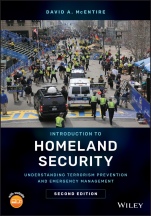
Introduction to Homeland Security: Understanding Terrorism Prevention and Emergency Management
ISBN 9781119430650
Autor: David A. McEntire
Wydawca: Wiley
Dostępność: 3-6 tygodni
Cena: 400,05 zł
Przed złożeniem zamówienia prosimy o kontakt mailowy celem potwierdzenia ceny.
ISBN13: |
9781119430650 |
ISBN10: |
1119430658 |
Autor: |
David A. McEntire |
Oprawa: |
Paperback |
Rok Wydania: |
2018-11-30 |
Numer Wydania: |
2nd Edition |
Ilość stron: |
416 |
Wymiary: |
251x177 |
Tematy: |
JBV |
Introduces readers to the world of homeland security and provides them with up–to–date information on recent attacks, new terrorist threats, visible terrorist organizations, current dilemmas, updated research, and best practices
This book provides comprehensive coverage of issues relating to terrorism, terrorist behavior, homeland security policies, and emergency management. It offers a foundation that spans the readily apparent chasm between the homeland security and disaster communities, and covers the stages of emergency management with a focus on terrorism prevention and response. Based on both the academic literature and practical understanding, the book includes research findings, covering theory and principles as well as their application.
Introduction to Homeland Security: Understanding Terrorism Prevention and Emergency Management, Second Edition teaches how to define homeland security, understand how it changed after 9/11, and explore its relationship with emergency management; recognize the causes of terrorism and what prompts people to engage in terrorist attacks; assess the trade–offs between security and rights, and understand how terrorism exploits the tension between these two priorities; work to prevent terrorist attacks through intelligence gathering, by promoting laws that prohibit terrorism, and by protecting borders and various sectors of society; prepare for a terrorist attack by creating an advisory council, passing ordinances, acquiring monetary resources, and establishing an EOC; effectively respond to a terrorist attack through the many functions involved, including the protection of first responders and the decontamination of the victims; recover from a terrorist attack through both short–term and long–term measures; anticipate the current challenges faced in homeland security; and comprehend the various types of attacks that might take place in the future.
The second edition:
Introduction to Homeland Security is an excellent book for all scholars, students, and practitioners interested or involved in homeland security and emergency management.
Chapter 1. Understanding a New Global Priority: Terrorism, Homeland Security, and Emergency Management
1.1 Terrorism is the New Normal
1.1.1 Boston Marathon Bombing
1.1.2 San Bernardino Regional Center Shooting
1.1.3 Orlando Nightclub Shooting
1.1.4 Other Notable Attacks
1.2 A Growing Threat
1.2.1 Reasons to Anticipate More Attacks
1.3 9/11: A Wake–Up Call
1.4 The Nature of Homeland Security
1.4.1 Agreement about Homeland Security
1.5 Disciplines Involved in Homeland Security and the Emergency Management Profession
1.5.1 The Role of Emergency Management
1.5.2 Important Terminology
Chapter 2. Identifying Terrorism: Ideologically Motivated Acts of Violence and Their Relation to Disasters
2.1 Defining Terrorism
2.2 Common Characteristics of Terrorism
2.3 Type of Terrorism
2.4 Relation of Terrorism to Other Disasters
Chapter 3. Recognizing the Causes of Terrorism: Differing Perspectives and the Role of Ideology
3.1 Frequently Mentioned Causes of Terrorism
3.1.1 Historical Grievances
3.1.2 U.S. Foreign Policy
3.1.3 Poverty
3.2 Political Causes
3.2.1 Politics
3.2.2 Political Systems
3.2.3 Political Functions
3.2.4 Political Structure
3.3 Cultural and Religious Causes
3.3.1 Cultural Dimensions of Terrorism
3.3.2 The Role of Religion in Terrorism
3.4 Ideology
3.4.1 The Nature of Ideologies
3.4.2 Ideological Dimensions of Terrorism
Chapter 4. Comprehending Terrorists and Their Behavior: Who They are and What They Do
4.1 Terrorists and Terrorist Organizations
4.1.1 Terrorist Classification
4.2 Personal Characteristics
4.2.1 Distinct Differences
4.3 The Behavior and Tactics of Terrorists
4.3.1 Propaganda
4.3.2 Recruiting
4.3.3 Financing
4.3.4 Training
4.3.5 False Documents, Travel and Safe Haven
4.3.6 Code Words and Secret Communications
4.3.7 Planning
4.3.8 Weapons
4.3.9 Acts of Civil Disorder or Terrorisms
Chapter 5. Uncovering the Dynamic Nature of Terrorism: History of Violence and Change over Time
5.1 The Appearance of Terrorism
5.2 The Evolution of Terrorism Abroad
5.3 Terrorism and the United States
5.4 Terrorism Today
Chapter 6. Evaluating a Major Dilemma: Terrorism, the Media, and Censorship
6.1 Changes in the Media Over Time
6.2 Terrorists and the Media
6.3 The Media and Terrorism
6.4 Government and the Media
6.5 Censorship and Self–Censorships
Chapter 7. Contemplating a Quandary: Terrorism, Security, and Liberty
7.1 War, Terrorism and Law
7.2 Security and Liberty
7.3 Cases and Considerations
Chapter 8. Preventing Terrorist Attacks: Root Causes, Law, Intelligence, Counter–Terrorism
8.1 Addressing Root Causes
8.2 Policy and Legislation
8.2.1 Laws Prior to 9/11
8.2.2 Legislation After 9/11
8.3 Intelligence
8.3.1 The Need for Intelligence
8.3.2 The Intelligence Cycle
8.3.3 Successes
8.4 Counter–Terrorism
8.4.1 Risky Operations
8.4.2 Learning from Other Nations
8.4.3 Controversy Regarding Counter–Terrorism
Chapter 9. Securing the Nation: Border Control and Sector Safety
9.1 Border Control
9.1.1 What Is the Border?
9.1.2 Our Porous Border
9.1.3 Participants Involved in Border Control
9.1.4 Measures to Secure Borders
9.2 Protecting Air Transportation
9.3 Rail Transportation Security
9.4 Protection of Sea Ports and Maritime Transportation
9.5 Protection of Petrochemical Facilities
Chapter 10. Protecting against Potential Attacks: Threat Assessment, Mitigation and Other Measures
10.1 Threat Assessment
10.1.1 Critical Infrastructure, Key Assets, and Soft Targets
10.1.2 Collaboration with Others to Identify Threats
10.1.3 Points of Consideration
10.3 Structural and Non–Structural Mitigation
10.3.1 Architectural Design and Construction
10.3.2 Zoning and Set Back Regulations
10.3.3 Other Protective Measures
Chapter 11. Preparing for the Unthinkable: Efforts to Get Ready for Terrorism
11.1 The Importance and Nature of Preparedness
11.1.1 Federal and State Initiatives
11.2 Foundations of Preparedness
11.2.1 Preparedness Councils
11.2.2 Ordinances
11.2.3 Budgets and Grants
11.2.4 Emergency Operations Centers
11.3 Planning
11.4 Other Measures
11.4.1 Training
11.4.2 Exercises
11.4.3 Community Education
Chapter 12 Responding to Attacks: Important Functions and Coordination Mechanisms
12.1 Behavior and Major Priorities
12.1.1 Initial Investigation and Apprehension
12.1.2 Safety and Security
12.1.3 Search and Rescue
12.1.4 Medical Care and Triage
12.1.5 Decontamination
12.1.6 Closing the Investigation
12.2 Other Crucial Functions
12.2.1 Warning, Intelligence and Public Information
12.2.2 Evacuation and Sheltering
12.3 Coordination Mechanisms
12.3.1 The Incident Command System
12.3.2 Strengths and Weakness of ICS
12.3.3 Utilization of Emergency Operations Centers
12.3.4 EOC Management
Chapter 13. Recovering from Impacts: Short–term and Long–term Measures
13.1 Initial Recovery Steps
13.1.1 Damage Assessment
13.1.2 Damage Assessment Concerns and Procedures
13.1.3 Declaring a Disaster and Seeking Help
13.2 Key Recovery Functions
13.2.1 Mass Fatality Management
13.2.2 Debris Management
13.2.3 Emotional Issues
13.3 The Importance of Disaster Assistance
13.3.1 Volunteer and Donation Management
13.3.2 Individual and Public Assistance
13.3.3 Novel Approaches
Chapter 14. Assessing Significant Threats: WMD and Cyberterorrism
14.1 The Future of Terrorism and WMD
14.2 Radiological Weapons
14.3 Nuclear Weapons
14.4 Biological Weapons
14.5 Chemical Weapons
14.6 Cyber Terrorism
Chapter 15. Looking toward the Future: Challenges and Opportunities
15.1 The Lessons of this Book
15.2 Accountability in Homeland Security
15.3 Clarification of Homeland Security Policy
15.4 Research Needs and Recommendations for the Future
15.4.1 Direction for Researchers
15.4.2 Guidance for Practitioners
David A. McEntire, PhD, is the Dean of the College of Health and Public Service at Utah Valley University in Orem, Utah. He is responsible for the oversight of numerous undergraduate and graduate programs in the areas of emergency services, homeland security, national security, public service, aviation and health care. He has received several grants funded by the Natural Hazards Center, the National Science Foundation, and other sources that allowed him to conduct research in Peru, the Dominican Republic, Texas, New York, California, and Haiti.
Koszyk
Książek w koszyku: 0 szt.
Wartość zakupów: 0,00 zł
Informacje


Kontakt
Gambit
Centrum Oprogramowania
i Szkoleń Sp. z o.o.
Al. Pokoju 29b/22-24
31-564 Kraków
Siedziba Księgarni
ul. Kordylewskiego 1
31-542 Kraków
+48 12 410 5991
+48 12 410 5987
+48 12 410 5989
Subskrypcje
Administratorem danych osobowych jest firma Gambit COiS Sp. z o.o. Na podany adres będzie wysyłany wyłącznie biuletyn informacyjny.
Autoryzacja płatności

Informacje na temat autoryzacji płatności poprzez PayU.

© Copyright 2012: GAMBIT COiS Sp. z o.o. Wszelkie prawa zastrzeżone.
Projekt i wykonanie: Alchemia Studio Reklamy