


Wydawcy
Katalog tematyczny
- Archeologia (109)
- Ekonomia, finanse, business (13704)
- Filozofia (1445)
- Historia (3040)
- Języki i językoznawstwo (2356)
- Lifestyle, hobby i rozrywka (475)
- Medycyna (9704)
- Nauki humanistyczne (4)
- Nauki o Ziemi i środowisku (2638)
- Nauki ścisłe (20412)
- Nauki społeczne (8486)
- Nauki techniczne (13450)
- Prawo (1696)
- Publikacje informacyjne i interdyscyplinarne (1288)
- Religia i wierzenia (917)
- Technika komputerowa (4067)
- Zdrowie, relacje międzyludzkie i rozwój osobisty (657)





Informacje szczegółowe o książce
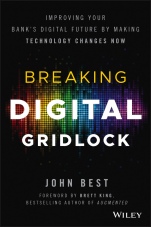
Breaking Digital Gridlock: Improving Your Banks Digital Future by Making Technology Changes Now + Website
ISBN 9781119421955
Autor: John Best, Brett King
Wydawca: Wiley
Dostępność: 3-6 tygodni
Cena: 211,05 zł
Przed złożeniem zamówienia prosimy o kontakt mailowy celem potwierdzenia ceny.
ISBN13: |
9781119421955 |
ISBN10: |
1119421950 |
Autor: |
John Best, Brett King |
Oprawa: |
Hardback |
Rok Wydania: |
2018-05-01 |
Ilość stron: |
336 |
Wymiary: |
240x152 |
Tematy: |
KFFK |
PRAISE FOR BREAKING DIGITAL GRIDLOCK
"As a science fiction writer I am interested in all aspects of the future, including the future of business, finance, and money. This book is a manual for that future, and it′s a fascinating and insightful read."
Kevin J. Anderson, New York Times bestselling author and noted futurist
"John Best does a brilliant job of breaking down complex topics such as blockchain, AI and machine learning into the what, the why, and the how for non–technical executives. It′s the new desk–top reference for our executive team."
John Janclaes, CEO, Partners Federal Credit Union, Author of Doing What Matters
"In such a fast paced and complex world in technology, John does a great job of breaking down emerging digital technologies. A must–read for any executive looking to digest topics such as blockchain, machine learning, and the future of identity."
John Ainsworth, CEO, CULedger
Foreword xi
Preface xv
Acknowledgments xxi
Introduction xxiii
Five Myths about Going Digital xxiii
John s Story xxvi
Part I Processes 1
Chapter 1 How to Improve Internal Processes 3
Regulatory Gridlock 3
Regulatory Gridlock in Action 4
The Risk Spectrum 5
Flawed Bank Processes 7
Continual Improvement 9
Project Management 10
Waterfall 10
Agile 11
When to Use Agile versus Waterfall 13
In–house Staff and Outside Vendors 13
Process Management 16
Team Organization: Centers of Excellence 17
Cultural Considerations 18
Part II Technology 21
Chapter 2 Tech Evolution versus Tech Revolution 23
Evolutionary Technology 23
Evolution in Banking 25
True Revolution 27
The Financial Revolution 29
Chapter 3 The Cloud 35
The Financial Cloud 36
What Are You Afraid Of? 39
It Is Hard to Control 39
It Is Insecure 40
Data Will Be Shared with Others 40
It s Unreliable 41
It s Super Expensive 41
There Will Be Staff Cuts 42
The Internet Could Go Down 43
It Is a Direct Expense 43
What about Our Data Center? 44
The Cloud Won t Conform to Regulatory Needs 44
The Cloud Kills Baby Seals 44
Types of Cloud Services 45
Infrastructure as a Service (IaaS) 45
Software as a Service (SaaS) 46
Platform as a Service (PaaS) 46
Major Players in the Cloud 47
Amazon Web Services 47
Microsoft Azure 48
Google Compute Engine 48
Commonalities between Each of These Platforms 48
How to Choose? 49
Capital One in the Cloud 49
Strategies for Moving to the Cloud 49
Note 52
Chapter 4 Artificial Intelligence 53
Computers Will Be Trainable 53
Machine Learning: Familiar Names 54
Artificial Intelligence versus Intelligent Augmentation 56
The AI Threat 67
Notes 70
Chapter 5 Application Programming Interface (API) 71
Why Create an API? 71
Getting Started 83
For the Technology Organization 83
For the Services Organization 83
The Second Step 84
The Third Step 84
Chapter 6 Blockchain and Cryptocurrency 87
Bitcoin: A Brief History 87
Decentralization 88
Security 90
Blockchain 91
Permissioned Networks 97
How to Use a Distributed Ledger 99
Part III Security 103
Chapter 7 Sovereign Identity 105
Trust Frameworks 110
Encryption and Data Security 111
Sovereign Identity in Practice 113
Weaknesses in the Current Identity System 115
Phishing 115
EMV 115
Consumer Privacy Concerns 116
An Opportunity for Financial Institutions 116
Note 123
Chapter 8 The Hacker Threat 125
The Artificial Intelligence Threat 127
Planning for the Worst 128
Operation Ababil 132
DDoS Attacks 133
Be Afraid When Things Are Down. Be Very Afraid When Things Are Going Well 134
Security as a Process of Innovation 136
The Equifax Breach 137
Scenario Planning 141
Scenario 1: NSA Backdoor 141
Scenario 2: Ransomware 143
Scenario 3: Cyber Infrastructure Attack 144
Scenario 4: Internet of Things Breach 145
Notes 147
Part IV People 149
Chapter 9 The Digital Change Is for Everyone 151
Human Resources 151
Remote Employees 151
Evaluations 153
Career Paths 153
Incentives and Compensation 154
Recruiting 154
Training 155
Dress Code 157
Facilities 157
Workspaces 158
Wi–Fi 159
Equipment 159
Meet–ups 160
Accounting: Software Depreciating 160
Chapter 10 Who Can Break Gridlock? 165
Common Symptoms of People Problems 168
Lack of Consistency 168
Cost and Time Overruns 168
Human Solutions 169
Chief Digital Officer (CDO) 169
Chief Analytic Officer (CAO) 170
Data Is Money 171
Part V Culture 175
Chapter 11 Culture and Innovation 177
Where Does Culture Start? 178
Culture Breakdowns 180
Contents ix
Culture and Talent 181
Steps to an Innovative Culture 185
Collaboration 186
Communications 188
Rewards and Evaluations 191
Achievement versus Alignment 191
Notes 194
Chapter 12 Culture and Technology 195
A Tale of Two Cultures 195
Having It Your Way BYOP 200
Part VI Strategy 205
Chapter 13 The Long View 207
The Problem: Banking and Financial Competitors 208
Threats: The tions 209
Interchange Compression 209
Cannibalization 211
Digitization 212
Mobilization 212
Disintermediation 213
The Reality of Change 213
Changing Features or Services 215
Cost 217
Service 217
Security 217
Features 217
How Solutions Can Fail 218
Note 224
Chapter 14 Digital Governance 225
Review Proposed Products and Integration 228
Change Control 229
Review Security 229
Accountability 229
Business Continuity 230
Schedule Approval 231
Build versus Buy 231
Final Approval on Recommended Vendors 232
Data Governance 233
Data Quality 236
Data Security 238
Data Duplication 238
Data Engineering 239
Chapter 15 Using Data Analytics 243
Look Ahead 244
Credit Card Usage 246
Usage Monitoring 249
Digital Why 101 250
Digital Marketing 252
Chapter 16 Big Data and the Zombie Apocalypse 259
Apocalyptic Risk 261
Staffing in an Apocalypse 261
Creating Value 264
Digital Insight and Intuition 265
Data Is Valuable 266
Data Is a Discipline 269
Types of Analytics 273
Note 278
Conclusion 279
Cultural Issues 281
People Strategy 282
Process Changes 283
Technology 284
Security 286
About the Companion Website 289
Index 291
JOHN BEST is a thought leader recognized throughout the FinTech arena, with a particular affinity for credit unions. John is the founder and CEO of the financial technology firm, Best Innovation Group (BIG), which focuses on industry–wide code sharing and API prototype development. He speaks regularly at industry events, hosts a weekly FinTech podcast, and facilitates a highly interactive financial technology forum.
Koszyk
Książek w koszyku: 0 szt.
Wartość zakupów: 0,00 zł
Informacje


Kontakt
Gambit
Centrum Oprogramowania
i Szkoleń Sp. z o.o.
Al. Pokoju 29b/22-24
31-564 Kraków
Siedziba Księgarni
ul. Kordylewskiego 1
31-542 Kraków
+48 12 410 5991
+48 12 410 5987
+48 12 410 5989
Subskrypcje
Administratorem danych osobowych jest firma Gambit COiS Sp. z o.o. Na podany adres będzie wysyłany wyłącznie biuletyn informacyjny.
Autoryzacja płatności

Informacje na temat autoryzacji płatności poprzez PayU.

© Copyright 2012: GAMBIT COiS Sp. z o.o. Wszelkie prawa zastrzeżone.
Projekt i wykonanie: Alchemia Studio Reklamy