


Wydawcy
Katalog tematyczny
- Archeologia (109)
- Ekonomia, finanse, business (13704)
- Filozofia (1445)
- Historia (3040)
- Języki i językoznawstwo (2356)
- Lifestyle, hobby i rozrywka (475)
- Medycyna (9704)
- Nauki humanistyczne (4)
- Nauki o Ziemi i środowisku (2638)
- Nauki ścisłe (20412)
- Nauki społeczne (8486)
- Nauki techniczne (13450)
- Prawo (1696)
- Publikacje informacyjne i interdyscyplinarne (1288)
- Religia i wierzenia (917)
- Technika komputerowa (4067)
- Zdrowie, relacje międzyludzkie i rozwój osobisty (657)





Informacje szczegółowe o książce
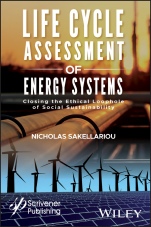
Life Cycle Assessment of Energy Systems: Closing the Ethical Loophole of Social Sustainability
ISBN 9781119418160
Autor: Nicholas Sakellariou
Wydawca: Wiley
Dostępność: 3-6 tygodni
Cena: 976,50 zł
Przed złożeniem zamówienia prosimy o kontakt mailowy celem potwierdzenia ceny.
ISBN13: |
9781119418160 |
ISBN10: |
111941816X |
Autor: |
Nicholas Sakellariou |
Oprawa: |
Hardback |
Rok Wydania: |
2019-04-05 |
Ilość stron: |
366 |
Wymiary: |
238x156 |
Tematy: |
HB |
This groundbreaking work is the most in–depth and state–of–the–art study on the Life Cycle Assessment (LCA) of energy systems, the only volume available on this critical subject.
Energy and sustainability are two of the most important and often most misunderstood subjects in our world today. As these two subjects have grown in importance over the last few decades, interest in the Life Cycle Assessment (LCA) model has grown as well, as a potentially crucial tool in understanding and striving towards sustainability in energy systems. Not just wind and solar systems, but all energy systems, need to be understood through this model.
Wind and solar power have the potential to decentralize the U.S. energy system by offering local communities electricity and economic support, depending on the scale and design of projects. Nevertheless, every energy technology potentially faces environmental costs, lay and expert opposition, and risks to public health. Engineers play a central role as designers, builders, and operators in energy systems. As they extend their expertise into electrical, mechanical and chemical fields, from fossil fuel–based systems to renewable energy systems, "sustainability" is steadily becoming one of the key criteria engineers apply in their work. This groundbreaking new study argues that engineering cultures foster sustainability by adopting assumptions and problem–solving practices as part of their identities when designing and building engineering projects.
This work examines the politics of creating, utilizing, and modifying Life Cycle Assessment (LCA) in the construction of renewable energy systems. The only volume of its kind ever written, it is a must–have for any engineer, scientist, manager, or other professional working in or interested in Life Cycle Assessment and its relation to energy systems and impact on environmental and economic sustainability.
This groundbreaking new study:
Analyzes the politics of engineering identity formation in relation to social, political, regulatory and community pressure to reshape the boundaries of LCA Offers a broad conceptual analysis of "sustainability engineering" in the U.S., outlining its history, epistemology and politics Focuses on two case studies of renewable energy system building, solar and wind project development in California and the decommissioning of wind turbine blades, to understand in more detail the politics of LCA in renewable technologies Proposes one of the first studies to focus on the politics of deciding what sustainability means in renewable energy systems Is a valuable contribution, not just to the energy industry and to LCA professionals, but also to teachers and their studentsAcknowledgements ix
Part I Engineering and Sustainability 1
1 Engineering Sustainability, Sustaining Engineering 3
2 A Critical History of Sustainability Engineering 23
3 Resisting Sustainability 77
Part II Life Cycle Analysis 111
4 When Social Values Make an Entry 113
5 Social Life Cycle Assessment (SLCA) Rationalities 149
Part III Case Studies 191
6 Life Cycle Sustainability, Renewable Energy Project Development, and the Exclusion of Local Knowledge in California s Western Antelope Valley (WAV) 193
7 Through an Ethnographic Lens: Local–Regional Politics of Utility Solar and Wind Siting in California 235
8 Epilogue 303
Bibliography 317
Appendix 1: Solar Ranch One Timeline (Siting, Permitting, Financing and Pre–Construction) 346
Appendix 2: Sample of Community Concerns as Regards to the Solar Ranch One, Alpine, Wildflower and Blue
Sky RE projects 349
Index 355
Nicholas Sakellariou, PhD, is a lecturer at California Polytechnic State University, San Luis Obispo, where he teaches engineering ethics and professional responsibilities classes. He received his doctorate in Environmental Science Policy and Management from the University of California at Berkeley in 2015. He holds postgraduate degrees from the National Technical University of Athens and Virginia Polytechnic Institute. Nicholas is a recipient of the National Academy of Engineering (NAE) Energy Ethics and Society Scholarship and was Hennebach Visiting Scholar at the Department of Humanitarian Engineering, Colorado School of Mines in 2012. His doctoral project on Energy Systems′ Life Cycle Assessment (LCA) was supported by a National Science Foundation (NSF) book grant.
Koszyk
Książek w koszyku: 0 szt.
Wartość zakupów: 0,00 zł
Informacje


Kontakt
Gambit
Centrum Oprogramowania
i Szkoleń Sp. z o.o.
Al. Pokoju 29b/22-24
31-564 Kraków
Siedziba Księgarni
ul. Kordylewskiego 1
31-542 Kraków
+48 12 410 5991
+48 12 410 5987
+48 12 410 5989
Subskrypcje
Administratorem danych osobowych jest firma Gambit COiS Sp. z o.o. Na podany adres będzie wysyłany wyłącznie biuletyn informacyjny.
Autoryzacja płatności

Informacje na temat autoryzacji płatności poprzez PayU.

© Copyright 2012: GAMBIT COiS Sp. z o.o. Wszelkie prawa zastrzeżone.
Projekt i wykonanie: Alchemia Studio Reklamy