


Wydawcy
Katalog tematyczny
- Archeologia (109)
- Ekonomia, finanse, business (13704)
- Filozofia (1445)
- Historia (3040)
- Języki i językoznawstwo (2356)
- Lifestyle, hobby i rozrywka (475)
- Medycyna (9704)
- Nauki humanistyczne (4)
- Nauki o Ziemi i środowisku (2638)
- Nauki ścisłe (20412)
- Nauki społeczne (8486)
- Nauki techniczne (13450)
- Prawo (1696)
- Publikacje informacyjne i interdyscyplinarne (1288)
- Religia i wierzenia (917)
- Technika komputerowa (4067)
- Zdrowie, relacje międzyludzkie i rozwój osobisty (657)





Informacje szczegółowe o książce
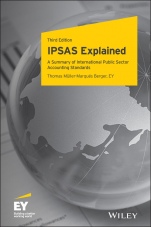
IPSAS Explained: A Summary of International Public Sector Accounting Standards
ISBN 9781119415060
Autor: Thomas Müller–Marqués Berger
Wydawca: Wiley
Dostępność: 3-6 tygodni
Cena: 313,95 zł
Przed złożeniem zamówienia prosimy o kontakt mailowy celem potwierdzenia ceny.
ISBN13: |
9781119415060 |
ISBN10: |
1119415063 |
Autor: |
Thomas Müller–Marqués Berger |
Oprawa: |
Hardback |
Rok Wydania: |
2018-03-09 |
Numer Wydania: |
3rd Edition |
Ilość stron: |
368 |
Wymiary: |
236x162 |
Tematy: |
KF |
Global diversity in the practice of public sector accounting still impedes the reduction of bureaucracy as well as the creation and application of comparable standards in terms of accountability and transparency.
The International Public Sector Accounting Standards Board (IPSASB) continues its efforts in harmonizing public sector accounting with their International Public Sector Accounting Standards??(IPSASs).
IPSAS Explained: A Summary of International Public Sector Accounting Standards, Third Edition provides an update of existing standards, including a summary of the standards issued since the second edition of IPSAS Explained such as the standard on first–time adoption of accrual basis IPSASs or the consolidation standards. In addition, the book describes the new oversight and governance structure of the IPSASB.
The book covers all pronouncements of the IPSASB as of 31 August 2017. The IPSASB′s Conceptual Framework is now covered in a separate chapter. Furthermore, the book covers recently published Exposure Drafts and Consultation Papers, including the Consultation Paper, Accounting for Revenue and Non–Exchange Expenses, as well as an outlook on the IPSASB′s current work plan.
Each IPSAS is distilled into a useful and accessible summary, and illustrated with graphs, figures and tables. Beyond that, the book focuses on current status and recent developments of public sector accounting in three regions of the world, namely Africa, Europe and Latin America. In??addition, an outlook on recent reform initiatives in these regions is provided.
IPSAS Explained aims to provide senior executives and decision–makers in the public sector with??a??thorough grounding on the IPSASs and the operations of the IPSASB.
I. Introduction: General information about IPSASs and the IPSASB 1
1 The International Public Sector Accounting Standards Board 1
1.1 General information 1
1.2 Structure and organization of IPSASB 2
1.3 Objectives of the IPSASB 4
1.4 Governance and oversight of the IPSASB 5
1.5 Members of the IPSASB 7
1.6 The strategy and work plan of the IPSASB 8
2 International accounting standards for the public sector 10
2.1 Overview of international accounting standards for the public sector 10
2.2 History of the International Public Sector Accounting Standards 14
2.3 Applicability of the International Public Sector Accounting Standards 15
2.4 General purpose financial statements 16
2.5 Authority of the International Public Sector Accounting Standards.. 17
2.6 IPSASs for accrual basis of accounting and cash basis of accounting 19
2.7 Background to the application of international accounting standards for the public sector . 19
2.8 Provisions for the transition from the cash basis to the accrual basis of accounting 21
2.9 Procedures for developing accounting standards 22
2.10 Process for reviewing and modifying IASB documents 24
2.11 Process for considering GFS reporting guidelines during development of IPSASs . 25
2.12 Current projects of the IPSASB........ 25
3 IPSASB s Conceptual Framework for General Purpose Financial Reporting by Public Sector Entities 28
3.1 Background 28
3.2 Key characteristics of the public sector 30
3.3 Role and authority of the Framework 30
3.4 Objectives and users of general purpose financial reporting 31
3.5 Qualitative characteristics 32
3.6 Reporting entity 33
3.7 Elements in the financial statements 34
3.8 Recognition in financial statements 36
3.9 Measurement of assets and liabilities in financial statements 37
3.10 Presentation in GPFRs 44
II. Costs versus benefits of implementing accrual accounting in the public sector 47
1 Cost–benefit assessments for implementation 47
2 Summary of expected benefits and positive impacts of implementing IPSASs 48
3 Expected costs of implementing IPSASs 51
4 Expected challenges of IPSAS implementation 53
III. International developments in public sector accounting 57
1 Africa 57
1.1 Current situation in Africa 57
1.2 Reform movements underway in Africa 59
1.3 Outlook . 64
2 Europe 65
2.1 Current situation in Europe 65
2.2 Reform movements underway in Europe 68
2.3 Current status of the EPSAS project 70
2.4 EPSAS framework and governance 72
3 Latin America and the Caribbean 75
3.1 Current situation in Latin America and the Caribbean 75
3.2 Reform movements underway in LAC 76
3.3 Outlook 82
IV. Overview of accrual basis IPSASs 85
IPSAS 1: Presentation of Financial Statements 85
IPSAS 2: Cash Flow Statement 92
IPSAS 3: Accounting Policies, Changes in Accounting Estimates and Errors 97
IPSAS 4: The Effects of Changes in Foreign Exchange Rates 102
IPSAS 5: Borrowing Costs 105
IPSAS 6: Consolidated and Separate Financial Statements 108
IPSAS 7: Investments in Associates 114
IPSAS 8: Interests in Joint Ventures 118
IPSAS 9: Revenue from Exchange Transactions 122
IPSAS 10: Financial Reporting in Hyperinflationary Economies 127
IPSAS 11: Construction Contracts 129
IPSAS 12: Inventories . 133
IPSAS 13: Leases 138
IPSAS 14: Events after the Reporting Date 144
IPSAS 15: Financial Instruments: Disclosure and Presentation 148
IPSAS 16: Investment Property 149
IPSAS 17: Property, Plant and Equipment 155
IPSAS 18: Segment Reporting 163
IPSAS 19: Provisions, Contingent Liabilities and Contingent Assets 166
IPSAS 20: Related Party Disclosures 172
IPSAS 21: Impairment of Non–Cash–Generating Assets 175
IPSAS 22: Disclosure of Information About the General Government Sector 180
IPSAS 23: Revenue from Non–Exchange Transactions (Taxes and Transfers) 183
IPSAS 24: Presentation of Budget Information in Financial Statements 190
IPSAS 25: Employee Benefits 195
IPSAS 26: Impairment of Cash–Generating Assets 205
IPSAS 27: Agriculture 211
IPSAS 28: Financial Instruments: Presentation 216
IPSAS 29: Financial Instruments: Recognition and Measurement 219
IPSAS 30: Financial Instruments: Disclosures 225
IPSAS 31: Intangible Assets 229
IPSAS 32: Service Concession Arrangements: Grantor 236
IPSAS 33: First–time Adoption of Accrual Basis International Public Sector Accounting Standards (IPSASs) 246
IPSAS 34: Separate Financial Statements 253
IPSAS 35: Consolidated Financial Statements 257
IPSAS 36: Investments in Associates and Joint Ventures 263
IPSAS 37: Joint Arrangements 268
IPSAS 38: Disclosure of Interests in Other Entities 272
IPSAS 39: Employee Benefits 283
IPSAS 40: Public Sector Combinations 287
Cash Basis IPSAS: Financial Reporting Under the Cash Basis of Accounting 294
V. Recommended Practice Guidelines (RPGs) 301
RPG 1: Long–Term Sustainability of an Entity s Finances 301
RPG 2: Financial Statement Discussion and Analysis 306
RPG 3: Reporting Service Performance Information 310
VI. Exposure Drafts and Consultation Papers 315
1 Exposure Drafts 315
1.1 ED 61, Amendments to Financial Reporting under the Cash Basis of Accounting (the Cash Basis IPSAS) 315
1.2 ED 62, Financial Instruments 317
2 Consultation Papers . 319
2.1 Recognition and Measurement of Social Benefits 319
2.2 Public Sector Specific Financial Instruments 324
2.3 Heritage 326
2.4 Accounting for Revenue and Non–Exchange Expenses 328 Further reading . 340
EY is a global leader in assurance, tax, transaction and advisory services. Worldwide, our more than 247,000 people are united by our shared values and an unwavering commitment to quality. We make a difference by helping our people, our clients and our wider communities achieve their potential.
Thomas Müller–Marqués Berger (Stuttgart, Germany) is a partner at Ernst & Young GmbH and serves as the firm′s Global Leader of International Public Sector Accounting.
Thomas was a member of the International Public Sector Accounting Standards Board (IPSASB) from January 2009 to December 2014. In January 2016 he became the Inaugural Chair of the IPSASB′s Consultative Advisory Group (CAG) and in that role actively participates in IPSASB meetings. In June 2017, he was elected as CAG Chair for a term of three years.
Since January 2011 he has served as Chair of the Public Sector Group of Accountancy Europe (former F??d??ration des Experts Comptables Europ??en (FEE)). In that capacity, he is a standing observer of the Eurostat EPSAS Working Group and contributes to the work of the EPSAS Cells.
Koszyk
Książek w koszyku: 0 szt.
Wartość zakupów: 0,00 zł
Informacje


Kontakt
Gambit
Centrum Oprogramowania
i Szkoleń Sp. z o.o.
Al. Pokoju 29b/22-24
31-564 Kraków
Siedziba Księgarni
ul. Kordylewskiego 1
31-542 Kraków
+48 12 410 5991
+48 12 410 5987
+48 12 410 5989
Subskrypcje
Administratorem danych osobowych jest firma Gambit COiS Sp. z o.o. Na podany adres będzie wysyłany wyłącznie biuletyn informacyjny.
Autoryzacja płatności

Informacje na temat autoryzacji płatności poprzez PayU.

© Copyright 2012: GAMBIT COiS Sp. z o.o. Wszelkie prawa zastrzeżone.
Projekt i wykonanie: Alchemia Studio Reklamy