


Wydawcy
Katalog tematyczny
- Archeologia (109)
- Ekonomia, finanse, business (13704)
- Filozofia (1445)
- Historia (3040)
- Języki i językoznawstwo (2356)
- Lifestyle, hobby i rozrywka (475)
- Medycyna (9704)
- Nauki humanistyczne (4)
- Nauki o Ziemi i środowisku (2638)
- Nauki ścisłe (20412)
- Nauki społeczne (8486)
- Nauki techniczne (13450)
- Budownictwo lądowe (1045)
- Chemia przemysłowa (2258)
- Elektronika i telekomunikacja (3287)
- Energetyka (1122)
- Inne nauki stosowane (363)
- Inżynieria biochemiczna (507)
- Inżynieria transportu (232)
- Mechanika i materiały (3316)
- Nauka o środowisku (321)
- Rolnictwo (507)
- Technika, ogólnie (475)
- Prawo (1696)
- Publikacje informacyjne i interdyscyplinarne (1288)
- Religia i wierzenia (917)
- Technika komputerowa (4067)
- Zdrowie, relacje międzyludzkie i rozwój osobisty (657)





Informacje szczegółowe o książce
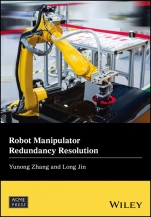
Robot Manipulator Redundancy Resolution
ISBN 9781119381235
Autor: Yunong Zhang, Long Jin
Wydawca: Wiley
Dostępność: 3-6 tygodni
Cena: 540,75 zł
Przed złożeniem zamówienia prosimy o kontakt mailowy celem potwierdzenia ceny.
ISBN13: |
9781119381235 |
ISBN10: |
1119381231 |
Autor: |
Yunong Zhang, Long Jin |
Oprawa: |
Hardback |
Rok Wydania: |
2017-11-03 |
Ilość stron: |
320 |
Wymiary: |
251x173 |
Tematy: |
TG |
Introduces a revolutionary, quadratic–programming based approach to solving long–standing problems in motion planning and control of redundant manipulators
This book describes a novel quadratic programming approach to solving redundancy resolutions problems with redundant manipulators. Known as ``QP–unified motion planning and control of redundant manipulators′′ theory, it systematically solves difficult optimization problems of inequality–constrained motion planning and control of redundant manipulators that have plagued robotics engineers and systems designers for more than a quarter century.
An example of redundancy resolution could involve a robotic limb with six joints, or degrees of freedom (DOFs), with which to position an object. As only five numbers are required to specify the position and orientation of the object, the robot can move with one remaining DOF through practically infinite poses while performing a specified task. In this case redundancy resolution refers to the process of choosing an optimal pose from among that infinite set. A critical issue in robotic systems control, the redundancy resolution problem has been widely studied for decades, and numerous solutions have been proposed. This book investigates various approaches to motion planning and control of redundant robot manipulators and describes the most successful strategy thus far developed for resolving redundancy resolution problems.
Provides a fully connected, systematic, methodological, consecutive, and easy approach to solving redundancy resolution problems Describes a new approach to the time–varying Jacobian matrix pseudoinversion, applied to the redundant–manipulator kinematic control Introduces The QP–based unification of robots′ redundancy resolution Illustrates the effectiveness of the methods presented using a large number of computer simulation results based on PUMA560, PA10, and planar robot manipulators Provides technical details for all schemes and solvers presented, for readers to adopt and customize them for specific industrial applicationsRobot Manipulator Redundancy Resolution is must–reading for advanced undergraduates and graduate students of robotics, mechatronics, mechanical engineering, tracking control, neural dynamics/neural networks, numerical algorithms, computation and optimization, simulation and modelling, analog, and digital circuits. It is also a valuable working resource for practicing robotics engineers and systems designers and industrial researchers.
List of Figures xi
List of Tables xxvii
Preface xxix
Acknowledgments xxxv
Acronyms xxxvii
PART I PSEUDOINVERSEBASED ZD APPROACH
1 Redundancy Resolution via Pseudoinverse and ZD Models 3
1.1 Introduction 4
1.2 Problem Formulation and ZD Models 6
1.3 ZD Applications to DifferentType Robot Manipulators 11
1.4 Chapter Summary 16
PART II INVERSE FREE
SIMPLE APPROACH
2 G1 Type Scheme to JVL Inverse Kinematics 19
2.1 Introduction 20
2.2 Preliminaries and Related Work 21
2.3 Scheme Formulation 24
2.4 Computer Simulations 27
2.5 Physical Experiments 28
2.6 Chapter Summary 28
3 D1G1 Type Scheme to JAL Inverse Kinematics 33
3.1 Introduction 34
3.2 Preliminaries and Related Work 34
3.3 Scheme Formulation 37
3.4 Computer Simulations 40
3.5 Chapter Summary 44
4 Z1G1 Type Scheme to JAL Inverse Kinematics 45
4.1 Introduction 46
4.2 Problem Formulation and Z1G1 Type Scheme 46
4.3 Computer Simulations 47
4.4 Physical Experiments 52
4.5 Chapter Summary 55
PART III QP APPROACH AND UNIFICATION
5 Redundancy Resolution via QP Approach and Unification 59
5.1 Introduction 60
5.2 Robotic Formulation 61
5.3 Handling Joint Physical Limits 63
5.4 Avoiding Obstacles 64
5.5 Various Performance Indices 66
5.6 Unified QP Formulation 67
5.7 Online QP Solutions 68
5.8 Computer Simulations 73
5.9 Chapter Summary 78
PART IV ILLUSTRATIVE JVL QP SCHEMES AND PERFORMANCES
6 Varying Joint Velocity Limits Handled by QP 83
6.1 Introduction 84
6.2 Preliminaries and Problem Formulation 84
6.3 94LVI Assisted QP Solution 92
6.4 Computer Simulations and Physical Experiments 93
6.5 Chapter Summary 110
7 FeedbackAided Minimum Joint Motion 111
7.1 Introduction 112
7.2 Preliminaries and Problem Formulation 114
7.3 Computer Simulations and Physical Experiments 123
7.4 Chapter Summary 138
8 QP Based Manipulator State Adjustment 139
8.1 Introduction 140
8.2 Preliminaries and Scheme Formulation 141
8.3 QP Solution and Control of Robot Manipulator 143
8.4 Computer Simulations and Comparisons 145
8.5 Physical Experiments 155
8.6 Chapter Summary 156
PART V SELFMOTION PLANNING
9 QP Based SelfMotion Planning 161
9.1 Introduction 161
9.2 Preliminaries and QP Formulation 163
9.3 LVIAPDNN Assisted QP Solution 164
9.4 PUMA560 Based Computer Simulations 165
9.5 PA10 Based Computer Simulations 177
9.6 Chapter Summary 182
10 Pseudoinverse Method and Singularities Discussed 185
10.1 Introduction 186
10.2 Preliminaries and Scheme Formulation 187
10.3 LVIAPDNN Assisted QP Solution with Discussion 189
10.4 Computer Simulations 194
10.5 Chapter Summary 206
11 SelfMotion Planning with ZIV Constraint 209
11.1 Introduction 210
11.2 Preliminaries and Scheme Formulation 211
11.3 E47 Assisted QP Solution 215
11.4 Computer Simulations and Physical Experiments 216
11.5 Chapter Summary 225
PART VI MANIPULABILITY MAXIMIZATION
12 ManipulabilityMaximizing SMP Scheme 229
12.1 Introduction 230
12.2 Scheme Formulation 231
12.3 Computer Simulations and Physical Experiments 234
12.4 Chapter Summary 238
13 TimeVarying Coefficient Aided MM Scheme 239
13.1 Introduction 240
13.2 ManipulabilityMaximization with TimeVarying Coefficient 241
13.3 Computer Simulations and Physical Experiments 248
13.4 Chapter Summary 257
PART VII ENCODER FEEDBACK AND JOYSTICK CONTROL
14 QP Based Encoder Feedback Control 261
14.1 Introduction 261
14.2 Preliminaries and Scheme Formulation 263
14.3 Computer Simulations 268
14.4 Physical Experiments 279
14.5 Chapter Summary 283
15 QP Based Joystick Control 285
15.1 Introduction 286
15.2 Preliminaries and Hardware System 286
15.3 Scheme Formulation 288
15.4 Computer Simulations and Physical Experiments 290
15.5 Chapter Summary 295
References 297
Index 315
Yunong Zhang, PhD, is a professor at the School of Information Science and Technology, Sun Yat–sen University, Guangzhou, China, and an associate editor at IEEE Transactions on Neural Networks and Learning Systems. He has researched motion planning and control of redundant manipulators and recurrent neural networks for 19 years, and he holds seven authorized patents.
Long Jin is pursuing his doctorate in Communication and Information Systems at the School of Information Science and Technology, Sun Yat–sen University, Guangzhou, China. His main research interests include robotics, neural networks, and intelligent information processing.
Koszyk
Książek w koszyku: 0 szt.
Wartość zakupów: 0,00 zł
Informacje


Kontakt
Gambit
Centrum Oprogramowania
i Szkoleń Sp. z o.o.
Al. Pokoju 29b/22-24
31-564 Kraków
Siedziba Księgarni
ul. Kordylewskiego 1
31-542 Kraków
+48 12 410 5991
+48 12 410 5987
+48 12 410 5989
Subskrypcje
Administratorem danych osobowych jest firma Gambit COiS Sp. z o.o. Na podany adres będzie wysyłany wyłącznie biuletyn informacyjny.
Autoryzacja płatności

Informacje na temat autoryzacji płatności poprzez PayU.

© Copyright 2012: GAMBIT COiS Sp. z o.o. Wszelkie prawa zastrzeżone.
Projekt i wykonanie: Alchemia Studio Reklamy