


Wydawcy
Katalog tematyczny
- Archeologia (109)
- Ekonomia, finanse, business (13704)
- Filozofia (1445)
- Historia (3040)
- Języki i językoznawstwo (2356)
- Lifestyle, hobby i rozrywka (475)
- Medycyna (9704)
- Nauki humanistyczne (4)
- Nauki o Ziemi i środowisku (2638)
- Nauki ścisłe (20412)
- Nauki społeczne (8486)
- Nauki techniczne (13450)
- Prawo (1696)
- Publikacje informacyjne i interdyscyplinarne (1288)
- Religia i wierzenia (917)
- Technika komputerowa (4067)
- Zdrowie, relacje międzyludzkie i rozwój osobisty (657)





Informacje szczegółowe o książce
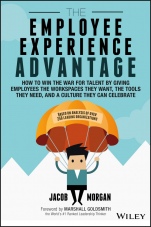
The Employee Experience Advantage: How to Win the War for Talent by Giving Employees the Workspaces they Want, the Tools they Need, and a Culture They Can Celebrate
ISBN 9781119321620
Autor: Jacob Morgan, Marshall Goldsmith
Wydawca: Wiley
Dostępność: 3-6 tygodni
Cena: 152,25 zł
Przed złożeniem zamówienia prosimy o kontakt mailowy celem potwierdzenia ceny.
ISBN13: |
9781119321620 |
ISBN10: |
111932162X |
Autor: |
Jacob Morgan, Marshall Goldsmith |
Oprawa: |
Hardback |
Rok Wydania: |
2017-05-16 |
Ilość stron: |
304 |
Wymiary: |
235x159 |
Tematy: |
KM |
PRAISE FOR THE EMPLOYEE EXPERIENCE ADVANTAGE
"To attract and retain the best talent, we must focus on creating an innovative employee experience. Jacob′s book shares case studies, research and unique models to demonstrate the incredible value of building amazing teams and transforming how work is done to positively impact business results."
Chuck Robbins, CEO, Cisco
"Companies that invest time and energy in the employee experience will crush those that don′t. This book and the research behind it proves that. Wanna win? Read this!"
John Legere, President and CEO, T–Mobile US
"Well researched, intriguing, and practical. Jacob has written a book that any business leader should read if they want to learn how to attract and retain the best and the brightest talent."
Peter Brabeck–Letmathe, Chairman of the Board of Nestlé SA, Vice– Chairman of L′Oréal and Vice–Chairman of the Foundation Board of the World Economic Forum
"An inspiring, thoughtful and practical book, filled with specific ideas and concrete examples that will make it an indispensable resource for anyone on the journey to building a purposeful, successful, and vibrant organization."
Hubert Joly, CEO of Best Buy
"Every few years a book comes along that will make you think differently about how you design your organization and treat your people. This is one of those books a must read for employers."
James R. Downing, MD, President and CEO of St. Jude Children′s Research Hospital
"Great employee experiences create great customer experiences. This book offers the data behind how and why culture, technology, and the physical workplace are so vital for success!"
Tony Hsieh, New York Times bestselling author of Delivering Happiness and CEO of Zappos.com, Inc.
Acknowledgements
We all care about experience (Introduction)
Part I: The evolution of employee experience
Chapter 1: Utility
Productivity
Engagement
Employee Experience
Chapter 2: Research on employee experience
A note about the research sponsors
Chapter 3: Employee Experience Drivers
Poor success with engagement
Engagement measures downwards
Engagement has become the new annual review
Engagement tends to look at the effect but not the cause
Engagement surveys are exhaustingly long
Engagement acts as an adrenaline shot
The War for Talent
Skills gap and talent shortage
Changing demographics
Changing face of talent competition
Psychology (and sociology)
Business turbulence
Technology
The alternative work arrangements, the gig economy, and employee tenure
People analytics
Transparency
Part II The Reason for Being and the Three Employee Experience Environments
Chapter 4: Reason for Being
Statements from leading organizations
The Three Employee Experience Environments
Chapter 5: The Physical Environment
Chooses to Bring in Friends or Visitors
What this measures
What you can do
Offers Flexibility
What this measures
What you can do
Organization s Values are Reflected
What this measures
What you can do
Leverage Multiple Workspace Options
What this measures
What you can do
Chapter 6: The technological environment
Availability to Everyone
What this measures
What you can do
Consumer Grade Technology
What this measures
What you can do
Employee Needs vs Business Requirements
What this measures
What you can do
Chapter 7: The cultural environment
Company Is Viewed Positively
What this measures
What you can do:
Everyone feels valued
Compensation and benefits
Having employee s voices heard
Organization doesn t ask
Organization asks but does nothing
Organizations asks and acknowledges
Organization asks, acknowledges, and acts
Employees being recognized for the work that they do
What this measures
What you can do
Legitimate sense of purpose
What this measures
What you can do
Employees feel like they re part of a team
What this measures:
What you can do
Believes in diversity and inclusion
What this measures:
What you can do:
Referrals come from employees
What this measures:
What you can do
Ability to learn new things and given the resources to do so and advance
Learning and development
Advancement
What this measures
What you can do
Treats employees fairly
What this measures
What you can do
Executives and managers are coaches and mentors
What this measures
What you can do
Dedicated to employee health and wellness
What this measures:
What you can do:
Chapter 8: The employee experience equation
Part II Why invest in employee experience?
Chapter 9 The Nine Types of Organizations
inExperienced
Emerging
Engaged
Empowered
Enabled
preExperiential
Experiential
Chapter 10: Employee Experience Distribution
Chapter 11: The Business Value of Employee Experience
Customer service
Innovation
Employer Attractiveness
Admiration and Respect
Brand Value
Other Lists
Chapter 12: Business Metrics and Financial Performance
The Cost of Employee Experience
Part IV: Building the experiential organization
Chapter 14: System 1 vs system 2 experiences
Chapter 16: The Employee Experience Design Loop
Respond
Analyze
Analysis reveals
Insight for your organization
Analysis reveals
Insight for your organization
Analysis reveals
Insight for your organization
Design
Launch
Participate
GE
Respond
Analyze
Design
Launch
Participate
Airbnb
Respond
Analyze
Design
Launch
Participate
Chapter 17: The Starbucks model of transparency
The employee life cycle
Chapter 18: Moments that matter or moments of impact
Specific Moments That Matter
Ongoing Moments That Matter
Created Moments That Matter
Chapter 19: Employee experience and moments that matter
Chapter 20: The Employee Experience Pyramid
Chapter 21: What About the Actual Work?
Chapter 22: Who owns the employee experience?
Initiated by the CEO and executive team
Owned by the people team
Driven by managers
Championed by everyone
A Lesson from Airbnb
Chapter 24: The Role of Employees
Chapter 25: Where to start
You have to care, really care
Define a Reason for Being
Build a people analytics function
Start small
Identify the required skills
Have executive support, typically the Chief Human Resources Officer
Train the organization
Tell stories
Build or evolve experience team
Deploy feedback tools/mechanisms
In person feedback
Feedback via technology
Implement COOL spaces, ACE technology, and CELEBRATED culture
Technological Environment
Physical Environment
Cultural Environment
Technological Environment
Consumer–grade technology
Available to everyone
Focused on employee needs
Physical Environment
Workspace options
Values reflected in the workspace
Being proud to bring in friends or visitors
Workplace flexibility and autonomy
Cultural Environment
Sense of purpose
Fair treatment
Feeling valued
Managers acting like coaches and mentors
Feeling like you re part of a team
Ability to learn something new and advance and get the resources to do so
Referring others
Diversity and inclusion
Health and wellness
Brand perception
Identify and created moments that matter (or moments of impact)
Think of your organization like a lab instead of a factory
Chapter 26: Focus on what makes your company unique
Chapter 27: Growing vs grown–up companies
What separates the Experiential Organizations from everyone else
Always improve
Think like a laboratory
Move beyond checklists
Put people at the center
Know your people
Design with, not for
Care
Focus on what makes you unique
Chapter 28: A Futurist s Perspective
Appendix
JACOB MORGAN is a best–selling author, keynote speaker, futurist, and co–founder of The Future of Work Community, a brand council of the world′s leading organizations exploring how the workplace is changing. A highly sought after expert worldwide, he is regularly featured in media publications such as Forbes, Inc., The Wall Street Journal, and many others. He has a regular podcast show on iTunes and a weekly show on Youtube where he shares inspiring and motivational videos on the future of work. He is the bestselling author of The Future of Work and The Collaborative Organization. Jacob lives in Alameda, California with his wife, daughter, and two dogs. To learn more about Jacob and get access to his content visit: TheFutureOrganization.com or email him: Jacob@TheFutureOrganization.com
Koszyk
Książek w koszyku: 0 szt.
Wartość zakupów: 0,00 zł
Informacje


Kontakt
Gambit
Centrum Oprogramowania
i Szkoleń Sp. z o.o.
Al. Pokoju 29b/22-24
31-564 Kraków
Siedziba Księgarni
ul. Kordylewskiego 1
31-542 Kraków
+48 12 410 5991
+48 12 410 5987
+48 12 410 5989
Subskrypcje
Administratorem danych osobowych jest firma Gambit COiS Sp. z o.o. Na podany adres będzie wysyłany wyłącznie biuletyn informacyjny.
Autoryzacja płatności

Informacje na temat autoryzacji płatności poprzez PayU.

© Copyright 2012: GAMBIT COiS Sp. z o.o. Wszelkie prawa zastrzeżone.
Projekt i wykonanie: Alchemia Studio Reklamy