


Wydawcy
Katalog tematyczny
- Archeologia (109)
- Ekonomia, finanse, business (13704)
- Filozofia (1445)
- Historia (3040)
- Języki i językoznawstwo (2356)
- Lifestyle, hobby i rozrywka (475)
- Medycyna (9704)
- Nauki humanistyczne (4)
- Nauki o Ziemi i środowisku (2638)
- Nauki ścisłe (20412)
- Nauki społeczne (8486)
- Nauki techniczne (13450)
- Prawo (1696)
- Publikacje informacyjne i interdyscyplinarne (1288)
- Religia i wierzenia (917)
- Technika komputerowa (4067)
- Zdrowie, relacje międzyludzkie i rozwój osobisty (657)





Informacje szczegółowe o książce
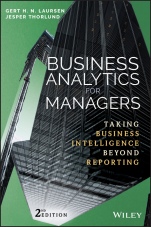
Business Analytics for Managers: Taking Business Intelligence Beyond Reporting
ISBN 9781119298588
Autor: Gert H. N. Laursen, Jesper Thorlund
Wydawca: Wiley
Dostępność: 3-6 tygodni
Cena: 253,05 zł
Przed złożeniem zamówienia prosimy o kontakt mailowy celem potwierdzenia ceny.
ISBN13: |
9781119298588 |
ISBN10: |
111929858X |
Autor: |
Gert H. N. Laursen, Jesper Thorlund |
Oprawa: |
Hardback |
Rok Wydania: |
2016-12-27 |
Numer Wydania: |
2nd Edition |
Ilość stron: |
288 |
Wymiary: |
236x163 |
Tematy: |
KM |
THE NEW WAYS BIG DATA CAN BE PROCESSED AND APPLIED TO DRIVE PROFITS
Business Analytics for Managers, Second Edition offers up–to–date guidance and fresh applications of its popular framework to enable businesses to gain even more insight from their big data and stay way ahead of the competition with predictive models. Fully revised with comprehensive material on the technologies and practices revolutionizing the field, this single resource is all you need to create and practice high–level business analytics (BA) at the forward edge of innovation. Focused on how BA can optimize business planning, this everyday guidebook gives you a convenient way to:
See how open–source software like Hadoop can open limitless opportunities for data storage and applications Dig into all the innovative ways companies are successfully using social media for both analysis and as a channel to apply the conclusions Act confidently with authoritative explanations of the latest best practices for cloud technologies, data security, and moreBefore you decide you know how BA works, look at Business Analytics for Managers, Second Edition and see all the ways it can work for you.
Foreword
Introduction
What Is the Scope of BA? Information Systems Not Technical Solutions
Purpose and Audience
Organization of Chapters
Why the Term Business Analytics?
Chapter 1: The Business Analytics Model
Overview of the Business Analytics Model
Strategy Creation
Business Processes and Information Use
Types of Reporting and Analytical Processes
Data Warehouse
Data Sources: IT Operations and Development
Deployment of the Ba Model
Case Study: How to Make an Information Strategy for a Radio Station
Summary
Chapter 2: Business Analytics at the Strategic Level
Link between Strategy and the Deployment of BA
Strategy and BA: Four Scenarios
Scenario 1: No Formal Link between Strategy and BA
Scenario 2: BA Supports Strategy at a Functional Level
Scenario 3: Dialogue between the Strategy and the BA Functions
Scenario 4: Information as a Strategic Resource
Which Information Do We Prioritize?
The Product and Innovation Perspective
Customer Relations Perspective
The Operational Excellence Perspective
Summary
Chapter 3: Development and Deployment of Information at the Functional Level
Case Study: A Trip to the Summerhouse
Speci cation of Requirements
Your Technical Support
And Now Off We Go to the Summerhouse
Your Lead and Lag information
More about Lead and Lag Information
Establishing Business Processes with the Rockart Model
Example: Establishing New Business Processes with the Rockart Model
Level 1: Identifying the Objectives
Level 2: Identifying an Operational Strategy
Level 3: Identifying the Critical Success Factors
Level 4: Identifying Lead and Lag Information
Optimizing Existing Business Processes
Example: Deploying Performance Management to Optimize Existing Processes
Concept of Performance Management
Which Process Should You Start With?
CRM Activities
Campaign Management
Product Development
Web Log Analyses
Pricing
Human Resource Development
CPM
Finance
Inventory Management
Supply Chain Management
Lean
A Catalogue of Ideas with KPIs for the Company s Different Functions
Summary
Chapter 4: Business Analytics at the Analytical Level
Data, Information, and Knowledge
Analyst s Role in the BA Model
Three Requirements the Analyst Must Meet
Business Competencies
Tool Kit Must Be in Order (Method Competencies)
Technical Understanding (Data Competencies)
Required Competencies for the Analyst
Analytical Methods (Information Domains)
How to Select the Analytical Method
The Three Imperatives
Descriptive Statistical Methods, Lists, and Reports
HYPOTHESIS–DRIVEN METHODS
Tests with Several Input Variables
Data Mining with Target Variables
Data Mining Algorithms
Explorative Methods
Data Reduction
Cluster Analysis
Cross–Sell Models
Up–Sell Models
Business Requirements
De nition of the Overall Problem
De nition of Delivery
De nition of Content
Summary
Chapter 5: Business Analytics at the Data Warehouse Level
Why a Data Warehouse?
Architecture and Processes in a Data Warehouse
Selection of Certain Columns to Be Loaded
Staging Area and Operational Data Stores
Causes and Effects of Poor Data Quality
The Data Warehouse: Functions, Components, and Examples
Alternative Ways of Storing Data
Business Analytics Portal: Functions and Examples
Tips and Techniques in Data Warehousing
Master Data Management
Service–Oriented Architecture
How Should You Access Your Data?
Access to BA Portals
Access to Data Mart Areas
Access to Data Warehouse Areas
Access to Source Systems
Summary
Chapter 6: The Company s Collection of Source Data
What Are Source Systems, and What Can They Be Used For?
Which Information Is Best to Use for Which Task?
When There Is More Than One Way to Get the Job Done
When the Quality of Source Data Fails
Summary
Chapter 7: Structuring of a Business Analytics Competency Center
What Is a Business Analytics Competency Center?
Why Set up a Business Analytics Competency Center?
Tasks and Competencies
Establishing an Information Wheel
Creating Synergies between Information Wheels
Educating Users
Prioritizing New BA Initiatives
Competencies
Centralized or Decentralized Organization
Strategy and Performance
When the Analysts Reports to the IT Department
When Should a BACC Be Established?
Applying the analytical factory approach
Summary
Chapter 8: Assessment and Prioritization of BA Projects
Is It a Strategic Project or Not?
Uncovering the Value Creation of the Project
When Projects Run Over Several Years
When the Uncertainty Is Too Big
The Descriptive Part of the Cost/Bene t Analysis for the Business Case
The Cost/Bene t Analysis Used for the Business Case
Projects as Part of the Bigger Picture
Case Study on How to Make a Information Strategy Roadmap
Summary
Chapter 9: Business Analytics in the Future
About the Authors
Index
GERT H. N. LAURSEN is a business consultant who builds analytical organizations around the world. He also builds disruptive business strategies for global market leaders and humanitarian organizations. He has an MBA in digital strategy, a master′s degree in marketing, and was named a global thought leader by IBM and SAS Institute.
JESPER THORLUND is a business intelligence consultant and frequent speaker on business intelligence, business analytics, and microeconomics throughout Europe.
Koszyk
Książek w koszyku: 0 szt.
Wartość zakupów: 0,00 zł
Informacje


Kontakt
Gambit
Centrum Oprogramowania
i Szkoleń Sp. z o.o.
Al. Pokoju 29b/22-24
31-564 Kraków
Siedziba Księgarni
ul. Kordylewskiego 1
31-542 Kraków
+48 12 410 5991
+48 12 410 5987
+48 12 410 5989
Subskrypcje
Administratorem danych osobowych jest firma Gambit COiS Sp. z o.o. Na podany adres będzie wysyłany wyłącznie biuletyn informacyjny.
Autoryzacja płatności

Informacje na temat autoryzacji płatności poprzez PayU.

© Copyright 2012: GAMBIT COiS Sp. z o.o. Wszelkie prawa zastrzeżone.
Projekt i wykonanie: Alchemia Studio Reklamy