


Wydawcy
Katalog tematyczny
- Archeologia (109)
- Ekonomia, finanse, business (13704)
- Filozofia (1445)
- Historia (3040)
- Języki i językoznawstwo (2356)
- Lifestyle, hobby i rozrywka (475)
- Medycyna (9704)
- Nauki humanistyczne (4)
- Nauki o Ziemi i środowisku (2638)
- Nauki ścisłe (20412)
- Nauki społeczne (8486)
- Nauki techniczne (13450)
- Prawo (1696)
- Publikacje informacyjne i interdyscyplinarne (1288)
- Religia i wierzenia (917)
- Technika komputerowa (4067)
- Zdrowie, relacje międzyludzkie i rozwój osobisty (657)





Informacje szczegółowe o książce
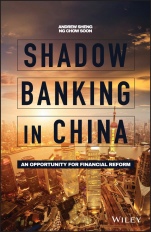
Shadow Banking in China: An Opportunity for Financial Reform
ISBN 9781119266327
Autor: Andrew Sheng, Ng Chow Soon
Wydawca: Wiley
Dostępność: 3-6 tygodni
Cena: 205,80 zł
Przed złożeniem zamówienia prosimy o kontakt mailowy celem potwierdzenia ceny.
ISBN13: |
9781119266327 |
ISBN10: |
1119266327 |
Autor: |
Andrew Sheng, Ng Chow Soon |
Oprawa: |
Hardback |
Rok Wydania: |
2016-06-10 |
Ilość stron: |
288 |
Wymiary: |
235x151 |
Tematy: |
KF |
THE AUTHORITATIVE GUIDE TO THE RISE OF CHINESE SHADOW BANKING AND ITS SYSTEMIC IMPLICATIONS
"The Chinese economy has experienced explosive growth in debt since 2009: total gross debt reached 282% of GDP in 2014, comparable to the developed economies. Particularly striking was the increase in non–financial sector corporate credit. Non–bank lending played a significant role in that build–up. In this important volume, the authors bring this complex and opaque system into the light and put it under a magnifying glass. They identify the opportunities for expanded equity and debt funding of businesses that will drive growth in the rapidly evolving Chinese economic structure. But they also highlight the risks of improperly priced risk, poor credit cultures, implicit guarantees relying on the state balance sheet, and lax regulation. It is essential reading for those seeking to understand the evolving structure of the financial system in China and the key reforms that are urgently required at this stage."
A. Michael Spence, Nobel laureate; Professor of economics, New York University Leonard N. Stern School of Business
"How serious is China′s shadow banking issue? What Chinese characteristics does it have? Will it trigger the next financial crisis in China or globally? What policy measures should be adopted to address the risks in the shadow banking system? These are among a few of the most important questions examined in this book entitled Shadow Banking in China: An Opportunity for Financial Reform, edited by Andrew Sheng and Ng Chow Soon. This important book not only puts recent developments in China′s shadow banking sector into proper perspective and context and identifies key Chinese characteristics underpinning the rapid growth of Chinese shadow banks, but also offers fresh insights on the interconnectivities and vulnerabilities at the sectoral level. It also provides useful policy recommendations at the macro and structural levels. The analyses are solid and comprehensive, and the conclusions are insightful and useful. I strongly recommend this top quality book to any reader interested in gaining a deeper understanding of the key risks rooted in China′s shadow banking and how to sort them out, from the academic, policy and investment perspectives."
Haizhou Huang, Managing Director, China International Capital Corporation
"Andrew Sheng, an experienced regulator with a complex systems view of finance, leads a team that investigates and sheds light for both Western and Eastern thinkers on the shadows (banks) of the Chinese financial markets. Read, learn, and marvel at how Sheng′s creative mind, rigorous observation, and deep insights rise to the challenge to diagnose the fault lines of financial instability and to prescribe remedies to manage the dangers of these mysterious financial innovations in China."
Robert Johnson, President, Institute for New Economic Thinking (INET); Senior Fellow and Director, Franklin and Eleanor Roosevelt Institute
"Rapid financial and technological innovation is entangling regulators everywhere in an ongoing game of ′whack–a–mole′ as they struggle to keep pace with burgeoning developments in shadow banking. Nowhere is this more true than in China, and nowhere are the information flows more opaque. Sheng and Ng′s study is a must for those trying to seek truth from facts."
Simon Ogus, Founder and CEO, DSG Asia Limited
Foreword
Acknowledgments
About the Editors
Executive Summary
Key Findings and Policy Recommendations
Chapter 1: Introduction
Andrew Sheng
Chapter 2: Shadow Banking in the Global Context
Cathleen Yi Tin
2.1. Introduction
2.2. What is Shadow Banking?
2.3. Size of the Global Shadow Banking Industry
2.4. Factors for the Rise in Global Shadow Banking
2.5. Interconnectedness Between Shadow Banks and the Formal Banking Sector
2.6. The Nature of Shadow Banking Differs across Countries
References
Chapter 3: Shadow Banking within the National Balance Sheet
Jodie Hu and Andrew Sheng
3.1. Introduction
3.2. Overview of Chinese National Balance Sheet
3.3. Who Owes What in China s National Balance Sheet?
3.4. Zooming in on China s Sectoral Balance Sheets
3.5. Shadow Banks within the National Balance Sheet
3.6. Evaluation of National Balance Sheet Approach
3.7. Basic Analytical CONCLUSIONS and Policy Recommendations from the NBS Approach
References
Chapter 4: Shadow Banking with Chinese Characteristics
Wang Yao
4.1. Introduction
4.2. Nature and Scale of Shadow Banking in China
4.3. Factors Spurring Growth of Shadow Banks in China
4.4. Different Channels of China s Shadow Banking
4.5. Inter–connectivity between Shadow Banking and Official Banking System
4.6. Shadow Banking s Impact and Regulatory Implications
4.7. Conclusion
References
Chapter 5: Inherent Risks in Chinese Shadow Banking
Wang Yao and Jodie Hu
5.1. Introduction
5.2. Getting to the Heart of the Problem the Underlying Asset Quality
5.3. Non–financial Corporate Sector (excluding Real Estate Companies)
5.4. Real Estate Companies
5.5. Local Government Financing Platforms (LGFPs)
5.6. Non–performing Assets in the Shadow Banking System
References
Chapter 6: Impact of Technology on China s Financial System
Li Sai Yau and Cathleen Yi Tin
6.1. Introduction
6.2. The Rise of e–commerce in China and its Implications
6.3. The Rise of e–finance in China and its Implications
6.4. The Role of Technological Innovation in China s Transformation
6.5. Re–thinking Conventional Financial Regulation and Development
6.6. Implications for the Financial Services Industry
6.7. Conclusion
References
Chapter 7: Implications for Reform Agenda
Andrew Sheng
7.1. Introduction
7.2. On–going Shadow Banking Reforms in China
7.3. Financial Reforms Looking Beyond Shadow Banking
7.4. Immediate–term Reform Priorities Diagnosis and Damage Control
7.5. Loss Allocation Medium–Term Measures
7.6. Mapping the Future of China s Financial System: A Potential Long–term Blueprint
7.7. Conclusion and Suggestions for Future Research
References
Chapter 8: Conclusion
Andrew Sheng
8.1. Introduction
8.2. Shadow Banking with Chinese Characteristics
8.3. Unique Opportunity for Reform
8.4. Reform Agenda Going Forward
8.5. Immediate–term Reform Priorities
8.6. Long–term Reforms: A Financial Blueprint
Appendix A: Evolution of International Financial Crises – Lessons for China
Li Sai Yau
A.1. Introduction
A.2. Comparing the Evolution of International Financial Crises
A.3. The Subprime Mortgage and ESDC Crises: Lessons for China
A.4. International Comparison of Nonperforming Loans (NPLs)
A.5. Conclusion
References
Index
ANDREW SHENG is chief adviser to the China Banking Regulatory Commission, former chairman of the Securities and Futures Commission, Hong Kong and deputy chief executive in HKMA.
NG CHOW SOON is the former director of the governor′s office, Bank Negara Malaysia and a Harvard Mason Fellow.
Koszyk
Książek w koszyku: 0 szt.
Wartość zakupów: 0,00 zł
Informacje


Kontakt
Gambit
Centrum Oprogramowania
i Szkoleń Sp. z o.o.
Al. Pokoju 29b/22-24
31-564 Kraków
Siedziba Księgarni
ul. Kordylewskiego 1
31-542 Kraków
+48 12 410 5991
+48 12 410 5987
+48 12 410 5989
Subskrypcje
Administratorem danych osobowych jest firma Gambit COiS Sp. z o.o. Na podany adres będzie wysyłany wyłącznie biuletyn informacyjny.
Autoryzacja płatności

Informacje na temat autoryzacji płatności poprzez PayU.

© Copyright 2012: GAMBIT COiS Sp. z o.o. Wszelkie prawa zastrzeżone.
Projekt i wykonanie: Alchemia Studio Reklamy