


Wydawcy
Katalog tematyczny
- Archeologia (109)
- Ekonomia, finanse, business (13704)
- Filozofia (1445)
- Historia (3040)
- Języki i językoznawstwo (2356)
- Lifestyle, hobby i rozrywka (475)
- Medycyna (9704)
- Nauki humanistyczne (4)
- Nauki o Ziemi i środowisku (2638)
- Nauki ścisłe (20412)
- Astronomia (294)
- Biologia (5119)
- Chemia (6540)
- Chemia analityczna (361)
- Chemia fizyczna (346)
- Chemia nieorganiczna (137)
- Chemia organiczna (535)
- Krystalografia (27)
- Minerologia (46)
- Fizyka (3309)
- Matematyka (4574)
- Nauki ścisłe, ogólnie (503)
- Nauki społeczne (8486)
- Nauki techniczne (13450)
- Prawo (1696)
- Publikacje informacyjne i interdyscyplinarne (1288)
- Religia i wierzenia (917)
- Technika komputerowa (4067)
- Zdrowie, relacje międzyludzkie i rozwój osobisty (657)





Informacje szczegółowe o książce
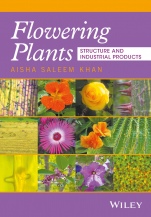
Flowering Plants: Structure and Industrial Products
ISBN 9781119262770
Autor: Aisha S. Khan
Wydawca: Wiley
Dostępność: 3-6 tygodni
Cena: 774,90 zł
Przed złożeniem zamówienia prosimy o kontakt mailowy celem potwierdzenia ceny.
ISBN13: |
9781119262770 |
ISBN10: |
1119262771 |
Autor: |
Aisha S. Khan |
Oprawa: |
Hardback |
Rok Wydania: |
2017-03-31 |
Ilość stron: |
344 |
Wymiary: |
250x174 |
Tematy: |
PN |
Angiosperms, or flowering plants, are one of the most diverse plant groups on the planet, and they offer tremendous resources for a broad range of industries. Flowering Plants examines the anatomy and morphology of angiosperms with a focus on relating their metabolic activities to products for the pharmaceutical, food, cosmetic, and textile industries.
This up–to–date reference provides a thorough understanding of plant structure and chemical and molecular processes found in angiosperms. It covers many important topics on applied botany, and therefore, can also be used as a textbook for students of related fields. It details the latest research in the field, along with areas in need of further study, for students, researchers, and professionals working in industry. The book takes advantage of technological innovations to showcase a range of advanced techniques for studying plant structure and metabolites, such as cryo–electron microscopy, ultramicroscopy, x–ray crystallography, spectroscopy, and chromatography. Filled with helpful illustrations, diagrams, and flowcharts to aid comprehension, Flowering Plants offers readers the morphological, anatomic, and molecular knowledge about angiosperms they need for a range of industrial applications.
Chapter 1 An introduction to flowering plants: Monocots and Eudicots
1.1 An introduction to major groups of angiosperms: Monocot, eudicots and basal angiosperms
1.2 Plant Cell: Revisions and few updates
1.2.1. A cellulosic cell wall is crucial for all plant cells
1.2.2 Plant plasma membrane allows molecules to enter only through their respective channels
1.2.3 Mitochondria convert energy of glucose in ATP and in reducing powers
1.2.4 Plant vacuoles store water, pigments and compounds of defensive nature
1.2.5 Golgi apparatus
1.2.6 Nucleus encodes genes required for enzymes forming products of commercial applications
1.2.7 Plastids are sites of sugar and fragrance formation
1.2.8 Tannosomes are chloroplast–derived organelles which contain polymers of tannins
1.2.9 Ribosomes
1.2.10 Endoplasmic reticulum
1.2.11Peroxisomes
1.2.12 Oleosomes
1.3 Intracellular and extracellular communications are crucial for cells metabolic demands
1.4 Future perspectives
References
Further reading
Chapter 2 An introduction to angiosperms natural products
2.1 Introduction
2.2 Glucose serves as a precursor for formation of primary and secondary metabolites in plants
2.3 Classification of natural products of angiosperms
2.3.1 Alkaloids provide defense against herbivory due to their bitter taste in plant organs
2.3.2 Flavonoids are important pollination pigments and increase plants demands in floriculture industries
2.3.3 Glycosides are sugar containing natural products
2.3.4 Terpenoids make fragrances and used in perfume and cosmetic products
2.4 Techniques for isolation of secondary metabolites with future perspectives
References
Further reading
Chapter 3 Plant tissues organization of angiosperms
3.1 Introduction to plant tissues
3.2 Diversity of plant cell
3.3 Parenchyma (Ground tissue): Introduction & Distribution within plant body
3.4 Collenchyma: Introduction & Distribution
3.5 Sclerenchyma (Mechanical tissue): Introduction
3.5.1 Fibers types in plants
3.5.2 Economically important fibers
3.5.3 Making of fabrics from corn fibers
3.5.4 Diversity in sclereids
3.6 Vascular tissues: Xylem & Phloem
3.6.1 Xylem (Water–conducting tissue)
3.6.2 Why there is a need of water transport?
3.6.3 Leaf morphology and venation
3.6.4 Tracheary elements: Tracheids and Vessels
3.6.5 Why tracheids and vessels are water transporting cells?
3.6.6 Significance of lignification for plants
3.6.7 Genetic modification of lignin for bioenergy crops
3.6.8 Pits and pit membranes
3.6.9 Proteomic analysis of xylem sap provides evidence of protein translocation through xylem sap
3.6.10 Water channels in plant membranes
3.7 Phloem (Sugar–conducting tissue): Introduction
3.7.1 Significance of callose deposition
3.7.2 Companion cells
3.7.3 Evaluation of phloem sap through modern techniques
3.8 Future perspectives
References
Further reading
Chapter 4 Floral Cell Biology and Diversity in floral cells
4.1 Introduction to angiosperm flowers: monocots and eudicots
4.2 Morphological & anatomical characteristics of eudicot flower
4.2.1. Sepals morphology and anatomy
4.2.2 Petals morphology in response to their pollinators
4.2.3. Epidermal cell of petals and elaiophores
4.2.4 Anatomical characteristics of petals of eudicots
4.2.5 Morphological and anatomical features of carpels
4.2.6 Ovule anatomy
4.2.7 Stamens: Morphology and Anatomy
4.2.8 Vascular supply to stamens
4.2.9 Stamen anatomy and pollen development
4.3 Morphology of monocots flowers
4.3.1 An account of economic importance of Zea mays (corn)
4.4 Cell membranes and vacuolar channels and transporters within floral cells
4.5 Future perspectives
References
Further reading
Chapter 5 Signaling during sexual reproduction in angiosperms
5.1Introduction
5.2 Angiosperms show diversity in their sporophytic and gametophytic generations
5.3 Angiosperms spend most part of their lives as sporophytes and produce gametophytes for a shorter period of time
5.4 Steps from pollination to fertilization
5.4.1 Stigma of angiosperms may be dry or wet
5.4.2 Pollen landing on stigma (rehydration)
5.4.3 Style anatomy and types in angiosperms
5.4.4 Growth of pollen tube
5.4.5 Physiological activities within pollen tube
5.4.6 Cysteine rich proteins (CRP) facilitate pollen and pistil interaction
5.4.7 Steps involved in fertilization
5.4.8 Sperm cell in angiosperms
5.4.9 Molecular basis of reproduction
5.4.10 Temperature affects pollination
5.5 Future perspectives
References
Further reading
Chapter 6 Physiologically active metabolic pathways in floral cells
6.1 Introduction to floral physiology
6.2 Glucose fates in floral cells differ according to their metabolic demands
6.3 PPP provides floral cells with their nucleotides and important pigments
6.4 ATP and NADPH produced through photochemical reactions energize sugar formation in stroma of chloroplasts
6.5 Floral photosynthesis contributes to sugar requirements of floral whorls
6.5.1 Presence of stomata and chloroplasts in flowers facilitate sugar formation
6.5.2 Sepals of angiosperms have developed many adaptations for foliar photosynthesis
6.5.3 Photosynthesis in anthers is required for metabolic demands of developing pollen grains
6.5.4 Chloroplasts in exocarp of fruits are modified and photosynthetic
6.6 Future perspectives
References
Further reading
Chapter 7 Anthocyanins: Accumulation in plants and role in industries
7.1 Anthocyanins accumulation in different organs is indicative of their multiple roles
7.2 Anthocyanidin biosynthesis takes place in cytosol of cells, however they are accumulated in vacuoles
7.3 Anthocyanins exist in modified forms in cells
7.4 Transport to vacuoles
7.5 Anthocyanins role is dependent upon their location and accumulation
7.5.1 Accumulation as defensive compounds in vegetative organs
7.5.2 Accumulation and role in leaves
7.5.3 Anthocyanins are involved in senescence of leaves
7.5.4 Defensive pigments against insects
7.5.5 Protection of plants against UV light
7.5.6 Role in scavenging reactive molecular O2
7.5.7 Role as stress indicators
7.5.8 Anthocyanins are crucial for pollination and seed dispersal in many eudicots
7.5.9 Accumulation in fruits
7.6 Industrial applications
7.7 Future perspectives
References
Further reading
Chapter 8 Carotenoids: Introduction, Classification and Industrial uses
8.1 Carotenoids are vital for leaves as light absorbing pigments and for flowers to attract their pollinators
8.2 Oxygenated and de–oxygenated carotenoids are major carotenoids in angiosperms
8.3 Carotenoid biosynthesis is under the control of transcriptional regulation
8.4 Carotenoids are localized in plastids in form of crystals and plastoglobuli
8.5 Carotenoids accumulation takes place in chromoplasts of autumn leaves of eudicots
8.6 Carotenoids pigments in flowers and pollens
8.7 Lutein are important antenna and photoprotective pigments in thylakoids of chloroplasts
8.8 Capsaicin is a carotenoid derivative which causes hotness of Capsicum spp.
8.9 Carotenoid accumulation in epidermal cells of many fruits is due to conversion of chloroplast into chromoplasts
8.10 Transcriptional regulation of carotenoids in fruits
8.11 Application in food, pharmaceutical, cosmetic, textile and nutracuetical industries
8.12 Future challenges
References
Further reading
Chapter 9 Alkaloids Biosynthesis, Translocation and Industrial products
9.1 Alkaloids are nitrogen containing natural products which provide defense against herbivores
9.1.2 An account of historical uses of alkaloids
9.1.3 Alkaloids are psychoactive and act as neurotransmitters
9.2 Alkaloids are synthesized in cytosol and accumulated in vacuoles as they are toxic for plant cells
9.2.1 Monoterpenoids indole alkaloids (MIA) derivatives are synthesized from tryptophan
9.2.2 Tropane alkaloids are tyrosine derivatives
9.3 Purine nucleotides serve as precursors of caffeine synthesis
9.4 History of discovery of caffeine
9.4.1 Caffeine is a popular stimulant alkaloid in coffee and teas
9.4.2 Supercritical CO2 method is efficient for producing decaffeinated coffee
9.4.3 Teas are representative of culture, tradition and civilization
9.4.4 Black, Green and Oolong teas
9.5 Theobromine is an alkaloid widely used in chocolates and teas
9.5.1 Chocolate formation: From cacao beans to markets
9.6 Clinical applications of alkaloids are due to their mode of action
9.7 Development of physiologically functional food containing alkaloids as food vaccines
9.7.1 Development of transgenic caffeine resistant plants
9.7.2 Use of caffeine in cosmetic products
9.7.3 Alkaloids in medicinal products
9.7.4 Future challenges for agriculture and cosmetic industries
References
Further reading
Chapter 10 Nectaries, carnations and ornamental hybrid flowers in floriculture
10.1 Introduction
10.2 Nectaries are nectar synthesizing structures of plants
10.2.1 Nectar guides
10.2.2 Nectar secretion and important metabolites
10.2.3 Molecular basis of nectar secretion
10.3 Ornamental transgenic plants in floriculture
10.3.1 Development of transgenic roses
10.3.2 Ornamental hybrids in floriculture
10.4 Dianthus spp. are major carnations in floriculture
10.4.1 Economic importance of carnations
10.4.2 Genetically modified carnations and ornamental plants
10.5 Future perspectives in floriculture industries
References
Further reading
Chapter 11 Floral Essential Oils: Biosynthesis, Classification and Commercial applications
11.1 Fragrance formation is a unique and genetically controlled characteristic of many angiosperms
11.2 Number of carbon and hydrogens atoms in isoprene units determine their roles in plants
11.2.1. Two isoprene units (monoterpenes) make volatile atoms responsible for different fragrances
11.2.2 Formation of monoterpenoids like menthol is a part of chemical defense of mint and other plants
11.2.3 Secretory structures and mechanisms involved in release of essential oils
11.2.4 Linalool is a defensive and a volatile attractant
11.2.5 Geraniol: A volatile attractant and defensive essential oil in cosmetic and medicinal products
11.3 Many terpenoids are insecticidal and act as allelochemicals
11.4 Sesquiterpenes are defensive terpenoids of many plants
11.5 Diterpenoids are formed by four isoprenoid units and represent important phytohormones
11.6 Terpenoid biosynthesis in plants proceeds in two different cellular compartments
11.6.1 Vanillin biosynthesis
11.7 Economically important terpenoids
11.7.1 Bio–engineered terpenoids
11.8 Future challenges
References
Further reading
Chapter 12 Aromatic molecules from flowers in perfume and cosmetic industries
12.1 Introduction and overview of perfume and cosmetic industries
12.2 History of perfume making
12.3 Aromatic flowers, leaves and woods used in perfumery
12.4 Traditional and modern techniques of distillation and isolation of fragrant molecules
12.4.1 Collection & extraction of essential oils are prerequisite steps in traditional perfume making
12.4.2 Enfleurage & maceration through grease and fats
12.4.3 Solvent extraction convert aromatic molecules in concrete and absolute
12.4.4 Eau de parfum, Eau de toilette and Eau de cologne
12.4.5 Perfume notes
12.5 CO2 as a solvent to extract fragrant molecules in super–critical CO2 fluid extraction method
12.6 Modern perfume making machines
12.7 Aromatherapy: Relaxation through aromatic molecules
12.8 Cosmetic industry: An overview and history
12.9 Popular plants and their products in cosmetic products
12.10 Anti–aging properties some plants and their applications in cosmetic products
12.11 Bioengineered aromatic bacteria with lemon and rose fragrances
12.12 Future considerations
References
Further reading
Aisha Saleem Khan is Associate Professor in the Department of Biological Sciences at Forman Christian College, Pakistan. She received her Ph.D. from the University of Punjab and held a post–doctoral research post at Miami University, Ohio. Her research, which focuses on plant anatomy, electron microscopy, and heavy metal toxicity, has been published in national and international publications. Aisha has over 12 years of teaching experience in plant systematics and applied botany.
Koszyk
Książek w koszyku: 0 szt.
Wartość zakupów: 0,00 zł
Informacje


Kontakt
Gambit
Centrum Oprogramowania
i Szkoleń Sp. z o.o.
Al. Pokoju 29b/22-24
31-564 Kraków
Siedziba Księgarni
ul. Kordylewskiego 1
31-542 Kraków
+48 12 410 5991
+48 12 410 5987
+48 12 410 5989
Subskrypcje
Administratorem danych osobowych jest firma Gambit COiS Sp. z o.o. Na podany adres będzie wysyłany wyłącznie biuletyn informacyjny.
Autoryzacja płatności

Informacje na temat autoryzacji płatności poprzez PayU.

© Copyright 2012: GAMBIT COiS Sp. z o.o. Wszelkie prawa zastrzeżone.
Projekt i wykonanie: Alchemia Studio Reklamy