


Wydawcy
Katalog tematyczny
- Archeologia (109)
- Ekonomia, finanse, business (13704)
- Filozofia (1445)
- Historia (3040)
- Języki i językoznawstwo (2356)
- Lifestyle, hobby i rozrywka (475)
- Medycyna (9704)
- Nauki humanistyczne (4)
- Nauki o Ziemi i środowisku (2638)
- Nauki ścisłe (20412)
- Nauki społeczne (8486)
- Edukacja (229)
- Kryminologia, opieka spełeczna (284)
- Obronność (10)
- Polityka (1389)
- Psychologia (777)
- Socjologia (410)
- Społeczeństwo i kultura (187)
- Nauki techniczne (13450)
- Prawo (1696)
- Publikacje informacyjne i interdyscyplinarne (1288)
- Religia i wierzenia (917)
- Technika komputerowa (4067)
- Zdrowie, relacje międzyludzkie i rozwój osobisty (657)





Informacje szczegółowe o książce
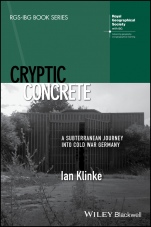
Cryptic Concrete: A Subterranean Journey Into Cold War Germany
ISBN 9781119261117
Autor: Ian Klinke
Wydawca: Wiley
Dostępność: 3-6 tygodni
Cena: 178,50 zł
Przed złożeniem zamówienia prosimy o kontakt mailowy celem potwierdzenia ceny.
ISBN13: |
9781119261117 |
ISBN10: |
1119261112 |
Autor: |
Ian Klinke |
Oprawa: |
Paperback |
Rok Wydania: |
2018-04-27 |
Ilość stron: |
192 |
Wymiary: |
229x159 |
Tematy: |
JP |
′A serendipitous childhood discovery led the author on a personal and professional odyssey. Klinke immerses us in the zeitgeist of Cold War West Germany a partitioned country created by post–war rivalries and foreign occupation. By investigating its subterranean qualities, he reveals a world far more complex and contradictory than accounts preoccupied with surface–level check–points and walls. Highly recommended.′
Klaus Dodds, Department of Geography, Royal Holloway, University of London
′Cryptic Concrete provides a fascinating and original exploration of how the distinctive German experiences of the Cold War and the aftermath of fascism can be read through their inscription in the architectural and landscape remains of atomic missile sites and nuclear bunkers. Ian Klinke reveals how the infrastructure of 20th century military destruction and survival informs the materiality of geopolitics in the present.′
Rachel Woodward, School of Geography, Politics and Sociology, Newcastle University
Cryptic Concrete sets out to understand the inner workings of the Cold War state. In an attempt to grapple with the architecture, both material and ideological, that was designed to protect and take life in nuclear war, the book examines two complimentary types of structures the nuclear bunker and the atomic missile silo. Ian Klinke, a noted expert on German geopolitics, makes the case that West German military strategists, engineers, civil defence planners and politicians were animated in the 1950s and 1960s by the idea that geopolitics had to be fought in three–dimensional space, specifically in subterranea. Analyzing a broad range of sources through the lens of critical theory, the author reveals the ways in which the Cold War state reproduced and inverted the Third Reich′s spaces of survival and extermination. In this way, Cryptic Concrete offers a vital reassessment of the history of geo– and bio–politics.
Series Editor s Preface vi
Preface vii
1 Of Blood and Soil 1
2 Lebensraum and Its Underside 22
3 Return to the Soil 45
4 Nuclear Living Space 67
5 Spaces of Extermination 91
6 Enter the Void 111
7 Conclusion 130
References 142
Index 167
Ian Klinke is Associate Professor in Human Geography at the University Oxford and a fellow of St John′s College. His work covers German geopolitics, Cold War landscapes and the politics of European (dis)integration.
′A serendipitous childhood discovery led the author on a personal and professional odyssey. Klinke immerses us in the zeitgeist of Cold War West Germany a partitioned country created by post–war rivalries and foreign occupation. By investigating its subterranean qualities, he reveals a world far more complex and contradictory than accounts preoccupied with surface–level check–points and walls. Highly recommended.′
Klaus Dodds, Department of Geography, Royal Holloway, University of London
′Cryptic Concrete provides a fascinating and original exploration of how the distinctive German experiences of the Cold War and the aftermath of fascism can be read through their inscription in the architectural and landscape remains of atomic missile sites and nuclear bunkers. Ian Klinke reveals how the infrastructure of 20th century military destruction and survival informs the materiality of geopolitics in the present.′
Rachel Woodward, School of Geography, Politics and Sociology, Newcastle University
Koszyk
Książek w koszyku: 0 szt.
Wartość zakupów: 0,00 zł
Informacje


Kontakt
Gambit
Centrum Oprogramowania
i Szkoleń Sp. z o.o.
Al. Pokoju 29b/22-24
31-564 Kraków
Siedziba Księgarni
ul. Kordylewskiego 1
31-542 Kraków
+48 12 410 5991
+48 12 410 5987
+48 12 410 5989
Subskrypcje
Administratorem danych osobowych jest firma Gambit COiS Sp. z o.o. Na podany adres będzie wysyłany wyłącznie biuletyn informacyjny.
Autoryzacja płatności

Informacje na temat autoryzacji płatności poprzez PayU.

© Copyright 2012: GAMBIT COiS Sp. z o.o. Wszelkie prawa zastrzeżone.
Projekt i wykonanie: Alchemia Studio Reklamy