


Wydawcy
Katalog tematyczny
- Archeologia (109)
- Ekonomia, finanse, business (13704)
- Filozofia (1445)
- Historia (3040)
- Języki i językoznawstwo (2356)
- Lifestyle, hobby i rozrywka (475)
- Medycyna (9704)
- Nauki humanistyczne (4)
- Nauki o Ziemi i środowisku (2638)
- Nauki ścisłe (20412)
- Nauki społeczne (8486)
- Nauki techniczne (13450)
- Budownictwo lądowe (1045)
- Chemia przemysłowa (2258)
- Elektronika i telekomunikacja (3287)
- Energetyka (1122)
- Inne nauki stosowane (363)
- Inżynieria biochemiczna (507)
- Inżynieria transportu (232)
- Mechanika i materiały (3316)
- Nauka o środowisku (321)
- Rolnictwo (507)
- Technika, ogólnie (475)
- Prawo (1696)
- Publikacje informacyjne i interdyscyplinarne (1288)
- Religia i wierzenia (917)
- Technika komputerowa (4067)
- Zdrowie, relacje międzyludzkie i rozwój osobisty (657)





Informacje szczegółowe o książce
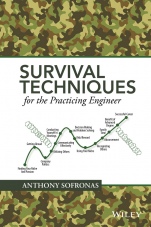
Survival Techniques for the Practicing Engineer
ISBN 9781119250456
Autor: Anthony Sofronas
Wydawca: Wiley
Dostępność: 3-6 tygodni
Cena: 260,40 zł
Przed złożeniem zamówienia prosimy o kontakt mailowy celem potwierdzenia ceny.
ISBN13: |
9781119250456 |
ISBN10: |
1119250455 |
Autor: |
Anthony Sofronas |
Oprawa: |
Hardback |
Rok Wydania: |
2016-10-07 |
Ilość stron: |
208 |
Wymiary: |
241x159 |
Tematy: |
TDCB |
Providing engineers with the tools and skills to survive and become successful in the work place
The engineering field, both the corporate and government sectors, can be a tough place to try to navigate if you don t know the rules, risks, politics, or have a plan. Engineering is more complex than most fields since the products and processes that engineers work on have to function correctly so that people and the environment are not damaged and customers are satisfied with the product produced all under significant financial restraints. Based on the authors 45 year career of personal experiences Survival Techniques for the Practicing Engineer fills this gap by providing engineers with both the tools to survive in work place and skills to become successful.
The book delves into the techniques young engineers can learn to find their way in the workplace. More importantly it discusses lessons learned through–out a career. These lessons should be most useful for the practicing engineer to know and to help them be successful. Survival Techniques for the Practicing Engineer features:
Experience–based, highly realistic guidance to a cross–section of young and even established engineers Practical guidance and acts as a handy resource so that lessons do not have to be learned the hard way with numerous errors, and costly problems Real world examples and case studiesWhat is a successful engineer can mean different things to different people. Being highly respected and confident, performing useful work, building things, being able to touch things you have built or repaired, solving problems, becoming a manager, enjoying a high salary, always being employed are definitions of success some use as well as working with passion. Readers of this book will now have this information early to help them through their career.
Anthony Sofronas, DEng, PE, has spent the past forty years troubleshooting field failures, designing machinery, and fixing equipment for ExxonMobil, Bendix, and General Electric. He is currently a consultant and presents seminars worldwide through his company Engineered Products. He has published forty–one technical papers and articles, along with a bimonthly column for Hydrocarbon Processing magazine on engineering case histories.
Dedication
About the author
Preface
Acknowledgment
Chapter 1: Getting Ahead
1.1 Finding Your Niche
1.2 Twenty Rules To Remember
1.3 Calculated Risk vs. Reward
1.4 Advancement
1.5 Learn From Observing Failures
1.6 Keep Good Records Of What You Have Done
1.7 Flexibility In Your Career
1.8 Your Known From Your Work
1.9 Ethical Behavior In Engineering
1.10 Humor In The Workplace
1.11 Self–Preservation When Documenting Your Analysis
1.12 Don t Be Overwhelmed
1.13 Providing Guidance To Others
Chapter 2: The Politics Of Engineering
2.1 What To Do
2.2 What Not To Do
2.3 Disenchantment With Your Job
2.4 Conducting Yourself In A Meeting
2.5 Organize And Prioritize
2.6 Do As Much As You Can For Your Colleagues
2.7 The Catch 22 Of Engineering
2.8 Arrogance, Humility, Favors And Courtesies
2.9 Be Curious And Inquisitive
2.10 Striving For Perfection
Chapter 3: Utilizing The Input From Others
3.1 Just Out Of College
3.2 Mentors And Colleagues
3.3 Interaction Between Disciplines
3.4 It s Nice To Be Appreciated
3.5 The Funny Look Test
3.6 Uncluttered Thinking
3.7 The Art Of Visualization
3.8 The Importance Of Alliances And Networking
Chapter 4: Communicating Effectively
4.1 Speaking Effectively At Meetings
4.2 Effective Writing Skills
4.3 Learn To Listen
Chapter 5: Problem Solving And Decision Making
5.1 Why Is This Section Important
5.2 Simplest Solutions First
5.3 The 80–20 Relationship
5.4 The Five Whys Used In Problem Solving
5.5 Being The Devil s Advocate
5.6 An Engineering Approach: Using The Scientific Method For Problem Solving
5.7 You Need To Know The Whole Story
5.8 Failure Analysis And Accident Investigations Differ
5.9 Why Decision Making Is Important In Engineering
5.10 Decisions On Several Choices
5.11 The Importance Of Personal Check–Lists
5.12 Confirmational Bias Or Self–fulfilling Prophecies
Chapter 6: How An Engineering Consultant Can Help Your Company
6.1 Why Use An Engineering Consultant
6.2 What An Engineering Consultant Can Do
6.3 The Cost Of A Consultant
Chapter 7: Consulting Engineering As A Career
7.1 Consulting As A Career
7.2 Compensation Will Be Less Than Expected
7.3 How Much Should My Billing Rate Be?
7.4 The Job Contract
7.5 You Must Understand The Companies Politics
7.6 Documenting The Consulting Effort
7.7 Useful Equipment For A Mechanical Engineering Consultant
7.8 Verifying An Analysis
Chapter 8: Precautions On Purchasing First Of Its Kind Equipment
8.1 Initial Design Specifications
8.2 Question Everything
8.3 Document All Changes
8.4 Assign Responsibilities
8.5 When Things Don t Work As Expected
Chapter 9: Useful Information To Consider
9.1 Types Of Equipment And Failure Loads
9.2 Cracking Of Welds Due To Cyclic Stresses
9.3 Remember To Consider All Forces And Moments
9.4 Phantom Failures: Some Failures Are Very Elusive
9.5 The Art Of Hammer Tapping
9.6 Development Of Some Simple Energy Equations
9.7 Maintaining Proficiency In Your Analytical Abilities
9.8 Safety Concerns To Be Aware Of
9.9 Should I Pursue A Patent
Chapter 10: Case Histories Using Analytical Models
10.1 Building And Analytical Model Of A Material Processor
10.2 Determining The Loads On The Processor Due To The Cutting Forces
10.3 Determining The Life Of The Processor At A Weld With A Defect
10.4 Discussion Of Failure And Potential Fix Of The Processor
10.5 Understanding The Sloshing Equation
10.6 Failure Of Agitator Coupling Bolts
10.7 Causes Of Auger Feeder Screw Failures
10.8 Temperature Of A Blocked In Centrifugal Pump On By–Pass
10.9 Heat Up Rate And Rubs On A Steam Turbine
10.10 Pneumatic Testing Dangers And Beware Of Safe Distances
10.11 Containment Of A Wrecked Internal Part
10.12 A Catastrophic Disaster
10.13 Why Are Parts Out Of Tolerance On The Production Line?
10.14 Failures Caused By An Impact Force
10.15 Design Of An Aircraft Tow
10.16 Shaft Failures And Crack Growth
Chapter 11: Benefits Of Continuing Your Education
11.1 Benefits Of An Advanced Degree
11.2 Importance On Selecting Your Academic Advisor
11.3 Difference Between An Engineer and Scientist
11.4 Benefits Of Continued Education
Chapter 12: Closing Guidance
12.1 Determine What You Want To Achieve
12.2 Most Of My Success Was Due To Others
12.3 It s Not So Much What You Do As What You Haven t Done
12.4 Become A Mentor To Someone
12.5 Remembering Those Before Us
12.6 Thoughts On The Future Of Engineering
Index
Koszyk
Książek w koszyku: 0 szt.
Wartość zakupów: 0,00 zł
Informacje


Kontakt
Gambit
Centrum Oprogramowania
i Szkoleń Sp. z o.o.
Al. Pokoju 29b/22-24
31-564 Kraków
Siedziba Księgarni
ul. Kordylewskiego 1
31-542 Kraków
+48 12 410 5991
+48 12 410 5987
+48 12 410 5989
Subskrypcje
Administratorem danych osobowych jest firma Gambit COiS Sp. z o.o. Na podany adres będzie wysyłany wyłącznie biuletyn informacyjny.
Autoryzacja płatności

Informacje na temat autoryzacji płatności poprzez PayU.

© Copyright 2012: GAMBIT COiS Sp. z o.o. Wszelkie prawa zastrzeżone.
Projekt i wykonanie: Alchemia Studio Reklamy