


Wydawcy
Katalog tematyczny
- Archeologia (109)
- Ekonomia, finanse, business (13704)
- Filozofia (1445)
- Historia (3040)
- Języki i językoznawstwo (2356)
- Lifestyle, hobby i rozrywka (475)
- Medycyna (9704)
- Nauki humanistyczne (4)
- Nauki o Ziemi i środowisku (2638)
- Nauki ścisłe (20412)
- Nauki społeczne (8486)
- Nauki techniczne (13450)
- Budownictwo lądowe (1045)
- Chemia przemysłowa (2258)
- Elektronika i telekomunikacja (3287)
- Energetyka (1122)
- Inne nauki stosowane (363)
- Inżynieria biochemiczna (507)
- Inżynieria transportu (232)
- Mechanika i materiały (3316)
- Nauka o środowisku (321)
- Rolnictwo (507)
- Technika, ogólnie (475)
- Prawo (1696)
- Publikacje informacyjne i interdyscyplinarne (1288)
- Religia i wierzenia (917)
- Technika komputerowa (4067)
- Zdrowie, relacje międzyludzkie i rozwój osobisty (657)





Informacje szczegółowe o książce
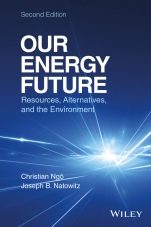
Our Energy Future: Resources, Alternatives and the Environment
ISBN 9781119213369
Autor: Christian Ngo, Joseph Natowitz
Wydawca: Wiley
Dostępność: 3-6 tygodni
Cena: 631,05 zł
Przed złożeniem zamówienia prosimy o kontakt mailowy celem potwierdzenia ceny.
ISBN13: |
9781119213369 |
ISBN10: |
1119213363 |
Autor: |
Christian Ngo, Joseph Natowitz |
Oprawa: |
Hardback |
Rok Wydania: |
2016-04-26 |
Numer Wydania: |
2nd Edition |
Ilość stron: |
536 |
Wymiary: |
244x163 |
Tematy: |
TJ |
Presents an overview on the different aspects of the energy value chain and discusses the issues that future energy is facing
This book covers energy and the energy policy choices which face society. The book presents easy–to–grasp information and analysis, and includes statistical data for energy production, consumption and simple formulas. Among the aspects considered are: science, technology, economics and the impact on health and the environment. In this new edition two new chapters have been added: The first new chapter deals with unconventional fossil fuels, a resource which has become very important from the economical point of view, especially in the United States. The second new chapter presents the applications of nanotechnology in the energy domain.
Provides a global vision of available and potential energy sources Discusses advantages and drawbacks to help prepare current and future generations to use energy differently Includes new chapters covering unconventional fossil fuels and nanotechnology as new energyOur Energy Future: Resources, Alternatives and the Environment, Second Edition, is written for professionals, students, teachers, decision–makers and politicians involved in the energy domain and interested in environmental issues.
Christian Ngô, ScD, was formerly executive general manager of ECRIN (Échange et Coordination Recherche–Industrie) and scientific director of the Atomic Energy′s High Commissioner Office. In 2008, he founded Edmonium Conseil, a consulting company. He has worked in fundamental research for twenty years, and has published approximately 200 papers. Dr. Ngô is the author of ten books in French and has been involved as an energy expert in several studies of the OPECST (Parliamentary Office for Evaluation of Scientific and Technological Options), a common committee of the French Parliament and Senate.
Joseph B. Natowitz, PhD, is currently University Distinguished Professor Emeritus at Texas A&M University (TAMU). Previously at TAMU, he served as head of the Department of Chemistry and Director of the Cyclotron Institute and held the Bright Chair in Nuclear Science. Among his awards and honors are the American Chemical Society Award in Nuclear Chemistry, the ACS Southwest Regional Award, and the Association of Former Students Research Award at TAMU. Professor Natowitz has served and continues to serve on the program advisory and/or review committees of many national and international research facilities as well as on Advisory Committees for a number of international conferences. Professor Natowitz has published more than 300 research papers.
Preface
1. We Need Energy
1.1. Generalities
1.1.1. Primary and Secondary Energy
1.1.2. Energy Units
1.1.3. Power
1.1.4. Energy and First Law of Thermodynamics
1.1.5. Entropy and Second Law of Thermodynamics
1.1.6. Exergy
1.1.7. Going Back to the Past
1.1.8. Humans and Energy
1.2. Always More!
1.2.1. Why Do We Need More Energy?
1.2.2. Energy Sources We Use
1.2.3. Security of Supply
1.2.4. Environmental Concerns
2. Oil and Natural Gas
2.1. Genesis of Oil and Natural Gas
2.2. Recovering Oil and Gas
2.3. Peak Oil
2.4. Reserves
2.4.1. Crude Oil Reserves
2.4.2. Natural Gas Reserves
2.5. Properties of Hydrocarbons
2.6. Oil Fields
2.7. Prices
2.8. Consumption
2.9. Electricity Generation
2.10. Impact on Environment
2.11. Unconventional Oil and Gas Resources
2.11.1. Oil Shale
2.11.2. Tar Sands
2.11.3. Coal Bed Methane
2.11.4. Methane Hydrates
2.12. Conclusion
3. Unconventional Oil and Gas Resources
3.1 Hydrocarbon formation
3.2 Offshore hydrocarbons
3.3 Unconventional hydrocarbons
3.4 Unconventional oils
3.4.1 Unconventional oils contained in reservoirs
3.4.2 Unconventional oils contained in source rock
3.5 Unconventional gases
3.5.1 Unconventional gases contained in reservoirs
3.5.2 Unconventional gases contained in source rocks
3.6 Methane hydrates
3.7 Conclusion
4. Coal: Fossil Fuel of the Future
4.1. Genesis of Coal
4.2. Rank of Coals
4.3. Classification of Coals
4.4. Peat
4.5. Use of Coal
4.6. Coal Reserves
4.7. Production and Consumption
4.8. Electricity Production
4.9. Coal Combustion for Power Generation
4.9.1. Advanced Pulverized Coal Combustion
4.9.2. Fluidized–Bed Combustion at Atmospheric Pressure
4.9.3. Pressurized Fluidized–Bed Combustion
4.10. Combined Heat and Power Generation
4.11. Integrated Gasification Combined–Cycle Power Plants
4.12. Coal–to–Liquid Technologies
4.13. Direct Coal Liquefaction
4.14. Indirect Coal Liquefaction
4.15. Direct or Indirect CTL Technology?
4.16. Carbon Capture and Sequestration
4.16.1. Capture
4.16.2. Transport
4.16.3. Sequestration
4.16.4. Cost
4.17. Coal Pit Accidents
4.18. Environmental Impacts
4.19. Conclusion
5. Fossil Fuels and Greenhouse Effect
5.1. Greenhouse Effect
5.2. Greenhouse Gases
5.3. Weather and Climate
5.4. Natural Change of Climate
5.5. Anthropogenic Emissions
5.6. Water and Aerosols
5.7. Global Warming Potentials
5.8. Increase of Average Temperature
5.9. Model Predictions
5.10. Energy and Greenhouse Gas Emissions
5.11. Consequences
5.12. Other Impacts on Ocean
5.13. Factor 4
5.14. Kyoto Protocol
5.15. Conclusion
6. Energy from Water
6.1. Hydropower
6.1.1. Hydropower: Important Source of Electricity
6.1.2. Dams and Diversions
6.1.3. Head and Flow
6.1.4. Turbines
6.1.5. Small–Scale Hydropower
6.1.6. Environmental Concerns
6.1.7. Costs
6.2. Energy from the Ocean
6.2.1. Offshore Wind Energy
6.2.2. Wave Energy
6.2.3. Tidal Energy
6.2.4. Marine Current Energy
6.2.5. Ocean Thermal Energy Conversion
6.2.6. Osmotic Energy
7. Biomass
7.1. Producing Biomass
7.2. An Old Energy Resource
7.3. Electricity Production
7.4. Technologies
7.4.1. Direct–Combustion Technologies
7.4.2. Cofiring Technologies
7.4.3. Biomass Gasification
7.4.4. Anaerobic Digestion
7.4.5. Pyrolysis
7.5. Heat Production
7.6. Biomass for Cooking
7.7. Environmental Impact
7.8. Market Share
7.9. Biofuels
7.9.1. First–Generation Biofuels
7.9.1.1. Biofuels for Gasoline Engines
7.9.1.2. Biofuels for Diesel Engines
7.9.2. Second–Generation Biofuels
7.9.3. Third–Generation Biofuels
7.10. From Well to Wheels
7.11. Conclusion
8. Solar Energy
8.1. Solar Energy: A Huge Potential
8.2. Thermal Solar Energy
8.2.1. Producing Hot Water for Domestic Purposes
8.2.2. Heating, Cooling, and Ventilation Using Solar Energy
8.2.3. The Solar Cooker
8.3. Concentrated Solar Power Plants
8.3.1. Parabolic Troughs
8.3.2. Power Towers
8.3.3. Parabolic Dish Collectors
8.4. Solar Chimneys or Towers
8.5. Photovoltaic Systems
8.5.1. Market Dominated by Silicon
8.5.2. Other Photovoltaic Technologies
8.5.3. Applications
8.6. Electricity Storage
8.7. Economy and Environment
8.8. Conclusion
9. Geothermal Energy
9.1. Available in Many Places
9.2. Different Uses
9.3. Technologies
9.4. Geothermal Energy in the World
9.5. Conclusion
10. Wind Energy
10.1. Already a Long History
10.2. From Theory to Practice
10.3. Development of Wind Power
10.4. Off–Shore Wind Turbines
10.5. Conclusion
11. Nuclear Energy
11.1. Basics of Nuclear Energy
11.1.1. Atoms and Nuclei
11.1.2. Radioactivity
11.1.3. Energy and Mass
11.1.4. Fission
11.1.5. Fissile and Fertile
11.1.6. Chain Reaction
11.1.7. Critical Mass
11.1.8. Nuclear Reactors
11.1.9. Natural Nuclear Reactors: Oklo
11.1.10. Conclusion
11.2. Uses of Nuclear Energy
11.2.1. Different Technologies
11.2.2. Selection Process
11.2.3. Why Nuclear Energy?
11.2.4. Uranium Resources
11.2.5. Fuel Cycles
11.2.6. Safety
11.2.7. Nuclear Waste
11.2.8. Conclusion
11.3. Thermonuclear Fusion
11.3.1. Nuclei: Concentrated Sources of Energy
11.3.2. The Sun
11.3.3. Fusion of Light Nuclei
11.3.4. Difficulties
11.3.5. A Bit of History
11.3.6. Thermonuclear Fusion in Tokamaks
11.3.7. ITER: New Step Towards Mastering Fusion
11.3.8. About Fuel Reserves
11.3.9. Longer Term Possibilities
11.3.10. Safety and Waste Issues
11.3.11. Conclusion
Appendix
12. Electricity: Smart Use of Energy
12.1. Rapid Development
12.2. Energy Sources for Electricity Production
12.3. No Unique Solution
12.4. From Mechanical Energy to Consumer
12.5. Impact on Environment
12.6. Cost
12.7. Conclusion
13. Energy Storage: Weak Point of Energy Supply Chain
13.1. Electricity Storage
13.1.1. Characteristics of Electricity Storage
13.1.2. Large–Quantity Storage Technologies
13.1.3. Electrochemical Batteries
13.1.3.1. Primary Batteries
13.1.3.2. Rechargeable Batteries
13.1.3.3. Flow Batteries
13.1.4. Supercapacitors
13.1.5. Flywheels
13.2. Thermal Energy Storage
13.2.1. Basic Heat Storage
13.2.2. Sensible Heat Storage
13.2.3. Phase Change Materials
13.2.4. Thermochemical and Thermophysical Energy Storage
13.2.5. Applications of Thermal Energy Storage
13.2.6. Underground Energy Storage
13.2.7. Conclusion
14. Transportation
14.1. Short History of Transportation
14.2. Energy and Transportation
14.3. Road Transportation
14.4. Ship Transportation
14.5. Air Transport
14.6. Car Dynamics
14.7. Fuels for Road Transportation
14.8. CO2 Emissions
14.9. Hybrid Vehicles
14.10. Electric Vehicles
14.11. Conclusion
15. Housing
15.1. Importance of Housing
15.2. Towards More Efficient Housing
15.3. Different Regions, Different Solutions
15.4. Bioclimatic Architecture
15.5. Insulation
15.6. Glazing
15.7. Lighting
15.8. Ventilation
15.9. Water
15.10. Energy Use in a Household
15.11. Heat Pumps
15.12. Impact on Environment
15.13. Conclusion
16. Smart Energy Consumption
16.1. Housing
16.2. Improving the Way We Consume Energy
16.3. Cogeneration
16.4. Standby Consumption
16.5. Lighting
16.6. Transportation
16.6.1. Technology
16.6.2. Individuals
16.7. Conclusion
17. Hydrogen
17.1. From Production to Distribution
17.1.1. Properties
17.1.2. Production
17.1.3. Storage
17.1.4. Hydrogen Transport and Distribution
17.1.5. Conclusion
17.2. Hydrogen: Energetic Applications
17.2.1. Fundamentals of Fuel Cells
17.2.2. Different Types of Fuel Cells
17.2.3. Transportation
17.2.4. Direct Use of Hydrogen
17.2.5. Direct Combined Heat and Power
17.2.6. Hydrogen and Portable Devices
17.2.7. Hydrogen Safety
17.2.8. Conclusion
18. Nanotechnology and Energy
18.1 What is new at the nanoscale?
18.1.1 Surface effects prevail
18.1.2 Quantum effects
18.2 Nanotechnology and energy production
18.2.1 Fossil fuels
18.2.2 Syngas
18.3 New energy technologies
18.3.1 Solar energy
18.3.2 Wind energy
18.3.3 Hydrogen
18.3.4 Fuel cells
18.3.5 Batteries
18.3.6 Thermoelectricity
18.3.7 Electrical distribution
18.4 Nanotechnology and housing
18.4.1 Construction engineering
18.4.2 Insulation
18.4.3 Lighting
18.4.4 Heating, ventilating and air conditioning
18.4.5 Surface Materials
18.5 Nanotechnology and transportation
18.5.1 Bodywork
18.5.2 Interior of the car
18.5.3 Tires
18.5.4 Powertrain
18.5.5 Electronics
18.5.6 Outlook in the automotive sector
18.6 Conclusion
19. Conclusion
Exercises
Solutions
Bibliography
Index
Koszyk
Książek w koszyku: 0 szt.
Wartość zakupów: 0,00 zł
Informacje


Kontakt
Gambit
Centrum Oprogramowania
i Szkoleń Sp. z o.o.
Al. Pokoju 29b/22-24
31-564 Kraków
Siedziba Księgarni
ul. Kordylewskiego 1
31-542 Kraków
+48 12 410 5991
+48 12 410 5987
+48 12 410 5989
Subskrypcje
Administratorem danych osobowych jest firma Gambit COiS Sp. z o.o. Na podany adres będzie wysyłany wyłącznie biuletyn informacyjny.
Autoryzacja płatności

Informacje na temat autoryzacji płatności poprzez PayU.

© Copyright 2012: GAMBIT COiS Sp. z o.o. Wszelkie prawa zastrzeżone.
Projekt i wykonanie: Alchemia Studio Reklamy