


Wydawcy
Katalog tematyczny
- Archeologia (109)
- Ekonomia, finanse, business (13704)
- Filozofia (1445)
- Historia (3040)
- Języki i językoznawstwo (2356)
- Lifestyle, hobby i rozrywka (475)
- Medycyna (9704)
- Nauki humanistyczne (4)
- Nauki o Ziemi i środowisku (2638)
- Nauki ścisłe (20412)
- Nauki społeczne (8486)
- Edukacja (229)
- Kryminologia, opieka spełeczna (284)
- Obronność (10)
- Polityka (1389)
- Psychologia (777)
- Socjologia (410)
- Społeczeństwo i kultura (187)
- Nauki techniczne (13450)
- Prawo (1696)
- Publikacje informacyjne i interdyscyplinarne (1288)
- Religia i wierzenia (917)
- Technika komputerowa (4067)
- Zdrowie, relacje międzyludzkie i rozwój osobisty (657)





Informacje szczegółowe o książce
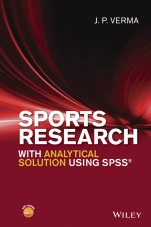
Sports Research with Analytical Solution using SPSS
ISBN 9781119206712
Autor: J. P. Verma
Wydawca: Wiley
Dostępność: 3-6 tygodni
Cena: 554,40 zł
Przed złożeniem zamówienia prosimy o kontakt mailowy celem potwierdzenia ceny.
ISBN13: |
9781119206712 |
ISBN10: |
1119206715 |
Autor: |
J. P. Verma |
Oprawa: |
Hardback |
Rok Wydania: |
2016-05-24 |
Ilość stron: |
392 |
Wymiary: |
241x157 |
Tematy: |
JN |
A step–by–step approach to problem–solving techniques using SPSS® in the fields of sports science and physical education
Featuring a clear and accessible approach to the methods, processes, and statistical techniques used in sports science and physical education, Sports Research with Analytical Solution using SPSS® emphasizes how to conduct and interpret a range of statistical analysis using SPSS. The book also addresses issues faced by research scholars in these fields by providing analytical solutions to various research problems without reliance on mathematical rigor.
Logically arranged to cover both fundamental and advanced concepts, the book presents standard univariate and complex multivariate statistical techniques used in sports research such as multiple regression analysis, discriminant analysis, cluster analysis, and factor analysis. The author focuses on the treatment of various parametric and nonparametric statistical tests, which are shown through the techniques and interpretations of the SPSS outputs that are generated for each analysis. Sports Research with Analytical Solution using SPSS® also features:
Numerous examples and case studies to provide readers with practical applications of the analytical concepts and techniques Plentiful screen shots throughout to help demonstrate the implementation of SPSS outputs Illustrative studies with simulated realistic data to clarify the analytical techniques covered End–of–chapter short answer questions, multiple choice questions, assignments, and practice exercises to help build a better understanding of the presented concepts A companion website with associated SPSS data files and PowerPoint® presentations for each chapterSports Research with Analytical Solution using SPSS® is an excellent textbook for upper–undergraduate, graduate, and PhD–level courses in research methods, kinesiology, sports science, medicine, nutrition, health education, and physical education. The book is also an ideal reference for researchers and professionals in the fields of sports research, sports science, physical education, and social sciences, as well as anyone interested in learning SPSS.
J. P. Verma, PhD, is Professor of Statistics and Director of the Center for Advanced Studies at Lakshmibai National Institute of Physical Education. Dr. Verma is an active researcher and expert in data analysis and sports statistics and has conducted many workshops on research methodology, research designs, multivariate analysis, statistical modeling, and data analysis for students in management, physical education, social science, and economics. He is the author of seven additional books including Repeated Measures Design for Empirical Researchers and Statistics for Exercise Science and Health with Microsoft® Office Excel®, both published by Wiley.
Preface
Chapter One: Introduction to Data and SPSS Operations
1.1 Introduction
1.2 Types of Data
1.3 Important Definitions
1.4 Data Cleaning
1.5 Detection of Errors
1.6 How to Start the SPSS
1.7 Exercise
Chapter Two: Descriptive Profile
2.1 Introduction
2.2 Explanation of Various Descriptive Statistics
2.3 Application of Descriptive Statistics
2.4 Computation of Descriptive Statistics Using SPSS
2.5 Interpretation of the Results
2.6 Developing Profile Chart
2.7 Summary of SPSS Commands
2.8 Exercise
2.9 Case Study
Chapter Three: Correlation Coefficient and Partial Correlation
3.1 Introduction
3.2 Correlation Matrix and Partial Correlation
3.3 Application of Correlation Matrix and Partial Correlation
3.4 Correlation Matrix with SPSS
3.5 Partial Correlation with SPSS
3.6 Summary of the SPSS Commands
3.7 Exercise
3.8 Case Study
Chapter Four: Comparing Means
4.1 Introduction
4.2 One–Sample t–test
4.3 Two–Sample t–test for Unrelated Groups
4.4 Paired t–test for Related Groups
4.5 One Sample t test with SPSS
4.6 Two–Sample t–test for Independent Groups with SPSS
4.7 Paired t–test for Related Groups with SPSS
4.8 Summary of SPSS Commands for t–tests
4.9 Exercise
4.10 Case Study
Chapter Five: Independent Measures ANOVA
5.1 Introduction
5.2 One–Way Analysis of Variance
5.3 One–Way ANOVA with SPSS(Equal Sample Size)
5.4 One–way ANOVA with SPSS (unequal Sample Size)
5.5 Two–Way Analysis of Variance
5.6 Two–Way ANOVA using SPSS
5.7 Summary of the SPSS Commands
5.8 Exercise
5.9 Case Study I: One Way ANOVA Design
5.10 Case Study II: Factorial Design with Two–way ANOVA
Chapter Six: Repeated Measures ANOVA
6.1 Introduction
6.2 One–way Repeated Measures ANOVA
6.3 One–Way Repeated Measures ANOVA using SPSS
6.4 Two–Way Repeated Measures ANOVA
6.5 Two–Way Repeated Measures ANOVA with SPSS
6.5.1 Computation in Two–Way Repeated Measures ANOVA
6.6 Summary of the SPSS commands for One–way Repeated Measures ANOVA
6.7 Summary of the SPSS commands for Two–way Repeated Measures ANOVA
6.8 Exercise
6.9 Case Study
Chapter Seven: Analysis of Covariance
7.1 Introduction
7.2 Conceptual Framework of Analysis of Covariance
7.3 Application of ANCOVA
7.4 Analysis of Covariance with SPSS
7.5 Summary of the SPSS Commands
7.6 Exercise
7.7 Case Study
Chapter Eight: Non Parametric Tests in Sports
8.1 Introduction
8.2 Chi–square Test
8.2.1 Testing Goodness of Fit
8.3 Goodness of Fit with SPSS
8.4 Testing Association with SPSS
8.5 Mann–Whitney U test: Comparing two independent samples
8.6 Wilcoxon Signed Rank Test: For comparing two related groups
8.7 Kruskal–Wallis Test
8.8 Friedman Test
8.9 Summary of the SPSS Commands
8.10 Exercise
8.11 Case Study
Chapter Nine: Regression Analysis and Multiple Correlations
9.1 Introduction
9.2 Understanding Regression Equation
9.3 Application of Regression Analysis
9.4 Multiple Regression Analysis with SPSS
9.5 Summary of SPSS Commands for Regression Analysis
9.6 Exercise
9.7 Case Study
Chapter Ten: Application of Discriminant Function Analysis
10.1 Introduction
10.2 Basics of Discriminant Function Analysis
10.3 Assumptions in Discriminant Analysis
10.4 Why to use Discriminant Analysis
10.5 Steps in Discriminant Analysis
10.6 Application of Discriminant Function Analysis
10.7 Discriminant Analysis using SPSS
10.8 Summary of the SPSS Commands for Discriminant Analysis
10.9 Exercise
10.10 Case Study
Chapter 11: Logistic Regression for Developing Logit model in Sport
11.1 Introduction
11.2 Understanding Logistic Regression
11.3 Application of Logistic Regression in Sports Research
11.4 Assumptions in Logistic Regression
11.5 Steps in Developing Logistic Model
11.6 Logistic Analysis using SPSS
11.7 Interpretation of Outputs
11.8 Exercise
11.9 Case Study
Chapter Twelve: Application of Factor Analysis
12.1 Introduction
12.2 Terminologies used in Factor Analysis
12.3 Assumptions in Factor Analysis
12.4 Steps in Factor Analysis
12.5 Application of Factor Analysis
12.6 Factor Analysis with SPSS
12.7 Summary of the SPSS Commands for Factor Analysis
Appendix
A.1: Table for normal distribution
A.2: Table for t–value
A.3: Table for F–value at .05 significance level
A.4: Table for F–value at .01 significance level
A.5: Table for Chi–Square
A.6: Table for Correlation Coefficient required for significance
A.7: Critical Values of Studentized Range Distribution (q) for Familywise ALPHA = .05
References
Index
Koszyk
Książek w koszyku: 0 szt.
Wartość zakupów: 0,00 zł
Informacje


Kontakt
Gambit
Centrum Oprogramowania
i Szkoleń Sp. z o.o.
Al. Pokoju 29b/22-24
31-564 Kraków
Siedziba Księgarni
ul. Kordylewskiego 1
31-542 Kraków
+48 12 410 5991
+48 12 410 5987
+48 12 410 5989
Subskrypcje
Administratorem danych osobowych jest firma Gambit COiS Sp. z o.o. Na podany adres będzie wysyłany wyłącznie biuletyn informacyjny.
Autoryzacja płatności

Informacje na temat autoryzacji płatności poprzez PayU.

© Copyright 2012: GAMBIT COiS Sp. z o.o. Wszelkie prawa zastrzeżone.
Projekt i wykonanie: Alchemia Studio Reklamy