


Wydawcy
Katalog tematyczny
- Archeologia (109)
- Ekonomia, finanse, business (13704)
- Filozofia (1445)
- Historia (3040)
- Języki i językoznawstwo (2356)
- Lifestyle, hobby i rozrywka (475)
- Medycyna (9704)
- Nauki humanistyczne (4)
- Nauki o Ziemi i środowisku (2638)
- Nauki ścisłe (20412)
- Astronomia (294)
- Biologia (5119)
- Chemia (6540)
- Fizyka (3309)
- Elektryczność i magnetyzm (90)
- Fizyka atomowa i molekularna (110)
- Fizyka cząstek elementarnych (36)
- Fizyka jądra atomowego (36)
- Fizyka kwantowa (210)
- Fizyka matematyczna (121)
- Fizyka relatywistyczna (36)
- Fizyka statystyczna (51)
- Fizyka stosowana (498)
- Mechanika klasyczna (186)
- Optyka i światło (133)
- Stany materii (202)
- Matematyka (4574)
- Nauki ścisłe, ogólnie (503)
- Nauki społeczne (8486)
- Nauki techniczne (13450)
- Prawo (1696)
- Publikacje informacyjne i interdyscyplinarne (1288)
- Religia i wierzenia (917)
- Technika komputerowa (4067)
- Zdrowie, relacje międzyludzkie i rozwój osobisty (657)





Informacje szczegółowe o książce
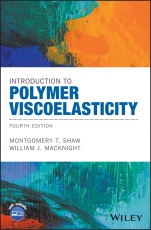
Introduction to Polymer Viscoelasticity
ISBN 9781119181804
Autor: Montgomery T. Shaw, William J. MacKnight
Wydawca: Wiley
Dostępność: 3-6 tygodni
Cena: 660,45 zł
Przed złożeniem zamówienia prosimy o kontakt mailowy celem potwierdzenia ceny.
ISBN13: |
9781119181804 |
ISBN10: |
1119181801 |
Autor: |
Montgomery T. Shaw, William J. MacKnight |
Oprawa: |
Hardback |
Rok Wydania: |
2018-08-24 |
Numer Wydania: |
4th Edition |
Ilość stron: |
384 |
Wymiary: |
257x176 |
Tematy: |
PH |
The revised fourth edition of the text that offers a thorough understanding of viscoelastic behavior, essential for the proper utilization of polymers
The thoroughly revised and updated fourth edition of Introduction to Polymer Viscoelasticity is the classic resource on the topic of molecular viscoelasticity. This important text bridges the gap between primers on polymer science and advanced research–level monographs. The authors assume a molecular, rather than a mechanical approach, and provide a strong grounding in the fundamental concepts, detailed derivations, and particular attention to assumptions, simplifications, and limitations.
Revisions to the updated fourth edition feature the inclusion of new measurement techniques, coverage of biopolymer viscoelasticity, and a vital discussion of the relationship between mechanical polymer properties and viscoelastic functions. In addition, the text contains two entirely new sections that address modern areas of viscoelastic measurement: large amplitude oscillatory shear (LAOS) and microrheology. The authors explain principles, corresponding equations, and experimental methods with supporting real–life applications and the text has supporting data available with a supplementary website. This important resource:
Offers a completely revised and updated guide to molecular viscoelasticity Includes coverage of measurement techniques (nano–indentation, atomic force microscopy (AFM), and diffusing wave spectroscopy (DWS)), biopolymer viscoelasticity Explores the relationship between mechanical polymer properties and viscoelastic functions Offers two new sections that address modern areas of viscoelastic measurement: large amplitude oscillatory shear (LAOS) and microrheologyWritten for polymer and materials scientists, chemical engineers, physical chemists, product design engineers, mechanical engineers, and students, Introduction to Polymer Viscoelasticity is the go–to resource for understanding the most current research and developments in the field.
Preface to the Fourth Edition
Preface to the Third Edition
Preface to the Second Edition
Preface to the First Edition
1. Introduction
PROBLEMS, 6
GENERAL REFERENCE TEXTS, 7
REFERENCES, 8
2. Phenomenological Treatment of Viscoelasticity
A. ELASTIC MODULUS, 9
B. TRANSIENT EXPERIMENTS, 21
C. DYNAMIC EXPERIMENTS, 25
1. Low–Strain Measurements, 25
2. Large Amplitude Oscillatory Shear (LAOS), 30
3. Microrheology, 34
D. BOLTZMANN SUPERPOSITION PRINCIPLE, 38
E. RELATIONSHIP BETWEEN THE CREEP COMPLIANCE AND THE STRESS RELAXATION MODULUS, 43
F. RELATIONSHIP BETWEEN STATIC AND DYNAMIC PROPERTIES, 44
APPENDIX 2–1. Connecting Creep Compliance and Stress Relaxation Modulus Using Laplace Transforms, 45
APPENDIX 2–2. Borel s Theorem, 48
APPENDIX 2–3. Geometries for the Measurement of Viscoelastic Functions, 49
1. Linear Motion Geometries, 49
2. Rotational Motion Geometries, 53
PROBLEMS, 57
REFERENCES, 64
3. Viscoelastic Models
A. MECHANICAL ELEMENTS, 66
1. Maxwell Model, 68
2. Voigt Model, 74
3. Generalized Maxwell Model, 76
4. Voigt–Kelvin model, 79
B. DISTRIBUTIONS OF RELAXATION AND RETARDATION TIMES, 81
C. MOLECULAR THEORIES THE ROUSE MODEL, 84
D. APPLICATION OF FLEXIBLE–CHAIN MODELS TO SOLUTIONS, 93
E. THE ZIMM MODIFICATION, 94
F. EXTENSION TO BULK POLYMER, 96
G. REPTATION, 108
APPENDIX 3–1: MANIPULATION OF THE ROUSE MATRIX, 112
PROBLEMS, 117
REFERENCES, 123
4. Time Temperature Correspondence
A. FOUR REGIONS OF VISCOELASTIC BEHAVIOR, 125
B. TIME TEMPERATURE SUPERPOSITION, 133
C. MASTER CURVES, 136
D. THE WLF EQUATION, 136
E. MOLECULAR INTERPRETATION OF VISCOELASTIC RESPONSE, 143
PROBLEMS, 144
REFERENCES, 149
5. Transitions and Relaxation in Amorphous Polymers
A. PHENOMENOLOGY OF THE GLASS TRANSITION, 150
B. THEORIES OF THE GLASS TRANSITION, 155
1. Free–Volume Theory, 155
2. Thermodynamic Theory, 158
3. Kinetic Theories, 164
C. STRUCTURAL PARAMETERS AFFECTING THE GLASS TRANSITION, 166
D. RELAXATIONS IN THE GLASSY STATE, 172
E. RELAXATION PROCESSES IN NETWORKS, 176
1. Physical Relaxation, 176
2. Chemical Processes, 177
F. BIOPOLYMER VISCOELASTICITY, 180
1. Biopolymer Sources, 180
2. Humidity Control, 181
3. Examples of Biopolymer Viscoelastic Response, 183
PROBLEMS, 189
REFERENCES, 196
6. Elasticity of Rubbery Networks
A. THERMODYNAMIC TREATMENT, 199
B. STATISTICAL TREATMENT, 205
1. Derivation, 205
2. Energy Contribution, 216
C. PHENOMENOLOGICAL TREATMENT, 220
D. FACTORS AFFECTING RUBBER ELASTICITY, 224
1. Effect of Degree of Crosslinking, 224
2. Effect of Swelling, 226
3. Effect of Fillers, 229
4. Effect of Strain–Induced Crystallization, 232
APPENDIX 6–1. Statistics of a Polymer Chain, 234
APPENDIX 6–2. Equation of State for a Polymer Chain, 240
PROBLEMS, 242
REFERENCES, 246
7. Dielectric and NMR Methods
A. DIELECTRIC METHODS, 249
1. Phenomenology, 250
2. Molecular Interpretation of Dielectric Constant, 257
3. Interfacial Polarization, 264
4. Application to Polymers, 265
5. Experimental Methods, 268
6. Application of Dielectric Relaxation to Poly (methyl methacrylate), 272
7. Comparisons between Mechanical and Dielectric Relaxation for Polymers, 273
B. NUCLEAR MAGNETIC RESONANCE METHODS, 274
PROBLEMS, 280
REFERENCES, 282
Answers to Selected Problems
CHAPTER 2, 284
CHAPTER 3, 296
CHAPTER 4, 304
CHAPTER 5, 308
CHAPTER 6, 312
CHAPTER 7, 320
List of Major Symbols
List of Files on Website
Author Index
Subject Index
Montgomery T. Shaw, PhD, is Emeritus Distinguished Professor of Chemical Engineering at the University of Connecticut. Among his books are the prior edition of Introduction to Polymer Viscoelasticity and Introduction to Polymer Rheology, both published by Wiley.
William J. MacKnight, PhD, is a Professor Emeritus at the University of Massachusetts Amherst, where he was formerly the co–Principal Investigator for the Center for UMass/Industry Research on Polymers (CUMIRP). He has been a co–author for each edition of Introduction to Polymer Viscoelasticity, all published by Wiley.
Koszyk
Książek w koszyku: 0 szt.
Wartość zakupów: 0,00 zł
Informacje


Kontakt
Gambit
Centrum Oprogramowania
i Szkoleń Sp. z o.o.
Al. Pokoju 29b/22-24
31-564 Kraków
Siedziba Księgarni
ul. Kordylewskiego 1
31-542 Kraków
+48 12 410 5991
+48 12 410 5987
+48 12 410 5989
Subskrypcje
Administratorem danych osobowych jest firma Gambit COiS Sp. z o.o. Na podany adres będzie wysyłany wyłącznie biuletyn informacyjny.
Autoryzacja płatności

Informacje na temat autoryzacji płatności poprzez PayU.

© Copyright 2012: GAMBIT COiS Sp. z o.o. Wszelkie prawa zastrzeżone.
Projekt i wykonanie: Alchemia Studio Reklamy