


Wydawcy
Katalog tematyczny
- Archeologia (109)
- Ekonomia, finanse, business (13704)
- Filozofia (1445)
- Historia (3040)
- Języki i językoznawstwo (2356)
- Lifestyle, hobby i rozrywka (475)
- Medycyna (9704)
- Nauki humanistyczne (4)
- Nauki o Ziemi i środowisku (2638)
- Nauki ścisłe (20412)
- Nauki społeczne (8486)
- Nauki techniczne (13450)
- Prawo (1696)
- Publikacje informacyjne i interdyscyplinarne (1288)
- Religia i wierzenia (917)
- Technika komputerowa (4067)
- Zdrowie, relacje międzyludzkie i rozwój osobisty (657)





Informacje szczegółowe o książce
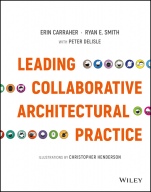
Leading Collaborative Architectural Practice
ISBN 9781119169246
Autor: Erin Carraher, Ryan E. Smith, Peter DeLisle, Christopher Henderson
Wydawca: Wiley
Dostępność: 3-6 tygodni
Cena: 327,60 zł
Przed złożeniem zamówienia prosimy o kontakt mailowy celem potwierdzenia ceny.
ISBN13: |
9781119169246 |
ISBN10: |
1119169240 |
Autor: |
Erin Carraher, Ryan E. Smith, Peter DeLisle, Christopher Henderson |
Oprawa: |
Hardback |
Rok Wydania: |
2017-05-12 |
Ilość stron: |
336 |
Wymiary: |
242x189 |
Tematy: |
AM |
The comprehensive guide to leading today′s collaborative project delivery teams
Leading Collaborative Architectural Practice is a first–of–its–kind resource for those interested in alternative and integrated forms of project delivery. Based on a multi–year study of emerging practices, this guide features leadership models, interpersonal skills and communication techniques, and best practices for maximizing the potential of project teams all specifically tailored for the AEC community. Practitioners at all stages of their careers will use this guide to develop a creative approach to project delivery that engages diverse people, processes, and tools to more effectively, efficiently, and elegantly respond to the changing needs of today′s practice environment. Through concepts and immediately implementable strategies, professionals will learn how to:
Reflect on their own leadership style and cultivate the skills necessary to influence others Boost team productivity through heightened interpersonal skills and effective communication Create and maintain a collaborative culture prone to innovation and fueled by self–motivated talent Use hands–on exercises and lessons learned from in–depth case studies to solve their everyday challenges in the office or in the fieldForeword
Acknowledgments
Introduction
Leadership and Collaboration
Conceptual Framework
Why Collaborate?
How This Book is Structured
Who Should Read This Book?
Part 1: Collaboration In Context
Chapter 1 Collaboration in Practice
1.1 The Changing Landscape Of Architectural Practice
1.2 The Rise of Integrated and Collaborative Project Delivery
1.3 Mutually–Beneficial Collaboration
1.4 Leadership and Followership
The Promise Versus Reality of Integrated Project Delivery Interview with Renée Cheng
Chapter 2 Collaborative Project Delivery Tools
2.1 Traditional vs. Collaborative Project Delivery
2.2 Collaborative Design–Bid–Build
2.3 Collaborative CM At–Risk
2.4 Collaborative Design–Build
2.5 Multi–Party Agreements
2.6 Integrated Project Delivery and Collaboration
2.7 The Value of Collaboration
2.8 When Not To Collaborate
Case Study Excerpt: Wayne N. Aspinall Federal Building & U.S. Courthouse
Chapter 3 Creating Collaborative Environments
3.1 Collaborative Infrastructure
3.2 Physical Space
3.3 Social Structures
3.4 Training and Support
3.5 Technology Tools
3.6 Leaders Roles
Collaboration Takes Commitment Interview with Stephen Van Dyck
Part 2: Collaboration Tools and Tactics
Chapter 4 Building Collaborative Teams
4.1 Assembling and Organizing Teams
4.2 Selection of Team Members
4.3 Diversity and Inclusion in Teams
4.4 Organizing Teams
4.5 Coordination Between Sub–Teams
4.6 Developing Team Culture
Case Study Excerpt: Odegaard Library Renovation
Chapter 5 Maintaining Collaborative Teams
5.1 Project Team Size
5.2 Cross–Functional Teams
5.3 Stability of Teams
5.4 Assessment
5.5 Coaching and Feedback
Collaborative from the Start A Conversation with Clare Olsen, Caryn Brause, and Erin Carraher
Chapter 6 Development Stages
6.1 Stages of Team Development
6.2 Forming
6.3 Storming
6.4 Norming
6.5 Performing
6.6 Adjourning
6.7 Team Development Model
Case Study Excerpt: Center for Health and Innovation
Chapter 7 Team Behaviors
7.1 Negative Team Behavior
7.2 Fear of Conflict
7.3 Lack of Commitment
7.4 Lack of Accountability
7.5 Inattention to Results
7.6 Loss of Trust
7.7 Effective Team Behaviors
7.8 Situational Team Organization
7.9 Collective Decision–Making
Case Study Excerpt: Health & Wellness Center
Chapter 8 Collaboration Tools
8.1 Rationale Vs. Intuitive Processes
8.2 Lean Strategies
8.3 Lean Tools
8.4 Choosing Bby Advantages
8.4 A3 Reports
8.5 Decision Matrix
8.6 Decision Tree
8.7 Ishikawa (Fishbone) Diagram
8.8 BIM Scorecard
Case Study Excerpt: Alta Bates Summit Medical Center
Part 3: Leadership Effectiveness
Chapter 9 Leadership Effectiveness
9.1 Foundations of Leadership
9.2 Trait Vs. Behavior
9.3 Ability
9.4 Awareness
9.5 Commitment
9.6 Conscious/Competent
Leading Together Interview with Patricia Rhee
Chapter 10 Leadership Development
10.1 Farm Gate Model
10.2 Interpersonal Awareness
10.3 INDIVIDUAL Individual AWARENESS Awareness TOOLSTools
10.4 Team Awareness Tools
Case Study Excerpt: Bullitt Center
Chapter 11 Leadership Stages of Development
11.1 Guildhall Model
Novice
Apprentice
Journeyman
Master
11.2 Development Stages
11.3 Combined Development Model
Case Study Excerpt: ASU Memorial Union
Chapter 12 Task–Relationship Behavior
12.1 Leader in Development
12.2 Direction and Feedback
12.3 Stage Assessment
12.4 Task–Relationship
Practice–Based Scenario: The Story of Frank and Denise
Chapter 13 Cognitive Styles
13.1 Understanding Cognition
13.2 Adaptive Problem Solving
13.3 Innovative Problem Solving
13.4 Bridgers as Leaders
13.5 Adaptive And Innovative Team Cultures
13.6 Reflective Environments
Case Study Excerpt: Building 661
Chapter 14 Leadership Styles
14.1 Authoritarian/Autocratic
14.2 Participative/Democratic
14.3 Delegative/Free Reign
14.4 Style–To–Situation
14.5 Positive & Negative Leadership
14.6 Task & Relationship
Leadership in Development Stories from Rick del Monte and Fred Perpall
Part 4: Communication and& Conflict
Chapter 15 Communication Fundamentals
15.1 Components of Communication
15.2 Barriers To Communication
15.3 Listening and Feedback
15.4 Verbal And Non–Verbal Communication
Communication Assessment
Chapter 16 Johari Window Model
16.1 Johari Window Model
16.2 Open Self
16.3 Hidden Self
16.4 Blind Self
16.5 Unknown Self
Chapter 17 Feedback and Motivation
17.1 Steps to Constructive Feedback
17.2 Feedback Style
17.3 Maslow s Theory
17.4 Herzberg s Theory
17.5 Adequate Resources
17.6 Motivation Process
17.7 Modes of Motivation
17.8 Motivation to Innovation
Motivation & Maintenance
Chapter 18 Conflict Management
18.1 Healthy Conflict
18.2 Conflict Management Styles
18.3 Conflict Management Model
18.4 Conflict Management Leadership
Exercise: Conflict Management and Resolution
Part 5: Leadership In Practice
Chapter 19 The Value of Inclusion
19.1 The Changing Workforce
19.2 Diversity and Creativity
19.3 Empathy
19.4 Generational Traits
19.5 Gender And Leadership
19.6 Race And Leadership
Building Leaders and Design/Build Interview with Emilie Taylor Welty
Chapter 20 Leadership and Change
20.1 Foundations of Innovation
20.2 Complex Environments
20.3 Strategic Leadership
20.4 Change Management
20.5 Social Leadership
20.6 Thought Leadership
Case Study Excerpt: Girl Scouts of Utah Summer Cabins
Chapter 21 Practice Leadership
21.1 Culture and Organization
21.2 Practice Management Components
21.3 Managing Meetings
21.4 Structure and Business Models
21.5 The Leadership Cycle
21.6 Training and Development
Reflective Practice Interview with Z Smith
Conclusion
Toward a More Collaborative Practice
Applying Collaboration and Leadership in Practice
Bibliography
Index
Erin Carraher, AIA, is a licensed architect and assistant professor at the University of Utah′s School of Architecture.
Ryan E. Smith is an associate professor and director of the Integrated Technology & Architecture Collaborative (ITAC) at the University of Utah. He is author of Prefab Architecture and co–editor of Building Systems and Offsite Architecture.
Peter DeLisle, PhD, served as the Leslie B. Crane Chair of Leadership Studies and director of The Posey Leadership Institute at Austin College until his recent retirement.
Koszyk
Książek w koszyku: 0 szt.
Wartość zakupów: 0,00 zł
Informacje


Kontakt
Gambit
Centrum Oprogramowania
i Szkoleń Sp. z o.o.
Al. Pokoju 29b/22-24
31-564 Kraków
Siedziba Księgarni
ul. Kordylewskiego 1
31-542 Kraków
+48 12 410 5991
+48 12 410 5987
+48 12 410 5989
Subskrypcje
Administratorem danych osobowych jest firma Gambit COiS Sp. z o.o. Na podany adres będzie wysyłany wyłącznie biuletyn informacyjny.
Autoryzacja płatności

Informacje na temat autoryzacji płatności poprzez PayU.

© Copyright 2012: GAMBIT COiS Sp. z o.o. Wszelkie prawa zastrzeżone.
Projekt i wykonanie: Alchemia Studio Reklamy