


Wydawcy
Katalog tematyczny
- Archeologia (109)
- Ekonomia, finanse, business (13704)
- Filozofia (1445)
- Historia (3040)
- Języki i językoznawstwo (2356)
- Lifestyle, hobby i rozrywka (475)
- Medycyna (9704)
- Nauki humanistyczne (4)
- Nauki o Ziemi i środowisku (2638)
- Nauki ścisłe (20412)
- Nauki społeczne (8486)
- Edukacja (229)
- Kryminologia, opieka spełeczna (284)
- Obronność (10)
- Polityka (1389)
- Psychologia (777)
- Socjologia (410)
- Społeczeństwo i kultura (187)
- Nauki techniczne (13450)
- Prawo (1696)
- Publikacje informacyjne i interdyscyplinarne (1288)
- Religia i wierzenia (917)
- Technika komputerowa (4067)
- Zdrowie, relacje międzyludzkie i rozwój osobisty (657)





Informacje szczegółowe o książce
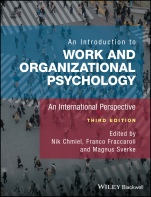
An Introduction to Work and Organizational Psychology: An International Perspective
ISBN 9781119168027
Autor: Nik Chmiel, Franco Fraccaroli, Magnus Sverke
Wydawca: Wiley
Dostępność: 3-6 tygodni
Cena: 244,65 zł
Przed złożeniem zamówienia prosimy o kontakt mailowy celem potwierdzenia ceny.
ISBN13: |
9781119168027 |
ISBN10: |
1119168023 |
Autor: |
Nik Chmiel, Franco Fraccaroli, Magnus Sverke |
Oprawa: |
Paperback |
Rok Wydania: |
2017-04-26 |
Numer Wydania: |
3rd Edition |
Ilość stron: |
560 |
Wymiary: |
244x191 |
Tematy: |
JM |
DidYouKnow?
This book is available as a Wiley E–Text.
The Wiley E–Text is a complete digital version of the text that makes time spent studying more efficient. Course materials can be accessed on a desktop, laptop, or mobile device so that learning can take place anytime, anywhere.
A more affordable alternative to traditional print, the Wiley E–Text creates a flexible user experience:
Access on–the–go Search across content Highlight and take notes Save money!
The Wiley E–Text can be purchased in the following ways:
Check with your bookstore for available e–textbook options Wiley E–Text: Powered by VitalSource ® ISBN 978–1–119–16803–4
Directly from: www.wiley.com/wiley–blackwell
Foreword
Wilmar Schaufeli
Introduction
Nik Chmiel, Franco Fraccaroli and Magnus Sverke
PART I. JOB–FOCUSSED
1. What do people really do at work? Job analysis and design
Stephen A. Woods and Daniel P. Hinton
2. How do I get a job, what are they looking for? Personnel selection and assessment
Silvia Moscoso, Jesús Salgado and Neil Anderson
3. How can I shape my job to suit me better? Job crafting for sustainable employees and organizations
Pascale Le Blanc, Evangelia Demerouti, and Arnold Bakker
4. What am I supposed to do in my job? Set goals and appraise your people
Gary Latham
5. Why is my job so stressful? Characteristics, processes and models of stress at work
Jan de Jonge and Christian Dormann
6. Digital technologies at work are great, aren t they? The development of information and communication technologies (ICT) and their relevance in the world of work
Christian Korunka and Matti Vartiainen
7. Whose side is technology on, really? On the interdependence of work and technology
Michael Allvin and Fredrik Movitz
8. Why did I choose that career path? Approaches to vocational choices and people s readiness to self–manage their own career paths
Guido Sarchielli
PART II. ORGANIZATION–FOCUSSED
1. How do we get new entrants on board ? Organizational socialization, psychological contracts, and realistic job previews
Allison Ellis and Talya Bauer
2. How does power affect those who have it and those who don t? Power inside organizations
Lourdes Munduate and Francisco Medina
3. Does it matter who leads us? The study of organizational leadership
E. Kevin Kelloway and Stephanie Gilbert
4. Why are we in a team? Effects of teamwork and how to enhance team effectiveness
Annika Lantz and Daniela Ulber
5. How do we react when our organization changes? Perspectives on employees appraisal of change, consequences, and mitigating factors
Magnus Sverke, Helena Falkenberg, Johnny Hellgren, Chang–qin Lu and Jaco Pienaar
6. How do we feel and behave when we re not permanent full–time employees? The case of the diverse forms of non–standard work
Claudia Bernhard–Oettel, Nele De Cuyper, Megan Murphy and Catherine Connelly
7. Why should organizations treat their employees fairly? Definition, relevance, and consequences of justice at work
Constanze Eib and Guillaume Soenen
8. What does our organization do to help our well–being? Creating healthy workplaces and workers
Arla Day and Karina Nielsen
PART III. PEOPLE–FOCUSSED
1. Does it matter who we are? Personality at work
Adrian Furnham
2. How do I learn what to do? How the science of training supports learning
Amanda Woods, Julie Dinh, and Eduardo Salas
3. How much effort will I put into my work? It depends on your type of motivation
Anja Van den Broeck, Joseph Carpini, Hannes Leroy and James Diefendorff
4. How do we handle computer–based technology? What is the cost/benefit ratio of technology for workers?
Fred Zijlstra and Anne–Sophie Nyssen
5. Why do I put myself and others in danger or help increase safety? Person– and situation–related causes of safety behaviours
Nik Chmiel and Gudela Grote
6. Does it matter whether I am a happy and committed worker? The role of identification, commitment and job satisfaction for employee behavior
Rolf van Dick and Lucas Monzani
7. How does work fit with my life? The relation between flexible work arrangements, work–life balance and recovery from work
Göran Kecklund, Debby Bekkers, Constanze Leineweber, and Philip Tucker
8. What happens when I get older? Older workers, late careers and transitions to retirement
Franco Fraccaroli, Marco Depolo, and Mo Wang
PART IV. ADVISING THE ORGANIZATION
1. How do we work with organizations?
Henry Honkanen and Diana Rus
Case Studies:
2. A strategic approach to improving wellbeing at a large railway company
Ivan Robertson, Matthew Smeed and Victoria Ward
3. Humiliation. Why we deserve respect at work
Barbara Ko usznik
4. Resilience development through an organisation–led well–being initiative
Katharina Näswall, Sanna Malinen and Joana Kuntz
5. Positive Action: Effectively increasing diversity at the top
Nic Hammarling
6. Age management
Christian Stamov Roßnagel
Koszyk
Książek w koszyku: 0 szt.
Wartość zakupów: 0,00 zł
Informacje


Kontakt
Gambit
Centrum Oprogramowania
i Szkoleń Sp. z o.o.
Al. Pokoju 29b/22-24
31-564 Kraków
Siedziba Księgarni
ul. Kordylewskiego 1
31-542 Kraków
+48 12 410 5991
+48 12 410 5987
+48 12 410 5989
Subskrypcje
Administratorem danych osobowych jest firma Gambit COiS Sp. z o.o. Na podany adres będzie wysyłany wyłącznie biuletyn informacyjny.
Autoryzacja płatności

Informacje na temat autoryzacji płatności poprzez PayU.

© Copyright 2012: GAMBIT COiS Sp. z o.o. Wszelkie prawa zastrzeżone.
Projekt i wykonanie: Alchemia Studio Reklamy