


Wydawcy
Katalog tematyczny
- Archeologia (109)
- Ekonomia, finanse, business (13704)
- Filozofia (1445)
- Historia (3040)
- Języki i językoznawstwo (2356)
- Lifestyle, hobby i rozrywka (475)
- Medycyna (9704)
- Nauki humanistyczne (4)
- Nauki o Ziemi i środowisku (2638)
- Nauki ścisłe (20412)
- Nauki społeczne (8486)
- Nauki techniczne (13450)
- Prawo (1696)
- Publikacje informacyjne i interdyscyplinarne (1288)
- Religia i wierzenia (917)
- Technika komputerowa (4067)
- Zdrowie, relacje międzyludzkie i rozwój osobisty (657)





Informacje szczegółowe o książce
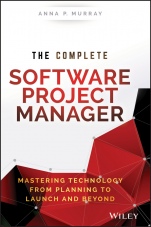
The Complete Software Project Manager: Mastering Technology from Planning to Launch and Beyond
ISBN 9781119161837
Autor: Anna P. Murray
Wydawca: Wiley
Dostępność: 3-6 tygodni
Cena: 211,05 zł
Przed złożeniem zamówienia prosimy o kontakt mailowy celem potwierdzenia ceny.
ISBN13: |
9781119161837 |
ISBN10: |
1119161835 |
Autor: |
Anna P. Murray |
Oprawa: |
Hardback |
Rok Wydania: |
2016-02-26 |
Ilość stron: |
256 |
Wymiary: |
238x158 |
Tematy: |
KM |
SPECIALIZED GUIDANCE FOR MANAGING SOFTWARE DEVELOPMENT PROJECTS
The Complete Software Project Manager: Mastering Technology from Planning to Launch and Beyond is the must–have resource for every professional leading software projects. Everyone, from those with no background in technology to seasoned project managers, will find valuable advice to improve their process.
Written specifically for day–to–day use on the job, this one–of–a–kind resource addresses the factors contributing to disastrous technology projects by providing exclusive coverage on how to successfully roll out and lead those types of projects. Even if you′re already in the middle of an initiative that isn′t going well, this groundbreaking guidebook gives you the crash course you need to turn things around, including the basics of software project management, clarity through real–world examples, advanced topics for developing an effective management approach, and the hard–to–see pitfalls to avoid. Boost your management skills to another level with insight found nowhere else, such as:
The five most common project hazards and what to do about them Identifying and trouble–shooting the three most serious project problems The single–most important key to modern project managementDon′t let the technology gap stand in your way of leadership excellence with The Complete Software Project Manager.
Foreword
Acknowledgments
About the Author(s)
Introduction
Chapter 1: Software Development Explained: Creativity Meets Complexity
A Definition of Software Development
Why is Software Development So Difficult? Hint: It s Not Like Building a House
The Simple, the Complicated, and the Complex
Metaphor #1: Piles of Snow
Metaphor #2: The Ikea Desk
Metaphor #3: Heart Surgery
Using the Three Metaphors in Project Management
Chapter 2: Agile, Waterfall and the Key to Modern Project Management
Agile & Waterfall
Waterfall
Waterfall s Problems
The Requirements Requirement
Inflexibility
Loss of Opportunity & Time to Market
Customer Dissatisfaction
Agile
Lack of Up Front Planning
Lack of Up Front Costs
Stakeholder Involvement
Extensive Training
Where Agile Works Best
The Need for Upfront Requirements in Many Projects
The Real World
Agile Enough
The Software Development Life Cycle
Chapter 3: Project Approaches; Off–the–Shelf & Custom Development; One Comprehensive Tool & Specialized Tools; Phased Launches & Pilots
The Custom vs. Off–the–Shelf Approach
History
The Benefit of Off the Shelf
Off–the–Shelf Examples
Thinking You re Editing When You re Actually Creating
Common Challenges with Off–the–Shelf Software
Business Compromise
Discovering You Made the Wrong Choice with Packaged Software
Breaking the Upgrade Path
Locked into a Partnership & the Product Roadmap
Expense of Off–the–Shelf
Where Packaged Software Works Well
Frameworks & The Blurring Worlds of Custom and Packaged Software
Integrations Vs. One Tool for the Job
To Phase or Not to Phase
Bigger Is Not Always Better
The Pilot Approach
Why Not Pilot?
Chapter 4: Teams and Team Roles and Responsibilities Defined
Teams and the Roles on Teams
Project Leadership
The Key Business Stakeholder
The Project Sponsor
The Program Manager
Project Manager
Multiple Project Managers
Confusion about the Project Manager Role; It s More Limited than You Think
Project Team
The Business Analyst
User Experience
Designer
The Programmers
Architect
Systems Administrator
Team Member Choice & Blending Roles
Getting All the Roles Covered
Real–World Examples for Role–Blending
Project Sponsor as Program Manager
Program Manager as Business Analyst
Front End Programmer as Designer
Design, UX and Business Analysis
Backend Programmer as Architect
SysAdmin as Architect
Professionals and Personalities
Programmers
Project Managers
Business Analysts and User Experience People
Architects & Systems Administrators
In–Source or Out–Source: Whether to Staff Roles with Internal People or Get Outside Help
The Myth that Insourcing Programming Is Better
Inexperience with Projects
How Knowledge Goes Stale
Outsourced Teams
When to Use Internal or External Teams
Roles Easiest to Outsource
Roles In the Middle
Roles that Are Usually Internal
Vendors & Hiring External Resources
Some Tech–Types to Avoid: Dot Communists & Shamans
The Shamans
Boundaries, Responsibilities and Driving in Your Lane
Techies Who Don t Drive in Their Lane
Business Stakeholders Who Shirk Responsibilities
Business Stakeholders, Step Up!
Have a Trusted Technology Partner
How Best (and Worst) to Work with Your Technology Partner
Too Many Cooks
Chapter 5: Project Research & Technology Choice; Conflicts at the Start of Projects; 4 Additional Project Delays Initial Pitfalls
Choice of Technology, A Definition
The Project s Research Phase
Current State
Integrations & Current State
Data & Current State
Business Needs
Possible Technology Solutions
Demos
Comparison Grids
Talk to Other People, A Journalistic Exercise
How Do You Know When Your Research Is Done?
Research Reality Check
You Can t Run the Control
Religious Wars
Passion over Reason
Business Stakeholders and Controlling Ego
How to Stop a Technology Religious War
Not So Easy
Preventing a Technology Religious War
Being Right
Stopping a War in its Tracks
Détente and Finally Ending a Technology Religious War
Clarity
The Role of the CIO
Two Most Important Factors in Core Technology Decisions
Budget Constraints
The Team
Choosing Technology & What NOT to Consider: The Future
Other Conflicts that Delay the Start of Projects
Business Strategy & Organizational Authority
Design
Blue Sky
Overanalysis
The Project Charter, a Key Document
Chapter 6: Final discovery; Project Definition, Scope and Documentation
Budgeting and Ongoing Discovery; Discovery Work is Real Work
Budgeting Final Discovery
What Discovery Costs
What Comes Out of Final Discovery: A Plan
Getting to a Plan
The Murk
Getting Out of the Murk
The Plan for the Plan Company A
Hosting
Content Entry
Search
Content Pages & Features
Integrations
Backend System
Data migration
How Anyone Can Make a Plan for the Plan
Different Approaches to Elicit the Plan for the Plan
Exception to The Murk
Breakout Sessions
The Weeds Are Where the Flowers Grow
Not All Questions Will be Answered
Agile, Waterfall, and Project Documentation
The Scope Document
Project Summary
Project Deliverables
Out of Scope
Constraints
Assumptions
Risks
Timeline
Budget, Scope, Timeline–ing and Horse Trading
Metrics
What about The List?
Defining and Visualizing & Project Scope
What Usually Happens
The Chicken and the Egg
Common Questions
Where Does Design Fit In?
Working with Marketing Stakeholders
How You Know You re On the Wrong Track
A Word About On–Going Discovery
Chapter 7: Budgeting: The Budgeting Methods; Comparative, Bottom–Up, Top–Down, and Blends; Accurate Estimating
An Unpleasant Picture
What Goes on Behind the Scenes; A Scene
Budgeting Type 1: Comparative Budgeting
Gotchas with Comparative Budgeting
Budgeting Type 2: Bottom–Up Budgeting
The Rub in Bottom–Up Budgeting
Budgeting Type 3: Top–Down and Blends
Why RFPs Don t Work
Accurate Estimating & Comparison Budgeting
Effective Estimating in Top–Down and Bottom–Up Budgeting
Establish a Base Budget for Programming, Ongoing Discovery, Unit Testing, Debugging, and Project Management
Percentages of Each
Programming Hours Raw and Final
The Math Part
Additional Items to Consider
Budgeting and Conflicts
Chapter 8 Project Risks: The Five Most Common Project Hazards and What to Do about Them; Budgeting and Risk
Five Always–Risky Activities
Integration
Data Migration
Customization
Unproven Technology/Unproven Team
Too–Large Project
Want Versus Need
Want Versus Need: Programmers
Want Versus Need: Business Stakeholders
Optimism is Not Your Friend in Software Development
Beware the Panacea Claim
Facing Risks
A Few Words about Fault
Identifying Risks Up Front
Embrace the Snow
Talking to Your Boss
Hidden Infections
Bad Technology Team; Wrong Technology Choice
Too Many Opinions and Lack of Leadership
The Contingency Factor
The Cost of Consequences
Contingency Percentage Factors
In the Real World
The Good News
A Common Question
Long–Term Working Relationships and Contingency
Chapter 9: Communication. Project Communication Strategy. From Project Kickoff to Daily Meetings
Project Kickoff
Project Kickoff Cast
Project Leadership
Company Leadership
Who Gives the Kickoff?
Kickoff Presentation
High Level Project Definition
Business Case & Metrics
Project Approach
Team Members & Roles
Project Scope
Out of Scope
Timeline
Budget
Risks, Cautions and Disclaimers
Monthly Steering Committee
Monthly Steering Committee Attendees
Monthly Steering Committee Agenda
Weekly Project Management Meeting
Weekly Project Management Attendees
Weekly Project Management Agenda
Daily Standup Meeting
Well–Run Meetings
Insist on Attention
Timeliness
Getting Into the Weeds
Needs to Be Kicked Upstairs
Poor Quality Sound Speaker Phones and Cell Phones
Too Much Talk
Agenda & Notes
Chapter 10 The Project Execution Phase: Diagnosing Project Health. Scope Compromises
What Should Be Going on Behind the Scenes
The Best Thing You Can Ever Hear: Wait. What Was It Supposed to Do?
Neutral Corners
What If Things Aren t Quiet?
Making Decisions
How to Listen to the Programmers
The Programmer s Prejudice
SneakerNet and the Fred Operating System
SneakerNet Integrations
The Fred Operating System
The Hidden Benefits
Demos & Iterative Deliverables
Why Iterative Deliverables Are Important
Why Iterative Deliverables Are Hard
What You Can Do to Achieve Iterative Deliverables Even if It s Hard
Demos
Scope Creep
Dealing with Scope Creep; Early is Better
Scope Creep and Budgeting
Scope Creep and Governance
Types of Scope Creep
Scope Creep and the Team
Chapter 11: First Deliverables: Testing, QA, and Project Health Continued
The Project s First Third
The Second Third
A First Real Look at the Software
The Trough of FUD
Distinguishing a Good Mess from a Bad Mess
An Important Checkpoint
Getting to Stability
First Testing and the Happy Path
Quality Assurance
Bug Reporting
Regression Testing
Bugs: Too Many, Too Few
Testing: The Right Amount for the Job
Too Much Testing?
Bug Cleanup Period
Timeline So Far
Chapter 12: Problems: Identifying and Trouble–Shooting the Three Most Serious Project Problems. Criteria for Cancellation & Rollback
A Rule about Problems
Additional Resources
Fault A Review
Common Late–Stage Problems
Business User Revolt: We Talked about it in a Meeting Once
Managing Business–User Revolt
What if No or Little Documentation Exists?
Risk Chickens Come Home to Roost
Managing the Risk Chickens
When Programmers Ask for More Time
Lurking Infections
Bad Technology Team
How to Manage a Bad Technology Team
Wrong Technology Choice
Managing a Wrong Technology Choice
The Sunk–Cost Bias
Lack of Leadership
Managing Lack of Leadership
Chapter 13: Launch and Post–Launch: UAT, Security Testing, Performance Testing, Go Live, and Support Mode
User Acceptance Testing: What It Is and When It Happens
Controlling UAT and We Talked about it in a Meeting Once, Part Deux
Classifying UAT Feedback
Bugs
Not Working as Expected The Trickiest Category
Request for Improvement
Feature Request
Conflict Resolution & Final Launch List
Load Testing
Performance Testing
Security Testing
Sign–Off
Questions to Ask Regarding Launch Readiness
Not Knowing Is Not Acceptable
Singing the Post–Launch Blues
Was It All a Big Mistake?
Metrics
Ongoing Development
Surviving the Next One
Recommended Reading
ANNA P. MURRAY, a nationally recognized technology consultant, speaker, and blogger, is president of emedia, a provider of software development, high–level technology consulting, and project and program management. She is a double winner of the Stevie Award for Women in Business, a recipient of a Mobile Marketing Association award for mobile app development, and Folio′s Top Women in Media award.
Koszyk
Książek w koszyku: 0 szt.
Wartość zakupów: 0,00 zł
Informacje


Kontakt
Gambit
Centrum Oprogramowania
i Szkoleń Sp. z o.o.
Al. Pokoju 29b/22-24
31-564 Kraków
Siedziba Księgarni
ul. Kordylewskiego 1
31-542 Kraków
+48 12 410 5991
+48 12 410 5987
+48 12 410 5989
Subskrypcje
Administratorem danych osobowych jest firma Gambit COiS Sp. z o.o. Na podany adres będzie wysyłany wyłącznie biuletyn informacyjny.
Autoryzacja płatności

Informacje na temat autoryzacji płatności poprzez PayU.

© Copyright 2012: GAMBIT COiS Sp. z o.o. Wszelkie prawa zastrzeżone.
Projekt i wykonanie: Alchemia Studio Reklamy