


Wydawcy
Katalog tematyczny
- Archeologia (109)
- Ekonomia, finanse, business (13704)
- Filozofia (1445)
- Historia (3040)
- Języki i językoznawstwo (2356)
- Lifestyle, hobby i rozrywka (475)
- Medycyna (9704)
- Chirurgia (272)
- Inne gałęzie medycyny (1871)
- Medycyna kliniczna (4187)
- Medycyna niekonwencjonalna (14)
- Medycyna przedkliniczna (269)
- Medycyna, ogólnie (1740)
- Historia medycyny (3)
- Lekarze, sprawy zawodowe (8)
- Medycyna, aspekty prawne (10)
- Służba zdrowia (36)
- Wyposażenie medyczne (157)
- Zdrowie publiczne (460)
- Medyczne służby pomocnicze (745)
- Studia medyczne (16)
- Weterynaria (548)
- Nauki humanistyczne (4)
- Nauki o Ziemi i środowisku (2638)
- Nauki ścisłe (20412)
- Nauki społeczne (8486)
- Nauki techniczne (13450)
- Prawo (1696)
- Publikacje informacyjne i interdyscyplinarne (1288)
- Religia i wierzenia (917)
- Technika komputerowa (4067)
- Zdrowie, relacje międzyludzkie i rozwój osobisty (657)





Informacje szczegółowe o książce
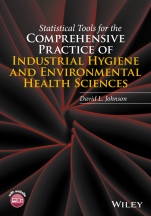
Statistical Tools for the Comprehensive Practice of Industrial Hygiene and Environmental Health Sciences
ISBN 9781119143017
Autor: David L. Johnson
Wydawca: Wiley
Dostępność: 3-6 tygodni
Cena: 523,95 zł
Przed złożeniem zamówienia prosimy o kontakt mailowy celem potwierdzenia ceny.
ISBN13: |
9781119143017 |
ISBN10: |
1119143012 |
Autor: |
David L. Johnson |
Oprawa: |
Hardback |
Rok Wydania: |
2017-03-03 |
Ilość stron: |
400 |
Wymiary: |
264x186 |
Tematy: |
MBN |
Reviews and reinforces concepts and techniques typical of a first statistics course with additional techniques useful to the IH/EHS practitioner
The occupational health, safety, and environmental science fields are data–intensive. Industrial hygiene and environmental health sciences (IH/EHS) professionals spend a lot of their time measuring things, and do so with the goal of answering a specific question. How they go about the measurements the what, when, where, who, and how of the measurements is driven by the why. That is, by the question they are trying to answer. However, the data always has some uncertainty because of measurement variability, and statistics helps the user see through the fog of uncertainty in order to draw accurate inferences about what is being measured.
Most undergraduate and graduate programs in industrial hygiene and environmental health sciences recognize the value of statistical tools, and require an introductory statistics course. Additional statistical tools and techniques beyond those usually covered in a basic course are typically needed. Statistical Tools for the Comprehensive Practice of Industrial Hygiene and Environmental Health Sciences reviews and reinforces the concepts and techniques typical of a first statistics course, and supplement them with additional graphical and non–parametric techniques that may be particularly useful to the IH/EHS practitioner.
Organized into nine chapters Statistical Tools for the Comprehensive Practice of Industrial Hygiene and Environmental Health Sciences features:
Techniques for displaying data, descriptive statistics, and data frequency distributions in various tabular and graphical formats Reviews parametric two–sample comparison techniques and introduces their non–parametric equivalents Techniques for assessing the likelihood of exposures in the upper tail of the distribution of potential exposures One–way parametric analysis of variance (ANOVA) and presents the non–parametric equivalent one–way ANOVA Two–way ANOVA and presents the non–parametric equivalent two–way ANOVA Parametric correlation analysis and regression analysis, including multiple regression and model–building Applications of the Chi–square test to frequency data, and introduces Fisher s Exact Test Application of Poisson probability based techniques, including comparison of two Poisson variablesStudents in industrial hygiene, safety, safety engineering, environmental engineering, environmental health, environmental sciences, and similar programs, and graduates of these programs who are already practicing professionals will benefit from the techniques covered in this text. Analysis using the readily available Excel® statistical functions is emphasized, so that special statistical software and programming expertise are not required.
David L. Johnson has over 40 years of experience in environmental engineering and occupational safety and health practice, research, and teaching. Dr. Johnson was a practicing environmental engineer and industrial hygienist with the United States Army for 20 years, serving in a variety of positions in the United States, Europe, and the Middle East. He joined the faculty of the University of Oklahoma s College of Public Health, Department of Occupational and Environmental Health in 1991.
Dedication
Preface
Acknowledgments
About the Author
Chapter 1. Some Basic Concepts
1.0 Objectives
1.1 Introduction
1.2 Physical vs. statistical sampling
1.3 Representative measures
1.4 Strategies for representative sampling
1.5 Measurement precision
1.6 Probability concepts
1.6.1 The relative frequency approach
1.6.2 The classical approach – probability based on deductive reasoning
1.6.3 Subjective probability
1.6.4 Complement of a probability
1.6.5 Mutually exclusive events
1.6.6 Independent events
1.6.7 Events that are not mutually exclusive
1.6.8 Marginal and conditional probabilities
1.6.9 Testing for independence
1.7 Permutations and combinations
1.7.1 Permutations for sampling without replacement
1.7.2 Permutations for sampling with replacement
1.7.3 Combinations
1.8 Introduction to frequency distributions
1.8.1 The Binomial distribution
1.8.2 The Normal distribution
1.8.3 The Chi–square distribution
1.9 Confidence intervals and hypothesis testing
1.10 Summary
1.11 Addendum: Glossary of Some Useful Excel Functions
1.12 Exercises
References
Chapter 2. Descriptive Statistics and Methods of Presenting Data
2.0 Objectives
2.1 Introduction
2.2 Quantitative descriptors of data and data distributions
2.3 Displaying data with frequency tables
2.4 Displaying data with histograms and frequency polygons
2.5 Displaying data frequency distributions with cumulative probability plots
2.6 Displaying data with NED and Q–Q plots
2.7 Displaying data with Box and Whisker plots
2.8 Data transformations to achieve normality
2.9 Identifying outliers
2.10 What to do with censored values?
2.11 Summary
2.12 Exercises
References
Chapter 3. Analysis of Frequency Data
3.0 Objectives
3.1 Introduction
3.2 Tests for association and goodness–of–fit
3.2.1 r×c contingency tables and the Chi–Square Test
3.2.2 Fisher s Exact Test
3.3 Binomial proportions
3.4 Rare events and the Poisson distribution
3.4.1 Poisson probabilities
3.4.2 Confidence interval on a Poisson count
3.4.3 Testing for fit with the Poisson distribution
3.4.4 Comparing two Poisson rates
3.4.5 Type I error, Type II error, and power
3.4.6 Power and sample size in comparing two Poisson rates
3.5 Summary
3.6 Exercises
References
Chapter 4. Comparing Two Conditions
4.0 Objectives
4.1 Introduction
4.2 Standard error of the mean
4.3 Confidence interval on a mean
4.4 The t–distribution
4.5 Parametric one–sample test – Student s t–test
4.6 Two–tailed vs. one–tailed hypothesis tests
4.7 Confidence interval on a variance
4.8 Other applications of the confidence interval concept in IH/EHS work
4.8.1 OSHA compliance determinations
4.8.2 Laboratory analyses LOB, LOD, and LOQ
4.9 Precision, power, and sample size for one mean
4.9.1 Sample size required to estimate a mean with a stated precision
4.9.2 Sample size required to detect a specified difference in Student s t–test
4.10 Iterative solutions using the Excel Goal Seek utility
4.11 Parametric two–sample tests
4.11.1 Confidence interval for a difference in means: the two–sample t–test
4.11.2 Two–sample t–test when variances are equal
4.11.3 Verifying the assumptions of the two–sample t–test
Lilliefors test for normality
Shapiro–Wilk W Test for normality
Testing for homogeneity of variance
Transformations to stabilize variance
4.11.4 Two–sample t–test with unequal variances Welch s Test
4.11.5 Paired sample t–test
4.11.6 Precision, power, and sample size for comparing two means
4.12 Testing for difference in two Binomial proportions
4.12.1 Testing a binomial proportion for difference from a known value
4.12.2 Testing two binomial proportions for difference
4.13 Nonparametric two–sample tests
4.13.1 Mann–Whitney U Test
4.13.2 Wilcoxon Matched Pairs Test
4.13.3 McNemar and Binomial tests for paired nominal data
4.14 Summary
4.15 Exercises
References
Chapter 5. Characterizing the Upper Tail of the Exposure Distribution
5.0 Objectives
5.1 Introduction
5.2 Upper Tolerance Limits
5.3 Exceedance Fractions
5.4 Distribution free tolerance limits
5.5 Summary
5.6 Exercises
References
Chapter 6. One–Way Analysis of Variance
6.0 Objectives
6.1 Introduction
6.2 Parametric one–way ANOVA
6.2.1 How the parametric ANOVA works sums of squares and the F–test
6.2.2 Post hoc multiple pairwise comparisons in parametric ANOVA
Tukey s Test
Tukey–Kramer Test
Dunnett s test for comparing means to a control mean
Planned contrasts using the Scheffé S test
6.2.3 Checking the ANOVA model assumptions NED plots and variance tests
Levene s Test
Bartlett s Test
6.3 Nonparametric Analysis of Variance
6.3.1 Kruskal–Wallis nonparametric one–way ANOVA
6.3.2 Post hoc multiple pairwise comparisons in nonparametric ANOVA
Nemenyi s Test
Bonferroni–Dunn Test
6.4 ANOVA disconnects
6.5 Summary
6.6 Exercises
References
Chapter 7. Two–Way Analysis of Variance
7.0 Objectives
7.1 Introduction
7.2 Parametric two–way ANOVA
7.2.1 Two–way ANOVA without interaction
7.2.2 Checking for homogeneity of variance
7.2.3 Multiple pairwise comparisons when there is no interaction term
7.2.4 Two–way ANOVA with interaction
7.2.5 Multiple pairwise comparisons with interaction
7.2.6 Two–way ANOVA without replication
7.2.7 Repeated measures ANOVA
7.2.8 Two–way ANOVA with unequal sample sizes
7.3 Nonparametric two–way ANOVA
7.3.1 Rank tests
The Rank test
The Rank Transform test
Other options Aligned Rank tests
7.3.2 Repeated measures nonparametric ANOVA Friedman s test
Friedman s Test without replication
Multiple comparisons for Friedman s test without replication
Friedman s Test with replication
Multiple comparisons for Friedman s test with replication
7.4 More powerful non–ANOVA approaches: linear modeling
7.5 Summary
7.6 Exercises
References
Chapter 8. Correlation Analysis
8.0 Objectives
8.1 Introduction
8.2 Simple parametric correlation analysis
8.2.1 Testing the correlation coefficient for significance
t–test for significance
F test for significance
8.2.2 Confidence limits on the correlation coefficient
8.2.3 Power in simple correlation analysis
8.2.4 Comparing two correlation coefficients for difference
8.2.5 Comparing more than two correlation coefficients for difference
8.2.6 Multiple pairwise comparisons of correlation coefficients
8.3 Simple nonparametric correlation analysis
8.3.1 Spearman rank correlation coefficient
8.3.2 Testing Spearman s rank correlation coefficient for statistical significance
8.3.3 Correction to Spearman s rank correlation coefficient when there are tied ranks
8.4 Multiple correlation analysis
8.4.1 Parametric multiple correlation
8.4.2 Nonparametric multiple correlation: Kendall s coefficient of concordance
8.5 Determining causation
8.6 Summary
8.7 Exercises
References
Chapter 9. Regression Analysis
9.0 Objectives
9.1 Introduction
9.2 Linear regression
9.2.1 Simple linear regression
9.2.2 Non–constant variance transformations and weighted least squares regression
9.2.3 Multiple linear regression
Multiple regression in Excel
Multiple regression using the Excel Solver utility
Multiple regression using advanced software packages
9.2.4 Using regression for factorial ANOVA with unequal sample sizes
9.2.5 Multiple correlation analysis using multiple regression
Assumptions of parametric multiple correlation
Options when collinearity is a problem
9.2.6 Polynomial regression
9.2.7 Interpreting linear regression results
9.2.8 Linear regression vs. ANOVA
9.3 Logistic regression
9.3.1 Odds and odds ratios
9.3.2 The logit transformation
9.3.3 The likelihood function
9.3.4 Logistic regression in Excel
9.3.5 Likelihood Ratio test for significance of MLE coefficients
9.3.6 Odds ratio confidence limits in multivariate models
9.4 Poisson regression
9.4.1 Poisson regression model
9.4.2 Poisson regression in Excel
9.5 Regression with Excel add–ons
9.6 Summary
9.7 Exercises
References
Chapter 10. Analysis of Covariance
10.0 Objectives
10.1 Introduction
10.2 The simple ANCOVA model and its assumptions
10.2.1 Required regressions
10.2.2 Checking the ANCOVA assumptions
Linearity, independence, and normality
Similar variances
Equal regression slopes
10.2.3 Testing and estimating the treatment effects
10.3 The two–factor covariance model
10.4 Summary
10.5 Exercises
References
Chapter 11. Experimental Design
11.0 Objectives
11.1 Introduction
11.2 Randomization
11.3 Simple randomized experiments
11.4 Experimental designs blocking on categorical factors
11.5 Randomized full factorial experimental design
11.6 Randomized full factorial design with blocking
11.7 Split plot experimental designs
11.8 Balanced experimental designs Latin Square
11.9 Two–level factorial experimental designs with quantitative factors
11.9.1 Two–level factorial designs for exploratory studies
11.9.2 The Standard Order
11.9.3 Calculating main effects
11.9.4 Calculating interactions
11.9.5 Estimating standard Errors
11.9.6 Estimating effects with REGRESSION in Excel
11.9.7 Interpretation
11.9.8 Cube, surface, and NED plots as an aid to interpretation
11.9.9 Fractional factorial two–level experiments
11.10 Summary
11.11 Exercises
References .
Chapter 12. Uncertainty and Sensitivity Analysis
12.0 Objectives
12.1 Introduction
12.2 Simulation modeling
12.2.1 Propagation of errors
12.2.2 Simple bounding
Sums and differences
Products and ratios
Powers
12.2.3 Addition in Quadrature
Sums and differences
Products and ratios
Powers
12.2.4. LOD and LOQ revisited – dust sample gravimetric analysis
12.3 Uncertainty analysis
12.4 Sensitivity analysis
12.4.1 One–at–a–time (OAT) analysis
12.4.2 Variance–based analysis
12.5 Further reading on uncertainty and sensitivity analysis
12.6 Monte Carlo simulation
12.7 Monte Carlo simulation in Excel
12.7.1 Generating random numbers in Excel
12.7.2 The populated spreadsheet approach
12.7.3 Monte Carlo simulation using VBA macros
12.8 Summary
12.9 Exercises
References
Chapter 13. Bayes Theorem and Bayesian Decision Analysis
13.0 Objectives
13.1 Introduction
13.2 Bayes Theorem
13.3 Sensitivity, specificity, and positive and negative predictive value in screening tests
13.4 Bayesian Decision Analysis in Exposure Control Banding
13.4.1 Introduction to BDA
13.4.2 The prior distribution and the parameter space
13.4.3 The posterior distribution and likelihood function
13.4.4 Relative influences of the prior and the data
13.4.5 Frequentist vs. Bayesian perspectives
13.5 Exercises
13.6 References
Appendix A z–tables of the standard normal distribution
Appendix B Critical values of the chi–square distribution
Appendix C Critical values for the t–distribution
Appendix D Critical values for Lilliefors test
Appendix E Shapiro–Wilk W Test coefficients and critical values
Appendix F Critical values of the F distribution for =0.05
Appendix G Critical U values for the Mann–Whitney U test
Appendix H Critical Wilcoxon matched pairs test T values
Appendix I K values for Upper Tolerance Limits
Appendix J Exceedance Fraction 95% Lower Confidence Limit vs Z
Appendix K q values for Tukey s, Tukey–Kramer, & Nemenyi s MSD tests
Appendix L q′ values for Dunnett s test
Appendix M Q values for the Bonferroni–Dunn MSD test
Appendix N Critical Spearman rank correlation test values
Appendix O Critical values of Kendall s W
Index
Koszyk
Książek w koszyku: 0 szt.
Wartość zakupów: 0,00 zł
Informacje


Kontakt
Gambit
Centrum Oprogramowania
i Szkoleń Sp. z o.o.
Al. Pokoju 29b/22-24
31-564 Kraków
Siedziba Księgarni
ul. Kordylewskiego 1
31-542 Kraków
+48 12 410 5991
+48 12 410 5987
+48 12 410 5989
Subskrypcje
Administratorem danych osobowych jest firma Gambit COiS Sp. z o.o. Na podany adres będzie wysyłany wyłącznie biuletyn informacyjny.
Autoryzacja płatności

Informacje na temat autoryzacji płatności poprzez PayU.

© Copyright 2012: GAMBIT COiS Sp. z o.o. Wszelkie prawa zastrzeżone.
Projekt i wykonanie: Alchemia Studio Reklamy