


Wydawcy
Katalog tematyczny
- Archeologia (1)
- Ekonomia, finanse, business (698)
- Filozofia (20)
- Historia (57)
- Języki i językoznawstwo (4)
- Lifestyle, hobby i rozrywka (32)
- Medycyna (1025)
- Nauki humanistyczne (2)
- Nauki o Ziemi i środowisku (430)
- Nauki ścisłe (1681)
- Nauki społeczne (1297)
- Nauki techniczne (530)
- Prawo (1437)
- Publikacje informacyjne i interdyscyplinarne (32)
- Religia i wierzenia (15)
- Technika komputerowa (237)
- Zdrowie, relacje międzyludzkie i rozwój osobisty (4)





Informacje szczegółowe o książce
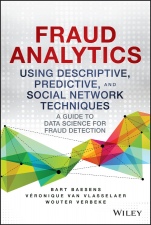
Fraud Analytics Using Descriptive, Predictive, and Social Network Techniques: A Guide to Data Science for Fraud Detection
ISBN 9781119133124
Autor: Bart Baesens, Veronique Van Vlasselaer, Wouter Verbeke
Wydawca: Wiley
Dostępność: 3-6 tygodni
Cena: 248,85 zł
Przed złożeniem zamówienia prosimy o kontakt mailowy celem potwierdzenia ceny.
ISBN13: |
9781119133124 |
ISBN10: |
1119133122 |
Autor: |
Bart Baesens, Veronique Van Vlasselaer, Wouter Verbeke |
Oprawa: |
Hardback |
Rok Wydania: |
2015-10-09 |
Ilość stron: |
400 |
Wymiary: |
229x165 |
Tematy: |
KM |
THE DEFINITIVE GUIDE TO THE DETECTION AND PREVENTION OF FRAUD THROUGH DATA ANALYTICS
Catch fraud early! Fraud Analytics Using Descriptive, Predictive, and Social Network Techniques shows you how with a thorough overview of how to prevent losses and recover quickly as well as the security issues you need to address now. Exploring how auditors, corporate security prevention managers, and fraud prevention professionals can stay one step ahead of cyber criminals, this book addresses the different types of analytics in detecting fraud, including descriptive analytics, predictive analytics, and social network analysis.
Fraud Analytics Using Descriptive, Predictive, and Social Network Techniques offers a current, state–of–the–art detection and prevention methodology, describing the data necessary to detect fraud. Taking you from the basics of fraud detection data analytics, through advanced pattern recognition methodology, to cutting–edge social network analysis and fraud ring detection, this book presents essential coverage of:
The fraud analytics process model Big data Break point/peer group analysis Anomaly detection Linear/logistic regression Neural networks Ensemble methods Social network metrics Bipartite graphs Community mining Visual analytics Model monitoring and backtestingInsightful and clearly written, this hands–on guide reveals what you need to know about fraud analytics and the secret to putting historical data to work in the fight against fraud.
Chapter 1: Fraud: Detection, Prevention & Analytics!
Introduction
Fraud!
Fraud Detection and Prevention
Big Data for Fraud Detection
Data Driven Fraud Detection
Fraud Detection Techniques
Fraud Cycle
The Fraud Analytics Process Model
Fraud Data Scientists
A Scientific Perspective on Fraud
References
Chapter 2: Data Collection, Sampling and Preprocessing
Introduction
Types of Data Sources
Merging Data Sources
Sampling
Types of Data Elements
Visual Data Exploration and Exploratory Statistical Analysis
Benford s Law
Descriptive Statistics
Missing Values
Outlier Detection and Treatment
Red Flags
Standardizing Data
Categorization
Weights Of Evidence Coding
Variable Selection
Principal Components Analysis
Ridits
PRIDIT Analysis
Segmentation
References
Chapter 3: Descriptive Analytics for Fraud Detection
Introduction
Graphical Outlier Detection Procedures
Statistical Outlier Detection Procedures
Clustering
One Class SVMs
References
Chapter 4: Predictive Analytics for Fraud Detection
Introduction
Target Definition
Linear Regression
Logistic Regression
Variable Selection for Linear and Logistic Regression
Decision Trees
Neural Networks
Support Vector Machines
Ensemble Methods
Multiclass Classification Techniques
Evaluating Predictive Models
Other Performance Measures for Predictive Analytical Models
Developing Predictive Models for Skewed Data Sets
Fraud Performance Benchmarks
References
Chapter 5: Social Network Analysis for Fraud Detection
Networks: Form, Components, Characteristics and their Applications
Is Fraud a Social Phenomenon? An Introduction to Homophily
Impact of the Neighborhood: Metrics
Community Mining: Finding Groups of Fraudsters
Extending the Graph: Towards a Bipartite Representation
Case Study: GOTCHA!
References
Chapter 6: Fraud Analytics: Post Processing
Introduction
The Analytical Fraud Model Lifecycle
Model Representation
Selecting the Sample to Investigate
Fraud Alert and Case Management
Visual Analytics
Backtesting Analytical Fraud Models
Model Design and Documentation
References
Chapter 7: Fraud Analytics: A Broader Perspective
Introduction
Data Quality
Privacy
Capital Calculation for Fraud Loss
An Economic Perspective on Fraud Analytics
In– Versus Outsourcing
Modeling Extensions
The Internet of Things
Corporate Fraud Governance
BART BAESENS is a full professor at KU Leuven, and a lecturer at the University of Southampton. He has done extensive research on analytics, customer relationship management, web analytics, fraud detection, and credit risk management. He regularly advises and provides consulting support to international firms with respect to their analytics and credit risk management strategy.
VÉRONIQUE VAN VLASSELAER is a PhD researcher in the Department of Decision Sciences and Information Management at KU Leuven. Her research focuses on the development of new techniques for fraud detection by combining predictive and network analytics.
WOUTER VERBEKE is an assistant professor at Vrije Universiteit Brussel (Brussels, Belgium). His research is situated in the field of predictive analytics and complex network analysis with applications in fraud, marketing, credit risk, human resources management, and mobility.
Koszyk
Książek w koszyku: 0 szt.
Wartość zakupów: 0,00 zł
Informacje


Kontakt
Gambit
Centrum Oprogramowania
i Szkoleń Sp. z o.o.
Al. Pokoju 29b/22-24
31-564 Kraków
Siedziba Księgarni
ul. Kordylewskiego 1
31-542 Kraków
+48 12 410 5991
+48 12 410 5987
+48 12 410 5989
Subskrypcje
Administratorem danych osobowych jest firma Gambit COiS Sp. z o.o. Na podany adres będzie wysyłany wyłącznie biuletyn informacyjny.
Autoryzacja płatności

Informacje na temat autoryzacji płatności poprzez PayU.

© Copyright 2012: GAMBIT COiS Sp. z o.o. Wszelkie prawa zastrzeżone.
Projekt i wykonanie: Alchemia Studio Reklamy