


Wydawcy
Katalog tematyczny
- Archeologia (109)
- Ekonomia, finanse, business (13704)
- Filozofia (1445)
- Historia (3040)
- Języki i językoznawstwo (2356)
- Lifestyle, hobby i rozrywka (475)
- Medycyna (9704)
- Nauki humanistyczne (4)
- Nauki o Ziemi i środowisku (2638)
- Nauki ścisłe (20412)
- Nauki społeczne (8486)
- Nauki techniczne (13450)
- Budownictwo lądowe (1045)
- Chemia przemysłowa (2258)
- Elektronika i telekomunikacja (3287)
- Energetyka (1122)
- Inne nauki stosowane (363)
- Inżynieria biochemiczna (507)
- Inżynieria transportu (232)
- Mechanika i materiały (3316)
- Nauka o środowisku (321)
- Rolnictwo (507)
- Technika, ogólnie (475)
- Prawo (1696)
- Publikacje informacyjne i interdyscyplinarne (1288)
- Religia i wierzenia (917)
- Technika komputerowa (4067)
- Zdrowie, relacje międzyludzkie i rozwój osobisty (657)





Informacje szczegółowe o książce
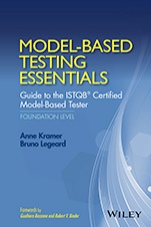
Model–Based Testing Essentials – Guide to the ISTQB Certified Model–Based Tester: Foundation Level
ISBN 9781119130017
Autor: Anne Kramer, Bruno Legeard, Gualtiero Bazzana, Robert V. Binder
Wydawca: Wiley
Dostępność: 3-6 tygodni
Cena: 433,65 zł
Przed złożeniem zamówienia prosimy o kontakt mailowy celem potwierdzenia ceny.
ISBN13: |
9781119130017 |
ISBN10: |
1119130018 |
Autor: |
Anne Kramer, Bruno Legeard, Gualtiero Bazzana, Robert V. Binder |
Oprawa: |
Hardback |
Rok Wydania: |
2016-05-20 |
Ilość stron: |
296 |
Wymiary: |
241x163 |
Tematy: |
TJ |
Provides a practical and comprehensive introduction to the key aspects of model–based testing as taught in the ISTQB® Model–Based Tester Foundation Level Certification Syllabus
This book covers the essentials of Model–Based Testing (MBT) needed to pass the ISTQB® Foundation Level Model–Based Tester Certification. The text begins with an introduction to MBT, covering both the benefits and the limitations of MBT. The authors review the various approaches to model–based testing, explaining the fundamental processes in MBT, the different modeling languages used, common good modeling practices, and the typical mistakes and pitfalls. The book explains the specifics of MBT test implementation, the dependencies on modeling and test generation activities, and the steps required to automate the generated test cases. The text discusses the introduction of MBT in a company, presenting metrics to measure success and good practices to apply.
Provides case studies illustrating different approaches to Model–Based Testing Includes in–text exercises to encourage readers to practice modeling and test generation activities Contains appendices with solutions to the in–text exercises, a short quiz to test readers, along with additional informationModel–Based Testing Essentials Guide to the ISTQB® Certified Model–Based Tester Foundation Level is written primarily for participants of the ISTQB® Certification: software engineers, test engineers, software developers, and anybody else involved in software quality assurance. This book can also be used for anyone who wants a deeper understanding of software testing and of the use of models for test generation.
Anne Kramer, PhD, is Senior Consultant and Project Manager at sepp.med gmbh, a German IT service provider specializing in quality assurance. Dr. Kramer has actively participated in the elaboration of the new ISTQB® Certified Test Model–Based Testing Syllabus. Dr. Kramer teaches model–based testing as part of the sepp.med training portfolio.
Bruno Legeard is Professor of Software Engineering at the University of Franche–Comté, co–founder and Scientific Advisor of Smartesting. Prof. Legeard is an ISTQB Certified Tester, member of the French Testing Board (CFTL) and he co–leads at ISTQB International Software Testing Qualification Board the writer of the new Certified Tester Model–Based Testing syllabus. He is a member of several program committees in software testing each year and an author of numerous publications in the field. In 2015, he is Program Chair of UCAAT User Conference on Advanced Automated Testing.
Table of Contents
Dedication
Preface
The ISTQB Certified Tester Foundation Level Model–Based Tester
How this book is organized
Acknowledgments
1. Introduction to model–based testing
1.1. Why do we need new approaches to testing?
1.2. What is model–based testing?
1.3. Benefits of MBT
1.4. Misleading expectations and pitfalls of MBT
1.5. What can you realistically expect?
2. What you should know about MBT before starting
2.1. ISTQB MBT glossary terms used in this book
2.2. Other terms to know
2.3. he modeling languages used in this book
3. Process aspects of MBT
3.1. MBT and the fundamental test process
3.2. The typical MBT process
3.3. MBT and software development lifecycles
3.4. How MBT supports requirement engineering
4. Aspects to consider before you start writing an MBT model
4.1. Preliminary considerations on MBT modeling
4.2. Subject and focus of your MBT model
4.3. The influence of test objectives on MBT models
5. Modeling languages The agony of choice
5.1. Main categories of modeling languages
5.2. UML and BPMN
5.3. Other graphical modeling languages used for MBT
5.4. Textual modeling languages used for MBT
5.5. How to select the appropriate modeling language
6. Good MBT modeling practices
6.1. Quality characteristics for MBT models
6.2. Typical mistakes and pitfalls in MBT model design
6.3. Linking requirements and process–related information to the MBT model
6.4. The significance of modeling guidelines for MBT
6.5. The question of reusing models from other development activities
6.6. Tool support for MBT modeling activities
6.7. Iterative MBT model development
6.8. Other recommendations
7. How MBT relates to test design techniques
7.1. Equivalence partitioning and boundary value analysis
7.2. Decision tables
7.3. State transition testing
7.4. Use case testing
8. Deriving tests from an MBT model
8.1. Taxonomy of selection criteria
8.2. Test case selection in practice
8.3. Examples of coverage criteria
8.4. Pros and cons of specific test selection criteria
8.5. Some recommendations regarding test case selection
8.6. Degree of automation in test generation
9. Executing model–based tests
9.1. Understanding the concepts
9.2. Adapting test cases for automated execution
9.3. Adapting MBT artifacts due to changes
10. Introducing MBT in your company
10.1. Five steps to MBT adoption
10.2. Return–on–invest considerations
10.3. Prioritize your organizational objectives
10.4. How to measure progress and success
10.5. Deploying MBT
10.6. Initial and running costs of MBT
10.7. Integrating the tools
11. Case studies
11.1. Enterprise IT Model–Based Testing OrangeHRM case study
11.2. MBT for process–supporting SW Tool validation case study
11.3. MBT for security components PKCS#11 case study
12. Conclusions
Appendix A: Solutions of exercises
Appendix B: Test yourself
Appendix C: Taxonomy of MBT approaches
Abbreviations
Terms and definitions
ISTQB terms
Other terms
Index
Anne Kramer, PhD, is Senior Consultant and Project Manager at sepp.med gmbh, a German IT service provider specializing in quality assurance. Dr. Kramer has actively participated in the elaboration of the new ISTQB® Certified Test Model–Based Testing Syllabus. Dr. Kramer teaches model–based testing as part of the sepp.med training portfolio.
Bruno Legeard is Professor of Software Engineering at the University of Franche–Comté, co–founder and Scientific Advisor of Smartesting. Prof. Legeard is an ISTQB Certified Tester, member of the French Testing Board (CFTL) and he co–leads at ISTQB International Software Testing Qualification Board the writer of the new Certified Tester Model–Based Testing syllabus. He is a member of several program committees in software testing each year and an author of numerous publications in the field. In 2015, he became Program Chair of UCAAT User Conference on Advanced Automated Testing.
Koszyk
Książek w koszyku: 0 szt.
Wartość zakupów: 0,00 zł
Informacje


Kontakt
Gambit
Centrum Oprogramowania
i Szkoleń Sp. z o.o.
Al. Pokoju 29b/22-24
31-564 Kraków
Siedziba Księgarni
ul. Kordylewskiego 1
31-542 Kraków
+48 12 410 5991
+48 12 410 5987
+48 12 410 5989
Subskrypcje
Administratorem danych osobowych jest firma Gambit COiS Sp. z o.o. Na podany adres będzie wysyłany wyłącznie biuletyn informacyjny.
Autoryzacja płatności

Informacje na temat autoryzacji płatności poprzez PayU.

© Copyright 2012: GAMBIT COiS Sp. z o.o. Wszelkie prawa zastrzeżone.
Projekt i wykonanie: Alchemia Studio Reklamy