


Wydawcy
Katalog tematyczny
- Archeologia (109)
- Ekonomia, finanse, business (13704)
- Filozofia (1445)
- Historia (3040)
- Języki i językoznawstwo (2356)
- Lifestyle, hobby i rozrywka (475)
- Medycyna (9704)
- Nauki humanistyczne (4)
- Nauki o Ziemi i środowisku (2638)
- Nauki ścisłe (20412)
- Nauki społeczne (8486)
- Nauki techniczne (13450)
- Prawo (1696)
- Publikacje informacyjne i interdyscyplinarne (1288)
- Religia i wierzenia (917)
- Technika komputerowa (4067)
- Zdrowie, relacje międzyludzkie i rozwój osobisty (657)





Informacje szczegółowe o książce
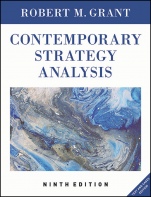
Contemporary Strategy Analysis: Text and Cases Edition
ISBN 9781119120841
Autor: Robert M. Grant
Wydawca: Wiley
Dostępność: 3-6 tygodni
Cena: 351,75 zł
Przed złożeniem zamówienia prosimy o kontakt mailowy celem potwierdzenia ceny.
ISBN13: |
9781119120841 |
ISBN10: |
1119120845 |
Autor: |
Robert M. Grant |
Oprawa: |
Paperback |
Rok Wydania: |
2015-12-18 |
Numer Wydania: |
9th Edition |
Ilość stron: |
776 |
Wymiary: |
243x189 |
Tematy: |
KM |
Great textbook that manages to provide both scientific insight as well as valuable tools for practice.
Prof. Dr Phillip C. Nell, Vienna University of Economics and Business, Austria
Grant s Contemporary Strategy Analysis provides a comprehensive and practical review of all the key strategy topics, from analysing internal resources and capabilities to competitive advantage in mature industries. It provides a detailed and pragmatic overview, ideal for my Strategy Exec MBA module, with numerous practical case studies making it a must have for both post graduates and industry practitioners.
Amazon Reviewer
Contemporary Strategy Analysis, 9th edition, is the latest installment of Robert M. Grant s widely adopted and internationally acclaimed book on strategy analysis in a business context. An ideal study companion for MBA and advanced undergraduate courses, Grant employs his vibrant and accessible writing style to introduce the core concepts and principles of strategy analysis, whilst combining a rigorous approach to business strategy with highly relevant illustrations of current practice. The rich collection of contemporary examples which run throughout the book present an in–depth focus on strategy implementation, particularly the pressures on companies to reconcile scale economies with entrepreneurial flexibility, innovation with cost–efficiency and globalization with local responsiveness.
The 9th edition is fully revised and updated to include greater emphasis on strategy implementation, platform–based competition and industry ecosystems , the role of strategy–making processes and practices, and mergers, acquisitions and alliances.
This text and cases combined volume includes 24 full–length cases written specifically by the author to enable students to apply concepts and techniques of strategy analysis to real–life scenarios. The cases, which have been completely updated, include several new entries such as Tough Mudder, Haier Group, Chipotle and the Marijuana Industry.
Contemporary Strategy Analysis comes equipped with a strong package of additional teaching materials, including author videos, PowerPoint slides, instructor s manual, testbank and case teaching notes, all of which can be found at www.wiley.com/college/grant.
Robert M. Grant is the Eni Professor of Strategic Management at Bocconi University in Milan, and a Visiting Professor at Georgetown University and City University, London. His previous faculty positions included London Business School, California Polytechnic, University of British Columbia, and University of St Andrews. His business experience ranges from manufacturing tires (Firestone) and meat pies (Kraft Foods) to strategy consulting with companies such as Eni and American Express.
Preface to Ninth Edition
PART I INTRODUCTION
1 The Concept of Strategy
Introduction and Objectives
The Role of Strategy in Success
The Basic Framework for Strategy Analysis
A Brief History of Business Strategy
Strategy Today
How Is Strategy Made? The Strategy Process
Strategic Management of Not–For–Profit Organizations
Summary
Self–Study Questions
Notes
PART II THE TOOLS OF STRATEGY ANALYSIS
2 Goals, Values, and Performance
Introduction and Objectives
Strategy as a Quest for Value
Putting Performance Analysis into Practice
Beyond Profit: Values and Corporate Social Responsibility
Beyond Profit: Strategy and Real Options
Summary
Self–Study Questions
Notes
3 Industry Analysis: The Fundamentals
Introduction and Objectives
From Environmental Analysis to Industry Analysis
Analyzing Industry Attractiveness
Applying Industry Analysis to Forecasting Industry Profitability
Using Industry Analysis to Develop Strategy
Defining Industries: Where to Draw the Boundaries
From Industry Attractiveness to Competitive Advantage: Identifying Key Success Factors
Summary
Self–Study Questions
Notes
4 Further Topics in Industry and Competitive Analysis
Introduction and Objectives
Extending the Five Forces Framework
Dynamic Competition: Hypercompetition, Game Theory, and Competitor Analysis
Segmentation and Strategic Groups
Summary
Self–Study Questions
Notes
5 Analyzing Resources and Capabilities
Introduction and Objectives
The Role of Resources and Capabilities in Strategy Formulation
Identifying Resources and Capabilities
Appraising Resources and Capabilities
Developing Strategy Implications
Summary
Self–Study Questions
Notes
6 Organization Structure and Management Systems: The Fundamentals of Strategy Implementation
Introduction and Objectives
From Strategy to Execution
Organizational Design: The Fundamentals of Organizing
Organizational Design: Choosing the Right Structure
Summary
Self–Study Questions
Notes
PART III BUSINESS STRATEGY AND THE QUEST FOR COMPETITIVE ADVANTAGE
7 The Sources and Dimensions of Competitive Advantage
Introduction and Objectives
How Competitive Advantage Is Established and Sustained
Types of Competitive Advantage: Cost and Differentiation
Cost Analysis
Differentiation Analysis
Implementing Cost and Differentiation Strategies
Summary
Self–Study Questions
Notes
8 Industry Evolution and Strategic Change
Introduction and Objectives
The Industry Life Cycle
The Challenge of Organizational Adaptation and Strategic Change
Managing Strategic Change
Summary
Self–Study Questions
Notes
9 Technology–based Industries and the Management of Innovation
Introduction and Objectives
Competitive Advantage in Technology–intensive Industries
Strategies to Exploit Innovation: How and When to Enter
Standards, Platforms, and Network Externalities
Platform–based Markets
Implementing Technology Strategies: Creating the Conditions for Innovation
Accessing External Sources of Innovation
Summary
Self–Study Questions
Notes
10 Competitive Advantage in Mature Industries
Introduction and Objectives
Competitive Advantage in Mature Industries
Strategy Implementation in Mature Industries: Structure, Systems, and Style
Strategies for Declining Industries
Summary
Self–Study Questions
Notes
PART IV CORPORATE STRATEGY
11 Vertical Integration and the Scope of the Firm
Introduction and Objectives
Transaction Costs and the Scope of the Firm
The Benefits and Costs of Vertical Integration
The Benefits from Vertical Integration
The Costs of Vertical Integration
Applying the Criteria: Deciding Whether to Make or Buy
Designing Vertical Relationships
Different Types of Vertical Relationship
Choosing among Alternative Vertical Relationships
Recent Trends
Summary
Self–Study Questions
Notes
12 Global Strategy and the Multinational Corporation
Introduction and Objectives
Implications of International Competition for Industry Analysis
Analyzing Competitive Advantage in an International Context
Internationalization Decisions: Locating Production
Internationalization Decisions: Entering a Foreign Market
Multinational Strategies: Global Integration versus National Differentiation
Implementing International Strategy: Organizing the Multinational Corporation
Summary
Self–Study Questions
Notes
13 Diversification Strategy
Introduction and Objectives
Motives for Diversification
Competitive Advantage from Diversification
Diversification and Performance
The Meaning of Relatedness in Diversification
Summary
Self–Study Questions
Notes
14 Implementing Corporate Strategy: Managing the Multibusiness Firm
Introduction and Objectives
The Role of Corporate Management
Managing the Corporate Portfolio
Managing Linkages Across Businesses
Managing Individual Businesses
Managing Change in the Multibusiness Corporation
Governance of Multibusiness Corporations
Summary
Self–Study Questions
Notes
15 External Growth Strategies: Mergers, Acquisitions, and Alliances
Introduction and Objectives
Mergers and Acquisitions
Strategic Alliances
Summary
Self–Study Questions
Notes
16 Current Trends in Strategic Management
Introduction
The New Environment of Business
New Directions in Strategic Thinking
Redesigning Organizations
The Changing Role of Managers
Summary
Notes
CASES TO ACCOMPANY CONTEMPORARY STRATEGY ANALYSIS, Ninth EDITION
1 Tough Mudder Inc.: The Business of Mud Runs
2 Starbucks Corporation, May 2015
3 Kering SA: Probing the Performance Gap With LVMH
4 Pot of Gold? The US Legal Marijuana Industry
5 The US Airline Industry in 2015
6 Wal–Mart Stores, Inc., June 2015
7 Harley–Davidson, Inc., May 2015
8 BP: Organizational Structure and Management Systems
9 AirAsia: The World s Lowest–cost Airline
10 Chipotle Mexican Grill, Inc.: Disrupting the Fast–food Business
11 Ford and the World Automobile Industry in 2015
12 Eastman Kodak s Quest for a Digital Future
13 Tesla Motors: Disrupting the Auto Industry
14 Video Game Console Industry in 2015
15 New York Times: The Search for a New Business Model
16 Eni SpA: The Corporate Strategy of an International Energy Major
17 American Apparel: Vertically Integrated in Downtown LA
18 Chipotle Mexican Grill, Inc.: The International Challenge
19 Haier Group: Internationalization Strategy
20 The Virgin Group in 2015
21 Google Is Now Alphabet But What s the Corporate Strategy?
22 Jeff Immelt and the New General Electric
23 Bank of America s Acquisition of Merrill Lynch
24 W. L. Gore & Associates: Rethinking Management?
Glossary
Index
Robert M. Grant is the Eni Professor of Strategic Management at Bocconi University in Milan, and a Visiting Professor at Georgetown University and City University, London. His previous faculty positions included London Business School, California Polytechnic, University of British Columbia, and University of St Andrews. His business experience ranges from manufacturing tires (Firestone) and meat pies (Kraft Foods) to strategy consulting with companies such as Eni and American Express.
Koszyk
Książek w koszyku: 0 szt.
Wartość zakupów: 0,00 zł
Informacje


Kontakt
Gambit
Centrum Oprogramowania
i Szkoleń Sp. z o.o.
Al. Pokoju 29b/22-24
31-564 Kraków
Siedziba Księgarni
ul. Kordylewskiego 1
31-542 Kraków
+48 12 410 5991
+48 12 410 5987
+48 12 410 5989
Subskrypcje
Administratorem danych osobowych jest firma Gambit COiS Sp. z o.o. Na podany adres będzie wysyłany wyłącznie biuletyn informacyjny.
Autoryzacja płatności

Informacje na temat autoryzacji płatności poprzez PayU.

© Copyright 2012: GAMBIT COiS Sp. z o.o. Wszelkie prawa zastrzeżone.
Projekt i wykonanie: Alchemia Studio Reklamy