


Wydawcy
Katalog tematyczny
- Archeologia (109)
- Ekonomia, finanse, business (13704)
- Filozofia (1445)
- Historia (3040)
- Języki i językoznawstwo (2356)
- Lifestyle, hobby i rozrywka (475)
- Medycyna (9704)
- Nauki humanistyczne (4)
- Nauki o Ziemi i środowisku (2638)
- Nauki ścisłe (20412)
- Astronomia (294)
- Biologia (5119)
- Chemia (6540)
- Chemia analityczna (361)
- Chemia fizyczna (346)
- Chemia nieorganiczna (137)
- Chemia organiczna (535)
- Krystalografia (27)
- Minerologia (46)
- Fizyka (3309)
- Matematyka (4574)
- Nauki ścisłe, ogólnie (503)
- Nauki społeczne (8486)
- Nauki techniczne (13450)
- Prawo (1696)
- Publikacje informacyjne i interdyscyplinarne (1288)
- Religia i wierzenia (917)
- Technika komputerowa (4067)
- Zdrowie, relacje międzyludzkie i rozwój osobisty (657)





Informacje szczegółowe o książce
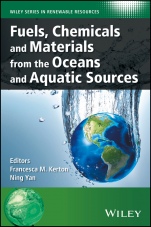
Fuels, Chemicals and Materials from the Oceans and Aquatic Sources
ISBN 9781119117162
Autor: Francesca M. Kerton, Ning Yan
Wydawca: Wiley
Dostępność: 3-6 tygodni
Cena: 605,85 zł
Przed złożeniem zamówienia prosimy o kontakt mailowy celem potwierdzenia ceny.
ISBN13: |
9781119117162 |
ISBN10: |
111911716X |
Autor: |
Francesca M. Kerton, Ning Yan |
Oprawa: |
Hardback |
Rok Wydania: |
2017-06-30 |
Ilość stron: |
304 |
Wymiary: |
235x156 |
Tematy: |
PN |
Fuels, Chemicals and Materials from the Oceans and Aquatic Sources provides a holistic view of fuels, chemicals and materials from renewable sources in the oceans and other aquatic media. It presents established and recent results regarding the use of water–based biomass, both plants and animals,for value–added applications beyond food.
The book begins with an introductory chapter which provides an overview of ocean and aquatic sources for the production of chemicals and materials. Subsequent chapters focus on the use of various ocean bioresources and feedstocks, including microalgae, macroalgae, and waste from aquaculture and fishing industries, including fish oils, crustacean and mollusc shells.
Fuels, Chemicals and Materials from the Oceans and Aquatic Sources serves as a valuable reference for academic and industrial professionals working on the production of chemicals, materials and fuels from renewable feedstocks. It will also prove useful for researchers in the fields of green and sustainable chemistry, marine sciences and biotechnology.
Topics covered include:
Production and conversion of green macroalgae
Marine macroalgal biomass as an energy feedstock
Microalgae bioproduction
Bioproduction and utilization of chitin and chitosan
Applications of mollusc shells
Crude fish oil as a potential fuel
For more information on the Wiley Series in Renewable Resources visit www.wiley.com/go/rrs
List of Contirbutors
Preface
Chapter 1 Overview of Ocean and Aquatic Sources for the Production of Chemicals and Materials
1.1 Introduction
1.2 Shellfish–based biomass
1.2.1 Crustacean shells
1.2.2 Mollusc shells
1.3 Finfish–based biomass
1.4 Plant–based biomass
1.5 Summary and outlook
References
Chapter 2 Production and conversion of green macroalgae (Ulva spp.)
2.1 Production of Ulva biomass
2.1.1 Land–based tank culture in Kochi
2.1.1.1 Germling cluster method
2.1.1.2 Deep seawater
2.1.1.3 Multistep tank system
2.1.2 Improvement for more intensive culture
2.1.2.1 Selection of strain
2.1.2.2 Nutrient supply
2.2 Conversion of Ulva biomass
2.2.1 Microwave–assisted hydrothermal reaction of biomass
2.2.2 Microwave–assisted conversion of Ulva biomass
2.2.2.1 Microwave–assisted extraction of ulvan from Ulva biomass
2.2.2.2 Microwave–assisted hydrolysis of Ulva biomass
2.2.2.3 Microwave susceptibility of ulvan
2.3 Conclusions
References
Chapter 3 A new wave of research interest in marine macroalgae for chemicals and fuels: challenges and potentials
3.1. Introduction
3.2. Macroalgal feedstock for chemicals
3.3. Marine macroalgae as a biorefinery feedstock
3.4. Marine macroalgal biomass as an energy feedstock
3.4.1. Bio–ethanol
3.4.2. Bio–diesel
3.4.3. Bio–butanol
3.4.4. Bio–oil
3.5. Advances in cultivation technology
3.6. Marine algal cultivation for CO2 sequestration
3.7. Opportunities, challenges and conclusions
References
Chapter 4 Kappaphycus alvarezii: A Potential Sustainable Resource for Fertilizers and Fuels
4.1. Introduction
4.2. Composition and processing of Kappaphycus alvarezii
4.3. Simultaneous production of liquid fertilizer ( –Sap) and –carrageenan from fresh Kappaphycus alvarezii seaweed
4.4. –Sap as potential plant stimulant
4.5. Manipulation of –Sap for sustainable biomass intensification of maize
4.6. Bioethanol production from Kappaphycus alvarezii
4.7. Fuel intermediates and useful chemical from Kappaphycus alvarezii
4.8. Environmental impact of fuel and fertilizers production from Kappaphycus alvarezii
4.9. Conclusion and future prospect
References
Chapter 5 Microalgae Bioproduction Feeds, Foods, Nutraceuticals, and Polymers
5.1. Introduction
5.2. Microalgae and Bioproduction Methods
5.2.1. Microalgae Groups Considered
5.2.2. Bioproduction of Microalgae Methods
5.2.2.1 Batch, Continuous, Fed–batch Semi–continuous and Perfusion Culture Methods
5.2.2.2 Indoor/Outdoor and Open/Closed Bioproduction Systems
5.2.2.3 Novel Bioproduction Systems Under Development or Re–evaluation
5.2.2.3.1 Integrated Aquaculture System (IAS)
5.2.2.3.2 Dialysis Membrane Reactors
5.2.2.3.3 Offshore Membrane Enclosures for Growing Algae (OMEGA)
5.3. Microalgae Feedstock Products and Co–Products
5.3.1 Microalgae as Animal Feed
5.3.2 Microalgae as a Human Food Source
5.3.3 Microalgae in Nutraceuticals
5.3.3.1. Polyunsaturated Fatty Acids (PUFAs) in Microalgae
5.3.3.2. Antioxidants in Microalgae
5.3.4 Biopolymers from Microalgae
5.3.4.1 Chitin and Chitosan: Abundant biomaterial with high applicability
5.3.4.2 Uses for Chitin Polymorphic Forms and –chitin
5.3.4.3 Chitosan and its Derivatives: Oligosaccharides (COS) and Glucosamine
5.4. Conclusion The Path Forward
References
Chapter 6 Innovations in Crustacean Processing: Bio–production of Chitin and its Derivatives
6.1 Introduction
6.2 Innovations in Crustacean Processing
6.2.1 Conventional Processing Technologies
6.2.2 Innovations in Crustacean Processing
6.3 Utilization of Marine By–products
6.3.1 Processing Technologies for Crustacean By–products
6.3.2 A Biorefinery Approach for Value Chain Optimization of Crustacean Biomass Waste
6.4 Bio–production of Chitin and its Derivatives
6.4.1 Background
6.4.2 Isolation and Extraction of Chitin and Chitosan
6.4.3 Non–chemical Structural Modifications of Chitin and Chitosan
6.5 Conclusions
References
Chapter 7 Recent Progress on the Utilization of Chitin/Chitosan for Chemicals and Materials
7.1 Structure, source, and properties of chitin/chitosan
7.2 Isolation and purification of chitin/chitosan
7.3 Derivatives of chitin/chitosan
7.4 Utilization of chitin/chitosan for chemicals and materials
7.5 Closing remark and perspectives
References
Chapter 8 Characterization and Utilization of Waste Streams from Mollusc Aquaculture and Fishing Industries
8.1 Introduction
8.2 Processing and characterization of mollusc shells
8.2.1 Processing technologies
8.2.1.1 Bio–cleaning
8.2.2 Characterization of shells
8.2.2.1 Powder X–ray diffraction and polymorphs of calcium carbonate
8.2.2.2 Morphology of calcium carbonate particles using microscopy
8.2.2.3 Solid–state NMR spectra of mollusc shells
8.2.2.4 Infrared spectra of mollusc shells
8.2.2.5 Surface areas of ground mollusc shells
8.3 Applications of mollusc shells
8.3.1 Soil amendment
8.3.2 Treatment of metal contamination and acid mine drainage
8.3.3 Phosphate removal and water purification
8.3.4 Building materials
8.3.5 Mollusc–derived calcium oxide in catalysis
8.4 Conclusions
References
Chapter 9 Fish Processing Waste Streams as a Feedstock for Fuels
9.1 Introduction
9.2 Fish processing by–product
9.3 Chemical and physical properties of crude fish oil
9.3.1 Chemical composition of crude fish oil
9.4 Oil recovery processes and parameters
9.4.1 Physical/thermal separation processes
9.4.2 Chemical extraction processes
9.4.2.1 Solvent extraction
9.4.3 Biological/chemical hydrolysis and Fermentation
9.4.3.1 Hydrolysis
9.4.3.2 Fermentation
9.4.4 Purification
9.4.5 Preservation of feedstock and the recovered oil
9.5 Fuel properties of crude and refined fish oils
9.6 Performance of crude fish oil as a fuel
9.7 Upgrading marine crude bio–oil
9.7.1 Types of refined fish oil products
9.7.2 Transesterification
9.7.3 Pyrolysis
9.7.4 Microemulsification
9.7.5 Alternative processes
9.8 Emission comparison for bio–oils
9.8.1 Crude fish oil
9.8.2 Fish biodiesel
9.8.3 Biogas from fish waste
9.8.4 Fish biofuels from other processes
9.9 Comparison of crude oil and refined oil performance as a fuel
9.10 Comparison of fish biofuels
9.11 Summary
References
Editors
Francesca Kerton Memorial University of Newfoundland, St. John s, Canada
Ning Yan National University of Singapore, Singapore
Series Editor
Christian Stevens Faculty of Bioscience Engineering, Ghent University, BelgiumKoszyk
Książek w koszyku: 0 szt.
Wartość zakupów: 0,00 zł
Informacje


Kontakt
Gambit
Centrum Oprogramowania
i Szkoleń Sp. z o.o.
Al. Pokoju 29b/22-24
31-564 Kraków
Siedziba Księgarni
ul. Kordylewskiego 1
31-542 Kraków
+48 12 410 5991
+48 12 410 5987
+48 12 410 5989
Subskrypcje
Administratorem danych osobowych jest firma Gambit COiS Sp. z o.o. Na podany adres będzie wysyłany wyłącznie biuletyn informacyjny.
Autoryzacja płatności

Informacje na temat autoryzacji płatności poprzez PayU.

© Copyright 2012: GAMBIT COiS Sp. z o.o. Wszelkie prawa zastrzeżone.
Projekt i wykonanie: Alchemia Studio Reklamy