


Wydawcy
Katalog tematyczny
- Archeologia (109)
- Ekonomia, finanse, business (13704)
- Filozofia (1445)
- Historia (3040)
- Języki i językoznawstwo (2356)
- Lifestyle, hobby i rozrywka (475)
- Medycyna (9704)
- Chirurgia (272)
- Inne gałęzie medycyny (1871)
- Medycyna kliniczna (4187)
- Medycyna niekonwencjonalna (14)
- Medycyna przedkliniczna (269)
- Medycyna, ogólnie (1740)
- Historia medycyny (3)
- Lekarze, sprawy zawodowe (8)
- Medycyna, aspekty prawne (10)
- Służba zdrowia (36)
- Wyposażenie medyczne (157)
- Zdrowie publiczne (460)
- Medyczne służby pomocnicze (745)
- Studia medyczne (16)
- Weterynaria (548)
- Nauki humanistyczne (4)
- Nauki o Ziemi i środowisku (2638)
- Nauki ścisłe (20412)
- Nauki społeczne (8486)
- Nauki techniczne (13450)
- Prawo (1696)
- Publikacje informacyjne i interdyscyplinarne (1288)
- Religia i wierzenia (917)
- Technika komputerowa (4067)
- Zdrowie, relacje międzyludzkie i rozwój osobisty (657)





Informacje szczegółowe o książce
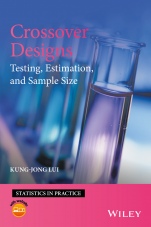
Crossover Designs: Testing, Estimation, and Sample Size
ISBN 9781119114680
Autor: Kung–Jong Lui
Wydawca: Wiley
Dostępność: 3-6 tygodni
Cena: 414,75 zł
Przed złożeniem zamówienia prosimy o kontakt mailowy celem potwierdzenia ceny.
ISBN13: |
9781119114680 |
ISBN10: |
1119114683 |
Autor: |
Kung–Jong Lui |
Oprawa: |
Hardback |
Rok Wydania: |
2016-10-07 |
Ilość stron: |
248 |
Wymiary: |
237x152 |
Tematy: |
MBN |
Crossover Designs: Testing, Estimation and Sample Size
Kung–Jong Lui, Department of Mathematics and Statistics, San Diego State University, USA
A comprehensive and practical resource for analyses of crossover designs
For ethical reasons, it is vital to keep the number of patients in a clinical trial as low as possible. As evidenced by extensive research publications, crossover design can be a useful and powerful tool to reduce the number of patients needed for a parallel group design in studying treatments for non–curable chronic diseases.
This book introduces commonly–used and well–established statistical tests and estimators in epidemiology that can easily be applied to hypothesis testing and estimation of the relative treatment effect for various types of data scale in crossover designs. Models with distribution–free random effects are assumed and hence most approaches considered here are semi–parametric. The book provides clinicians and biostatisticians with the exact test procedures and exact interval estimators, which are applicable even when the number of patients in a crossover trial is small. Systematic discussion on sample size determination is also included, which will be a valuable resource for researchers involved in crossover trial design.
Key features:
l Provides exact test procedures and interval estimators, which are especially of use in small–sample cases.
l Presents most test procedures and interval estimators in closed–forms, enabling readers to calculate them by use of a pocket calculator or commonly–used statistical packages.
l Each chapter is self–contained, allowing the book to be used a reference resource.
l Uses real–life examples to illustrate the practical use of test procedures and estimators
l Provides extensive exercises to help readers appreciate the underlying theory, learn other relevant test procedures and understand how to calculate the required sample size.
Crossover Designs: Testing, Estimation and Sample Size will be a useful resource for researchers from biostatistics, as well as pharmaceutical and clinical sciences. It can also be used as a textbook or reference for graduate students studying clinical experiments.
About the author
Preface
About the Companion Website
Chapter 1 Crossover Design Definitions, Notes and Limitations
1.1 Unsuitable for Acute or Most Infectious Diseases
1.2 Inappropriate for Treatments with Long–Lasting Effects
1.3 Loss of Efficiency in the Presence of Carry–Over Effects
1.4 Concerns of Treatment–by–Period Interaction
1.5 Flaw of the Commonly–used Two–Stage Test Procedure
1.6 Higher Risk of Dropping out or Being Lost to Follow–Up
1.7 More Assumptions Needed in Use of a Crossover Design
1.8 General Principle and Conditional Approach Used in the Book
Chapter 2 AB/BA Design in Continuous Data
2.1 Testing Non–Equality of Treatments
2.2 Testing Non–Inferiority of an Experimental Treatment to an Active Control Treatment
2.3 Testing Equivalence between an Experimental Treatment and an Active Control Treatment
2.4 Interval Estimation of the Mean Difference
2.5 Sample Size Determination
2.5.1 Sample size for testing non–equality
2.5.2 Sample size for testing non–inferiority
2.5.3 Sample size for testing equivalence
2.6 Hypothesis Testing and Estimation for the Period Effect
2.7 Estimation of the Relative Treatment Effect in the Presence of Differential Carryover Effects
2.8 Examples of SAS Programs and Results
Exercises
Chapter 3 AB/BA Design in Dichotomous Data
3.1 Testing Non–Equality of Treatments
3.2 Testing Non–Inferiority of an Experimental Treatment to an Active Control Treatment
3.3 Testing Equivalence between an Experimental Treatment and an Active Control Treatment
3.4 Interval Estimation of the Odds Ratio
3.5 Sample Size Determination
3.5.1 Sample size for testing non–equality
3.5.2 Sample size for testing non–inferiority
3.5.3 Sample size for testing equivalence
3.6 Hypothesis Testing and Estimation for the Period Effect
3.7 Testing and Estimation for Carryover Effects
3.8 SAS Program Codes and Likelihood–Based Approach
Exercises
Chapter 4 AB/BA Design in Ordinal Data
4.1 Testing Non–Equality of Treatments
4.2 Testing Non–Inferiority of an Experimental Treatment to an Active Control Treatment
4.3 Testing Equivalence between an Experimental Treatment and an Active Control Treatment
4.4 Interval Estimation of the Generalized Odds Ratio
4.5 Sample Size Determination
4.5.1 Sample size for testing non–equality
4.5.2 Sample size for testing non–inferiority
4.5.3 Sample size for testing equivalence
4.6 Hypothesis Testing and Estimation for the Period Effect
4.7 SAS Program Codes for the Proportional Odds Model with Normal Random Effects
Exercises
Chapter 5 AB/BA Design in Frequency Data
5.1 Testing Non–Equality of Treatments
5.2 Testing Non–Inferiority of an Experimental Treatment to an Active Control Treatment
5.3 Testing Equivalence between an Experimental Treatment and an Active Control Treatment
5.4 Interval Estimation of the Ratio of Mean Frequencies
5.5 Sample Size Determination
5.5.1 Sample size for testing non–equality
5.5.2 Sample size for testing non–inferiority
5.5.3 Sample size for testing equivalence
5.6 Hypothesis Testing and Estimation for the Period Effect
5.7 Estimation of the Relative Treatment Effect in the Presence of Differential Carryover Effects
Exercises
Chapter 6 Three–Treatment Three–Period Crossover Design in Continuous Data
6.1 Testing Non–Equality between Treatments and Placebo
6.2 Testing Non–Inferiority of an Experimental Treatment to an Active Control Treatment
6.3 Testing Equivalence between an Experimental Treatment and an Active Control Treatment
6.4 Interval Estimation of the Mean Difference
6.5 Hypothesis Testing and Estimation for Period Effects
6.6 Procedures for Testing Treatment–by–Period Interactions
6.7 SAS Program Codes and Results for Constant Variance
Exercises
Chapter 7 Three–Treatment Three–Period Crossover Design in Dichotomous Data
7.1 Testing Non–Equality of Treatment Effects
7.1.1 Asymptotic test procedures
7.1.2 Exact test procedures
7.1.3 Procedures for simultaneously testing non–equality of two experimental treatments versus a placebo
7.2 Testing Non–Inferiority of an Experimental Treatment to an Active Control Treatment
7.3 Testing Equivalence between an Experimental Treatment and an Active Control Treatment
7.4 Interval Estimation of the Odds Ratio
7.5 Hypothesis Testing and Estimation for Period Effects
7.6 Procedures for Testing Treatment–by–Period Interactions
7.7 SAS Program Codes and Results for a Logistic Regression Model with Normal Random Effects
Exercises
Chapter 8 Three–Treatment Three–Period Crossover Design in Ordinal Data
8.1 Testing Non–Equality between Treatments and Placebo
8.1.1 Asymptotic test procedures
8.1.2 Exact test procedures
8.2 Testing Non–Inferiority of an Experimental Treatment to an Active Control Treatment
8.3 Testing Equivalence between an Experimental Treatment and an Active Control Treatment
8.4 Interval Estimation of the Generalized Odds Ratio
8.5 Hypothesis Testing and Estimation for Period Effects
8.6 Procedures for Testing Treatment–by–Period Interactions
8.7 SAS Program Codes and Results for the Proportional Odds Model with Normal Random Effects
Exercises
Chapter 9 Three–Treatment Three–Period Crossover Design in Frequency Data
9.1 Testing Non–Equality between Treatments and Placebo
9.2 Testing Non–Inferiority of an Experimental Treatment to an Active Control Treatment
9.3 Testing Equivalence between an Experimental Treatment and an Active Control Treatment
9.4 Interval Estimation of the Ratio of Mean Frequencies
9.5 Hypothesis Testing and Estimation for Period Effects
9.6 Procedures for Testing Treatment–by–Period Interactions
Exercises
Chapter 10 Three–Treatment (Incomplete Block) Crossover Design in Continuous and Dichotomous Data
10.1 Continuous Data
10.1.1 Testing non–equality of treatments
10.1.2 Testing non–equality between experimental treatments (or non–nullity of dose effects)
10.1.3 Interval estimation of the mean difference
10.1.4 SAS codes for fixed effects and mixed effects models
10.2 Dichotomous Data
10.2.1 Testing non–equality of treatments
10.2.2 Testing non–equality between experimental treatments (or non–nullity of dose effects)
10.2.3 Testing non–inferiority of either experimental treatment to an active control treatment
10.2.4 Interval estimation of the odds ratio
10.2.5 SAS codes for the likelihood–based approach
Exercises
Index
References
Koszyk
Książek w koszyku: 0 szt.
Wartość zakupów: 0,00 zł
Informacje


Kontakt
Gambit
Centrum Oprogramowania
i Szkoleń Sp. z o.o.
Al. Pokoju 29b/22-24
31-564 Kraków
Siedziba Księgarni
ul. Kordylewskiego 1
31-542 Kraków
+48 12 410 5991
+48 12 410 5987
+48 12 410 5989
Subskrypcje
Administratorem danych osobowych jest firma Gambit COiS Sp. z o.o. Na podany adres będzie wysyłany wyłącznie biuletyn informacyjny.
Autoryzacja płatności

Informacje na temat autoryzacji płatności poprzez PayU.

© Copyright 2012: GAMBIT COiS Sp. z o.o. Wszelkie prawa zastrzeżone.
Projekt i wykonanie: Alchemia Studio Reklamy