


Wydawcy
Katalog tematyczny
- Archeologia (109)
- Ekonomia, finanse, business (13704)
- Filozofia (1445)
- Historia (3040)
- Języki i językoznawstwo (2356)
- Lifestyle, hobby i rozrywka (475)
- Medycyna (9704)
- Nauki humanistyczne (4)
- Nauki o Ziemi i środowisku (2638)
- Nauki ścisłe (20412)
- Astronomia (294)
- Biologia (5119)
- Chemia (6540)
- Chemia analityczna (361)
- Chemia fizyczna (346)
- Chemia nieorganiczna (137)
- Chemia organiczna (535)
- Krystalografia (27)
- Minerologia (46)
- Fizyka (3309)
- Matematyka (4574)
- Nauki ścisłe, ogólnie (503)
- Nauki społeczne (8486)
- Nauki techniczne (13450)
- Prawo (1696)
- Publikacje informacyjne i interdyscyplinarne (1288)
- Religia i wierzenia (917)
- Technika komputerowa (4067)
- Zdrowie, relacje międzyludzkie i rozwój osobisty (657)





Informacje szczegółowe o książce
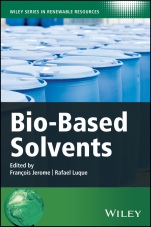
Bio–Based Solvents
ISBN 9781119065395
Autor: François Jérôme, Rafael Luque
Wydawca: Wiley
Dostępność: 3-6 tygodni
Cena: 577,50 zł
Przed złożeniem zamówienia prosimy o kontakt mailowy celem potwierdzenia ceny.
ISBN13: |
9781119065395 |
ISBN10: |
1119065399 |
Autor: |
François Jérôme, Rafael Luque |
Oprawa: |
Hardback |
Rok Wydania: |
2017-09-22 |
Ilość stron: |
200 |
Wymiary: |
235x154 |
Tematy: |
PN |
A multidisciplinary overview of bio–derived solvent applications, life cycle analysis, and strategies required for industrial commercialization.
This book provides the first and only comprehensive review of the state–of–the–science in bio–derived solvents. Drawing on their own pioneering work in the field, as well as an exhaustive survey of the world literature on the subject, the authors cover all the bases from bio–derived solvent applications to life cycle analysis to strategies for industrial commercialization for researchers and professional chemists working across a range of industries.
In the increasingly critical area of sustainable chemistry, the search for new and better green solvents has become a top priority. Thanks to their renewability, biodegradability and low toxicity, as well as their potential to promote advantageous organic reactions, green solvents offer the promise of significantly reducing the pernicious effects of chemical processes on human health and the environment.
Following an overview of the current solvents markets and the challenges and opportunities presented by bio–derived solvents, a series of dedicated chapters cover all significant classes of solvent arranged by origin and/or chemical structure. Throughout, real–world examples are used to help demonstrate the various advantages, drawbacks, and limitations of each class of solvent.
Considering the vast potential for new and better products suggested by recent developments in this exciting field, Bio–Based Solvents will be a welcome resource among students and researchers in catalysis, organic synthesis, electrochemistry, and pharmaceuticals, as well as industrial chemists involved in manufacturing processes and formulation, and policy makers.
Topics covered include:
The commercial potential of various renewably sourced solvents, such as glycerol The various advantages and disadvantages of bio–derived versus petroleum–based solvents Renewably–sourced and waste–derived solvents in the design of eco–efficient processes Life cycle assessment and predictive methods for bio–based solvents Industrial and commercial viability of bio–based solvents now and in the years ahead Potential and limitations of methodologies involving bio–derived solvents New developments and emerging trends in the field and the shape of things to comeFor more information on the Wiley Series in Renewable Resources, visit www.wiley.com/go/rrs
List of Contributors ix
Series Preface xi
Foreword xiii
1 Glycerol as Eco–Efficient Solvent for Organic Transformations 1
Palanisamy Ravichandiran and Yanlong Gu
1.1 Introduction 1
1.2 Metal–Free Organic Transformations in Glycerol 3
1.3 Metal–Promoted Organic Transformations in Glycerol 15
1.4 Conclusions and Perspectives 23
Acknowledgements 23
References 23
2 Aromatic Bio–Based Solvents 29
Egid B. Mubofu, James Mgaya, and Joan J. E. Munissi
2.1 Introduction 29
2.2 Resorcinolic Lipids 30
2.2.1 General Description 30
2.2.2 Occurrence of Alkylresorcinols 30
2.2.3 Extraction of Alkylresorcinols 31
2.2.4 Scientific Interest in Alkylresorcinols 35
2.3 Cashew Nut Shell Liquid 38
2.3.1 Description and Occurrence 38
2.3.2 Extraction of Cashew Nut Shell Liquid 38
2.3.3 Scientific Interest in Cashew Nut Shell Liquid 39
2.4 Conclusion 43
References 43
3 Solvents from Waste 49
Fergal Byrne, Saimeng Jin, James Sherwood, C. Rob McElroy, Thomas J. Farmer, James H. Clark, and Andrew J. Hunt
3.1 Introduction 49
3.2 Lignocellulosic Waste as a Feedstock for the Production of Solvents 52
3.2.1 Chemical Transformations of Sugars 53
3.2.2 Fermentation of Lignocellulosic Waste 60
3.3 Solvents from Used Cooking Oil 65
3.4 Terpenes and Derivatives 67
3.5 Conclusion 71
References 73
4 Deep Eutectic and Low–Melting Mixtures 83
Karine de Oliveira Vigier and Joaquín García–Álvarez
4.1 Introduction 83
4.2 Deep Eutectic and Low–Melting Mixtures: Definition and Composition 85
4.3 Deep Eutectic and Low–Melting Mixtures in Metal–Catalysed Organic Reactions 87
4.3.1 Metal–Catalysed Organic Reactions in ChCl–Based Deep Eutectic Solvents 87
4.3.2 Metal–Catalysed Organic Reactions in Low–Melting Mixtures 90
4.4 Conversion of Carbohydrates 92
4.4.1 Synthesis of 5–Hydroxymethylfurfural from Carbohydrates in Low–Melting Mixture 95
4.4.2 Synthesis of Furanic Compounds (Furfural and 5–Hydroxymethylfurfural) in ChCl–Based Deep Eutectic Solvents 101
4.5 Extraction with or from Deep Eutectic Solvents 104
4.6 Conclusion 107
References 108
5 Organic Carbonates: Promising Reactive Solvents for Biorefineries and Biotechnology 115
Paula Bracco and Pablo Domínguez de María
5.1 The Quest for Sustainable Solvents and the Emerging Role of Organic Carbonates 115
5.2 Carbonate Solvents in Biorefineries 117
5.3 Biotechnology: from Enzymatic Synthesis of Organic Carbonates to Enzyme Catalysis in these Non–Conventional Media 124
5.4 Concluding Remarks 127
References 127
6 Life Cycle Assessment for Green Solvents 131
Philippe Loubet, Michael Tsang, Eskinder Gemechu, Amandine Foulet, and Guido Sonnemann
6.1 Introduction 131
6.2 Life Cycle Assessment: an Overview 133
6.3 Application of Life Cycle Assessment for Conventional Solvents 136
6.4 Critical Review of Life Cycle Assessment Applied to Green Solvents 137
6.4.1 Criteria of the Review 137
6.4.2 Results of the Review 137
6.5 Discussion: Methodological Challenges 143
6.5.1 Life Cycle Inventory Analysis: from Lab, to Pilot, to Industrial Scale 143
6.5.2 Life Cycle Inventory Analysis: Use of Up–to–Date Methods 143
6.5.3 Coupling Life Cycle Analysis with Other Environmental Assessment Methods 144
6.5.4 Using Multi–Criteria Decision Approaches for Life Cycle Analysis 145
6.5.5 Broadening the Scope of the Application of Life Cycle Analysis for Solvents 145
6.6 Conclusion 146
References 146
7 Alkylphenols as Bio–Based Solvents: Properties, Manufacture and Applications 149
Yuhe Liao, Annelies Dewaele, Danny Verboekend, and Bert F. Sels
7.1 Introduction 149
7.2 Properties of Alkylphenols 151
7.3 Manufacture of Alkylphenols 152
7.3.1 Oil–Derived Synthesis 153
7.3.2 Separation from Coal Tar 154
7.3.3 (Methoxylated) Alkylphenols from Lignin 155
7.4 Alkylphenols as Solvent 158
7.5 Other Applications of Alkylphenols 162
7.6 Stability and Toxicity of Alkylphenols 163
7.7 Conclusions and Perspectives 164
Acknowledgements 164
References 165
Index 175
Editors
François Jérôme, Institut de Chimie des Milieux et Matériaux de Poitiers, Université de Poitiers, ENSIP, France
Rafael Luque, Departamento de Química Orgánica, Universidad de Córdoba, Spain
Series Editor
Christian Stevens, Faculty of Bioscience Engineering, Ghent University, Belgium
Koszyk
Książek w koszyku: 0 szt.
Wartość zakupów: 0,00 zł
Informacje


Kontakt
Gambit
Centrum Oprogramowania
i Szkoleń Sp. z o.o.
Al. Pokoju 29b/22-24
31-564 Kraków
Siedziba Księgarni
ul. Kordylewskiego 1
31-542 Kraków
+48 12 410 5991
+48 12 410 5987
+48 12 410 5989
Subskrypcje
Administratorem danych osobowych jest firma Gambit COiS Sp. z o.o. Na podany adres będzie wysyłany wyłącznie biuletyn informacyjny.
Autoryzacja płatności

Informacje na temat autoryzacji płatności poprzez PayU.

© Copyright 2012: GAMBIT COiS Sp. z o.o. Wszelkie prawa zastrzeżone.
Projekt i wykonanie: Alchemia Studio Reklamy