


Wydawcy
Katalog tematyczny
- Archeologia (109)
- Ekonomia, finanse, business (13704)
- Filozofia (1445)
- Historia (3040)
- Języki i językoznawstwo (2356)
- Lifestyle, hobby i rozrywka (475)
- Medycyna (9704)
- Nauki humanistyczne (4)
- Nauki o Ziemi i środowisku (2638)
- Nauki ścisłe (20412)
- Nauki społeczne (8486)
- Edukacja (229)
- Kryminologia, opieka spełeczna (284)
- Obronność (10)
- Polityka (1389)
- Psychologia (777)
- Socjologia (410)
- Społeczeństwo i kultura (187)
- Nauki techniczne (13450)
- Prawo (1696)
- Publikacje informacyjne i interdyscyplinarne (1288)
- Religia i wierzenia (917)
- Technika komputerowa (4067)
- Zdrowie, relacje międzyludzkie i rozwój osobisty (657)





Informacje szczegółowe o książce
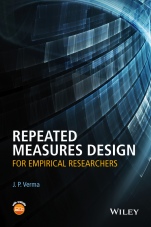
Repeated Measures Design for Empirical Researchers
ISBN 9781119052715
Autor: J. P. Verma
Wydawca: Wiley
Dostępność: 3-6 tygodni
Cena: 583,80 zł
Przed złożeniem zamówienia prosimy o kontakt mailowy celem potwierdzenia ceny.
ISBN13: |
9781119052715 |
ISBN10: |
1119052718 |
Autor: |
J. P. Verma |
Oprawa: |
Hardback |
Rok Wydania: |
2015-09-22 |
Ilość stron: |
288 |
Wymiary: |
242x166 |
Tematy: |
JC |
Introduces the applications of repeated measures design processes with the popular IBM SPSS® software
Repeated Measures Design for Empirical Researchers presents comprehensive coverage of the formation of research questions and the analysis of repeated measures using IBM SPSS and also includes the solutions necessary for understanding situations where the designs can be used. In addition to explaining the computation involved in each design, the book presents a unique discussion on how to conceptualize research problems as well as identify appropriate repeated measures designs for research purposes.
Featuring practical examples from a multitude of domains, including psychology, the social sciences, management, and sports science, the book helps readers better understand the associated theories and methodologies of repeated measures design processes. The book covers various fundamental concepts involved in the design of experiments, basic statistical designs, computational details, differentiating independent and repeated measures designs, and testing assumptions. Along with an introduction to IBM SPSS software, Repeated Measures Design for Empirical Researchers includes:
Repeated Measures Design for Empirical Researchers is a useful textbook for graduate– and PhD–level students majoring in biostatistics, the social sciences, psychology, medicine, management, sports, physical education, and health. The book is also an excellent reference for professionals interested in experimental designs and statistical sciences as well as statistical consultants and practitioners from other fields including biological, medical, agricultural, and horticultural sciences.
J. P. Verma, PhD, is Professor of Statistics and Director of the Center for Advanced Studies at Lakshmibai National Institute of Physical Education, India. Professor Verma is an active researcher in sports modeling and data analysis and has conducted many workshops on research methodology, research designs, multivariate analysis, statistical modeling, and data analysis for students of management, physical education, social science, and economics. He is author of Statistics for Exercise Science and Health with Microsoft® Office Excel®, also published by Wiley.
Preface xv
1 Foundations of Experimental Design 1
Introduction, 1
What is Experimental Research? 2
Design of Experiment and its Principles, 3
Randomization, 3
Replication, 4
Blocking, 4
Statistical Designs, 4
Completely Randomized Design, 5
Randomized Block Design, 6
Matched Pairs Design, 7
Factorial Experiment, 8
Terminologies in Design of Experiment, 9
Subject, 10
Experimental Unit, 10
Treatment, 10
Criterion Variable, 10
Factors, 11
Variation and Variance, 11
Experimental Error, 11
External Validity, 11
Internal Validity, 12
Considerations in Designing an Experiment, 12
Systematic Variance, 13
Extraneous Variance, 13
Randomization Method, 13
Elimination Method, 14
Matching Group Method, 14
Adding Additional Independent Variable, 14
Statistical Control, 15
Error Variance, 16
Exercise, 16
Assignment, 17
References, 17
2 Analysis of Variance and Repeated Measures Design 19
Introduction, 19
Understanding Variance and Sum of Squares, 20
One Way Analysis of Variance for Independent Measures Design, 22
Assumptions, 22
Illustration I, 23
Partitioning of Variation in the Design, 23
Computation, 24
Explanation, 24
Partitioning of SS and Degrees of Freedom, 25
Computation, 25
Results, 27
Post–Hoc Analysis, 27
Repeated Measures Design, 28
When to Use Repeated Measures ANOVA, 29
Assumptions, 30
Solving Repeated Measures Design With One–Way ANOVA, 31
Illustration II, 32
Hypothesis Construction, 32
Layout Design, 33
One–Way Repeated Measures ANOVA Model, 33
Computation in Repeated Measures Design with One–Way ANOVA, 34
Explanation, 35
Computation, 35
Testing Sphericity Assumption, 37
Correcting for Degrees of Freedom, 39
Results, 41
Pair–Wise Comparison of Means, 41
Bonferroni Correction, 42
Effect Size, 43
Exercise, 44
Assignment, 45
References, 46
3 Testing Assumptions in Repeated Measures Design Using SPSS 49
Introduction, 49
First Step in Using SPSS, 50
Assumptions, 51
Testing Normality, 52
Test of Normality, 55
Q Q Plot for Normality, 55
Testing Outliers, 57
Testing Sphericity, 57
Remedial Measures when Assumption Fails, 60
Transforming Nonnormal Data into Normal, 60
Choice of Design and Sphericity, 61
Sample Size Determination, 62
Important Terms, 62
Confidence Interval, 62
Confidence Level, 63
Power of the Test, 64
Sample Size Determination on the Basis of Cost, 65
Sample Size Determination on the Basis of Accuracy Factor, 65
Sample Size in Estimating Mean, 65
Sample Size in Hypothesis Testing, 66
Exercise, 66
Assignment, 67
References, 68
4 One–Way Repeated Measures Design 71
Introduction to Design, 71
Advantages of One–Way Repeated Measures Design, 72
Weaknesses of Repeated Measures Design, 72
Application, 72
Layout Design, 73
Case I: When the Levels of Within–Subjects Variable are Different
Treatment Conditions, 73
Case II: When the Levels of Within–Subjects Variable are Different
Time Durations, 74
Steps in Solving One–Way Repeated Measures Design, 75
Illustration, 75
Testing Assumptions, 75
Layout Design, 76
Distribution of Variation and Degrees of Freedom, 77
Hypothesis Construction, 78
Level of Significance, 78
Solving One–Way Repeated Measures Design Using SPSS, 79
SPSS Output and Interpretation, 81
Descriptive Statistics, 81
Testing Sphericity, 82
Testing Significance of Within–Subjects Effect, 84
How to Report the Findings, 86
Inference, 86
Exercise, 86
Assignment, 87
References, 88
5 Two–Way Repeated Measures Design 89
Introduction, 89
Advantages of Using Two–Way Repeated Measures Design, 90
Assumptions, 90
Layout Design, 91
Case I: When Levels of Within–Subjects Variable are Different Treatment Conditions, 91
Case II: When the Levels of the Within–Subjects Variable are Different Time Periods, 92
Application, 92
Steps in Solving Two–Way Repeated Measures Design, 93
Illustration, 95
Layout Design, 95
Distribution of Variation and Degrees of Freedom, 95
Research Questions, 98
Hypotheses Construction, 98
Level of Significance, 99
Solving Repeated Measures Design with Two–Way ANOVA Using SPSS, 99
SPSS Output and Interpretation, 103
Testing Assumptions, 106
Data Type, 106
Independence of Measurement, 106
Normality, 106
Sphericity, 113
Descriptive Statistics, 113
Testing Main Effect of Music (Within–Subjects), 113
Pairwise Comparison of Marginal Means of Music Groups, 114
Means Plot of Music, 114
Testing Main Effect of Environment (Within–Subjects), 114
Testing Significance of Interaction (Environment × Music), 114
Type I Error for Simple Effect, 114
Simple Effect of Environment (Within–Subjects), 115
Simple Effect of Music (Within–Subjects), 117
How to Report the Findings, 118
Assumptions, 118
Testing Main Effects, 119
Testing Simple Effects, 119
Inference, 120
Exercise, 120
Assignment, 121
References, 122
6 Two–Way Mixed Design 125
Introduction, 125
Advantages of Two–Way Mixed Design, 127
Assumptions, 127
Application, 128
Layout Design, 129
Case I: When Levels of the Within–Subjects Variable are Different Treatment Conditions, 129
Case II: When Levels of the Within–Subjects Variable are Different Time Period, 130
Steps in Solving Mixed Design with Two–Way ANOVA, 131
Illustration, 132
Layout Design, 132
Distribution of Variation and Degrees of Freedom, 134
Research Questions, 135
Hypothesis Construction, 136
Level of Significance, 136
Solving Mixed Design with Two–Way ANOVA using SPSS, 137
SPSS Outputs and Interpretation, 140
Testing Assumptions, 141
Assumption of Normality, 141
Homogeneity of Variance Covariance Matrices, 142
Homogeneity of Variance, 142
Sphericity Assumption, 143
Descriptive Statistics, 143
Testing Main Effect of Movie (within–Subjects), 143
Pair–Wise Comparison of Marginal Means of Movie Groups, 144
Means Plot of Movie, 146
Testing Main Effect of Age (Between–Subjects), 146
Pair–Wise Comparison of Marginal Means of Age Groups, 146
Means Plot of Age, 146
Testing Significance of Interaction (Movie × Age), 146
Simple Effect of Movie (within–Subjects), 147
Simple Effect of Age (between–subjects), 152
How to Report the Findings, 155
Assumptions, 156
Testing Main Effects, 156
Testing Simple Effects, 156
Inference, 158
Exercise, 158
Assignment, 158
References, 159
7 One–Way Repeated Measures MANOVA 161
Introduction, 161
When to Use Repeated Measures MANOVA? 162
Why to Use Repeated Measures MANOVA? 162
Assumptions, 163
Application, 164
Layout Design, 165
Case I: When Levels of Within–Subjects Variable are Different Treatment Conditions, 165
Case II: When Levels of Within–Subjects Variable are Different Time Period, 166
Steps in Solving One–Way Repeated Measures MANOVA, 166
Illustration, 167
Layout Design, 167
Research Questions, 168
Hypotheses Construction, 168
Level of Significance, 170
Solving One–Way Repeated Measures MANOVA Design with SPSS, 170
SPSS Output and Interpretation, 173
Descriptive Statistics, 174
Testing Assumptions, 174
Testing Correlation, 174
Testing Normality, 176
Testing Outliers, 176
Multivariate Testing, 178
Univariate Testing, 181
Testing Sphericity, 181
Pair–Wise Comparison of Marginal Means, 181
Means Plot of Maths, 181
Means Plot of English, 181
Means Plot of Reasoning, 182
How to Report the Findings, 183
Assumptions, 183
Testing Multivariate Effect, 183
Testing Univariate Effect, 183
Inference, 184
Exercise, 184
Assignment, 186
References, 186
8 Mixed Design with Two–Way MANOVA 189
Introduction, 189
What Happens in Manova Experiment, 190
Assumptions, 191
Multivariate Analysis, 191
Univariate Analysis, 192
Layout Design, 192
Case I: When the Levels of Within–Subjects Variable are Different Treatment Conditions, 192
Case II: When the Levels of the Within–Subjects Variable are Different Time Periods, 193
Application, 193
Steps in Solving Mixed Design with Two–Way Manova, 194
Illustration, 196
Layout Design, 196
Research Questions, 198
Hypotheses Construction, 198
Level of Significance, 200
Solving Mixed Design with Two–Way MANOVA Using SPSS, 200
SPSS Output and Interpretation, 204
Multivariate Outcome, 204
Main effect of each dependent variable, 204
Simple effect of each dependent variable, 205
Testing Assumptions, 206
Data Type, 206
Testing Correlations, 206
Testing Normality, 210
Testing Outliers, 210
Homogeneity of Variances, 211
Homogeneity of Variance Covariance Matrices, 211
Sphericity Assumption for Within–Subjects Conditions, 211
Multivariate Testing, 213
Univariate Testing, 215
Main Effect of Between–Subjects Factor (Sex), 215
Main Effect of Within–Subjects Factor (Chocolate), 215
Level of Significance for Simple Effect, 219
Simple Effect on Taste, 219
Simple Effect on Crunchiness, 227
Simple Effect on Flavor, 231
Means Plots (Sex × Chocolate), 233
How to Report Findings, 235
Assumptions, 236
Multivariate Effects, 237
Univariate Main Effects, 237
Univariate Simple Effects, 237
Inference, 238
Exercise, 238
Assignment, 240
References, 240
Appendix A Appendix 243
Index 253
J. P. Verma, PhD, is Professor of Statistics and Director of the Center for Advanced Studies at Lakshmibai National Institute of Physical Education, India. Professor Verma is an active researcher in sports modeling and data analysis and has conducted many workshops on research methodology, research designs, multivariate analysis, statistical modeling, and data analysis for students of management, physical education, social science, and economics. He is author of Statistics for Exercise Science and Health with Microsoft® Office Excel®, also published by Wiley.
Koszyk
Książek w koszyku: 0 szt.
Wartość zakupów: 0,00 zł
Informacje


Kontakt
Gambit
Centrum Oprogramowania
i Szkoleń Sp. z o.o.
Al. Pokoju 29b/22-24
31-564 Kraków
Siedziba Księgarni
ul. Kordylewskiego 1
31-542 Kraków
+48 12 410 5991
+48 12 410 5987
+48 12 410 5989
Subskrypcje
Administratorem danych osobowych jest firma Gambit COiS Sp. z o.o. Na podany adres będzie wysyłany wyłącznie biuletyn informacyjny.
Autoryzacja płatności

Informacje na temat autoryzacji płatności poprzez PayU.

© Copyright 2012: GAMBIT COiS Sp. z o.o. Wszelkie prawa zastrzeżone.
Projekt i wykonanie: Alchemia Studio Reklamy