


Wydawcy
Katalog tematyczny
- Archeologia (109)
- Ekonomia, finanse, business (13704)
- Filozofia (1445)
- Historia (3040)
- Języki i językoznawstwo (2356)
- Lifestyle, hobby i rozrywka (475)
- Medycyna (9704)
- Nauki humanistyczne (4)
- Nauki o Ziemi i środowisku (2638)
- Nauki ścisłe (20412)
- Nauki społeczne (8486)
- Nauki techniczne (13450)
- Budownictwo lądowe (1045)
- Chemia przemysłowa (2258)
- Elektronika i telekomunikacja (3287)
- Energetyka (1122)
- Inne nauki stosowane (363)
- Inżynieria biochemiczna (507)
- Inżynieria transportu (232)
- Mechanika i materiały (3316)
- Nauka o środowisku (321)
- Rolnictwo (507)
- Technika, ogólnie (475)
- Prawo (1696)
- Publikacje informacyjne i interdyscyplinarne (1288)
- Religia i wierzenia (917)
- Technika komputerowa (4067)
- Zdrowie, relacje międzyludzkie i rozwój osobisty (657)





Informacje szczegółowe o książce
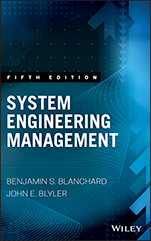
System Engineering Management
ISBN 9781119047827
Autor: Benjamin S. Blanchard, John E. Blyler
Wydawca: Wiley
Dostępność: 3-6 tygodni
Cena: 719,25 zł
Przed złożeniem zamówienia prosimy o kontakt mailowy celem potwierdzenia ceny.
ISBN13: |
9781119047827 |
ISBN10: |
111904782X |
Autor: |
Benjamin S. Blanchard, John E. Blyler |
Oprawa: |
Hardback |
Rok Wydania: |
2016-04-15 |
Numer Wydania: |
5th Edition |
Ilość stron: |
576 |
Wymiary: |
244x175 |
Tematy: |
TG |
THE REVISED AND UPDATED CLASSIC GUIDE TO TOTAL SYSTEM ENGINEERING MANAGEMENT
The fifth edition of System Engineering Management offers a comprehensive guide to the most current best practices, tools, and methods used in the field today. Step–by–step, the authors cover a total "systems approach" commencing with the initial definition of requirements and through the entire life cycle of systems to include design and development, test and evaluation, production/construction, system operation and support, and ultimately retirement. Systems engineering requirements are applicable in all phases of the life cycle.
This revised edition of System Engineering Management includes:
A comprehensive up–to–date discussion of systems from a total life–cycle perspective, the systems engineering process, and the planning and implementation of a systems engineering program An introduction to new concepts pertaining to agile engineering, model–based systems engineering (MBSE), middle–out process tailoring, and supporting analytical methods/tools for application in systems engineering programs today Additional case studies to support up–to–date systems engineering principles and concepts including decision modeling, trade–off analysis for hardware and software systems and the effect of organizational structure on product design Practical systems engineering program and design review checklists to aid in the effective and efficient implementation of overall program requirements Fresh end–of–chapters questions and problems that help to reinforce the material presentedSystem Engineering Management also includes a discussion of the everyday challenges faced by system engineers and offers a practical guide to the techniques that have proven to reduce costs and increase efficiency.
Chapter 1: Introduction to System Engineering
1.1 Definition of a System
1.1.1 The Characteristics of a System
1.1.3 System of Systems (SOS)
1.2 The Current Environment: Some Challenges
1.3 The Need for System Engineering
1.3.1 The System Life Cycle
1.3.2 Definition of System Engineering
1.3.3 Requirements for System Engineering
1.3.4 System Architecture
1.3.6 System Analysis
1.3.7 Some Additional System Models
1.3.8 System Engineering in the Life Cycle (Some Applications)
1.4 Related Terms and Definitions
1.4.1 Concurrent/Simultaneous Engineering
1.4.2 Some Major Supporting Design Disciplines
1.4.3 Logistics and Supply Chain Management (SCM)
1.4.4 Integrated System Maintenance and Support
1.4.5 Data and Information Management
1.4.6 Configuration Management (CM)
1.4.7 Total Quality Management (TQM)
1.4.8 Total System Value and Life–Cycle Cost (LCC)
1.4.8 Total System Value and Life–Cycle Cost (LCC)
1.5 System Engineering Management
1.6 Summary
Questions and Problems
Chapter 2: The System Engineering Process
2.1 Definition of the Problem (Current Deficiency)
2.2 System Requirements (Needs Analysis)
2.3 System Feasibility Analysis
2.4 System Operational Requirements
2.5 The Logistics and Maintenance Support Concept
2.6 Identification and Prioritization of Technical Performance Measures (TPMs)
2.7 Functional Analysis
2.7.1 Functional Flow Block Diagrams (FFBDs)
2.7.2 Operational Functions
2.7.3 Maintenance and Support Functions
2.7.4 Application of Functional Analysis
2.7.5 Interfaces with Other Systems in a SOS Configuration
2.8 Requirements Allocation
2.8.1 Functional Packaging and Partitioning
2.8.2 Allocation of System–Level Requirements to the Subsystem Level and Below
2.8.3 Traceability of Requirements (Top–Down/Bottom–Up)
2.8.4 Allocation of Requirements in a SOS Configuration
2.9 System Synthesis, Analysis, and Design Optimization
2.10 Design Integration
2.11 System Test and Evaluation
2.11.1 Categories of Test and Evaluation
2.11.2 Integrated Test Planning
2.11.3 Preparation for Test and Evaluation
2.11.4 Test Performance, Data Collection, Analysis, and Validation
2.11.5 System Modifications
2.12 Production and/or Construction
2.13 System Operational Use and Sustaining Support
2.14 System Retirement and Material Recycling/Disposal
2.15 Summary
Questions and Problems
Chapter 3: System Design Requirements
3.1 Development of Design Requirements and Design–To Criteria
3.2 Development of Specifications
3.3 The Integration of System
Design Activities
3.4 Selected Design Engineering Disciplines
3.4.1 Software Engineering8
3.4.2 Reliability Engineering17
3.4.3 Maintainability Engineering22
3.4.4 Human–Factors Engineering26,27
3.4.5 Safety Engineering33
3.4.6 Security Engineering34
3.4.7 Manufacturing and Production Engineering38
3.4.8 Logistics and Supportability Engineering41
3.4.9 Disposability Engineering
3.4.10 Quality Engineering50
3.4.11 Environmental Engineering
3.4.12 Value/Cost Engineering (Life–Cycle Costing)54
3.5 SOS Integration and Interoperability Requirements
3.6 Summary
Questions and Problems
Chapter 4: Engineering Design Methods and Tools
4.1 Conventional Design Practices2
4.2 Analytical Methods
4.3 Information Technology, the Internet, and Emerging Technologies5
4.4 Current Design Technologies and Tools
4.4.1 The Use of Simulation in System Engineering8
4.4.2 The Use of Rapid Prototyping9
4.4.3 The Use of Mock–ups
4.5 Computer–Aided Design (CAD)10
4.6 Computer–Aided Manufacturing (CAM)
4.7 Computer–Aided Support (CAS)14
4.8 Summary
Questions and Problems
Chapter 5: Design Review and Evaluation
5.1 Design Review and Evaluation Requirements
5.2 Informal Day–to–Day Review and Evaluation
5.3 Formal Design Reviews
5.3.1 Conceptual Design Review
5.3.2 System Design Reviews
5.3.3 Equipment/Software Design Reviews
5.3.4 Critical Design Review
5.4 The Design Change and System Modification Process
5.5 Supplier Review and Evaluation
5.6 Summary
Questions and Problems
Chapter 6: System Engineering Program Planning
6.1 System Engineering Program Requirements
6.1.1 The Need for Early System Planning
6.1.2 Determination of Program Requirements
6.2 System Engineering Management Plan (SEMP)4
6.2.1 Statement of Work
6.2.2 Definition of System Engineering Functions and Tasks
6.2.3 System Engineering Organization
6.2.4 Development of a Work Breakdown Structure (WBS)7
6.2.5 Specification/Documentation Tree
6.2.6 Technical Performance Measures (TPM)
6.2.7 Development of Program Schedules
6.2.8 Preparation of Cost Projections12
6.2.9 Program Technical Reviews and Audits
6.2.10 Program Reporting Requirements
6.3 Determination of Outsourcing Requirements
6.3.1 Identification of Potential Suppliers
6.3.2 Development of a Request for Proposal (RFP)
6.3.3 Review and Evaluation of Supplier Proposals
6.3.4 Selection of Suppliers and Contract Negotiation
6.3.5 Supplier Monitoring and Control
6.4 Integration of Design Specialty Plans
6.5 Interfaces with Other Program Activities
6.5.1 Interface Management
6.6 Management Methods/Tools
6.7 Risk Management Plan18
6.8 Global Applications/Relationships
6.9 Summary
Questions and Problems
Chapter 7: Organization for System Engineering
7.1 Developing the Organizational Structure
7.2 Customer, Producer, and Supplier Relationships
7.3 Customer Organization and Functions
7.4 Producer Organization and Functions (The Contractor)
7.4.1 Functional Organization Structure
7.4.2 Product–Line/Project Organization Structure
7.4.3 Matrix Organizational Structure
7.4.4 Integrated Product and Process Development (IPPD)
7.4.5 Integrated Product/Process Teams (IPTs)
7.4.6 System Engineering Organization
7.5 Tailoring the Process
7.5.1 Tailoring the Process
7.5.2 Middle–Out Approach
7.5.3 Managing from the Middle
7.6 Supplier Organization and Functions
Section 7.5.1 Mapping Organization and Systems Structures
7.7 Human Resource Requirements
7.7.1 Creating the Proper Organizational Environment
7.7.2 Leadership Characteristics
7.7.3 The Needs of the Individual
7.7.4 Staffing the Organization
7.7.5 Personnel Development and Training
7.8 Summary
Questions and Problems
Chapter 8: System Engineering Program Evaluation
8.1 Evaluation Requirements
8.2 Benchmarking
8.3 Evaluation of the System Engineering Organization
8.4 Program Reporting, Feedback, and Control
8.5 Summary
Questions and Problems
Appendix A: Functional Analysis (Case–Study Examples)
Appendix B: Cost Process and Models
Appendix C: Selected Case Studies (Nine Examples)
Appendix D: Design Review Checklist
Appendix E: Supplier Evaluation Checklist
Appendix F: Selected Bibliography
BENJAMIN S. BLANCHARD is Professor Emeritus, Department of Industrial and Systems Engineering, Virginia Polytechnic Institute & State University. He serves as consultant in such fields as systems engineering, reliability, maintainability, and lifecycle costing.
JOHN E. BLYLER is the founding advisor and affiliate professor of the Systems Engineering Graduate Program at Portland State University. He has considerable experience in hardware–software systems engineering and management, both in industry and government.
Koszyk
Książek w koszyku: 0 szt.
Wartość zakupów: 0,00 zł
Informacje


Kontakt
Gambit
Centrum Oprogramowania
i Szkoleń Sp. z o.o.
Al. Pokoju 29b/22-24
31-564 Kraków
Siedziba Księgarni
ul. Kordylewskiego 1
31-542 Kraków
+48 12 410 5991
+48 12 410 5987
+48 12 410 5989
Subskrypcje
Administratorem danych osobowych jest firma Gambit COiS Sp. z o.o. Na podany adres będzie wysyłany wyłącznie biuletyn informacyjny.
Autoryzacja płatności

Informacje na temat autoryzacji płatności poprzez PayU.

© Copyright 2012: GAMBIT COiS Sp. z o.o. Wszelkie prawa zastrzeżone.
Projekt i wykonanie: Alchemia Studio Reklamy