


Wydawcy
Katalog tematyczny
- Archeologia (109)
- Ekonomia, finanse, business (13704)
- Filozofia (1445)
- Historia (3040)
- Języki i językoznawstwo (2356)
- Lifestyle, hobby i rozrywka (475)
- Medycyna (9704)
- Nauki humanistyczne (4)
- Nauki o Ziemi i środowisku (2638)
- Nauki ścisłe (20412)
- Astronomia (294)
- Biologia (5119)
- Chemia (6540)
- Chemia analityczna (361)
- Chemia fizyczna (346)
- Chemia nieorganiczna (137)
- Chemia organiczna (535)
- Krystalografia (27)
- Minerologia (46)
- Fizyka (3309)
- Matematyka (4574)
- Nauki ścisłe, ogólnie (503)
- Nauki społeczne (8486)
- Nauki techniczne (13450)
- Prawo (1696)
- Publikacje informacyjne i interdyscyplinarne (1288)
- Religia i wierzenia (917)
- Technika komputerowa (4067)
- Zdrowie, relacje międzyludzkie i rozwój osobisty (657)





Informacje szczegółowe o książce
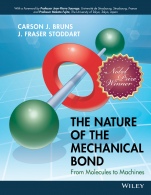
The Nature of the Mechanical Bond: From Molecules to Machines
ISBN 9781119044000
Autor: Carson J. Bruns, J. Fraser Stoddart
Wydawca: Wiley
Dostępność: 3-6 tygodni
Cena: 1 019,55 zł
Przed złożeniem zamówienia prosimy o kontakt mailowy celem potwierdzenia ceny.
ISBN13: |
9781119044000 |
ISBN10: |
1119044006 |
Autor: |
Carson J. Bruns, J. Fraser Stoddart |
Oprawa: |
Hardback |
Rok Wydania: |
2016-12-16 |
Ilość stron: |
786 |
Wymiary: |
282x224 |
Tematy: |
PN |
In molecules, the mechanical bond is not shared between atoms it is a bond that arises when molecular entities become entangled in space. Just as supermolecules are held together by supramolecular interactions, mechanomolecules, such as catenanes and rotaxanes, are maintained by mechanical bonds. This emergent bond endows mechanomolecules with a whole suite of novel properties relating to both form and function. They hold unlimited promise for countless applications, ranging from their presence in molecular devices and electronics to their involvement in remarkably advanced functional materials. The Nature of the Mechanical Bond is a comprehensive review of much of the contemporary literature on the mechanical bond, accessible to newcomers and veterans alike. Topics covered include:
Supramolecular, covalent, and statistical approaches to the formation of entanglements that underpin mechanical bonds in molecules and macromolecules Kinetically and thermodynamically controlled strategies for synthesizing mechanomolecules Chemical topology, molecular architectures, polymers, crystals, and materials with mechanical bonds The stereochemistry of the mechanical bond (mechanostereochemistry), including the novel types of dynamic and static isomerism and chirality that emerge in mechanomolecules Artificial molecular switches and machines based on the large–amplitude translational and rotational motions expressed by suitably designed catenanes and rotaxanes. This contemporary and highly interdisciplinary field is summarized in a visually appealing, image–driven format, with more than 800 illustrations covering both fundamental and applied research. The Nature of the Mechanical Bond is a must–read for everyone, from students to experienced researchers, with an interest in chemistry s latest and most non–canonical bond.Foreword
Preface
Acknowledgements
List of Abbreviations
1. An Introduction to the Mechanical Bond
2. The Fundamentals of Making Mechanical Bonds
3. Making Mechanical Bonds Under Thermodynamic Control
4. MolecularTopologiesandArchitectureswithMechanicalBonds
5. The Stereochemistry of the Mechanical Bond
6. Molecular Switches and Machines with Mechanical Bonds
Appendices
Glossary
Index
Carson J. Bruns is a Miller Research Fellow in the College of Chemistry at the University of California, Berkeley. He attended Luther College (2004 2008) where he earned degrees in chemistry, religion, and mathematics. He received a PhD in organic chemistry from Northwestern University (2008 2013), where he was a National Science Foundation (NSF) Graduate Research Fellow. Researching in the United States, Thailand, Korea, and Japan, he has co–authored more than 30 publications which have collectively been cited more than 1000 times. His research interests span all aspects of the mechanical bond, from fundamental science to applied chemical technologies.
J. Fraser Stoddart, presently a Board of Trustees Professor at Northwestern University, was previously (1997 2002) the Saul Winstein Professor of Chemistry at the University of California, Los Angeles (UCLA) before holding the Fred Kavli Chair of NanoSystems Sciences at UCLA while he was the Director of the California NanoSystems Institute (CNSI) from 2002 2007. By contributing to the introduction of the mechanical bond into molecules, he is one of a few contemporary chemists to have opened up an entirely new field of chemistry in which he has pioneered the development of mechanically interlocked molecules (MIMs) including bistable catenanes and rotaxanes that have made their way into molecular electronic devices and drug delivery vehicles. His current research interests include the design and synthesis of emergent systems and artificial molecular machines that operate away–from–equilibrium.
Koszyk
Książek w koszyku: 0 szt.
Wartość zakupów: 0,00 zł
Informacje


Kontakt
Gambit
Centrum Oprogramowania
i Szkoleń Sp. z o.o.
Al. Pokoju 29b/22-24
31-564 Kraków
Siedziba Księgarni
ul. Kordylewskiego 1
31-542 Kraków
+48 12 410 5991
+48 12 410 5987
+48 12 410 5989
Subskrypcje
Administratorem danych osobowych jest firma Gambit COiS Sp. z o.o. Na podany adres będzie wysyłany wyłącznie biuletyn informacyjny.
Autoryzacja płatności

Informacje na temat autoryzacji płatności poprzez PayU.

© Copyright 2012: GAMBIT COiS Sp. z o.o. Wszelkie prawa zastrzeżone.
Projekt i wykonanie: Alchemia Studio Reklamy