


Wydawcy
Katalog tematyczny
- Archeologia (109)
- Ekonomia, finanse, business (13704)
- Filozofia (1445)
- Historia (3040)
- Języki i językoznawstwo (2356)
- Lifestyle, hobby i rozrywka (475)
- Medycyna (9704)
- Nauki humanistyczne (4)
- Nauki o Ziemi i środowisku (2638)
- Nauki ścisłe (20412)
- Nauki społeczne (8486)
- Nauki techniczne (13450)
- Prawo (1696)
- Publikacje informacyjne i interdyscyplinarne (1288)
- Religia i wierzenia (917)
- Technika komputerowa (4067)
- Zdrowie, relacje międzyludzkie i rozwój osobisty (657)





Informacje szczegółowe o książce
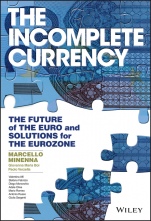
The Incomplete Currency: The Future of the Euro and Solutions for the Eurozone
ISBN 9781119019091
Autor: Marcello Minenna, Giovanna Maria Boi, Paolo Verzella
Wydawca: Wiley
Dostępność: 3-6 tygodni
Cena: 205,80 zł
Przed złożeniem zamówienia prosimy o kontakt mailowy celem potwierdzenia ceny.
ISBN13: |
9781119019091 |
ISBN10: |
1119019095 |
Autor: |
Marcello Minenna, Giovanna Maria Boi, Paolo Verzella |
Oprawa: |
Hardback |
Rok Wydania: |
2016-05-06 |
Ilość stron: |
552 |
Wymiary: |
245x179 |
Tematy: |
KF |
Praise for THE INCOMPLETE CURRENCY
"This book has the merit to frame the problems of the Eurozone not only in a perspective that is scientifically rigorous, but with an eye that is able to analyze all the consequences on the European and global financial system. The author does not limit the analysis to the current situation; he describes, with rigor and clarity, many proposals to attain in a gradual but concrete way, a real monetary union."
Prof. Romano Prodi, former President, EU Commission; Italy′s former Prime Minister
"Marcello Minenna is a smart and careful analyst. He had signaled many of the recent problems facing the single currency when they were still in their embryonic stage. With this rigorous and brilliant book, Marcello performs an original reconstruction of the euro crisis, always supporting his own theses with an impressive amount of empirical evidence. Some proposals for reform of the current Eurozone institutional arrangement surely deserve the attention of the European policy makers."
Prof. Vincenzo Visco, President, NENS center; Italy′s former Minister of Finance and Economy
"The beautiful book of Marcello Minenna can be a great tool for information, education and understanding, but it is mainly a contribution to the idea of Europe, for a new political and economic governance and a stricter control on finance many bricks that should be used to build the United States of Europe."
Susanna Camusso, General Secretary, CGIL (Italian General Confederation of Labor)
"The euro, along with the problems of monetary union without fiscal union, has been debated a lot. But the work done by Marcello Minenna in this beautiful volume is unique. The methodology of analysis is innovative and focused on the important role played by the movements of financial flows in the context of the European crisis. Finance can also be used to develop innovative solutions. This book contains many original proposals of great interest that demand the consideration of economists and policy makers."
Prof. Rainer Masera, Italy′s former Minister of Budget, Economic Planning and European Affairs
List of Figures xi
List of Tables xxiii
Foreword xxv
Preface xxxi
Acknowledgments xxxiii
About the Author xxxv
About the Website xxxvii
CHAPTER 1 The Building Blocks of the Single European Currency 1
1.1 The Basic Concepts: Financial Flows, Risks and Probability Distribution 1
1.2 Sovereign Credit Risk, Public Debt and Inflation 12
1.3 Single Curve of Interest Rate: Euribor, Euro Swap, Eurepo 20
1.4 The Monetary Policy in the Eurozone and the Mechanisms of Transmission 28
1.5 Recognition and Management of the Sovereign Credit Risk 35
CHAPTER 2 The Eurozone Architecture and the Working Paradigms 51
2.1 Relationships within the European Financial System 51
2.2 The Transmission Mechanisms between Finance and Real Economy in the Eurozone 69
CHAPTER 3 The Single Currency Area in the Context of International Crisis 94
3.1 Before the Crisis: the Adverse Effects of the Single Currency 94
3.2 The Crisis: Divergence of the Sovereign Debt Curves and the Disintegration of the Single Interest Rate Curve 101
CHAPTER 4 Dysfunctional Mechanisms of the Eurozone 122
4.1 The Explosion of Target2 Balances and the Unsustainable Accumulation of the Structural Imbalances 122
4.2 The Nationalisation of the Public Debt: the Case of Italy 142
4.3 The Nationalisation of the Public Debt Pushed to the Extreme: the Case of Greece 150
CHAPTER 5 The Pathological Banks–Governments Relationship 173
5.1 The Spread Intermediation 173
5.2 Collateral Discrimination on the Interbank Market 182
5.3 The Divergence Mechanisms in Action: Synergies and Accelerations 197
5.4 Case Studies: the Divergence Process in Some Peripheral Countries 206
CHAPTER 6 Assessing the Risk of a Euro Break–Up 216
6.1 A Historical Perspective on the Possible Break–up of the Euro 217
6.2 The Probability of a Euro Break–up 221
6.3 Costs and Benefits Associated with the Exit from the Euro 231
CHAPTER 7 Financial Assistance and Fiscal Agreements in the Eurozone 243
7.1 The Sovereign Bail–out Funds 243
7.2 The Reforms of the Stability and Growth Pact and the Fiscal Compact 257
CHAPTER 8 The Extraordinary Interventions of the ECB 267
8.1 The Securities Market Programme and the Purchases of Covered Bonds 267
8.2 The Long–term Refinancing Operations of December 2011 and February 2012 (LTROs) 270
8.3 The Outright Monetary Transactions (OMT) 271
8.4 The Targeted Long–term Refinancing Operations (TLTROs) 272
8.5 The Quantitative Easing 272
CHAPTER 9 The European and National Interventions on the Banking Systems 293
9.1 The Banking Union 293
9.2 The Hidden Recapitalisation of the Peripheral Banking Systems 296
9.3 The State Aids to the Banking Systems of the Core Countries 301
CHAPTER 10 Mutualisation of the Public Debt and Fiscal Transfers 304
10.1 The Mutualisation of the Public Debt in the Eurozone 304
10.2 The Fiscal Currency and Other Theories for the Unilateral Solution of Problems for Peripheral Countries 315
10.3 The Fiscal Transfers: Proposals for Structural Balance of Financial Flows 316
CHAPTER 11 Proposals of Monetary Policy Interventions to Overcome the Crisis 324
11.1 Reforming the Statutory Objectives of the ECB: the Zero–spread Target 324
11.2 The Cancellation of Interests on Government Bonds Purchased by the ECB 327
11.3 The European Public Debt Refinancing Programme (EPDRP) 329
11.4 A Far More Pervasive Intervention: Partial Debt Monetisation 334
11.5 The Purchase Programme of Asset–backed Securities Guaranteed by Sovereign States and Supranational Institutions 337
11.6 A Measure of Direct Support to the Real Economy: The Cancellation of Impaired Debts of the Non–financial Private Sector 344
11.7 A Proposal for an Authentic Sustainability of the Greek Public Debt 345
CHAPTER 12 Transparency as a Tool to Prevent Excessive Risk–taking and Contrast the Crisis 348
12.1 The Need for a Market Logic as the Basis of the Financial Sector s Regulation 348
12.2 Implications of the Lack of Transparency on Risks at a Macro Level 350
12.3 Fair Value and Probability Scenarios as a Solution to the Problem of Risk Transparency 351
ANNEX A 361
REFERENCES 463
INDEX 495
MARCELLO MINENNA is the head of the quantitative analysis unit at CONSOB (Commissione Nazionale per le Società e la Borsa, the Italian Securities and Exchange Commission), where he develops quantitative models for surveillance and supports the enforcement and regulatory units in their activities. Acknowledged by Risk magazine as the "quant enforcer" and the "quant regulator," he is the author of several publications, including the bestselling A Guide to Quantitative Finance.
Koszyk
Książek w koszyku: 0 szt.
Wartość zakupów: 0,00 zł
Informacje


Kontakt
Gambit
Centrum Oprogramowania
i Szkoleń Sp. z o.o.
Al. Pokoju 29b/22-24
31-564 Kraków
Siedziba Księgarni
ul. Kordylewskiego 1
31-542 Kraków
+48 12 410 5991
+48 12 410 5987
+48 12 410 5989
Subskrypcje
Administratorem danych osobowych jest firma Gambit COiS Sp. z o.o. Na podany adres będzie wysyłany wyłącznie biuletyn informacyjny.
Autoryzacja płatności

Informacje na temat autoryzacji płatności poprzez PayU.

© Copyright 2012: GAMBIT COiS Sp. z o.o. Wszelkie prawa zastrzeżone.
Projekt i wykonanie: Alchemia Studio Reklamy