


Wydawcy
Katalog tematyczny
- Archeologia (109)
- Ekonomia, finanse, business (13704)
- Filozofia (1445)
- Historia (3040)
- Języki i językoznawstwo (2356)
- Lifestyle, hobby i rozrywka (475)
- Medycyna (9704)
- Nauki humanistyczne (4)
- Nauki o Ziemi i środowisku (2638)
- Nauki ścisłe (20412)
- Nauki społeczne (8486)
- Nauki techniczne (13450)
- Prawo (1696)
- Publikacje informacyjne i interdyscyplinarne (1288)
- Religia i wierzenia (917)
- Technika komputerowa (4067)
- Zdrowie, relacje międzyludzkie i rozwój osobisty (657)





Informacje szczegółowe o książce
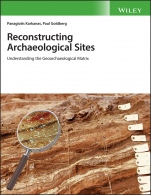
Reconstructing Archaeological Sites: Understanding the Geoarchaeological Matrix
ISBN 9781119016403
Autor: Panagiotis Karkanas, Paul Goldberg
Wydawca: Wiley
Dostępność: 3-6 tygodni
Cena: 449,40 zł
Przed złożeniem zamówienia prosimy o kontakt mailowy celem potwierdzenia ceny.
ISBN13: |
9781119016403 |
ISBN10: |
1119016401 |
Autor: |
Panagiotis Karkanas, Paul Goldberg |
Oprawa: |
Hardback |
Rok Wydania: |
2018-08-10 |
Ilość stron: |
296 |
Wymiary: |
283x218 |
Tematy: |
HD |
A guide to the systematic understanding of the geoarchaeological matrix
Reconstructing Archaeological Sites offers an important text that puts the focus on basic theoretical and practical aspects of depositional processes in an archaeological site. It contains an in–depth discussion on the role of stratigraphy that helps determine how deposits are organised in time and space. The authors two experts in the field include the information needed to help recognise depositional systems, processes and stratigraphic units that aid in the interpreting the stratigraphy and deposits of a site in the field.
The book is filled with practical tools, numerous illustrative examples, drawings and photos as well as compelling descriptions that help visualise depositional processes and clarify how these build the stratigraphy of a site. Based on the authors′ years of experience, the book offers a holistic approach to the study of archaeological deposits that spans the broad fundamental aspects to the smallest details. This important guide:
Offers information and principles for interpreting natural and anthropogenic sediments and physical processes in sites Provides a framework for reconstructing the history of a deposit and the site Outlines the fundamental principles of site formation processes Explores common misconceptions about what constitutes a deposit Presents a different approach for investigating archaeological stratigraphy based on sedimentary principlesWritten for archaeologists and geoarchaeologists at all levels of expertise as well as senior level researchers, Reconstructing Archaeological Sites offers a guide to the theory and practice of how stratigraphy is produced and how deposits can be organised in time and space.
Preface
Acknowledgements
Abbreviations
Introduction
1. Principles of Site Formation or Depositional Processes
a. The Concept of the Deposit
b. Types of Archaeological Deposits
c. Anthropogenic Sediments
d. Some Misconceptions of Site Formation and Depositional Processes
e. Soils and Post–Depositional Processes
f. Recording Deposits and Site Formation Processes (Stratigraphy)
2. Natural Sediments and Processes in Sites
a. Introduction
b. Principles of Transport and Deposition of Sediments
i. Physical processes
ii. Sediment properties
iii. Fabric
iv. Sedimentary structures
v. Some remarks on the interpretation of textures, fabrics, and sedimentary structures
c. Mass Movement in Sites
i. Slides and slumps
ii. Rock and debris falls, and avalanches and grain flows
iii. Solifluction
iv. Debris flows and mudflows
d. Water Flows in Sites
i. Shallow water flows
ii. Hyperconcentrated flows
iii. High energy flows
e. Aeolian Processes
f. Biological Sediments and Processes
i. Dung, coprolites and guano
ii. Bioturbation
g. Post–Depositional Features and Processes
i. Erosional features, deflation, lags, stone lines, and pavements
ii. Diagenesis
iii. Soil–forming processes
h. Concluding Remarks
3. Archaeological Sediments
a. Introduction
b. Burnt Remains
c. Organic Remains and Human Activities
i. Biological constructions (matting, roofing)
ii. Stabling
d. Formation of Constructed Materials
i. Living and constructed floors
ii. Mudbricks, daub, and other mud construction materials
iii. Mortar, wall plaster
e. Maintenance and Discard Processes
i. Sweeping and raking
ii. Dumping and filling
iii. Trampling
f. Concluding Remarks
4. Site Stratigraphy
a. Introduction
b. Historical Overview
c. The Definition of Stratigraphic Units in an Excavation
d. Nature of Contacts
e. Time and Stratigraphy
f. Massive Thick Layers
g. Basic Stratigraphic Principles
h. What is In Situ
i. Human Constructions and Depositional Stratigraphy
g. Concept of Facies
k. Practicing Stratigraphy
l. Concluding Remarks
5. Non–architectural sites
a. Introduction
b. Open–air vs. Cave Sites
i. Caves
ii. Open–air sites
c. Other Stratigraphic Themes
i. Burials
ii. Palimpsests
d. Concluding Remarks
6. Architectural sites
a. Introduction
b. Roofed Facies
c. Diachronic Spatial Organization
d. Unroofed Facies
i. How to recognize an unroofed area?
ii. Destruction and abandonment of buildings
iii. Courtyards, gardens, and other open spaces
iv. Street deposits
e. House Pits, Pueblos and Kivas
f. Tombs
g. Tumulus and Mounds
h. Concluding Remarks
7. Some Approaches to Field Sediment study
a. Introduction
b. Drawing
c. Photographing
d. Sampling Strategy
e. Representative Sampling
i. Sampling methods
ii. Number of samples
iii. Size of samples
iv. Micromorphological sampling
v. Microarchaeological sampling
Concluding Remarks
Sites and Place Names
References
Index
Panagiotis (Takis) Karkanas is director of the Malcolm H. Wiener Laboratory for Archaeological Science at the American School of Classical Studies at Athens, Greece. He is member of the American Academy of Arts and Sciences. His research interests encompass all aspects of geoarchaeology including site–formation processes and palaeoenvironmental reconstructions. He has carried out geoarchaeological research in sites of almost all cultural periods and associated landscapes in many countries around the world.
Paul Goldberg is a geoarchaeologist with over four decades of experience. He is Professorial Research Fellow at the University of Wollongong, Australia, Senior Researcher in the Institute of Archaeological Sciences, University of Tübingen, and Professor Emeritus, Boston University. His principal research focus is the use of soil micromorphology to understand how archaeological sites form, regardless of age or location, from Pleistocene caves in Europe and Asia, to Iron–Age sites in Menorca, Spain. He is coauthor of Practical and Theoretical Geoarchaeology (Blackwell, 2006).
Koszyk
Książek w koszyku: 0 szt.
Wartość zakupów: 0,00 zł
Informacje


Kontakt
Gambit
Centrum Oprogramowania
i Szkoleń Sp. z o.o.
Al. Pokoju 29b/22-24
31-564 Kraków
Siedziba Księgarni
ul. Kordylewskiego 1
31-542 Kraków
+48 12 410 5991
+48 12 410 5987
+48 12 410 5989
Subskrypcje
Administratorem danych osobowych jest firma Gambit COiS Sp. z o.o. Na podany adres będzie wysyłany wyłącznie biuletyn informacyjny.
Autoryzacja płatności

Informacje na temat autoryzacji płatności poprzez PayU.

© Copyright 2012: GAMBIT COiS Sp. z o.o. Wszelkie prawa zastrzeżone.
Projekt i wykonanie: Alchemia Studio Reklamy