


Wydawcy
Katalog tematyczny
- Archeologia (109)
- Ekonomia, finanse, business (13704)
- Filozofia (1445)
- Historia (3040)
- Języki i językoznawstwo (2356)
- Lifestyle, hobby i rozrywka (475)
- Medycyna (9704)
- Nauki humanistyczne (4)
- Nauki o Ziemi i środowisku (2638)
- Nauki ścisłe (20412)
- Nauki społeczne (8486)
- Edukacja (229)
- Kryminologia, opieka spełeczna (284)
- Obronność (10)
- Polityka (1389)
- Psychologia (777)
- Socjologia (410)
- Społeczeństwo i kultura (187)
- Nauki techniczne (13450)
- Prawo (1696)
- Publikacje informacyjne i interdyscyplinarne (1288)
- Religia i wierzenia (917)
- Technika komputerowa (4067)
- Zdrowie, relacje międzyludzkie i rozwój osobisty (657)







Informacje szczegółowe o książce
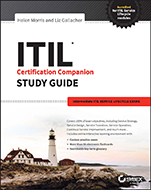
ITIL Intermediate Certification Companion Study Guide: Intermediate ITIL Service Lifecycle Exams
ISBN 9781119012214
Autor: Helen Morris, Liz Gallacher
Wydawca: Wiley
Dostępność: 3-6 tygodni
Cena: 337,05 zł
Przed złożeniem zamówienia prosimy o kontakt mailowy celem potwierdzenia ceny.
ISBN13: |
9781119012214 |
ISBN10: |
111901221X |
Autor: |
Helen Morris, Liz Gallacher |
Oprawa: |
Paperback |
Rok Wydania: |
2016-05-06 |
Ilość stron: |
1270 |
Wymiary: |
233x188 |
Tematy: |
JD |
Covers 100% of exam objectives, including Service Strategy, Service Design, Service Transition, Service Operation, Continual Service Improvement, and much more.... Includes online interactive learning environment with
+ More than 90 electronic flashcards
+ Searchable key term glossary
Your Comprehensive Companion Guide for the Intermediate ITIL® Service Lifecycle Exams
The ITIL Intermediate Certification Companion Study Guide provides 100% coverage of all five ITIL v3 Service Lifecycle exams, based on the 2011 syllabus: Service Strategy, Service Design, Service Transition, Service Operation, and Continual Service Improvement. Understand each area of the syllabus through detailed instruction on all concepts and process areas. Specific syllabus elements are illustrated with real–life examples, and critical terms are highlighted to emphasize their importance on the exams. Clear, concise language helps you fully grasp the fundamentals, and linking concept to practice helps you understand the importance of what you′re learning in real IT service scenarios.
Coverage of 100% of all Intermediate Lifecycle exam objectives in this Study Guide means you′ll be ready to take each of the five exams. For each lifecycle stage, you will understand
Principles and Processes Governance Requirements Organizational Requirements Technology Considerations Implementation Considerations Critical Success Factors, Challenges, and RisksInteractive learning environment
Take your exam prep to the next level with Sybex′s superior interactive online study tools. To access our learning environment, simply visit http://sybextestbanks.wiley.com, type in your unique PIN, and instantly gain access to:
More than 90 Electronic Flashcards to reinforce learning and last minute prep before the exam Comprehensive glossary in PDF format gives you instant access to the key terms so you are fully preparedThe ITIL® qualification scheme provides a modular approach to the ITIL framework, and is comprised of a series of qualifications focused on different aspects of ITIL best practice to various degrees of depth and detail. The tiered structure of the qualification offers candidates flexibility relating to the different disciplines and areas of ITIL and the ability to focus their studies on key areas of interest. There are five certification levels within the scheme:
Foundation Practitioner Intermediate Expert MasterIntroduction xlv
Assessment Test li
Part I Service Strategy 1
Chapter 1 Introduction to the Service Strategy Lifecycle Stage 3
The Main Purpose of Service Strategy 4
The Four Ps of Service Strategy 5
The Objectives of Service Strategy 5
The Scope of Service Strategy 6
The Value Service Strategy Delivers to the Business 7
The Context of Service Strategy within the Service Lifecycle 7
Service Strategy 8
Service Design 8
Service Transition 9
Service Operation 9
Continual Service Improvement 10
Summary 11
Exam Essentials 11
Review Questions 13
Chapter 2 Service Strategy Principles 15
Service Strategy Basics 16
Deciding on a Strategy 16
Strategy and Opposing Dynamics 17
Outperforming Competitors 18
Four Ps of Service Strategy 18
Services and Value 22
Service 22
Value 26
Utility and Warranty 29
Strategic Assets and Service Providers 35
Business Units and Service Providers 35
Defining Services 46
Step 1: Define the Market and Identify Customers 46
Step 2: Understand the Customer 47
Step 3: Quantify the Outcomes 47
Step 4: Classify and Visualize the Service 48
Step 5: Understand the Opportunities (Market Spaces) 52
Step 6: Define Services Based on Outcomes 53
Step 7: Service Models 55
Step 8: Define Service Units and Packages 57
Strategies for Customer Satisfaction 59
Kano Model 59
Service Economics 61
Return on Investment 63
Sourcing Strategy 69
Sourcing Structures 70
Sourcing Responsibilities 72
Service Strategy Inputs and Outputs 77
Summary 79
Exam Essentials 80
Review Questions 82
Chapter 3 Service Strategy Processes: Part 1 85
Understanding Strategy Management for IT Services 86
Purpose 86
Objectives 87
Scope 87
Value 90
Policies, Principles, and Basic Concepts 91
Process Activities, Methods, and Techniques 91
Triggers, Inputs, Outputs, and Interfaces 97
Critical Success Factors and Key Performance Indicators 99
Challenges 100
Risks 100
Understanding Service Portfolio Management 101
Purpose 101
Objectives 101
Scope 102
Value 103
Policies, Principles, and Basic Concepts 104
Service Portfolio Management through the Service Lifecycle 110
Process Activities, Methods, and Techniques 111
Triggers 116
Inputs 116
Outputs 117
Interfaces 117
Critical Success Factors and Key Performance Indicators 118
Challenges 119
Risks 119
Understanding Financial Management for IT Services 119
Purpose of Financial Management 120
Objectives of Financial Management 120
Scope of Financial Management 121
Value 122
Policies, Principles, and Basic Concepts 123
Process Activities, Methods, and Techniques 124
Triggers 127
Inputs 127
Outputs 127
Interfaces 128
Critical Success Factors and Key Performance Indicators 129
Challenges 129
Risk 130
Summary 130
Exam Essentials 130
Review Questions 132
Chapter 4 Service Strategy Processes: Part 2 135
Understanding Business Relationship Management 136
Purpose of Business Relationship Management 136
Objectives of Business Relationship Management 137
Scope of Business Relationship Management 137
Value 141
Policies, Principles, and Basic Concepts 141
Process Activities, Methods, and Techniques 143
Triggers 146
Inputs 146
Outputs 147
Interfaces 147
Critical Success Factors and Key Performance Indicators 148
Challenges 148
Risks 149
Understanding Demand Management 149
Purpose 150
Objectives 150
Scope 150
Value 150
Policies, Principles, and Basic Concepts 151
Process Activities, Methods, and Techniques 152
Triggers 156
Inputs 156
Outputs 157
Interfaces 157
Critical Success Factors and Key Performance Indicators 158
Challenges 158
Risks 159
Summary 159
Exam Essentials 159
Review Questions 161
Chapter 5 Governance 163
Understanding Governance 164
Setting the Strategy for Governance 164
Evaluate 165
Direct 166
Monitor 166
Governance Framework 166
What Is IT Governance? 167
Service Strategy Relating to Governance 169
Summary 169
Exam Essentials 170
Review Questions 171
Chapter 6 Organizing for Service Strategy 173
Organizational Development 174
Deciding on a Structure 177
Organizational Departmentalization 178
Organizational Design 179
Service Strategy Roles 180
Business Relationship Manager 182
Strategy Management Roles 183
Service Portfolio Roles 184
Financial Management Roles 184
Demand Management Roles 185
Summary 186
Exam Essentials 186
Review Questions 188
Chapter 7 Technology Considerations 191
Service Automation 192
Automation and Service Management 193
Service Analytics 194
Service Interfaces 197
Types of Service Technology Encounters 198
Summary 199
Exam Essentials 200
Review Questions 201
Chapter 8 Implementing Service Strategy 205
Implementation through the Lifecycle 206
Following a Lifecycle Approach 208
Service Strategy Approach 208
Service Design Approach 209
Service Transition Approach 210
Service Operation Approach 210
Continual Service Improvement Approach 210
Impact of Service Strategy on Lifecycle Stages 211
Service Design Stage 211
Service Transition Stage 213
Service Operation Stage 213
Continual Service Improvement Stage 213
Summary 213
Exam Essentials 214
Review Questions 215
Chapter 9 Challenges, Critical Success Factors, and Risks 217
Service Strategy Challenges 218
Complexity 218
Coordination and Control 218
Preserving Value 219
Effective Measurement 219
Service Strategy Risks 221
Definition of Risk 221
Inaccurate Information 221
Risk of Taking, or Failing to Take, Opportunities 222
Design Risks 222
Operational Risks 222
Market Risks 222
Critical Success Factors 223
Summary 223
Exam Essentials 223
Review Questions 225
Part II Service Design 227
Chapter 10 Introduction to the Service Design Lifecycle Stage 229
The Purpose of Service Design 230
The Goals and Objectives of Service Design 231
The Scope of Service Design 232
The Five Aspects of Service Design 232
The Value Service Design Delivers to the Business 234
The Context of Service Design and the Service Lifecycle 236
Service Design Inputs and Outputs 239
Strategy Inputs and Outputs 239
Transition Inputs and Outputs 240
Operation Inputs and Outputs 241
CSI Inputs and Outputs 242
The Contents and Use of the Service Design Package 245
The Contents and Use of Service Acceptance Criteria 245
Exam Essentials 248
Summary 248
Review Questions 249
Chapter 11 Service Design Principles 253
Holistic and Balanced Service Design 254
Service Design and Change Management 255
Utility and Warranty 255
Business Focus 256
Balanced Design 258
Service Requirements, Business Requirements, and Drivers 260
Service Requirements 260
Business Requirements and Drivers 262
Design Activities 263
Evaluate Alternative Solutions 264
Procure the Preferred Solution 264
Develop the Solution 264
Design Constraints 265
The Five Aspects of Service Design 266
Designing Service Solutions 269
The Design of the Management Information Systems and Tools 271
Management and Technology Architectures 275
Processes 279
Measurement Systems and Metrics 281
Service–Oriented Architecture 283
SOA Principles 284
Service Design Models 284
Design and Development Approaches 286
Summary 286
Exam Essentials 286
Review Questions 288
Chapter 12 Service Design Processes: Design Coordination and Service Catalog Management 291
Design Coordination 292
The Purpose of Design Coordination 292
The Objectives of Design Coordination 292
The Scope of Design Coordination 293
The Value of Design Coordination to the Business 294
Design Coordination Policies 294
Principles and Basic Concepts for Design Coordination 295
Design Coordination Process Activities, Methods, and Techniques 296
Triggers, Inputs, Outputs, and Interfaces 297
Information Management 299
Critical Success Factors and Key Performance Indicators 299
Challenges 300
Risks 300
Service Catalog Management 301
Purpose 301
Objectives 301
Scope 302
Value 302
Policies 303
Principles and Basic Concepts 303
Process Activities, Methods, and Techniques 305
Triggers, Inputs, Outputs, and Interfaces 306
Information Management 307
Critical Success Factors and Key Performance Indicators 308
Summary 309
Exam Essentials 309
Review Questions 311
Chapter 13 Service Design Processes: Service Level Management and Availability Management 315
Service Level Management 316
Purpose of Service Level Management 316
Objectives of Service Level Management 317
Scope of Service Level Management 318
Service Level Management Value to the Business 318
Service Level Management Policies 319
Service Level Management Process Activities, Methods, and Techniques 320
Service Level Management Triggers, Inputs, and Outputs 321
Service Level Management Interfaces 323
Information Management and Service Level Management 323
Measures, Metrics, and Critical Success Factors for Service Level Management 324
Challenges for Service Level Management 325
Risks for Service Level Management 325
Availability Management 325
Defining Availability 325
Purpose of Availability Management 326
Objectives of Availability Management 327
Scope of Availability Management 327
Availability Management Policies 328
Availability Management Principles and Basic Concepts 329
Availability Management Process, Methods, and Techniques 336
Availability Management Triggers, Inputs, and Outputs 337
Availability Management Interfaces 339
Information Management and Availability Management 340
Availability Management Critical Success Factors and Key Performance Indicators 341
Availability Management Challenges and Risks 342
Summary 343
Exam Essentials 343
Review Questions 345
Chapter 14 Service Design Processes: Capacity Management and IT Service Continuity Management 347
Capacity Management 348
Purpose of Capacity Management 348
Objectives of Capacity Management 349
Scope of Capacity Management 349
Capacity Management Value to the Business 350
Capacity Management Policies 351
Capacity Management Process Activities, Methods, and Techniques 351
Capacity Management Triggers, Inputs, and Outputs 355
Capacity Management Interfaces 356
Information Management and Capacity Management 357
Measures, Metrics, and Critical Success Factors for Capacity Management 358
Challenges for Capacity Management 358
Risks for Capacity Management 359
IT Service Continuity Management 359
Purpose of IT Service Continuity Management 360
Objectives of IT Service Continuity Management 360
Scope of IT Service Continuity Management 360
IT Service Continuity Management Value to the Business 361
IT Service Continuity Management Process, Methods, and Techniques 361
IT Service Continuity Management Triggers, Inputs, and Outputs 363
IT Service Continuity Management Interfaces 364
Information Management 365
IT Service Continuity Management Critical Success Factors and KPIs 365
IT Service Continuity Management Challenges and Risks 366
Summary 367
Exam Essentials 367
Review Questions 369
Chapter 15 Service Design Processes: Information Security Management and Supplier Management 371
Information Security Management 372
Purpose of Information Security Management 372
Objectives of Information Security Management 373
Scope of Information Security Management 373
Information Security Management Value to the Business 374
Information Security Management Policies 374
IT Security Management Process Activities, Methods, and Techniques 376
Information Security Management Triggers, Inputs, and Outputs 377
Information Security Management Interfaces 379
Measures, Metrics, and Critical Success Factors for Information Security Management 379
Challenges for Information Security Management 380
Risks for Information Security Management 380
Supplier Management 381
Purpose of Supplier Management 381
Objectives of Supplier Management 381
Scope of Supplier Management 381
Supplier Management Value to the Business 382
Supplier Management Principles, Policies, and Basic Concepts 382
Supplier Management Process, Methods, and Techniques 383
Supplier Management Triggers, Inputs, and Outputs 385
Supplier Management Interfaces 386
Information Management 386
Supplier Management Critical Success Factors and KPIs 387
Supplier Management Challenges and Risks 387
Summary 388
Exam Essentials 388
Review Questions 390
Chapter 16 Technology–Related Activities 393
Service Design Activities and Techniques within Requirements Engineering 394
Types of Requirement 395
Requirements Investigation Techniques 396
Problems with Requirements Engineering 399
Management of Data and Information 400
Data Management and the Service Lifecycle 401
Classifying Data 401
Management of Applications 401
The Application Portfolio 402
Linking Application and Service Portfolio 403
Application Frameworks 403
The Need for CASE Tools and Repositories 403
Outputs 403
Design Patterns 404
Developing Individual Applications 404
Templates and Code Generation 404
Diagnostic Hooks 404
Outputs 405
Summary 405
Exam Essentials 405
Review Questions 407
Chapter 17 Organizing for Service Design 411
The RACI Matrix 412
Functional Roles in Service Design 413
Organizational Structures in Service Design 414
Generic Roles 415
Service Owner 415
Process Owner 416
Process Manager 417
Process Practitioner 417
Specific Service Design Roles 418
Service Design Process Roles 418
Design Coordination Roles 418
Service Catalog Management Roles 419
Service Level Management Roles 420
Availability Management Process Roles 421
Capacity Management Process Roles 422
IT Service Continuity Management Process Roles 424
Information Security Management Process Roles 425
Supplier Management Process Roles 426
Summary 427
Exam Essentials 427
Review Questions 428
Chapter 18 Technology Considerations 431
Service Design Tools 432
Process or Tool First? 432
Specifying Requirements 432
Evaluation 433
Choosing the Preferred Option 435
Implementation 436
Summary 436
Exam Essentials 437
Review Questions 438
Chapter 19 Implementation and Improvement of Service Design 441
Business Impact Analysis 442
Service Level Management 443
Risks to the Services and Processes 443
Implementing Service Design 443
Improving Service Design 444
Measurement of Service Design 447
Balanced Scorecard 447
Six Sigma 448
Measuring Service Design 448
Summary 449
Exam Essentials 449
Review Questions 450
Chapter 20 Challenges, Critical Success Factors, and Risks 453
Service Design Challenges 454
Meeting the Challenges 455
Critical Success Factors 455
Key Performance Indicators 456
Service Design Risks 456
Summary 457
Exam Essentials 458
Review Questions 459
Part III Service Transition 461
Chapter 21 Introduction to Service Transition 463
Service Transition Concepts 464
Purpose 464
Objectives 464
Scope 465
Value to the Business 467
Service Transition in the Context of the Service Lifecycle 468
Service Strategy 468
Service Design 468
Service Transition 469
Service Operation 469
Continual Service Improvement 470
Summary 470
Exam Essentials 470
Review Questions 472
Chapter 22 Service Transition Principles 475
Formal Policy for Service Transition 476
Policy 476
Principles 476
Best Practice 477
Governance Policy for Service Transition 477
Policy 477
Principles 477
Best Practice 478
Common Framework for Service Transition 478
Policy 478
Principles 478
Best Practice 478
Maximize Reuse of Established Processes and Systems 479
Policy 479
Principles 479
Best Practice 479
Business Alignment of Service Transition 480
Policy 480
Principles 480
Best Practice 480
Establish and Maintain Relationships with Stakeholders 481
Policy 481
Principles 481
Best Practice 481
Establish Control and Disciplines 482
Policy 482
Principles 482
Best Practice 482
Knowledge Transfer and Service Transition 483
Policy 483
Principles 483
Best Practice 484
Plan Release Packages 484
Policy 484
Principles 484
Best Practice 485
Anticipate and Manage Course Corrections 485
Policy 485
Principles 486
Best Practice 486
Proactively Manage Resources 486
Policy 486
Principles 486
Best Practice 487
Ensure Early Involvement in Service Lifecycle 487
Policy 487
Principles 487
Best Practice 487
Quality Assurance 488
Policy 488
Principles 488
Best Practice 489
Proactively Improve Quality During Service Transition 489
Policy 489
Principles 489
Best Practice 490
Summary 490
Exam Essentials 491
Review Questions 492
Chapter 23 Service Transition Processes: Transition Planning and Support and Change Management 495
Transition Planning and Support 496
Purpose 496
Objectives 496
Scope 497
Value to the Business 497
Policies, Principles, and Basic Concepts 498
Process Activities, Methods, and Techniques 500
Triggers, Inputs, Outputs, and Interfaces 504
Critical Success Factors and Key Performance Indicators 505
Challenges 505
Risks 506
Change Management 506
The Purpose of Change Management 506
The Objective of Change Management 506
The Scope of Change Management 507
The Value of Change Management to the Business 508
Change Management Policies, Principles, and Basic Concepts 509
Change Management Process Activities, Methods, and Techniques 513
Triggers, Inputs, Outputs, and Interfaces 518
Triggers 518
Inputs 519
Outputs 520
Interfaces 520
Critical Success Factors and Key Performance Indicators 521
Challenges 521
Risks 521
Summary 522
Exam Essentials 522
Review Questions 524
Chapter 24 Service Transition Processes: Service Asset and Configuration Management 527
Service Asset and Configuration Management 528
Purpose 528
Objectives 528
Scope 529
Value to the Business 529
Policies, Principles, and Basic Concepts 530
Process Activities, Methods, and Techniques 537
Triggers, Inputs and Outputs, and Process Interfaces 538
KPIs and CSFs 539
Challenges 540
Risks 540
Summary 541
Exam Essentials 541
Review Questions 543
Chapter 25 Service Transition Processes: Release and Deployment Management and Service Validation and Testing 547
Release and Deployment Management 548
Purpose 548
Objectives 548
Scope 549
Value to the Business 549
Policies, Principles, and Basic Concepts 550
Process Activities, Methods, and Techniques 553
Triggers 556
Inputs 556
Outputs 556
Interfaces 556
Critical Success Factors and Key Performance Indicators 557
Challenges 557
Risks 557
Service Validation and Testing 558
Purpose 558
Objective 558
Scope 558
Value to the Business 559
Policies, Principles, and Basic Concepts 559
Process Activities, Methods, and Techniques 562
Trigger 564
Inputs 564
Outputs 565
Interfaces 565
Critical Success Factors and Key Performance Indicators 565
Challenges 566
Risks 566
Summary 566
Exam Essentials 566
Review Questions 568
Chapter 26 Service Transition Processes: Change Evaluation and Knowledge Management 571
Change Evaluation 572
Purpose 572
Objectives 572
Scope 573
Value to the Business 573
Policies, Principles, and Basic Concepts 573
Trigger 575
Inputs 575
Outputs 575
Interfaces 575
Critical Success Factors and Key Performance Indicators 576
Challenges 576
Risks 577
Knowledge Management 577
Purpose 577
Objectives 577
Scope 578
Value to the Business 578
Policies, Principles, and Basic Concepts 578
Process Activities, Methods, and Techniques 581
Triggers 582
Inputs 583
Outputs 583
Interfaces 583
Critical Success Factors and Key Performance Indicators 583
Challenges 584
Risks 584
Summary 584
Exam Essentials 584
Review Questions 587
Chapter 27 Managing People through Service Transitions 589
Management of Communication and Commitment 590
Methods of Communication 592
Managing Organization and Stakeholder Change 594
Organization, Roles, and Responsibilities 596
Service Transition s Role in Organizational Change 596
Planning and Implementing Organizational Change 599
Organizational Change Products 600
Assessing Organizational Readiness for Change 601
Monitoring Progress of Organizational Change 602
Organization and People in Sourcing Changes 603
Methods, Practices, and Techniques for Managing Change 603
Stakeholder Management 606
Stakeholder Management Strategy 606
Summary 609
Exam Essentials 610
Review Questions 611
Chapter 28 Organizing for Service Transition 613
Organizational Development 614
Small Organizations 614
Larger Organizations 615
Organizational Context for Transitioning a Service 616
Service Transition Roles and Responsibilities 618
Service Owner 618
Process Owner 618
Process Manager 619
Process Practitioner 619
Service Transition Manager 619
Transition Planning and Support Process Owner 620
Transition Planning and Support Process Manager 620
Transition Planning and Support Process Practitioner 620
Change Management Process Owner 620
Change Management Process Manager 621
Change Initiator 621
Change Practitioner 621
Change Authority 621
CAB Member 622
CAB Chair 622
SACM Process Owner 622
SACM Process Manager 622
Configuration Analyst 623
Configuration Librarian 623
Release and Deployment Process Owner 623
Release and Deployment Process Manager 624
Release Packaging and Build Practitioner 624
Deployment Practitioner 624
Early Life Support Practitioner 625
Build and Test Environment Manager 625
Service Validation and Testing Process Owner 626
Service Validation and Testing Process Manager 626
Service Validation and Testing Process Practitioner 626
Contribution of Other Roles to Service Validation and Testing 626
Change Evaluation Process Owner 627
Change Evaluation Process Manager 627
Change Evaluation Process Practitioner 627
Knowledge Management Process Owner 627
Knowledge Management Process Manager 628
Knowledge Management Process Practitioner 628
Knowledge Creator 628
Service Transition Relationship with Other Lifecycle Stages 628
Upstream Relationships for Service Transition 628
Logical Staff Mobility 629
Downstream Process and Procedure Influence 629
Summary 630
Exam Essentials 630
Review Questions 631
Chapter 29 Technology Considerations for Service Transition 633
Technology Considerations 634
Technology Throughout Service Transition 634
Technology Throughout the Service Lifecycle 635
Knowledge Management Tools 636
Collaboration 637
Configuration Management System 638
Summary 639
Exam Essentials 639
Review Questions 641
Chapter 30 Implementation and Improvement of Service Transition 643
The Key Activities in the Introduction of Service Transition 644
Justifying Service Transition 645
Designing Service Transition 645
Introduction of the Components to the Organization 647
Delivering the Service (Business as Usual) 647
An Integrated Approach to Service Transition Processes 648
Implementing Service Transition in a Virtual or Cloud Environment 649
Summary 650
Exam Essentials 650
Review Questions 651
Chapter 31 Challenges, Critical Success Factors, and Risks 655
Service Transition Challenges 656
Critical Success Factors 657
Service Transition Risks 658
Service Transition under Difficult Conditions 658
Risk Management 659
Restricted Resources 659
Safety–Critical Services and High–Risk Environments 660
Working with Difficult Customers 660
Summary 660
Exam Essentials 661
Review Questions 662
Part IV Service Operation 665
Chapter 32 Introduction to the Service Operation Lifecycle Stage 667
Understanding the Purpose, Objectives, and Scope of Service Operation 668
The Purpose of Service Operation 669
The Objectives of Service Operation 669
The Scope of Service Operation 669
The Context of Service Operation and the Service Lifecycle 671
Service Strategy 672
Service Design 673
Service Transition 674
Service Operation 674
Continual Service Improvement 675
The Value Service Operation Delivers to the Business 676
Service Operation Fundamentals 677
Functions and Processes in Service Operation 678
Summary 679
Exam Essentials 680
Review Questions 681
Chapter 33 Service Operation Principles 685
Service Operation Principles 686
Achieving Balance in Service Operation 686
Providing Good Service 694
Operational Staff Involvement in Other Lifecycle Stages 694
Operational Involvement in Service Strategy 694
Operational Involvement in Service Design 694
Operational Involvement in Service Transition 695
Operational Involvement in Continual Service
Improvement 695
Operational Health 696
Communication 696
Meetings 697
Documentation 697
Service Operation Inputs and Outputs 698
Service Strategy 698
Service Design 698
Service Transition 698
Continual Service Improvement 699
Summary 700
Exam Essentials 700
Review Questions 702
Chapter 34 Service Operation Processes: Incident and Problem Management 705
Incidents and Problems: Two Key Service Management Concepts 706
Incident Management 707
The Purpose of Incident Management 708
The Objectives of Incident Management 708
The Scope of Incident Management 708
The Value of Incident Management to the Business 709
Incident Management Policies 709
Principles and Basic Concepts for Incident Management 711
Incident Management Process Activities, Methods, and Techniques 714
Triggers for Incident Management 720
Inputs 720
Outputs 721
Interfaces between Incident Management and the Lifecycle Stages 721
Critical Success Factors and Key Performance Indicators 723
Challenges 724
Risks 724
Problem Management 724
Purpose 725
Objectives 726
Value 727
Policies 727
Principles and Basic Concepts 727
Process Activities, Methods, and Techniques 729
Process Activities 730
Triggers 735
Interfaces between Problem Management and the Lifecycle Stages 736
Critical Success Factors and Key Performance Indicators 737
Challenges 738
Risks 739
Summary 739
Exam Essentials 739
Review Questions 741
Chapter 35 Service Operation Processes: Request Fulfilment 743
Purpose and Objectives 744
Scope 746
Value to the Business 747
Policies 747
Principles and Basic Concepts 748
Separation of Requests and Incidents 748
Request Models 749
Menu Selection 749
Request Status Tracking 749
Prioritizing and Escalating Requests 750
Approval 750
Coordination of Fulfilment Activity and Closure of the Request 750
Process Activities, Methods, and Techniques 751
Receiving the Request 751
Logging the Request 751
Validating the Request 753
Categorizing the Request 753
Prioritizing the Request 753
Authorizing the Request 753
Fulfilling the Request 753
Completion and Closure of the Request 753
Triggers, Inputs, Outputs, and Interfaces 754
Trigger 754
Inputs 754
Outputs 754
Interfaces 755
Critical Success Factors and Key Performance Indicators 755
Challenges 756
Risks 757
Summary 757
Exam Essentials 757
Review Questions 759
Chapter 36 Service Operation Processes: Event Management 763
Definitions 764
Purpose 765
Objectives 765
Scope 766
Value 767
Policies 767
Principles and Basic Concepts 768
Monitoring and Event Management 768
Informational, Warning, and Exception Events 768
Filtering 769
Designing for Event Management 770
Instrumentation 770
Correlation Engine 771
Process Activities, Methods, and Techniques 772
Event Notification 773
Event Detection and Logging 773
Correlation and Filtering 773
Actions Taken 774
Review and Closure 774
Triggers, Inputs, Outputs, and Interfaces 775
Triggers 775
Inputs 775
Outputs 776
Interfaces between Event Management and the Lifecycle Stages 777
Critical Success Factors and Key Performance Indicators 778
Challenges 779
Risks 779
Summary 780
Exam Essentials 780
Review Questions 781
Chapter 37 Service Operation Processes: Access Management 785
Purpose 786
Objectives 787
Scope 787
Value 787
Policies 788
Principles and Basic Concepts 788
The High ]Level Activities of the Access Management Process 789
Request Access 789
Verifying and Validating 789
Provide Access 791
Monitor Access 791
Remove Access 792
Triggers, Inputs, Outputs, and Interfaces 792
Triggers 792
Inputs 793
Outputs 793
Interfaces 793
Critical Success Factors and Key Performance Indicators 794
Challenges 794
Risks 795
Summary 795
Exam Essentials 796
Review Questions 797
Chapter 38 Common Service Operation Activities 801
Common Service Operation Activities 802
Maturing Technology Management 802
Monitoring and Control 804
Monitor Control Loops 805
Measurement, Metrics, and Key Performance Indicators 812
Interfaces to Other Service Lifecycle Practices 813
IT Operations 814
Operations Bridge 814
Job Scheduling 814
Backup and Restore 815
Print and Output Management 815
Server and Mainframe Management and Support 816
Network Management 817
Storage and Archive 818
Database Administration 819
Directory Services Management 820
Desktop and Mobile Device Support 821
Middleware Management 821
Internet/Web Management 822
Facilities and Data Center Management 823
Data Center Strategies 824
Operational Activities of Processes Covered in Other Lifecycle Stages 825
Change Management 825
Service Asset and Configuration Management 826
Release and Deployment Management 826
Knowledge Management 826
Capacity Management 827
Availability Management 828
IT Service Continuity Management 829
Information Security Management 829
Service Level Management 830
Demand Management 830
Financial Management for IT Services 831
Improvement of Operational Activities 831
Summary 831
Exam Essentials 832
Review Questions 833
Chapter 39 Organizing for Service Operation 837
The Service Desk Function 839
Staffing 840
Role 841
Objective 841
Service Desk Organizational Structures 842
Local Service Desk 842
Centralized Service Desk 843
Virtual Service Desk 844
Follow the Sun 846
Specialized Service Desk Groups 847
Service Desk Single Point of Contact 847
Service Desk Staffing 848
Training 850
Staff Retention 850
Super Users 851
Measuring Service Desk Performance 851
Customer/User Satisfaction Surveys 852
Service Desk Environment 854
Outsourcing the Service Desk 855
Other ITIL Functions 857
Technical Management 857
Role 857
Objectives 858
Generic Technical Management Activities 858
Technical Management Organization 861
Technical Design and Technical Maintenance and Support 861
Measuring Technical Management Performance 861
Technical Management Documentation 863
Operations Management 863
IT Operations Control 864
Facilities Management 864
Objectives 865
Measuring IT Operations Management Performance 867
IT Operations Management Documentation 867
Applications Management 868
Role 869
Objectives 870
Application Management Principles 870
Application Management Lifecycle 870
Requirements 872
Design 872
Build 873
Deploy 873
Operate 873
Optimize 874
Application Management Generic Activities 874
Application Development vs. Application Management 877
Measuring Application Management Performance 880
Application Management Documentation 882
Roles and Responsibilities in Service Management 885
Service Owner 886
Process Owner 887
Process Manager 888
Process Practitioner 889
Service Operation Process Roles 890
Incident Management/Request Fulfilment 890
Problem Management 891
Event Management 891
Access Management 891
Technical and Application Management Roles 892
IT Operations Management and Service Desk Roles 892
Organization for Functions 892
Organization by Technical Specialization 892
Organization by Activity 894
Organizing to Manage Processes 896
Organizing IT Operations by Geography 896
Hybrid Organization Structures 898
Combined Functions 898
Organizing Application and Technical Management 899
Summary 900
Exam Essentials 901
Review Questions 902
Chapter 40 Technology Considerations 905
Service Management Tools 906
Tool Requirements for Service Operation Processes 908
Event Management 908
Incident Management 908
Request Fulfilment 909
Problem Management 909
Access Management 910
Service Desk Function 910
Service Management Tool Choice 911
Summary 912
Exam Essentials 912
Review Questions 913
Chapter 41 Implementation of Service Operation 915
Managing Change in Service Operation 916
Change Triggers 916
Change Assessment 917
Measurement of Successful Change 917
Service Operation and Project Management 918
Assessing and Managing Risk in Service Operation 918
Risks Resulting from Changes 918
Other Sources of Risk 919
Operational Staff in Design and Transition 919
Planning and Implementing Service Management Technologies 920
Licenses 920
Deployment 921
Summary 922
Exam Essentials 922
Review Questions 924
Chapter 42 Challenges, Critical Success Factors, and Risks 927
Service Operation Challenges 928
Engagement with Development and Project Staff 928
Justifying Funding 929
Differing Service Design and Service Operation Focus and Priorities 929
Other Challenges 930
Management of Staff 930
Critical Success Factors 931
Service Operation Risks 931
Summary 933
Exam Essentials 933
Review Questions 934
Part V Continual Service Improvement 937
Chapter 43 Introduction to the Continual Service Improvement Lifecycle Stage 939
Understanding the Purpose, Objectives, and Scope of Continual Service Improvement 940
Purpose 940
Objectives 942
Scope 942
Value 943
The Approach to Continual Service Improvement 944
Stage 1: What Is the Vision? 945
Stage 2: Where Are We Now? 945
Stage 3: Where Do We Want to Be? 945
Stage 4: How Do We Get There? 945
Stage 5: Did We Get There? 946
Stage 6: How Do We Keep the Momentum Going? 946
The Business Questions to Ask to Ensure That a CSI Initiative Is Warranted 946
Using the CSI Approach 946
Proactive Improvement 947
The Context of Continual Service Improvement in the Service Lifecycle 947
Service Strategy 948
Service Design 948
Service Transition 949
Service Operation 949
Improvement throughout the Lifecycle 949
CSI Inputs and Outputs 950
Service Strategy 950
Service Design 951
Service Transition 951
Service Operation 951
Starting Improvement 952
Summary 952
Exam Essentials 952
Review Questions 954
Chapter 44 Continual Service Improvement Principles 957
CSI and Organizational Change 958
Ownership 958
CSI Register 959
External and Internal Drivers 959
Service Level Management 960
Knowledge Management 960
The Deming Cycle 961
Service Measurement 961
Baselines 961
Why Do We Measure? 962
The Seven ]Step Improvement Process 962
Governance 964
Enterprise Governance 965
IT Governance 965
Frameworks, Models, Standards, and Quality Systems 966
Which One Should I Choose? 966
Summary 967
Exam Essentials 967
Review Questions 969
Chapter 45 The Seven–Step Continual Service Improvement Process 971
The Seven–Step Improvement Process 972
Purpose 972
Objectives 972
Scope 973
Value to the Business 973
Policies, Principles, and Basic Concepts 973
Process Activities, Methods, and Techniques 975
Triggers, Inputs, Outputs, and Interfaces 986
The Key Roles Played by Other Processes in the Seven–Step Improvement Process 987
Summary 992
Exam Essentials 992
Review Questions 993
Chapter 46 Continual Service Improvement Methods and Techniques 995
Assessments 996
When to Assess 996
What to Assess and How 997
Advantages of Assessments 999
Risks of Assessments 999
Assessment Considerations 1000
Value of Processes vs. Maturity of Processes 1000
Gap Analysis 1002
Benchmarking 1003
Benchmarking Procedure 1004
Benchmarking Costs 1004
Value of Benchmarking 1004
Benchmarking as a Lever 1005
Benchmarking as a Steering Instrument 1005
Benchmarking Categories 1005
Benefits 1005
Who Is Involved? 1006
What to Benchmark 1006
Comparison with Industry Norms 1006
Benchmark Approach 1007
Service Measurement 1008
Design and Develop a Service Measurement Framework 1010
Different Levels of Measurement and Reporting 1010
Service Management Process Measurement 1010
Creating a Measurement Framework Grid 1011
Metrics 1013
How Many CSFs and KPIs? 1014
Tension Metrics 1015
Goals and Metrics 1016
Interpreting and Using Metrics 1016
Using Measurement and Metrics 1017
Creating Scorecards and Reports 1018
Creating Scorecards That Align to Strategies 1019
Creating Reports 1020
Setting Targets 1023
Balanced Scorecard 1023
Cascading the Balanced Scorecard 1024
The Balanced Scorecard and Measurement ]Based Management 1025
SWOT Analysis 1025
Purpose 1026
How to Use SWOT Analysis 1026
Scope, Reach, and Range 1026
Common Pitfalls of a SWOT Analysis 1026
Creating a Return on Investment 1027
Establishing a Business Case 1027
Business Cases in a Data ]Poor Environment 1028
Measuring Benefits Achieved 1028
Service Reporting 1029
Reporting Policy and Rules 1029
Right Content for the Right Audience 1029
CSI and Other Service Management Processes 1030
Availability Management 1030
Capacity Management 1032
IT Service Continuity Management 1036
Problem Management 1037
Knowledge Management 1037
Summary 1038
Exam Essentials 1039
Review Questions 1040
Chapter 47 Organizing for Continual Service Improvement 1043
Responsibilities, Skills, and Competencies 1044
Generic Roles 1044
Roles Specific to the Seven ]Step Improvement Process 1047
The Activities Involved in the Seven ]Step Improvement Process 1048
Roles and Skills in the Seven ]Step Improvement Process 1049
Comparing the CSI Manager Role with Other Relevant Roles 1054
The Roles 1055
Comparison 1056
Using the RACI Model in CSI 1060
Summary 1062
Exam Essentials 1062
Review Questions 1063
Chapter 48 Technology Considerations 1067
Holistic IT Service Management Tools 1068
IT Service Management Suites 1069
Specialist Tools 1071
System and Network Tools 1071
Event Management Tools 1071
Automated Incident and Problem Resolution 1071
Performance Management Tools 1072
Statistical Analysis Tools 1072
Project and Portfolio Management Tools 1073
Financial Management Tools 1073
Business Intelligence/Reporting 1074
Summary 1074
Exam Essentials 1074
Review Questions 1075
Chapter 49 Implementation of Continual Service Improvement 1079
Critical Considerations and Where to Start 1080
Preparatory Steps 1080
Deciding Where to Start 1081
The Role of Governance 1082
Business Drivers 1083
Process Changes 1083
COBIT 1084
The Effect of Organizational Change for CSI 1084
The Softer Aspects of Successful Organizational Change 1085
Kotter s Eight Steps 1086
Communication Strategies and Planning 1089
Defining the Communications Plan 1089
Summary 1091
Exam Essentials 1091
Review Questions 1093
Chapter 50 Challenges, Critical Success Factors, and Risks 1097
Continual Service Improvement Challenges 1098
Critical Success Factors 1099
CSFs and KPIs 1100
Continual Service Improvement Risks 1100
Summary 1101
Exam Essentials 1102
Review Questions 1103
Appendix 1107
Index 1153
Helen Morris has more than 20 years of experience in Service Management and is an experienced trainer, consultant, and service delivery manager. Helen leads programs to achieve significant improvements in customer satisfaction, quality of service, reduced costs, and better control. Liz Gallacher holds ITIL Expert certification, having achieved distinction (top six percent) in the ITIL Manager certificate in 2002. Liz is an ITIL veteran, and employs most aspects of the framework in implementing various improvement programs.
Koszyk
Książek w koszyku: 0 szt.
Wartość zakupów: 0,00 zł
Informacje


Kontakt
Gambit
Centrum Oprogramowania
i Szkoleń Sp. z o.o.
Al. Pokoju 29b/22-24
31-564 Kraków
Siedziba Księgarni
ul. Kordylewskiego 1
31-542 Kraków
+48 12 410 5991
+48 12 410 5987
+48 12 410 5989
Subskrypcje
Administratorem danych osobowych jest firma Gambit COiS Sp. z o.o. Na podany adres będzie wysyłany wyłącznie biuletyn informacyjny.
Autoryzacja płatności

Informacje na temat autoryzacji płatności poprzez PayU.

© Copyright 2012: GAMBIT COiS Sp. z o.o. Wszelkie prawa zastrzeżone.
Projekt i wykonanie: Alchemia Studio Reklamy