


Wydawcy
Katalog tematyczny
- Archeologia (109)
- Ekonomia, finanse, business (13704)
- Filozofia (1445)
- Historia (3040)
- Języki i językoznawstwo (2356)
- Lifestyle, hobby i rozrywka (475)
- Medycyna (9704)
- Nauki humanistyczne (4)
- Nauki o Ziemi i środowisku (2638)
- Nauki ścisłe (20412)
- Nauki społeczne (8486)
- Nauki techniczne (13450)
- Budownictwo lądowe (1045)
- Chemia przemysłowa (2258)
- Elektronika i telekomunikacja (3287)
- Energetyka (1122)
- Inne nauki stosowane (363)
- Inżynieria biochemiczna (507)
- Inżynieria transportu (232)
- Mechanika i materiały (3316)
- Nauka o środowisku (321)
- Rolnictwo (507)
- Technika, ogólnie (475)
- Prawo (1696)
- Publikacje informacyjne i interdyscyplinarne (1288)
- Religia i wierzenia (917)
- Technika komputerowa (4067)
- Zdrowie, relacje międzyludzkie i rozwój osobisty (657)





Informacje szczegółowe o książce
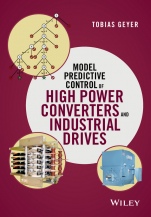
Model Predictive Control of High Power Converters and Industrial Drives
ISBN 9781119010906
Autor: Tobias Geyer
Wydawca: Wiley
Dostępność: 3-6 tygodni
Cena: 519,75 zł
Przed złożeniem zamówienia prosimy o kontakt mailowy celem potwierdzenia ceny.
ISBN13: |
9781119010906 |
ISBN10: |
111901090X |
Autor: |
Tobias Geyer |
Oprawa: |
Hardback |
Rok Wydania: |
2016-11-11 |
Ilość stron: |
576 |
Wymiary: |
251x179 |
Tematy: |
TJ |
In this original book on model predictive control (MPC) for power electronics, the focus is put on high–power applications with multilevel converters operating at switching frequencies well below 1 kHz, such as medium–voltage drives and modular multi–level converters.
Consisting of two main parts, the first offers a detailed review of three–phase power electronics, electrical machines, carrier–based pulse width modulation, optimized pulse patterns, state–of–the art converter control methods and the principle of MPC. The second part is an in–depth treatment of MPC methods that fully exploit the performance potential of high–power converters. These control methods combine the fast control responses of deadbeat control with the optimal steady–state performance of optimized pulse patterns by resolving the antagonism between the two.
MPC is expected to evolve into the control method of choice for power electronic systems operating at low pulse numbers with multiple coupled variables and tight operating constraints it. Model Predictive Control of High Power Converters and Industrial Drives will enable to reader to learn how to increase the power capability of the converter, lower the current distortions, reduce the filter size, achieve very fast transient responses and ensure the reliable operation within safe operating area constraints.
Targeted at power electronic practitioners working on control–related aspects as well as control engineers, the material is intuitively accessible, and the mathematical formulations are augmented by illustrations, simple examples and a book companion website featuring animations. Readers benefit from a concise and comprehensive treatment of MPC for industrial power electronics, enabling them to understand, implement and advance the field of high–performance MPC schemes.
About the companion website
Acknowledgements xi
List of Abbreviations xiii
Part One Introduction 1
1 Introduction 3
1.1 Industrial Power Electronics 3
1.2 Control and Modulation Schemes 7
1.3 Model Predictive Control 11
1.4 Research Vision and Motivation 18
1.5 Main Results 19
1.6 Summary of this Book 21
1.7 Prerequisites 24
References 25
References 25
2 Industrial Power Electronics 29
2.1 Preliminaries 29
2.2 Induction Machines 41
2.3 Power Semiconductor Devices 51
2.4 Multi–Level Voltage Source Inverters 54
2.5 Case Studies 67
References 74
References 74
3 Classic Control and Modulation Schemes 77
3.1 Requirements of Control and Modulation Schemes 77
3.2 Structure of Control and Modulation Schemes 84
3.3 Carrier–Based Pulse Width Modulation 85
3.4 Optimized Pulse Patterns 103
3.5 Performance Trade–Off for Pulse Width Modulation 117
3.6 Control Schemes for Induction Machine Drives 121
3.7 Appendix A: Harmonic Analysis of Single–Phase OPP 139
3.8 Appendix B: Mathematical Optimization 141
References 145
References 145
Part Two DirectModel Predictive Control with Reference Tracking 151
4 Predictive Control with Short Horizons 153
4.1 Predictive Current Control of a Single–Phase RL Load 153
4.2 Predictive Current Control of a Three–Phase Induction Machine 164
4.3 Predictive Torque Control of a Three–Phase Induction Machine 183
4.4 Summary 194
References 194
References 194
5 Predictive Control with Long Horizons 197
5.1 Preliminaries 197
5.2 Integer Quadratic Programming Formulation 203
5.3 An Efficient Method for Solving the Optimization Problem 206
5.4 Computational Burden 213
5.5 Appendix A: State–Space Model 215
5.6 Appendix B: Derivation of the Cost Function in Vector Form 215
References 217
References 217
6 Performance Evaluation of Predictive Control with Long Horizons 219
6.1 Performance Evaluation for the NPC Inverter Drive System 220
6.2 Suboptimal MPC via Direct Rounding 233
6.3 Performance Evaluation for the NPC Inverter Drive System with an LC Filter 236
6.4 Summary and Discussion 247
6.5 Appendix A: State–Space Model 250
6.6 Appendix B: Computation of the Output Reference Vector 250
References 252
References 252
Part Three Direct Model Predictive Control with Bounds 255
7 Model Predictive Direct Torque Control 257
7.1 Introduction 257
7.2 Preliminaries 259
7.3 Control Problem Formulation 264
7.4 Model Predictive Direct Torque Control 268
7.5 Extension Methods 279
7.6 Summary and Discussion 286
7.7 Appendix: Controller Model of the NPC Inverter Drive System 289
References 289
References 289
8 Performance Evaluation of Model Predictive Direct Torque Control 291
8.1 Performance Evaluation for the NPC Inverter Drive System 291
8.2 Performance Evaluation for the ANPC Inverter Drive System 302
8.3 Summary and Discussion 315
8.4 Appendix: Controller Model of the ANPC Inverter Drive System 318
References 319
References 319
9 Analysis and Feasibility of Model Predictive Direct Torque Control 321
9.1 Target Set 322
9.2 The State–Feedback Control Law 323
9.3 Analysis of the Deadlock Phenomena 335
9.4 Deadlock Resolution 340
9.5 Deadlock Avoidance 343
9.6 Summary and Discussion 350
References 351
References 351
10 Computationally Efficient Model Predictive Direct Torque Control 353
10.1 Preliminaries 354
10.2 MPDTC with Branch and Bound 355
10.3 Performance Evaluation 362
10.4 Summary and Discussion 371
References 372
References 372
11 Derivatives of Model Predictive Direct Torque Control 373
11.1 Model Predictive Direct Current Control 373
11.2 Model Predictive Direct Power Control 393
11.3 Summary and Discussion 406
11.4 Appendix A: Controller Model used in MPDCC 409
11.5 Appendix B: Real and Reactive Power 411
11.6 Appendix C: Controller Model used in MPDPC 413
References 414
References 414
Part Four Model Predictive Control based on Pulse Width Modulation
417
12 Model Predictive Pulse Pattern Control 419
12.1 State–of–the–Art Control Methods 419
12.2 Optimized Pulse Patterns 420
12.3 Stator Flux Control 426
12.4 MP3C Algorithm 430
12.5 Computational Variants of MP3C 436
12.6 Pulse Insertion 442
12.7 Appendix A: Quadratic Program 446
12.8 Appendix B: Unconstrained Solution 448
12.9 Appendix C: Transformations for Deadbeat MP3C 449
References 449
References 449
13 Performance Evaluation of Model Predictive Pulse Pattern Control 451
13.1 Performance Evaluation for the NPC Inverter Drive System 451
13.2 Experimental Results for the ANPC Inverter Drive System 467
13.3 Summary and Discussion 473
References 477
References 477
14 Model Predictive Control of a Modular Multi–Level Converter 479
14.1 Introduction 479
14.2 Preliminaries 480
14.3 Model Predictive Control 484
14.4 Performance Evaluation 491
14.5 Design Parameters 501
14.6 Summary and Discussion 505
14.7 Appendix A: Dynamic Current Equations 506
14.8 Appendix B: Controller Model of the MMC System 506
References 509
References 509
Part Five Summary 511
15 Summary and Conclusion 513
15.1 Performance Comparison of Direct Model Predictive Control Schemes 513
15.2 Assessment of the Control and Modulation Methods 525
15.3 Conclusion 529
15.4 Outlook 531
References 531
References 531
Index 533
Tobias Geyer, ABB Corporate Research Center, Switzerland
Tobias Geyer joined ABB′s Corporate Research Center as a deputy group leader and principal scientist in 2012. In this role, he is building up a dedicated research team focusing on Model predictive control (MPC) for power electronic systems. After obtaining his PhD at ETH Zurich, he spent three years in GE′s Corporate Research Center in Munich as a project leader for high–power electronics and drives. He subsequently worked at the intersection of academia and industrial research, fully funded by ABB and part of an ABB research team, whilst being employed by the University of Auckland as a Research Fellow. During this time, his focus was on the development of a new generation of drive control schemes that is intended to replace ABB′s currently used schemes in their medium–voltage drive portfolio. Tobias Geyer has been working on MPC for power electronics since 2002, and was one of the first researchers who began working in this field. During the past 12 years he has written approximately 100 peer–reviewed journal and conference publications and patent applications. He is also an Associate Editor of Transactions on Power Electronics and Transactions on Industry Applications.
Koszyk
Książek w koszyku: 0 szt.
Wartość zakupów: 0,00 zł
Informacje


Kontakt
Gambit
Centrum Oprogramowania
i Szkoleń Sp. z o.o.
Al. Pokoju 29b/22-24
31-564 Kraków
Siedziba Księgarni
ul. Kordylewskiego 1
31-542 Kraków
+48 12 410 5991
+48 12 410 5987
+48 12 410 5989
Subskrypcje
Administratorem danych osobowych jest firma Gambit COiS Sp. z o.o. Na podany adres będzie wysyłany wyłącznie biuletyn informacyjny.
Autoryzacja płatności

Informacje na temat autoryzacji płatności poprzez PayU.

© Copyright 2012: GAMBIT COiS Sp. z o.o. Wszelkie prawa zastrzeżone.
Projekt i wykonanie: Alchemia Studio Reklamy