


Wydawcy
Katalog tematyczny
- Archeologia (109)
- Ekonomia, finanse, business (13704)
- Filozofia (1445)
- Historia (3040)
- Języki i językoznawstwo (2356)
- Lifestyle, hobby i rozrywka (475)
- Medycyna (9704)
- Nauki humanistyczne (4)
- Nauki o Ziemi i środowisku (2638)
- Nauki ścisłe (20412)
- Nauki społeczne (8486)
- Nauki techniczne (13450)
- Prawo (1696)
- Publikacje informacyjne i interdyscyplinarne (1288)
- Religia i wierzenia (917)
- Technika komputerowa (4067)
- Zdrowie, relacje międzyludzkie i rozwój osobisty (657)





Informacje szczegółowe o książce
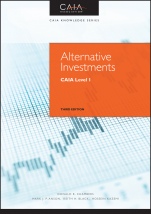
Alternative Investments: CAIA Level I
ISBN 9781119003366
Autor: Donald R. Chambers, Mark J. P. Anson, Keith H. Black, Hossein Kazemi, CAIA Association
Wydawca: Wiley
Dostępność: 3-6 tygodni
Cena: 476,70 zł
Przed złożeniem zamówienia prosimy o kontakt mailowy celem potwierdzenia ceny.
ISBN13: |
9781119003366 |
ISBN10: |
1119003369 |
Autor: |
Donald R. Chambers, Mark J. P. Anson, Keith H. Black, Hossein Kazemi, CAIA Association |
Oprawa: |
Hardback |
Rok Wydania: |
2015-11-03 |
Numer Wydania: |
3rd Edition |
Ilość stron: |
960 |
Wymiary: |
256x186 |
Tematy: |
KF |
Praise for
Alternative Investments
CAIA Level 1
THIRD EDITION
"By reading CAIA′s Alternative Investments: CAIA Level I, an aspiring investment analyst can quickly get up to speed on all foundational concepts of alternative investments. As a result, CAIA′s book is a wonderful foundation of knowledge for anyone coming into the alternative investments industry."
Hilary Till, Principal, Premia Capital Management, LLC; Co–Editor, Intelligent Commodity Investing
"Alternatives such as hedge funds, private equity, and real estate are an increasingly critical part of the investment portfolios of family offices, pensions, and other institutions. Yet many features of these asset classes remain shrouded in mystery. This book provides a broad yet thoughtful introduction to the spectrum of alternative investments."
Josh Lerner, Jacob H. Schiff Professor of Investment Banking, Harvard Business School
"The CAIA Association has set a new bar for excellence in alternative investments. Alternative Investments: CAIA Level 1 is an absolutely invaluable asset no matter what level of experience you have with alternative investments. The second edition currently sits on my desk, with dozens of sticky notes peeking out."
Daniel Kerbach, CAIA, Head Global Portfolio Management, Julius Baer Group
"CAIA is the leader in alternatives education and Deutsche Asset & Wealth Management is proud to endorse its third edition of the Level I textbook. Alternative investments can be a critical component of client portfolios. In a time of market uncertainty, demographic changes, and enhanced regulatory requirements, we believe that a greater understanding of alternative investments is essential before they can be integrated into institutional and private portfolios. This book fills that important need."
Theresa Gusman, Managing Director/Chief Knowledge Officer, Deutsche Asset & Wealth Management
Preface
Acknowledgments
About the Authors
Part 1: Introduction to Alternative Investments
Chapter 1: What Is an Alternative Investment?
1.1 Alternative Investments by Exclusion
1.2 Alternative Investments by Inclusion
1.3 Structures among Alternative Investments
1.4 Investments Are Distinguished by Return Characteristics
1.5 Investments Are Distinguished by Methods of Analysis
1.6 Investments Are Distinguished by Other Factors
1.7 Goals of Alternative Investing
1.8 Overview of This Book
Review Questions
Chapter 2: The Environment of Alternative Investments
2.1 The Participants
2.2 Financial Markets
2.3 Regulatory Environment
2.4 Liquid Alternative Investments
2.5 Taxation
Review Questions
Notes
Chapter 3: Quantitative Foundations
3.1 Return and Rate Mathematics
3.2 Returns Based on Notional Principal
3.3 Internal Rate of Return
3.4 Problems with Internal Rate of Return
3.5 Distribution of Cash Waterfall
Review Questions
Chapter 4: Statistical Foundations
4.1 Return Distributions
4.2 Moments of the Distribution: Mean, Variance, Skewness, and Kurtosis
4.3 Covariance, Correlation, Beta, and Autocorrelation
4.4 Interpreting Standard Deviation and Variance
4.5 Testing for Normality
4.6 Time–Series Return Volatility Models
Review Questions
Chapter 5: Measures of Risk and Performance
5.1 Measures of Risk
5.2 Estimating Value at Risk (VaR)
5.3 Ratio–Based Performance Measures
5.4 Risk–Adjusted Return Measures
Review Questions
Note
Chapter 6: Foundations of Financial Economics
6.1 Informational Market Efficiency
6.2 Single–Factor and Ex Ante Asset Pricing
6.3 Multifactor and Empirical Models
6.4 Arbitrage–Free Models
6.5 The Term Structure of Forward Contracts
6.6 Option Exposures
6.7 Option Pricing Models
6.8 Option Sensitivities
Review Questions
Notes
Chapter 7: Benchmarking and Performance Attribution
7.1 Benchmarking
7.2 Types of Models
7.3 Performance Attribution
7.4 Distinctions Regarding Alternative Asset Benchmarking
Review Questions
Notes
Chapter 8: Alpha, Beta, and Hypothesis Testing
8.1 Overview of Beta and Alpha
8.2 Ex Ante versus Ex Post Alpha
8.3 Inferring Ex Ante Alpha from Ex Post Alpha
8.4 Return Attribution, Alpha, and Beta
8.5 Ex Ante Alpha Estimation and Return Persistence
8.6 Return Drivers
8.7 Using Statistical Methods to Locate Alpha
8.8 Sampling and Testing Problems
8.9 Statistical Issues in Analyzing Alpha and Beta
Review Questions
Notes
Chapter 9: Regression, Multivariate, and Nonlinear Methods
9.1 Single–Factor Models and Regression
9.2 Multifactor Models and Regression
9.3 Three Dynamic Risk Exposure Models
9.4 Two Approaches to Modeling Changing Correlation
9.5 Four Multifactor Approaches to Understanding Hedge Fund Returns
9.6 Evidence on Fund Performance Persistence
Review Questions
Notes
Part 2: Real Assets
Chapter 10: Natural Resources and Land
10.1 Natural Resources Other Than Land
10.2 Land
10.3 Timber and Timberland
10.4 Farmland
10.5 Valuation and Volatility of Real Assets
10.6 Historical Risks and Returns
Review Questions
Notes
Chapter 11: Commodity Forward Pricing
11.1 Forward Contracts versus Futures Contracts
11.2 Rolling Contracts
11.3 The Term Structure of Forward Prices on Commodities
11.4 Backwardation and Contango
11.5 Returns on Forward Contracts
Review Questions
Chapter 12: Commodities: Applications and Evidence
12.1 Commodity Investing for Diversification
12.2 Commodity Investing for Return Enhancement
12.3 Investing in Commodities without Futures
12.4 Commodity Exposure through Futures Contracts
12.5 Commodity Futures Indices
12.6 Commodity Risks and Returns
12.7 Historical Risks and Returns
Review Questions
Chapter 13: Operationally Intensive Real Assets
13.1 Commodity Producers
13.2 Liquid Alternative Real Assets
13.3 Infrastructure
13.4 Intellectual Property
Review Questions
Notes
Chapter 14: Liquid and Fixed–Income Real Estate
14.1 Real Estate as an Investment
14.2 Residential Mortgages
14.3 Commercial Mortgages
14.4 Mortgage–Backed Securities Market
14.5 Liquid Alternatives: Real Estate Investment Trusts
14.6 Historical Risks and Returns of Mortgage REITs
Review Questions
Notes
Chapter 15: Real Estate Equity Investments
15.1 Real Estate Development
15.2 Valuation and Risks of Real Estate Equity
15.3 Alternative Real Estate Investment Vehicles
15.4 Real Estate and Depreciation
15.5 Real Estate Equity Risks and Returns
15.6 Historical Risks and Returns of Equity REITs
Review Questions
Part 3: Hedge Funds
Chapter 16: Structure of the Hedge Fund Industry
16.1 Distinguishing Hedge Funds
16.2 Hedge Fund Fees
16.3 Hedge Fund Types
16.4 Hedge Fund Returns and Asset Allocation
16.5 Evaluating a Hedge Fund Investment Program
16.6 Do Hedge Funds Adversely Affect the Financial Markets?
16.7 Hedge Fund Indices
16.8 Conclusion
Review Questions
Notes
Chapter 17: Macro and Managed Futures Funds
17.1 Major Distinctions between Strategies
17.2 Global Macro
17.3 Returns of Macro Investing
17.4 Managed Futures
17.5 Systematic Trading
17.6 Systematic Trading Strategies
17.7 Evidence on Managed Futures Returns
17.8 Analysis of Historical Returns Conclusion
Review Questions
Notes
Chapter 18: Event–Driven Hedge Funds
18.1 The Sources of Most Event Strategy Returns
18.2 Activist Investing
18.3 Merger Arbitrage
18.4 Distressed Securities Funds
18.5 Event–Driven Multistrategy Funds
Review Questions
Notes
Chapter 19: Relative Value Hedge Funds
19.1 Overview of Relative Value Strategies
19.2 Convertible Bond Arbitrage
19.3 Volatility Arbitrage
19.4 Fixed–Income Arbitrage
19.5 Relative Value Multistrategy Funds
Review Questions
Notes
Chapter 20: Equity Hedge Funds
20.1 Sources of Return
20.2 Market Anomalies
20.3 The Fundamental Law of Active Management
20.4 Implementing Anomaly Strategies
20.5 The Three Equity Strategies
20.6 Equity Hedge Fund Risks
Review Questions
Notes
Chapter 21: Funds of Hedge Funds
21.1 Overview of Funds of Hedge Funds
21.2 Investing in Multistrategy Funds
21.3 Investing in Funds of Hedge Funds
21.4 Investing in Portfolios of Single Hedge Funds
21.5 Multialternatives and Other Hedge Fund Liquid Alternatives
21.6 Historical Returns of Funds of Funds
Review Questions
Notes
Part Four: Private Equity
Chapter 22: Introduction to Private Equity
22.1 Private Equity Terminology and Background
22.2 Private Equity as Equity Securities
22.3 Private Equity as Debt Securities
22.4 Private Equity Liquid Alternatives
22.5 Trends and Innovations in Private Equity
Review Questions
Notes
Chapter 23: Equity Types of Private Equity
23.1 Contrasts between Venture Capital and Buyouts
23.2 The Underlying Businesses of Venture Capital
23.3 Venture Capital Funds
23.4 The Dynamics of Venture Capital
23.5 Venture Capital Risks and Returns
23.6 Types of Buyouts
23.7 Leveraged Buyout Details
Review Questions
Chapter 24: Debt Types of Private Equity
24.1 Mezzanine Debt
24.2 Distressed Debt
Review Questions
Part 5: Structured Products
Chapter 25: Introduction to Structuring
25.1 Overview of Financial Structuring
25.2 Major Types of Structuring
25.3 The Primary Economic Role of Structuring
25.4 Collateralized Mortgage Obligations
25.5 Structural Model Approach to Credit Risk
25.6 Introduction to Collateralized Debt Obligations
Review Questions
Note
Chapter 26: Credit Risk and Credit Derivatives
26.1 An Overview of Credit Risk
26.2 Reduced–Form Modeling of Credit Risk
26.3 Credit Derivatives Markets
26.4 Credit Default Swaps
26.5 Other Credit Derivatives
26.6 CDS Index Products
26.7 Five Key Risks of Credit Derivatives
Review Questions
Notes
Chapter 27: CDO Structuring of Credit Risk
27.1 Overview of CDO Variations
27.2 Balance Sheet CDOs and Arbitrage CDOs
27.3 Mechanics of and Motivations for an Arbitrage CDO
27.4 Cash–Funded CDOs versus Synthetic CDOs
27.5 Cash Flow CDOs versus Market Value CDOs
27.6 Credit Enhancements
27.7 Developments in CDOs
27.8 Risks of CDOs
Review Questions
Chapter 28: Equity–Linked Structured Products
28.1 Structured Products and Six Types of Wrappers
28.2 Four Potential Tax Effects of Wrappers
28.3 Structured Products with Exotic Option Features
28.4 Global Structured Product Cases
28.5 Structured Product Pricing
28.6 Motivations of Structured Products
Review Questions
Notes
Part 6: Risk Management and Portfolio Management
Chapter 29: Cases in Tail Events
29.1 Problems Driven by Market Losses
29.2 Trading Technology and Financial Crises
29.3 Failures Driven by Fraud
29.4 Four Major Lessons from Cases in Tail Events
Review Questions
Notes
Chapter 30: Investment Process, Operations, and Risk
30.1 Investment Strategy and Process
30.2 Investment Process and Market Risk
30.3 The Three Internal Fund Activities
30.4 Operational Risk
30.5 Controlling Operational Risk
30.6 Controlling Risk of Portfolios with Options
Review Questions
Note
Chapter 31: Due Diligence of Fund Managers
31.1 Due Diligence Evidence and Organization
31.2 Screening with Three Fundamental Questions
31.3 Structural Review
31.4 Strategic Review
31.5 Administrative Review
31.6 Performance Review
31.7 Portfolio Risk Review
31.8 Legal Review
31.9 Reference Review
31.10 Evidence on Operational Risk
Review Questions
Notes
Chapter 32: Portfolio Management, Alpha, and Beta
32.1 The Estimation of Alpha and Beta
32.2 The Separation of Alpha and Beta
32.3 Portable Alpha
32.4 Alpha, Beta, and Portfolio Allocation
Review Questions
Note
Appendix: Data Sources
Computations and Explanations
Index
DR. DONALD R. CHAMBERS, CAIA, is the Associate Director of Programs at the CAIA Association, the Walter E. Hanson/KPMG Professor of Finance at Lafayette College in Easton, Pennsylvania, and Chief Investment Officer of Biltmore Capital Advisors. Dr. Chambers previously served as the Director of Alternative Investments at Karpus Investment Management. He is a member of the editorial board of The Journal of Alternative Investments.
DR. MARK J. P. ANSON, CAIA, CFA, CPA, PhD, JD, is a member of the CAIA Board of Directors and the President and Chief Investment Officer of the Bass Family Office winner of the Family Office of the Year award for 2014 2015. Dr. Anson previously served as President and Executive Director of Investment Services at Nuveen Investments Inc., Chief Executive Officer of both the British Telecom Pension Scheme and its wholly owned asset management company in London, Hermes Pension Management Limited, and Chief Investment Officer at California Public Employees′ Retirement System. He has published over 100 research articles in professional journals, has won two Best Paper Awards, is the author of six financial textbooks, and sits on the editorial boards of several financial journals.
DR. KEITH H. BLACK, CAIA, is the Managing Director of Curriculum and Exams at the CAIA Association. He was previously an Associate at Ennis Knupp and, before that, an Assistant Professor at Illinois Institute of Technology. He is a member of the editorial board of The Journal of Alternative Investments.
DR. HOSSEIN KAZEMI, is a senior adviser to the CAIA Association. He is Michael and is Michael and Cheryl Philipp Professor of Finance at the University of Massachusetts Amherst, the Director of the Center for International Securities & Derivatives Markets, a co–founder of the CAIA Association, and the Editor–in–Chief of The Journal of Alternative Investments, the official publication of the CAIA Association.
Koszyk
Książek w koszyku: 0 szt.
Wartość zakupów: 0,00 zł
Informacje


Kontakt
Gambit
Centrum Oprogramowania
i Szkoleń Sp. z o.o.
Al. Pokoju 29b/22-24
31-564 Kraków
Siedziba Księgarni
ul. Kordylewskiego 1
31-542 Kraków
+48 12 410 5991
+48 12 410 5987
+48 12 410 5989
Subskrypcje
Administratorem danych osobowych jest firma Gambit COiS Sp. z o.o. Na podany adres będzie wysyłany wyłącznie biuletyn informacyjny.
Autoryzacja płatności

Informacje na temat autoryzacji płatności poprzez PayU.

© Copyright 2012: GAMBIT COiS Sp. z o.o. Wszelkie prawa zastrzeżone.
Projekt i wykonanie: Alchemia Studio Reklamy