


Wydawcy
Katalog tematyczny
- Archeologia (109)
- Ekonomia, finanse, business (13704)
- Filozofia (1445)
- Historia (3040)
- Języki i językoznawstwo (2356)
- Lifestyle, hobby i rozrywka (475)
- Medycyna (9704)
- Nauki humanistyczne (4)
- Nauki o Ziemi i środowisku (2638)
- Nauki ścisłe (20412)
- Nauki społeczne (8486)
- Nauki techniczne (13450)
- Prawo (1696)
- Publikacje informacyjne i interdyscyplinarne (1288)
- Religia i wierzenia (917)
- Technika komputerowa (4067)
- Zdrowie, relacje międzyludzkie i rozwój osobisty (657)





Informacje szczegółowe o książce
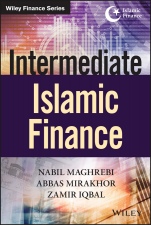
Intermediate Islamic Finance
ISBN 9781118990773
Autor: Nabil Maghrebi, Abbas Mirakhor, Zamir Iqbal
Wydawca: Wiley
Dostępność: 3-6 tygodni
Cena: 428,40 zł
Przed złożeniem zamówienia prosimy o kontakt mailowy celem potwierdzenia ceny.
ISBN13: |
9781118990773 |
ISBN10: |
1118990773 |
Autor: |
Nabil Maghrebi, Abbas Mirakhor, Zamir Iqbal |
Oprawa: |
Hardback |
Rok Wydania: |
2016-01-29 |
Ilość stron: |
416 |
Wymiary: |
233x162 |
Tematy: |
KF |
Praise for Intermediate Islamic Finance
"This is an excellent book for those who yearn to discover the roots of Islamic finance. Whilst scores of books have been written on the branches and trunk of Islamic finance, this appears to be the first book that neatly links the branches and the trunk to its roots. The book traces the epistemological origins of both conventional and Islamic finance systems and convincingly argues that both systems ought to have grown along risk–sharing models, in line with their original concept of morality and justice as part of an embedded ethical framework in finance. This book is a compulsory read for regulators, policy makers, practitioners, teachers, students, and others who dream of a more equitable and sustainable financial system."
Rafe Haneef, Chief Executive Officer and Executive Director, HSBC Amanah Malaysia Berhad
"This book opens a window on vital chapters in the important research issues related to essential features of Islamic finance. Researchers, as well as students, in particular, who are interested in and confused by the difference between the theory of neoclassical finance and Islamic finance, will be able to find a way to proceed further to the next steps. The authors have presented a superb guide for making progress in the theory of global finance."
Kazuhiko Nishina, former Vice–President and Professor Emeritus, Osaka University
"This book is an excellent intermediate–level treatment of the theory and practice of Islamic finance. Arguments are laid out in lucid and engaging prose, and the analytical approach brings forth clearly the essence of Islamic finance and its relation to conventional finance. This must–read book for students, practitioners, regulators, and researchers also offers a platform for productive debate on the origins of financial crises, the complexity of financial regulation, and the scope of derivatives."
Moosung Kim, former President, Korea Derivatives Association; Professor of Finance, Pusan National University, Korea
"Given that Islamic banking and finance is being taught at many universities worldwide, this book is an important contribution providing new theoretical perspectives on Islamic finance and fills a gap in literature catering to the academic world."
Habib Ahmed, Sharjah Chair in Islamic Law and Finance, Durham University Business School
Preface
About the Authors
Chapter 1: Epistemology of Finance
Epistemology of an ideal conventional financial system
Epistemology of an ideal Islamic financial system
Risk sharing finance in a world of uncertainty
Summary and conclusions
Chapter 2: Finance and Ethics
Embedded ethical issues in financial theory
Cases of ethical issues in finance
Virtue ethics model
Islamic framework of business ethics
Summary and conclusions
Chapter 3: The Analytics of Finance
The theory of interest
The concept of time value
Utility theory, risk aversion and risk premium
The individual s optimal consumption and portfolio choices
Market efficiency and the random–walk hypothesis
Risk–sharing in finance
Summary and conclusions
Chapter 4: Equity, Efficiency and Firm Behaviour
Theories of firm behaviour in Islamic economics
The profit–sharing principle
Theoretical construct of equity and allocative efficiency
Summary and conclusions
Chapter 5: Asset Pricing and Corporate Finance
Capital asset pricing model
Arbitrage pricing theory
Capital structure theory
Summary and conclusions
Chapter 6: Scope of Financial Engineering and Derivatives
Risk–hedging with forward and futures contracts
Properties of options contracts
Option valuation theory
Applications of option pricing theory in Islamic finance
Scope of financial engineering and risk–hedging in Islamic finance
Summary and conclusions
Chapter 7: Financing Models and Ownership Transfer
Structure and dynamics of outstanding balances
Financing schemes and ownership transfer
Hybrid financing models based on risk sharing
Summary and conclusions
Chapter 8: Securitisation and Structured Finance
Risk transfer with credit default swaps
The mechanics of securitisation and structured finance
Complexity of contract structures
Securitisation, structured finance, and completeness of contracts
Securitisation, risk transfer with waa d structures, and options strategies
Summary and conclusions
Chapter 9: Financial Stability
Financial system and the real economy
Financial crises and debt–financing
Stability of the Islamic financial system
Summary and conclusions
Chapter 10: Financial Regulation
The economics of financial regulation
The complexity of financial regulation
The regulatory framework under Islamic finance
The regulatory challenges in Islamic finance
Summary and conclusions
Appendix A
Appendix B
References
Index
Nabil Maghrebi is Professor of Finance at Wakayama University, Visiting Professor at Osaka University, and previously Research Fellow at the International Institute for Advanced Studies, Kyoto, Japan. His publications focus on international financial markets and Islamic finance.
Abbas Mirakhor is the First Holder of the Chair of Islamic Finance at the International Centre for Education in Islamic Finance (INCEIF). He is the author of An Introduction to Islamic Finance, Risk Sharing in Finance, and The Stability of Islamic Finance.
Zamir Iqbal is Lead Financial Sector Specialist at the Finance and Markets Global Practice of the World Bank and heads the World Bank Global Islamic Finance Development Center in Istanbul. He is co–author of An Introduction to Islamic Finance, Economic Development and Islamic Finance, and Risk Sharing in Finance.
Koszyk
Książek w koszyku: 0 szt.
Wartość zakupów: 0,00 zł
Informacje


Kontakt
Gambit
Centrum Oprogramowania
i Szkoleń Sp. z o.o.
Al. Pokoju 29b/22-24
31-564 Kraków
Siedziba Księgarni
ul. Kordylewskiego 1
31-542 Kraków
+48 12 410 5991
+48 12 410 5987
+48 12 410 5989
Subskrypcje
Administratorem danych osobowych jest firma Gambit COiS Sp. z o.o. Na podany adres będzie wysyłany wyłącznie biuletyn informacyjny.
Autoryzacja płatności

Informacje na temat autoryzacji płatności poprzez PayU.

© Copyright 2012: GAMBIT COiS Sp. z o.o. Wszelkie prawa zastrzeżone.
Projekt i wykonanie: Alchemia Studio Reklamy