


Wydawcy
Katalog tematyczny
- Archeologia (109)
- Ekonomia, finanse, business (13704)
- Filozofia (1445)
- Historia (3040)
- Języki i językoznawstwo (2356)
- Lifestyle, hobby i rozrywka (475)
- Medycyna (9704)
- Chirurgia (272)
- Inne gałęzie medycyny (1871)
- Medycyna kliniczna (4187)
- Choroby wewnętrzne (514)
- Dermatologia (51)
- Diagnostyka medyczna (3)
- Endokrynologia (144)
- Gastroenterologia (27)
- Geriatria (50)
- Ginekologia i położnictwo (134)
- Hematologia (46)
- Hepatologia (10)
- Kardiologia (71)
- Laryngologia (12)
- Nefrologia (10)
- Neurologia (500)
- Oftalmologia (50)
- Pediatria (33)
- Pulmunologia (32)
- Reumatologia (14)
- Terapia genowa (1)
- Układ mięśniowo-szkieletowy (1)
- Urologia (14)
- Medycyna niekonwencjonalna (14)
- Medycyna przedkliniczna (269)
- Medycyna, ogólnie (1740)
- Medyczne służby pomocnicze (745)
- Studia medyczne (16)
- Weterynaria (548)
- Nauki humanistyczne (4)
- Nauki o Ziemi i środowisku (2638)
- Nauki ścisłe (20412)
- Nauki społeczne (8486)
- Nauki techniczne (13450)
- Prawo (1696)
- Publikacje informacyjne i interdyscyplinarne (1288)
- Religia i wierzenia (917)
- Technika komputerowa (4067)
- Zdrowie, relacje międzyludzkie i rozwój osobisty (657)





Informacje szczegółowe o książce
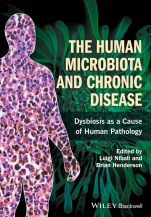
The Human Microbiota and Chronic Disease: Dysbiosis as a Cause of Human Pathology
ISBN 9781118982877
Autor: Luigi Nibali, Brian Henderson
Wydawca: Wiley
Dostępność: 3-6 tygodni
Cena: 687,75 zł
Przed złożeniem zamówienia prosimy o kontakt mailowy celem potwierdzenia ceny.
ISBN13: |
9781118982877 |
ISBN10: |
1118982878 |
Autor: |
Luigi Nibali, Brian Henderson |
Oprawa: |
Hardback |
Rok Wydania: |
2016-09-30 |
Ilość stron: |
544 |
Wymiary: |
252x169 |
Tematy: |
MJ |
Microbiota–associated pathology can be a direct result of changes in general bacterial composition, such as might be found in periodontitis and bacterial vaginosis, and/or as the result of colonization and/or overgrowth of so called keystone species. The disruption in the composition of the normal human microbiota, or dysbiosis, plays an integral role in human health and human disease.
The Human Microbiota and Human Chronic Disease: Dysbioses as a Cause of Human Pathology discusses the role of the microbiota in maintaining human health. The text introduces the reader to the biology of microbial dysbiosis and its potential role in both bacterial disease and in idiopathic chronic disease states.
Divided into five sections, the text delineates the concept of the human bacterial microbiota with particular attention being paid to the microbiotae of the gut, oral cavity and skin. A key methodology for exploring the microbiota, metagenomics, is also described. The book then shows the reader the cellular, molecular and genetic complexities of the bacterial microbiota, its myriad connections with the host and how these can maintain tissue homeostasis. Chapters then consider the role of dysbioses in human disease states, dealing with two of the commonest bacterial diseases of humanity periodontitis and bacterial vaginosis. The composition of some, if not all microbiotas can be controlled by the diet and this is also dealt with in this section. The discussion moves on to the major idiopathic diseases afflicting humans, and the potential role that dysbiosis could play in their induction and chronicity. The book then concludes with the therapeutic potential of manipulating the microbiota, introducing the concepts of probiotics, prebiotics and the administration of healthy human faeces (faecal microbiota transplantation), and then hypothesizes as to the future of medical treatment viewed from a microbiota–centric position.
Provides an introduction to dysbiosis, or a disruption in the composition of the normal human microbiota
Explains how microbiota–associated pathology and other chronic diseases can result from changes in general bacterial composition
Explores the relationship humans have with their microbiota, and its significance in human health and disease
Covers host genetic variants and their role in the composition of human microbial biofilms, integral to the relationship between human health and human disease
Authored and edited by leaders in the field, The Human Microbiota and Human Chronic Disease will be an invaluable resource for clinicians, pathologists, immunologists, cell and molecular biologists, biochemists, and system biologists studying cellular and molecular bases of human diseases.
About the Authors
Luigi Nibali is a Senior Clinical Lecturer in the Clinical Oral Research Centre, Institute of Dentistry, Queen Mary University London in London, UK.
Brian Henderson is a Professor of Microbial Diseases in the School of Life and Medical Sciences at University College London in London, UK.
Preface
SECTION 1 AN INTRODUCTION TO THE HUMAN TISSUE MICROBIOME
Chapter 1 The Human Microbiota System: A Brief History
Mike Wilson
1.1. Introduction– The discovery of the human microbiota: why do we care?
1.2. The importance of the indigenous microbiota in health and disease
1.3. The development of technologies for characterising the indigenous microbiota
1.4. Culture–independent approaches to microbial community analysis
1.5. Determination of microbial community functions
1.6. Closing Remarks
Take–home message
Chapter 2 An introduction to Microbial Dysbiosis
Mike Curtis
2.1 Definition of dysbiosis
2.2 The normal microbiota
2.3 Main features of dysbiosis
2.4 Conclusions
Take–home message
Acknowledgement
References
Chapter 3 The Gut Microbiota: An Integrated Interactive System
Hervé Blottiere and Joel Doré
3.1 Introduction
3.2 Who is there, how is it composed?
3.3 A system in interaction with food
3.4 A system highly impacted by the host
3.5 A system in interaction with human cells
3.6 Conclusion: an intriguing integrated interactive system deserving further studies
Take–home message
References
Chapter 4 The Oral Microbiota
David J. Spratt and Luigi Nibali
4.1 Introduction
4.2 Composition of the oral microbiota
4.2.1 Archaea
4.3 The oral microbiota in health
4.4 Role of oral microbiota in disease
4.5 Future outlook
Take–home message
References
Chapter 5 The Skin Microbiot
P. Zeeuwen and J. Schalkwjik
5.1 Normal Skin
5.2 Skin Diseases
5.3 Experimental Studies
Take–home message
References
Chapter 6 Metagenomic Analysis of the Human Microbiome
L. G. Bermúdez–Humarán
6.1 Introduction
6.2 The human microbiome
6.3 Changes in microbiota composition during host life cycles
6.4 The human microbiome and the environment
6.5 Disease and health implications of Microbiome
6.6 Conclusions
Take–home message
References
SECTION 2 MICROBIOTA–MICROBIOTA AND MICROBIOTA–HOST INTERACTIONS IN HEALTH AND DISEASE
Chapter 7 Systems Biology of Bacteria–Host Interactions
Ines Thiele
7.1 Introduction
7.2 Computational analysis of host–microbe interactions
7.3 Network–based modeling
7.4 Other computational modeling approaches
7.5 Conclusion
Take–home message
Acknowledgements
References
Chapter 8 Bacterial Biofilm Formation and Immune evasion mechanisms
Jessica Snowden
8.1 Introduction
8.2 Biofilms in human disease
8.3 Biofilm formation
8.4 Immune responses to biofilms
8.5 Biofilm immune evasion strategies
8.6 Vaccines and Biofilm Therapeutics
8.7 Conclusions
Take–home message
References
Chapter 9 Co–evolution of microbes and immunity and consequences for modern–day life
Markus Geuking
9.1 Introduction
9.2 Symbiosis in eukaryotic evolution
9.3 Evolution of the (innate and adaptive) immune system
9.4 Hygiene Hypothesis
9.5 What drives the composition of the microbiota?
9.6 The pace of evolution
Take–home messages
References
Chapter 10 How viruses and bacteria have shaped the human genome
Frank Ryan
10.1 Genetic symbiosis
10.2 Mitochondria: symbiogenesis in the human
10.3 Virus symbiogenesis
10.4 HERV proteins
Take–home messages
References
Chapter 11 The Microbiota as an Epigenetic Control Mechanism
B. A. Shenderov
11.1 Introduction
11.2 Background on epigenetics and epigenomic programming/reprograming
11.3 Epigenomics and link with energy metabolism
11.4 The Microbiota as a potential epigenetic modifier
11.5 Epigenetic control of the host genes by pathogenic and opportunistic microorganisms
11.6 Epigenetic control of the host genes by indigenous (probiotic) microorganisms
11.7 Concluding remarks and future directions
Take–home message
References
Chapter 12 The emerging role of Propionibacteria in human health and disease
H. Bruggemann
12.1 Introduction
12.2 Microbiological features of propionibacteria
12.3 Population structure of P. acnes
12.4 Propionibacteria as indigenous probiotics of the skin
12.5 Propionibacteria as opportunistic pathogens
12.6 Host interacting traits and factors of propionibacteria
12.7 Host responses to P. acnes
12.8 Propionibacterium–specific bacteriophages
12.9 Concluding remarks
Take–home message
References
SECTION 3 DYSBIOSES AND BACTERIAL DISEASES: METCHNIKOFF S LEGACY
Chapter 13 The Periodontal Diseases: Microbial disease or a disease of the host response
Luigi Nibali
13.1 The tooth: a potential breach in the mucosal barrier
13.2 The Periodontium from health to disease
13.3 Periodontitis: one of the commonest human diseases
13.4 Periodontal treatment: a non–specific biofilm disruption
13.5 Microbial aetiology
13.6 The host response in periodontitis
13.7 Conclusions
Take–home message
References
Chapter 14 The polymicrobial synergy and dysbiosis model of periodontal disease pathogenesis
G. Hajishengallis and Richard J. Lamont
14.1 Introduction
14.2 A (very) polymicrobial etiology of periodontitis
14.3 Synergism among periodontal bacteria
14.4 Interactions between bacterial communities and epithelial cells
14.5 Manipulation of host immunity
14.6 Conclusions
Take–home message
References
Chapter 15 New paradigm in the relationship between periodontal disease and systemic diseases– Effects of oral bacteria on the gut microbiota and metabolism
K. Yamazaki
15.1 Introduction
15.2 Association between periodontal and systemic diseases
15.3 Issues about causal mechanisms of periodontal disease for systemic disease
15.4 New insights into the mechanisms linking periodontal disease and systemic disease
15.5 Effect of oral administration of P. gingivalis on metabolic change and gut microbiota
15.6 Conclusions
Take–home messages
References
Chapter 16 The Vaginal Microbiota in health and disease
T. Sadiq and P. Hay
16.1 What makes a healthy microbiota
16.2 The Vaginal Microbiota in Disease
16.3 Conclusions
SECTION 4 DYSBIOSES AND CHRONIC DISEASES: IS THERE A CONNECTION?
Chapter 17 Reactive Arthritis: The Hidden Bacterial Connection
John Carter
17.1 Introduction
17.2 Reactive Arthritis
17.3 Pathophysiology of ReA
17.4 Questions Remain
17.5 Conclusion
Chapter 18 Rheumatoid arthritis: The Bacterial Connection
J. Detert
18.1 Preclinical rheumatoid arthritis
18.2 Predisposition to RA
18.3 MCH–HLA and genetic predisposition to RA
18.4 Molecular mimicry in RA
18.5 Innate immune system and RA
18.6 Bystander activation and pattern recognition receptors
18.7 Antibodies and neoepitopes
18.8 Superantigens
18.9 LPS
18.10 Bacterial DNA and peptidoglycans
18.11 Heat shock proteins
18.12 Toll–like and bacterial infections
18.13 Proteus mirabilis
18.14 Porphyromonas gingivalis and RA
18.15 Gastrointestinal flora and RA
18.16 Smoking, lung infection and RA
18.17 Where to go from here?
Chapter 19 Inflammatory bowel disease and the gut microbiota
A. Hart
19.1 The microbiota in inflammatory bowel disease
19.2 Dysbiosis and IBD pathogenesis
19.3 Environmental factors affecting microbiome composition
19.4 Genetics and application to the immune system and dysbiosis in IBD
19.5 An overview of gut microbiota studies in IBD
19.6 Specific bacterial changes in IBD
19.6.1 Potentiators
19.6.2 Protectors
19.6.3 Anti–inflammatory effects of microbiota (functional dysbiosis)
19.7 Functional composition of microbiota in IBD
19.8 Challenges
19.9 Conclusion
Chapter 20 Ankylosing Spondylitis, Klebsiella pneumonia and the low starch diet
Alan Ebringer and C. Wilson
20.1 Introduction
20.2 Clinical features of AS
20.3 Gut bacteria and total serum IgA
20.4. Molecular mimicry in AS
20.5 Pullulanase system and collagens
20.6 Specific antibodies to Klebsiella in AS patients.
20.6 The low starch diet in AS
20.7 Conclusions
Chapter 21 Microbiome of Chronic Plaque Psoriasis
Lionel Fry
21.1 Introduction
21.2 Microbiota in Psoriasis
21.3 Variation of microbiota with site
21.4 Swabs versus biopsies
21.5 Psoriatic arthritis
21.6 Microbiome and immunity
21.7 Evidence that the skin microbiome may be involved in the pathogenesis of psoriasis
21.8 New hypothesis on the pathogenesis of psoriasis
Chapter 22 Liver Disease: Interactions with the Intestinal Microbiota
B. Schnabl
22.1 Introduction
22.2 Non–alcoholic fatty liver disease
22.3 Qualitative and quantitative changes in the intestinal microbiota
22.4 Endotoxin
22.5 Ethanol
22.6 Choline
22.7 Alcoholic liver disease
Chapter 23 The Gut Microbiota: A Predisposing Factor in Obesity, Diabetes, Metabolic syndrome and Atherosclerosis
F. Fåk
23.1 Introduction
23.2 The obesogenic microbiota: evidence from animal models
23.3 The obesogenic microbiota in humans
23.4 A leaky gut contributing to inflammation and adiposity
23.5 Obesity–proneness: mediated by the gut microbiota?
23.6 Bacterial metabolites provide a link between bacteria and host metabolism
23.7 Fecal microbiota transplants: can we change our gut bacterial profiles?
23.8 What happens with the gut microbiota during weight loss?
23.9 The diabetic microbiota
23.10 The atherosclerotic microbiota
23.11 Conclusions
Chapter 24 The Airway Microbiota and Susceptibility to Asthma
B. J. Marsland and O. Salami
24.1 Introduction
24.2 The microenvironment of the lower airways
24.3 Development of the airway microbiota in the neonate
24.4 Upper airway microbiota
24.5 What constitutes a healthy airway microbiota
24.6 Microbiota and asthma
24.7 Dietary metabolites and asthma
24.8 Conclusion, future perspectives and clinical implications
Chapter 25 The Microbiota and Cancer
R. Francescone
25.1 Introduction
25.2 Microbiome and cancer: where is the link?
25.3 Microbiome and Barrier Disruption
25.4 Microbiome and different types of cancer
25.5 Microbiota and Metabolism: the good and the bad sides
25.6 Chemotherapy, Microbiome and the Immune System
25.7 Therapeutic Avenues
25.8 Unresolved Questions and Future Work
Chapter 26 Is colorectal cancer a result of dysbiosis?
I. Sobhani
26.1 Introduction
26.2 Colon carcinogenesis and epidemiological data
26.3 The Microbiota
26.4 Bacteria and CRCs links
26.5 Hypotheses and perspectives
26.6 Take–home message
Chapter 27 The Gut Microbiota and the CNS: An Old Story with a New Beginning
P. Forsythe
27.1 Introduction
27.2 The Microbiota–Gut–Brain Axis: A Historical Framework
27.3 The Microbiota–Gut–Brain Axis: An Evolutionary Perspective
27.4 The gut microbiota influence on brain and behavior
27.5 Microbes and the hardwired gut brain axis
27.6 Hormonal pathways to the brain
27.7 Microbes and Immune pathways to the brain
27.8 Metabolites of the microbiota: Short chain fatty acids
27.9 Clinical implications of the microbiota–gut–brain axis
27.10 Conclusion
Chapter 28 Genetic dysbiosis: how host genetic variants may affect microbial biofilms
L. Nibali
28.1 The holobiont: humans as supra–organisms
28.2 Genetic variants in the host response to microbes
28.3 Genetic dysbiosis
28.4 Summary and conclusions
SECTION 5 MIRRORING THE FUTURE: DYSBIOSIS THERAPY
Chapter 29 Diet and Dysbiosis
D. L. Gibson
29.1 Introduction
29.2 Coevolution of the host–microbiota super–organism
29.3 Gut microbiota in personalized diets
29.4 The evolution of diet
29.5 Plasticity of the microbiota and diet
29.6 Interaction between gut microbiota, host and food
29.7 Consequences of diet–induced dysbiosis on host health
29.8 The role of gut microbes on the digestion of macronutrients
29.9 Diet induces dysbiosis in the host
29.10 The effect of maternal diet on offspring microbiota
29.11 The effects of post–natal diet on the developing microbiota of neonates
29.12 Conclusion
Chapter 30 Probiotics and Prebiotics: What Are They And What Can They Do For Us?
Marie–Jose Butel
30.1 The gut microbiota, a partnership with the host
30.2 Probiotics
30.3 Prebiotics
30.4 Synbiotics
30.5 Pro–, pre–, and synbiotics today in human medicine
30.6 Concluding remarks
Chapter 31 The microbiota as target for therapeutic interventions in pediatric intestinal diseases
Andrea Lo Vecchio and Alfredo Guarino
31.1 Introduction
31.2 Use of Probiotics in pediatric intestinal diseases
31.3 Fecal microbiota transplantation for treatment of intestinal diseases
31.4 CONCLUSION
Chapter 32 Microbial therapeutics for cystic fibrosis: correction of intestinal dysbiosis
Eugenia Bruzzese, Giusy Ranucci and Alfredo Guarino
32.1 Introduction–Pathophysiology of Cystic Fibrosis
32.2 Intestinal inflammation in CF
32.3 Dysbiosis in CF
32.4 Microbial therapy in CF
32.5 Conclusion
Index
Koszyk
Książek w koszyku: 0 szt.
Wartość zakupów: 0,00 zł
Informacje


Kontakt
Gambit
Centrum Oprogramowania
i Szkoleń Sp. z o.o.
Al. Pokoju 29b/22-24
31-564 Kraków
Siedziba Księgarni
ul. Kordylewskiego 1
31-542 Kraków
+48 12 410 5991
+48 12 410 5987
+48 12 410 5989
Subskrypcje
Administratorem danych osobowych jest firma Gambit COiS Sp. z o.o. Na podany adres będzie wysyłany wyłącznie biuletyn informacyjny.
Autoryzacja płatności

Informacje na temat autoryzacji płatności poprzez PayU.

© Copyright 2012: GAMBIT COiS Sp. z o.o. Wszelkie prawa zastrzeżone.
Projekt i wykonanie: Alchemia Studio Reklamy