


Wydawcy
Katalog tematyczny
- Archeologia (109)
- Ekonomia, finanse, business (13704)
- Filozofia (1445)
- Historia (3040)
- Języki i językoznawstwo (2356)
- Lifestyle, hobby i rozrywka (475)
- Medycyna (9704)
- Nauki humanistyczne (4)
- Nauki o Ziemi i środowisku (2638)
- Nauki ścisłe (20412)
- Nauki społeczne (8486)
- Edukacja (229)
- Kryminologia, opieka spełeczna (284)
- Obronność (10)
- Polityka (1389)
- Psychologia (777)
- Socjologia (410)
- Społeczeństwo i kultura (187)
- Nauki techniczne (13450)
- Prawo (1696)
- Publikacje informacyjne i interdyscyplinarne (1288)
- Religia i wierzenia (917)
- Technika komputerowa (4067)
- Zdrowie, relacje międzyludzkie i rozwój osobisty (657)





Informacje szczegółowe o książce
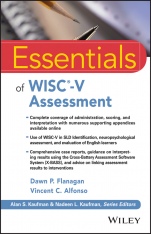
Essentials of WISC–V Assessment
ISBN 9781118980873
Autor: Dawn P. Flanagan, Vincent C. Alfonso
Wydawca: Wiley
Dostępność: 3-6 tygodni
Cena: 308,70 zł
Przed złożeniem zamówienia prosimy o kontakt mailowy celem potwierdzenia ceny.
ISBN13: |
9781118980873 |
ISBN10: |
1118980875 |
Autor: |
Dawn P. Flanagan, Vincent C. Alfonso |
Oprawa: |
Paperback |
Rok Wydania: |
2017-04-07 |
Ilość stron: |
656 |
Wymiary: |
231x136 |
Tematy: |
JC |
Complete coverage of administration, scoring, and interpretation with numerous supporting appendices available online Use of WISC–V in SLD Identification, neuropsychological assessment, and evaluation of English learners Comprehensive case reports, guidance on interpreting results using the Cross–Battery Assessment Software System (X–BASS), and advice on linking assessment results to interventions
A comprehensive review of the knowledge and skills needed to administer, score and interpret the new WISC®–V Assessment
Written by Dawn P. Flanagan and Vincent C. Alfonso two experts in assessment Essentials of WISC®–V Assessment offers practitioners step–by–step guidance for administering, scoring, and interpreting the Wechsler Intelligence Scale for Children (WISC–V). The WISC–V is the world′s most widely–used intelligence test for children and offers a tool for identifying children with intellectual disabilities and specific learning disabilities, as well as those who are gifted. Essentials of WISC–V Assessment is filled with practical suggestions for accurate assessment and contains illustrative, real–world case studies. In addition, this vital resource contains sample reports that show how WISC–V results are interpreted and reported using the Cross–Battery Assessment Software System (X–BASS) and linked to interventions that facilitate positive outcomes for children.
The companion software and a wealth of informative appendices that are available online facilitate WISC–V interpretation and assist the user in understanding test performance. As with all the volumes in the Essentials of Psychological Assessment series, this book is designed to help busy practitioners and school psychologists quickly acquire the knowledge and skills they need. The chapters feature numerous callout boxes highlighting key concepts, bulleted points, and extensive illustrative material, as well as test questions to help reinforce your grasp of the information covered.
Other titles in the Essentials of Psychological Assessment series:
Essentials of Assessment Report Writing Essentials of Processing Assessment Essentials of WIAT®–III and KTEA–3 Assessment Essentials of WJ IV® Tests of Achievement Assessment Essentials of WPPSI–IV Assessment Essentials of Cross–Battery Assessment, Third Edition Essentials of Executive Functioning Assessment Essentials of WMS®–IV Assessment Essentials of Specific Learning Disability Identification Essentials of Evidence–Based Academic InterventionsVisit us on the Web at: www.wiley.com/essentials
Acknowledgements
Series Preface
Foreword
Susie Engi Raiford, PhD; Pearson Clinical Assessment; San Antonio, Texas
Chapter 1: Overview of the WISC–V
W. Joel Schneider, Ph.D.; Dawn P. Flanagan, Ph.D.; and Vincent C. Alfonso, Ph.D.
From Prediction to Prevention
From Explanation to Enduring Empathy
General Trends in Intelligence Test Interpretation
Why the History of the Wechsler Scales Matters
Description of the WISC–V
Test Yourself
References
Chapter Two: How to Administer the WISC–V
Appropriate Testing Conditions
Rapport with Examinee
Testing Individuals with Special Needs
Administration Considerations
Rules for Starting and Discontinuing Subtests
Recording Responses
Timing
Querying
Subtest–By–Subtest Rules of Administration of the WISC–V Primary Subtests
Subtest–by–Subtest Rules of Administration of the WISC–V Secondary & Complementary Subtests
Frequently Asked Questions: Subtest Administration
Test Yourself
References
Chapter 3: How to Score the WISC–V
Types of Scores
Step–by–Step: How the WISC–V is Scored
Test Yourself
References
Chapter 4: How to Interpret The WISC–V
Getting Started
WISC–V Interpretation Step–by–Step
Conclusion
Test Yourself
References
Chapter 5: Strengths and Weaknesses of the WISC–V
Test Yourself
References
Chapter 6: A Neuropsychological Approach to Interpretation of the WISC–V
George McCloskey, Ph.D.; Jamie Slonim; Robert Whitaker, Psy.S. NCSP, ABSNP; Samantha Kaufman; Naoko Nagoshi, Ph.D.
Introduction
Levels of Interpretation
Neuropsychological Interpretation of WISC–V Performance
WISC–V Complementary Subtests
Summary
Test Yourself
References
Chapter 7: Use of the WISC–V in the Identification of Specific Learning Disabilities
The Dual Discrepancy/Consistency Operational Definition of SLD
Using X–BASS for SLD Identification: Three Steps to PSW Output
PSW–A Data Summary
PSW–A g–Value Data Summary
Dual Discrepancy/Consistency Model: PSW Analyses for SLD
Conclusions
Test Yourself
References
Chapter 8: Illustrative Case Report
Erin M. McDonough, Ph.D.
Psycho–Educational Evaluation Report
Chapter 9: Assessment of English Learners with the WISC–V
Samuel O. Ortiz, Ph.D.; Kristan E. Melo, M.S.; Meghan A. Opperman, B.A.
Introduction
Fairness, Bias, and Traditional Assessment Approaches
A Recommended Best Practice Approach
Best Practices in the Evaluation of ELs with the WISC–V
Case Study: Jose Maria
Conclusion
Test Yourself
References
Chapter 10: WISC–V and Q–interactive
Carlea Dries, M.A., M.Ed., N.C.C.; Ron Dumont, Ed.D., NCSP; Kathleen D. Viezel, Ph.D., NCSP
Introduction
Digital Platform
Hardware
Software
Setup
Administration
Training and Tech Support
Output
Security and Legal Issues
Considerations for University Trainers
Pricing
Overall Impressions and Recommendations
Test Yourself
References
Epilogue: Dorothea McCarthy Remembered
Alan S. Kaufman, Ph.D.
References
Appendix A: A Brief Overview of the Cattell–Horn–Carroll (CHC) Theory
Appendix B: Norms Tables for New Clinical Composites
Appendix C: Case Reports
Gail Cheramie, Ph.D.; Jamie Chaffin, Ed.D.; Robert Lichtenstein, Ph.D.
Comprehensive Evaluation
Psychoeducational Report
Psychoeducational Assessment Report
Appendix D: Form for Manifestations of Cognitive Weaknesses
Appendix E: Definition of Terms and Clarification of Concepts Used in the DD/C Definition and X–BASS
Appendix F: Task Characteristics of WISC–V Subtests
Appendix G: Cognitive Constructs Assessed with the WISC–V Subtests
Verbal Comprehension Domain Subtests
Cognitive Constructs Assessed with the Fluid Reasoning and Visual Spatial Subtests
Cognitive Capacities Assessed with the Working Memory Subtests and the Arithmetic and Immediate Symbol Translation Subtests
Cognitive Constructs assessed with the Processing Speed Subtests
Cognitive Constructs assessed with the Naming Speed Subtests
Cognitive Constructs Assessed with the Symbol Translation Tasks
Appendix H: Behavior Observations and Process–oriented Assessment at the Subtest, Item, and Cognitive Construct Levels
Verbal Comprehension Subtests
Fluid Reasoning and Visual Spatial Subtests
Working Memory Domain and Arithmetic and Symbol Translation Subtests
Processing Speed Subtests
Naming Speed Subtests
Appendix I: Cluster Analysis Interpretation
Steps for Completing Subtest Cluster Analyses
Verbal Comprehension Clinical Clusters and Cluster Contrasts
Verbal Comprehension Clinical Cluster Contrasts
Fluid Reasoning and Visual Spatial Clinical Clusters and Cluster Contrasts
Fluid Reasoning/Visual Spatial Clinical Cluster Contrasts
Working Memory Clinical Clusters and Clinical Cluster Contrasts
Appendix J: Subtest and Process Score Comparison Worksheets
Appendix K: CBRS Scores
Appendix L: Cross–Battery Assessment Software System (X–BASS): Dual–Discrepancy/Consistency Model: PSW Results for Amanda Farris
Appendix M: Factors That May Facilitate Learning and Aid in Bypassing or Minimizing the Effects of Deficits
About the Authors
Contributors
DAWN P. FLANAGAN, PHD, is Professor of Psychology at St. John???s University and Clinical Professor of Psychology at Yale Child Study Center, Yale University School of Medicine.
VINCENT C. ALFONSO, PHD, is the Dean of the School of Education at Gonzaga University. He is the past president of Division 16 (School Psychology) of the American Psychological Association.
Dawn and Vincent are co–editors of Essentials of Specific Learning Disability Identification 2nd edition.
Koszyk
Książek w koszyku: 0 szt.
Wartość zakupów: 0,00 zł
Informacje


Kontakt
Gambit
Centrum Oprogramowania
i Szkoleń Sp. z o.o.
Al. Pokoju 29b/22-24
31-564 Kraków
Siedziba Księgarni
ul. Kordylewskiego 1
31-542 Kraków
+48 12 410 5991
+48 12 410 5987
+48 12 410 5989
Subskrypcje
Administratorem danych osobowych jest firma Gambit COiS Sp. z o.o. Na podany adres będzie wysyłany wyłącznie biuletyn informacyjny.
Autoryzacja płatności

Informacje na temat autoryzacji płatności poprzez PayU.

© Copyright 2012: GAMBIT COiS Sp. z o.o. Wszelkie prawa zastrzeżone.
Projekt i wykonanie: Alchemia Studio Reklamy