


Wydawcy
Katalog tematyczny
- Archeologia (109)
- Ekonomia, finanse, business (13704)
- Filozofia (1445)
- Historia (3040)
- Języki i językoznawstwo (2356)
- Lifestyle, hobby i rozrywka (475)
- Medycyna (9704)
- Nauki humanistyczne (4)
- Nauki o Ziemi i środowisku (2638)
- Nauki ścisłe (20412)
- Nauki społeczne (8486)
- Nauki techniczne (13450)
- Budownictwo lądowe (1045)
- Chemia przemysłowa (2258)
- Elektronika i telekomunikacja (3287)
- Energetyka (1122)
- Inne nauki stosowane (363)
- Inżynieria biochemiczna (507)
- Inżynieria transportu (232)
- Mechanika i materiały (3316)
- Nauka o środowisku (321)
- Rolnictwo (507)
- Technika, ogólnie (475)
- Prawo (1696)
- Publikacje informacyjne i interdyscyplinarne (1288)
- Religia i wierzenia (917)
- Technika komputerowa (4067)
- Zdrowie, relacje międzyludzkie i rozwój osobisty (657)





Informacje szczegółowe o książce
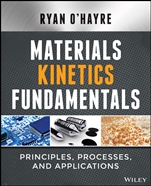
Materials Kinetics Fundamentals
ISBN 9781118972892
Autor: Ryan OHayre
Wydawca: Wiley
Dostępność: 3-6 tygodni
Cena: 557,55 zł
Przed złożeniem zamówienia prosimy o kontakt mailowy celem potwierdzenia ceny.
ISBN13: |
9781118972892 |
ISBN10: |
1118972899 |
Autor: |
Ryan OHayre |
Oprawa: |
Hardback |
Rok Wydania: |
2015-02-27 |
Ilość stron: |
320 |
Wymiary: |
239x200 |
Tematy: |
TG |
THE FIRST ACCESSIBLE, ENTRY–LEVEL TEXTBOOK ON THE KINETICS OF MATERIALS
Until now, a straightforward, undergraduate–level introduction to the fundamental concepts and principles underlying kinetic processes in materials systems has been missing from available literature. This textbook explores the essential kinetics concepts and applications necessary for more advanced studies in engineering and materials science.
Part I is devoted to a basic treatment of critical kinetic concepts such as diffusion and reaction rate theory, essential thermodynamics, and chemical reaction kinetics. Illustrated diagrams, examples, textboxes, and homework questions impart a unified, intuitive understanding of these essentials, creating the groundwork for application.
Part II builds upon this foundation, showing how to apply the basic tool developed in Part I to qualitatively and quantitatively model common kinetic processes relevant to materials science and engineering. Topics explored include gas–solid kinetic processes, liquid–solid and solid–solid phase transformations, and microstructural evolution.
Throughout the book, real–world examples illustrate the application of kinetic principles to important materials systems. These include silicon processing and integrated circuit fabrication, gas transport through membranes, thin–film deposition, sintering, oxidation, carbon–14 dating, nucleation and growth, steel degassing, and kinetic aspects of energy conversion devices like fuel cells and batteries.
Each chapter features exercises designed to further illustrate the concepts for greater understanding.
Preface v
Acknowledgments vii
Objectives ix
I Kinetic Principles 1
1 Introduction to Materials Kinetics 3
1.1 What is Kinetics? 3
1.2 Kinetics vs. Thermodynamics 5
1.3 Homogeneous vs. Heterogeneous Kinetics 6
1.4 Reaction vs. Diffusion 7
1.5 Classifying Kinetic Processes 9
1.6 A Brief Word About Units 10
1.7 Chapter Summary 10
1.8 Chapter Exercises 12
2 A Short Detour Into Thermodynamics 15
2.1 Dynamic Equilibrium 15
2.2 Enthalpy (H), Entropy (S), and Gibbs Free Energy (G) 16
2.3 Molar Quantities 19
2.4 Standard State 21
2.5 Calculating Thermodynamic Quantities 21
2.6 The Reaction Quotient, Q, and the Equilibrium Constant, K 23
2.7 The Temperature Dependence of K 30
2.8 Thermodynamics of Phase Transformations 32
2.9 The Ideal Gas Law 35
2.10 Calculating Concentrations for Liquids or Solids 37
2.11 Chapter Summary 45
2.12 Chapter Exercises 47
3 Chemical Reaction Kinetics 51
3.1 Homogeneous vs. Heterogeneous Chemical Reactions 53
3.2 Homogeneous Chemical Reactions 54
3.3 The Temperature Dependence of Reaction Kinetics: Activation Theory 71
3.4 Heterogeneous Chemical Reactions 75
3.5 Chapter Summary 82
3.6 Chapter Exercises 85
4 Transport Kinetics (Diffusion) 89
4.1 Flux 90
4.2 Fluxes and Forces 91
4.3 Common Transport Modes (Force/Flux Pairs) 93
4.4 Phenomenological Treatment of Diffusion 95
4.5 Atomistic Treatment of Diffusion 132
4.6 Chapter Summary 146
4.7 Chapter Exercises 149
II Applications of Materials Kinetics 155
5 Gas–Solid Kinetic Processes 157
5.1 Adsorption/Desorption 157
5.2 Active Gas Corrosion 163
5.3 Chemical Vapor Deposition 172
5.4 Atomic Layer Deposition 183
5.5 Passive Oxidation 186
5.6 Chapter Summary 192
5.7 Chapter Exercises 195
6 Liquid–Solid and Solid–Solid Phase Transformations 199
6.1 What is a Phase Transformation? 199
6.2 Driving Forces for Transformation: Temperature and Composition 201
6.3 Spinodal Decomposition: A Continuous Phase Transformation 206
6.4 Surfaces and Interfaces 208
6.5 Nucleation 216
6.6 Growth 231
6.7 Nucleation and Growth Combined 235
6.8 Solidification 242
6.9 Martensitic Transformations 251
6.10 Chapter Summary 253
6.11 Chapter Exercises 258
7 Microstructural Evolution 263
7.1 Capillary forces 263
7.2 Surface Evolution 268
7.3 Coarsening 270
7.4 Grain growth 273
7.5 Sintering 275
7.6 Chapter Summary 278
7.7 Chapter Exercises 280
8 Bibliography 283
III Appendices 285
A Units 287
B Periodic Table 291
C Answers to Selected Calculation Questions 293
RYAN O′HAYRE, Ph.D., is Professor of Metallurgical and Materials Engineering at the Colorado School of Mines, where he directs the Advanced Energy Materials Laboratory, a developer of new materials and devices to enable alternative energy technologies including fuel cells and solar cells. He received his Ph.D. in materials science and engineering from Stanford University.
Koszyk
Książek w koszyku: 0 szt.
Wartość zakupów: 0,00 zł
Informacje


Kontakt
Gambit
Centrum Oprogramowania
i Szkoleń Sp. z o.o.
Al. Pokoju 29b/22-24
31-564 Kraków
Siedziba Księgarni
ul. Kordylewskiego 1
31-542 Kraków
+48 12 410 5991
+48 12 410 5987
+48 12 410 5989
Subskrypcje
Administratorem danych osobowych jest firma Gambit COiS Sp. z o.o. Na podany adres będzie wysyłany wyłącznie biuletyn informacyjny.
Autoryzacja płatności

Informacje na temat autoryzacji płatności poprzez PayU.

© Copyright 2012: GAMBIT COiS Sp. z o.o. Wszelkie prawa zastrzeżone.
Projekt i wykonanie: Alchemia Studio Reklamy