


Wydawcy
Katalog tematyczny
- Archeologia (109)
- Ekonomia, finanse, business (13704)
- Filozofia (1445)
- Historia (3040)
- Języki i językoznawstwo (2356)
- Lifestyle, hobby i rozrywka (475)
- Medycyna (9704)
- Nauki humanistyczne (4)
- Nauki o Ziemi i środowisku (2638)
- Nauki ścisłe (20412)
- Nauki społeczne (8486)
- Nauki techniczne (13450)
- Prawo (1696)
- Publikacje informacyjne i interdyscyplinarne (1288)
- Religia i wierzenia (917)
- Technika komputerowa (4067)
- Zdrowie, relacje międzyludzkie i rozwój osobisty (657)





Informacje szczegółowe o książce
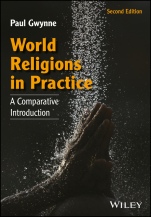
World Religions in Practice: A Comparative Introduction
ISBN 9781118972267
Autor: Paul Gwynne
Wydawca: Wiley
Dostępność: 3-6 tygodni
Cena: 186,90 zł
Przed złożeniem zamówienia prosimy o kontakt mailowy celem potwierdzenia ceny.
ISBN13: |
9781118972267 |
ISBN10: |
1118972260 |
Autor: |
Paul Gwynne |
Oprawa: |
Paperback |
Rok Wydania: |
2017-08-18 |
Numer Wydania: |
2nd Edition |
Ilość stron: |
384 |
Wymiary: |
258x177 |
Tematy: |
HRAC |
A new and expanded edition of a highly successful textbook on world religions with a comparative approach which explores how six major religions are lived and expressed through their customs, rituals and everyday practices.
A new edition of this major textbook, exploring the world′s great religions through their customs, rituals and everyday practices by focusing on the ′lived experience′ This comparative study is enriched and broadened with the inclusion of a sixth religion, Daoism Takes a thematic, comparative and practical approach; each chapter explores a series of key themes including birth, death, ethics, and worship across all six religions at each time Broadens students′ understanding by offering an impartial discussion of the similarities and differences between each religion Includes an increased range of student–friendly features, designed to allow students to engage with each religion and extend their understandingList of Boxes ix
List of Tables xi
List of Figures xiii
Preface xv
Note on Scriptural References xvi
Acknowledgments xvii
Introduction 1
Part I Beyond Time and Space 13
1 Image 15
1.1 Introduction 16
1.2 The Second Commandment 16
1.3 Shirk 20
1.4 Incarnate Son 23
1.5 Murti 27
1.6 Opening the Radiance 31
1.7 The Three Bodies 34
Summary 37
Discussion Topics 39
Notes 39
Further Reading 41
2 Book 43
2.1 Introduction 44
2.2 Shruti and Smriti 44
2.3 Daozang 47
2.4 The Three Baskets 51
2.5 New Testament 54
2.6 Tanach 58
2.7 Qur an 61
Summary 64
Discussion Topics 67
Notes 68
Further Reading 69
Part II Within Time and Space 71
3 Ethics 73
3.1 Introduction 74
3.2 Dharma 74
3.3 Pancasila 77
3.4 Inner Power 81
3.5 The Ten Words 84
3.6 A New Commandment 87
3.7 The Greater Jihad 90
Summary 93
Discussion Topics 95
Notes 96
Further Reading 97
4 Birth 99
4.1 Introduction 100
4.2 Baptism 100
4.3 B rit Milah 104
4.4 Aqiqah 107
4.5 Birth Samskaras 109
4.6 The Buddhist Exception 113
4.7 Chinese Customs 115
Summary 116
Discussion Topics 118
Notes 119
Further Reading 120
5 Death 121
5.1 Introduction 122
5.2 The Wheel of Rebirth 122
5.3 The Last Sacrifice 126
5.4 Hun and Po 129
5.5 Resurrection of the Body 131
5.6 Salat al ]Janazah 135
5.7 First Fruits 139
Summary 142
Discussion Topics 145
Notes 146
Further Reading 148
6 Marriage 151
6.1 Introduction 152
6.2 Nikah 152
6.3 Under the Huppah 155
6.4 Householder and Forest ]Dweller 159
6.5 Bride of Christ 163
6.6 The Renunciation 166
6.7 Arts of the Bedchamber 169
Summary 172
Discussion Topics 175
Notes 175
Further Reading 178
7 Food 181
7.1 Introduction 182
7.2 Cuisines of Immortality 182
7.3 Ahimsa and Samadhi 185
7.4 Blessed Leftovers 189
7.5 Bread and Wine 191
7.6 Kosher 195
7.7 Halal 198
Summary 201
Discussion Topics 203
Notes 203
Further Reading 206
8 Clothing 207
8.1 Introduction 208
8.2 The Veil of Modesty 208
8.3 Kippah, Tefillin and Tallit 212
8.4 The Thread and the Mark 215
8.5 Vestments and Habits 218
8.6 Garments of the Gods 222
8.7 The Three Robes 225
Summary 227
Discussion Topics 229
Notes 229
Further Reading 231
Part III Time and Space 233
9 Year 235
9.1 Introduction 236
9.2 Four Seasons 236
9.3 Full Moons and Monsoons 240
9.4 Day of Brahma 244
9.5 The 78th Cycle 249
9.6 Harvests, History and High Holy Days 252
9.7 Lunar Year 258
Summary 262
Discussion Topics 263
Notes 264
Further Reading 266
10 Building 267
10.1 Introduction 268
10.2 Mosque 268
10.3 Synagogue 272
10.4 Church 275
10.5 Mandir 278
10.6 Temple Complex 281
10.7 Guan 284
Summary 287
Discussion Topics 290
Notes 290
Further Reading 292
11 Journey 293
11.1 Introduction 294
11.2 The Sacred Ford 294
11.3 Reverencing the Mountain 299
11.4 Traces of Tathagata 303
11.5 The Quest of the Magi 307
11.6 Aliyah 312
11.7 Hajj 315
Summary 319
Discussion Topics 321
Notes 321
Further Reading 323
Conclusion 325
Glossary 331
Select Bibliography 343
Index 351
Paul Gwynne lectures in comparative religion in the General Education Program of the University of New South Wales. He completed his doctoral studies in Rome and has taught theology and religious studies in Indonesia and at the Melbourne College of Divinity. His previous books include Special Divine Action (1996), the first edition of World Religions in Practice (2008, Wiley Blackwell) and Buddha, Jesusand Muhammad: A Comparative Study (2014, Wiley Blackwell).
Koszyk
Książek w koszyku: 0 szt.
Wartość zakupów: 0,00 zł
Informacje


Kontakt
Gambit
Centrum Oprogramowania
i Szkoleń Sp. z o.o.
Al. Pokoju 29b/22-24
31-564 Kraków
Siedziba Księgarni
ul. Kordylewskiego 1
31-542 Kraków
+48 12 410 5991
+48 12 410 5987
+48 12 410 5989
Subskrypcje
Administratorem danych osobowych jest firma Gambit COiS Sp. z o.o. Na podany adres będzie wysyłany wyłącznie biuletyn informacyjny.
Autoryzacja płatności

Informacje na temat autoryzacji płatności poprzez PayU.

© Copyright 2012: GAMBIT COiS Sp. z o.o. Wszelkie prawa zastrzeżone.
Projekt i wykonanie: Alchemia Studio Reklamy