


Wydawcy
Katalog tematyczny
- Archeologia (109)
- Ekonomia, finanse, business (13704)
- Filozofia (1445)
- Historia (3040)
- Języki i językoznawstwo (2356)
- Lifestyle, hobby i rozrywka (475)
- Medycyna (9704)
- Nauki humanistyczne (4)
- Nauki o Ziemi i środowisku (2638)
- Nauki ścisłe (20412)
- Astronomia (294)
- Biologia (5119)
- Biochemia (575)
- Biologia człowieka (14)
- Biologia komórkowa (377)
- Biologia molekularna (398)
- Biologia rozwoju (130)
- Biologia, ogólnie (1277)
- Botanika (280)
- Hydrobiologia (92)
- Mikrobiologia (363)
- Mykologia (22)
- Zoologia (303)
- Chemia (6540)
- Fizyka (3309)
- Matematyka (4574)
- Nauki ścisłe, ogólnie (503)
- Nauki społeczne (8486)
- Nauki techniczne (13450)
- Prawo (1696)
- Publikacje informacyjne i interdyscyplinarne (1288)
- Religia i wierzenia (917)
- Technika komputerowa (4067)
- Zdrowie, relacje międzyludzkie i rozwój osobisty (657)





Informacje szczegółowe o książce
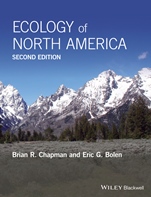
Ecology of North America
ISBN 9781118971543
Autor: Brian R. Chapman, Eric G. Bolen
Wydawca: Wiley
Dostępność: 3-6 tygodni
Cena: 353,85 zł
Przed złożeniem zamówienia prosimy o kontakt mailowy celem potwierdzenia ceny.
ISBN13: |
9781118971543 |
ISBN10: |
111897154X |
Autor: |
Brian R. Chapman, Eric G. Bolen |
Oprawa: |
Hardback |
Rok Wydania: |
2015-09-04 |
Numer Wydania: |
2nd Edition |
Ilość stron: |
352 |
Wymiary: |
288x173 |
Tematy: |
PS |
North America contains an incredibly diverse array of natural environments, each supporting unique systems of plant and animal life. These systems, the largest of which are biomes, form intricate webs of life that have taken millennia to evolve. This richly illustrated book introduces readers to this extraordinary array of natural communities and their subtle biological and geological interactions.
Completely revised and updated throughout, the second edition of this successful text takes a qualitative, intuitive approach to the subject, beginning with an overview of essential ecological terms and concepts, such as competitive exclusion, taxa, niches, and succession. It then goes on to describe the major biomes and communities that characterize the rich biota of the continent, starting with the Tundra and continuing with Boreal Forest, Deciduous Forest, Grasslands, Deserts, Montane Forests, and Temperature Rain Forest, among others. Coastal environments, including the Laguna Madre, seagrasses, Chesapeake Bay, and barrier islands appear in a new chapter. Additionally, the book covers many unique features such as pitcher plant bogs, muskeg, the polar ice cap, the cloud forests of Mexico, and the LaBrea tar pits. “Infoboxes” have been added; these include biographies of historical figures who provided significant contributions to the development of ecology, unique circumstances such as frogs and insects that survive freezing, and conservation issues such as those concerning puffins and island foxes. Throughout the text, ecological concepts are worked into the text; these include biogeography, competitive exclusion, succession, soil formation, and the mechanics of natural selection.
Ecology of North America 2e is an ideal first text for students interested in natural resources, environmental science, and biology, and it is a useful and attractive addition to the library of anyone interested in understanding and protecting the natural environment.
FOREWORD
PREFACE
CHAPTER ONE Introduction
A BRIEF OVERVIEW OF ECOLOGY
The Ecosystem
Abiotic Limits
Climate and Topography
Soils and Soil Profiles
Biotic Community
COMMUNITY SUCCESSION
Plant Succession: from Pioneer to Climax
Primary and Secondary Succession
Succession and Species Abundance
The Biome Concept
BIODIVERSITY
The “Species Diversity Gradient”
Biodiversity Hotspots
PATTERNS OF DISTRIBUTION
Continental patterns
Geographical and Ecological Distribution
SOME ECOLOGICAL CONCEPTS
Niches
Ecological Equivalents
Bergmann’Rule
Allen’s Rule
READINGS AND REFERENCES
CHAPTER TWO Tundra
CLIMATIC AND GLACIAL INFLUENCES
Soils and Geological Influences
Permafrost
Patterned Ground
Eskers and Tundra Wildlife
Glacial Refugia
FEATURES AND ADAPTATIONS
Plant Adaptations to Harsh Conditions
Plant Growth and Reproduction
Decomposition and Soil Nutrients
Some Animal Adaptations
MAJOR VEGETATIVE COMMUNITIES
Shrub Tundra
Dwarf Birch–Heath
Cottongrass–Heath
Fellfields
INVERTEBRATES AND TUNDRA ECOLOGY
SELECTED TUNDRA MAMMALS
Lemmings
Arctic Ground Squirrels
Arctic Foxes
Barren–Ground Caribou
SELECTED TUNDRA BIRDS
Gryfalcons
Snowy Owl
Ross’ Goose
HIGHLIGHTS
Absentees – Amphibians and Reptiles
Lichens and “Reindeer Moss”
Snow Goose “Eat Outs”
ALPINE TUNDRA
FRAGILE TUNDRA
Impacts of Human Activity
Global Warming
READINGS AND REFERENCES
CHAPTER THREE Boreal Forest
CLIMATIC BOUNDARIES AND SOILS
FEATURES AND ADAPTATIONS
Plant Adaptations
Animal Adaptations
Frequent Fires
Niches in the Boreal Forest
SELECTED BIOTIC COMMUNITIES
Tree Line and Forest–Tundra
Muskeg
Coniferous Swamps
Comparative Ecology of Lakes
Appalachian Extension
Mountain Balds
HIGHLIGHTS
The 10–Year Cycle
Wolves and Moose
A Wealth of Salamanders
Red Squirrels
ECOLOGICAL CHALLENGES
Acid Rain
Spruce Budworm and DDT
Balsam Wooly Adelgid
THE BOREAL FOREST AGREEMENT
READINGS AND REFERENCES
CHAPTER FOUR Eastern Deciduous Forest
CLIMATIC BOUNDARIES AND SOILS
FEATURES AND ADAPTATIONS
The Forest Primeval
The Layered Forest
Autumn Leaves
Ground and Leaf Litter
Mast
BIOTIC ASSOCIATIONS
Northern Hardwoods–Conifer Forests
Beech–Maple–Basswood
Mesophytic Forest
Oak–Hickory
Mississippi Alluvial Plain
Southern Mixed Forest
SOME ASSOCIATED COMMUNITIES
Longleaf Pine Forests
New Jersey Pine Barrens
Carolina Bays
HIGHLIGHTS
Acorns and Blue jays
Deer Yards
Kirtland’s Warblers and Fire
Franklin’s Lost Tree
Cicadas: A Buzz in the Forest
ECOLOGICAL CHALLENGES
Declines of Neotropical Migrants
Forest Destruction by Exotic Organisms
Reintroduction of Red Wolves
READINGS AND REFERENCES
CHAPTER FIVE Grasslands: Prairies and Plains
MAJOR ASSOCIATIONS
Tallgrass Prairie
Midgrass Prairie
Shortgrass Prairie
TRANSITION ZONES
Aspen Parklands
Cross Timbers
Western Transition
FEATURES AND ADAPTATIONS
Seasonal Grasses
Soils
Role of Fire
Prairie Streams
Prairie Wetlands and Waterfowl
PLEISTOCENE EXTINCTIONS
SELECTED PRAIRIE MAMMALS
Bison
Prairie Dogs
Pronghorns
SELECTED PRAIRIE BIRDS
Prairie Chickens
Burrowing Owls
HIGHLIGHTS
Riparian Forests
The Platte River
Nebraska Sandhills
Ants
Isolation and Contact on the Great Plains
GRASSLAND SETTLEMENT
PRAIRIE PRESERVATION
READINGS AND REFERENCES
CHAPTER SIX Regional Grasslands and Related Areas
REGIONAL ASSOCIATIONS
Palouse Prairie
California Annual Grasslands
Southwestern Desert Grasslands
Edwards Plateau
Tamaulipan Mezquital
HIGHLIGHTS
Rodents and Vegetation
Channeleed Scablands
Snake River Birds of Prey Area
Mima Mounds
DESERTIFICATION
READINGS AND REFERENCES
CHAPTER SEVEN Deserts
PHYSICAL GEOGRAPHY
Why Deserts are Dry
Desert Mountains and Bajadas
Ancient Lakes
FEATURES AND ADAPTATIONS
Desert Soils and Surfaces
Plant Adaptations
Animal Adaptations
THE MAJOR DESERTS
Chihuahuan Desert
Sonoran Desert
Mojave Desert
Great Basin Desert
HIGHLIGHTS
Nurse Trees
“Trees” for Desert Woodpeckers
Boojums and Elephants: Unique Trees
Yucca Moths
Desert Fishes
Realm of Reptiles
Of Soils and Mice
Deserts and Predators
Pygmies of the Sagebrush Steppe
Desert Quail, Rainfall, and Vitamin A
Sailing Stones
WHEELED THREATS TO DESERTS
READINGS AND REFERENCES
CHAPTER EIGHT Chaparral and Pinyon–Juniper Woodlands
FEATURES AND ADAPTATIONS OF CHAPARRAL
COASTAL (CALIFORNIA) CHAPARRAL
Chamise Chaparral
Manzanita Chaparral
Ceanothus Chaparral
Other Chaparral Communities
INTERIOR (ARIZONA) CHAPARRAL
PINYON–JUNIPER WOODLANDS
Distribution and Ecology
Human Uses
CHAPARRAL AND FIRE
Water–Repellant Soils
Post–Fire Vegetation
Wildlife and Chaparral Fire
HIGHLIGHTS
Allelopathy in Chaparral
Animal Associates of Chaparral
Lizards and Burned Chaparral
Pinyon Jays
HUMAN INFLUENCES
READINGS AND REFERENCES
CHAPTER NINE Montane Forests
FEATURES AND ADAPTATIONS
MONTANE FOREST ZONES
Lower Montane Zone
Upper Montane Zone
Subalpine Zone
ASSOCIATED HABITATS
Mountain Parks and Meadows
Black Hills
Redwoods and Sequoias
Bristlecone Pine Forest
FIRE IN MONTANE FORESTS
Western Chipmunks and Competitive Exclusion
Squirrels, Bears, and Pine Cones
Sky Islands in Arizona
Monarchs in Winter
Bears and Moths
READINGS AND REFERENCES
CHAPTER TEN Temperate Rain Forest
WHAT IS OLD–GROWTH FOREST?
FEATURES AND ADAPTATIONS
Valleys of Rain Forest
Epiphytes, Canopy Roots, and “Scuzz”
More About Logs
Succession on Glacial Till
HIGHLIGHTS
Bears, Salmon, and Forest Enrichment
A Seabird in the Forest
Some Mammals and Their Ecology
Bananna Slugs
Pacific Yew
Giant Salamanders and Other Amphibians
Mount St. Helens
ECOLOGICAL CONTROVERSY
READINGS AND REFERENCES
CHAPTER ELEVEN Coastal Environments
CURRENTS AND CLIMATES
FEATURES AND ADAPTATIONS
Rocky Seashores and Tidal Pools
Sandy Seashores
Chesapeake Bay
The Mother Lagoon
SUBMERGENT COMMUNITIES
Seagrass Meadows
Forests in the Ocean
Oyster Reefs
EMERGENT COMMUNITIES
Atlantic Tidal Marshes
Marshes of the Gulf Coast
Mangrove Islands and Thickets
SOME ASSOCIATED COMMUNITIES
Barrier islands
Coral Reefs
Maritime Forests
HIGHLIGHTS
Synchrony at Delaware Bay
Waterbird Colonies
A Whale of a Success
ECOLOGICAL CHALLENGES
Natural Disturbances
Sea Level Rise
READINGS AND REFERENCES
CHAPTER TWELVE A Selection of Special Environments
SPECIAL ENVIRONMENTS
Niagara Escarpment
Caves
Arctic Ice Cap
The Grand Canyon
Father of Waters
The Everglades
Fossil Lagerstätten
The Florida Keys
The Great Lakes
HABITAT HIGHLIGHTS
Rivers of Ice
Hot Springs and Geysers
Forest in the Clouds
Granite Outcrops and Inselbergs
Palm Forest
Mineral Licks
Bogs and Their Carnivorous Plants
READINGS AND REFERENCES
APPENDIX
GLOSSARY
INDEX
Brian R. Chapman was raised in Texas and earned degrees in zoology at Texas A&M University–Kingsville (BS) and Texas Tech University (MS, PhD). Before his present appointment as the Senior Research Scientist at the Texas Research Institute for Environmental Studies, Sam Houston State University, he held professorships at Texas A&M University–Corpus Christi and the University of Georgia; he also served as dean of the College of Arts and Sciences at Sam Houston State University and provost and vice president for academic affairs at universities in Texas and North Carolina. He is the author or coauthor of more than 150 refereed articles and book chapters.
Eric G. Bolen earned degrees in wildlife ecology and management at the University of Maine (BS) and Utah State University (MS, PhD). Before retiring, he taught at Texas A&M Kingsville, Texas Tech University and the University of North Carolina Wilmington where he served as dean of the Graduate School; he also held the position of assistant director of the Welder Wildlife Foundation. He is the author or coauthor of more than 200 publications, including several editions of the textbooks Wildlife Ecology and Management and Waterfowl Ecology and Management.
Koszyk
Książek w koszyku: 0 szt.
Wartość zakupów: 0,00 zł
Informacje


Kontakt
Gambit
Centrum Oprogramowania
i Szkoleń Sp. z o.o.
Al. Pokoju 29b/22-24
31-564 Kraków
Siedziba Księgarni
ul. Kordylewskiego 1
31-542 Kraków
+48 12 410 5991
+48 12 410 5987
+48 12 410 5989
Subskrypcje
Administratorem danych osobowych jest firma Gambit COiS Sp. z o.o. Na podany adres będzie wysyłany wyłącznie biuletyn informacyjny.
Autoryzacja płatności

Informacje na temat autoryzacji płatności poprzez PayU.

© Copyright 2012: GAMBIT COiS Sp. z o.o. Wszelkie prawa zastrzeżone.
Projekt i wykonanie: Alchemia Studio Reklamy