


Wydawcy
Katalog tematyczny
- Archeologia (109)
- Ekonomia, finanse, business (13704)
- Filozofia (1445)
- Historia (3040)
- Języki i językoznawstwo (2356)
- Lifestyle, hobby i rozrywka (475)
- Medycyna (9704)
- Nauki humanistyczne (4)
- Nauki o Ziemi i środowisku (2638)
- Nauki ścisłe (20412)
- Nauki społeczne (8486)
- Edukacja (229)
- Kryminologia, opieka spełeczna (284)
- Obronność (10)
- Polityka (1389)
- Psychologia (777)
- Socjologia (410)
- Społeczeństwo i kultura (187)
- Nauki techniczne (13450)
- Prawo (1696)
- Publikacje informacyjne i interdyscyplinarne (1288)
- Religia i wierzenia (917)
- Technika komputerowa (4067)
- Zdrowie, relacje międzyludzkie i rozwój osobisty (657)





Informacje szczegółowe o książce
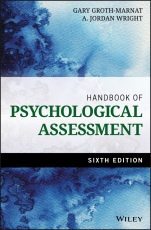
Handbook of Psychological Assessment
ISBN 9781118960646
Autor: Gary Groth–Marnat, A. Jordan Wright
Wydawca: Wiley
Dostępność: 3-6 tygodni
Cena: 584,85 zł
Przed złożeniem zamówienia prosimy o kontakt mailowy celem potwierdzenia ceny.
ISBN13: |
9781118960646 |
ISBN10: |
1118960645 |
Autor: |
Gary Groth–Marnat, A. Jordan Wright |
Oprawa: |
Hardback |
Rok Wydania: |
2016-05-20 |
Numer Wydania: |
6th Edition |
Ilość stron: |
928 |
Wymiary: |
26x18 |
Tematy: |
JC |
THE LANDMARK REFERENCE FOR PSYCHOLOGICAL ASSESSMENT, UPDATED WITH THE LATEST RESEARCH AND GUIDELINES
The Handbook of Psychological Assessment provides students and clinicians with practical instruction on selecting, administering, interpreting, and using the results of assessment procedures. This new sixth edition features a variety of updates, including the latest research, DSM–5 and ICD–10 guidelines, and the new WISC®–V, WAIS®–IV, and MMPI®–2 RF. A new chapter on the NEO –PI–3 aids in adult and adolescent assessment based on the Five–Factor Model of personality, and a new chapter on the Personality Assessment Inventory provides the empirical support behind its increasing popularity. All assessments covered were selected on the basis of clinical relevance and widespread use, and the discussion has been newly enhanced to emphasize diversity. Each chapter guides you through data evaluation and interpretation, and a discussion devoted to treatment planning helps you integrate assessment results into your reports. Detailed, practical, and well–referenced, this book is among the clinician′s most trusted resources.
Organized according to the typical assessment sequence, this practical, skills–based guide shows you the most efficient methods for every step in the assessment process.
Learn how each assessment test is evaluated and analyzed Make sense of raw data using various interpretive methodologies Get up to speed on the latest assessment guidelines and diagnostic criteria Integrate test scores into a case focused, problem solving psychological reportThe assessment process is a critical part of treatment planning and the foundation upon which future progress is built. This book helps you make it more user–friendly and consumer oriented, and provides valuable insight on client collaboration and treatment planning. For busy clinicians seeking quick answers and students needing clear guidance, the Handbook of Psychological Assessment is the field′s most thorough and trusted reference.
Preface
Chapter 1 Introduction
Organization of the Handbook
Role of the Clinician
Patterns of Test Usage in Clinical Assessment
Evaluating Psychological Tests
Validity in Clinical Practice
Clinical Judgment
Phases in Clinical Assessment
Recommended Reading
Chapter 2 Context of Clinical Assessment
Types of Referral Settings
Ethical Practice of Assessment
Assessing Diverse Groups
Selecting Psychological Tests
Computer–Assisted Assessment
Recommended Reading
Chapter 3 The Assessment Interview
History and Development
Issues Related to Reliability and Validity
Assets and Limitations
The Assessment Interview and Case History
Mental Status Evaluation
Interpreting Interview Data
Structured Interviews
Recommended Reading
Chapter 4 Behavioral Assessment
History and Development
Issues Related to Reliability and Validity
Assets and Limitations
Strategies of Behavioral Assessment
Recommended Reading
Chapter 5 Wechsler Intelligence Scales
Testing of Intelligence: Pros and Cons
History and Development
Reliability and Validity
Assets and Limitations
Use with Diverse Groups
Meaning of IQ Scores
Cautions and Guidelines in Administration
WAIS–IV/WISC–V Successive–Level Interpretation Procedure
Wechsler Indexes and Subtests
Assessing Brain Damage
Assessing Additional Special Populations
Short Forms
Recommended Reading
Chapter 6 Wechsler Memory Scales
History and Development
Reliability and Validity
Assets and Limitations
Use with Diverse Groups
Interpretation Procedure
Interpreting Patterns of Index Scores
Comparing Scores on the WAIS–IV and the WMS–IV
Additional Considerations: Malingering and Evaluating Change
Recommended Reading
Chapter 7 Minnesota Multiphasic Personality Inventory
History and Development
Reliability and Validity
Assets and Limitations
Use with Diverse Groups
Administration
MMPI–2 Interpretation Procedure
MMPI–2 Computerized Interpretation
MMPI–2 Validity Scales
MMPI–2 Clinical Scales
MMPI–2 2–Point Codes
MMPI–2 Content Scales
MMPI–A Content Scales
MMPI–2 Harris–Lingoes and Si Subscales
MMPI–2 Critical Items
MMPI–2 and MMPI–A Supplementary Scales
MMPI–2–RF Interpretation Procedure
MMPI–2–RF Validity Scales
MMPI–2–RF Higher–Order Scales
MMPI–2–RF Restructured Clinical Scales
MMPI–2–RF Specific Problem Scales
MMPI–2–RF Personality Psychopathology Five Scales (PSY–5)
Recommended Reading
Chapter 8 Personality Assessment Inventory
History and Development
Reliability and Validity
Assets and Limitations
Use with Diverse Groups
Interpretation Procedure
Validity Scales
Clinical Scales
Treatment Scales
Interpersonal Scales
Additional Clusters
Critical Items
Recommended Reading
Chapter 9 Millon Clinical Multiaxial Inventory
History and Development
Reliability and Validity
Assets and Limitations
Use with Diverse Groups
Interpretation Procedure
Validity Scales
Clinical Personality Patterns
Severe Personality Pathology
Clinical Syndromes
Severe Syndromes
Recommended Reading
Chapter 10 NEO Personality Inventory
History and Development
Reliability and Validity
Assets and Limitations
Use with Diverse Groups
Interpretation Procedure
Recommended Reading
Chapter 11 The Rorschach
History and Development
Reliability and Validity
Assets and Limitations
Use with Diverse Groups
Comprehensive System: Administration
Comprehensive System: Coding
Comprehensive System: Scoring the Structural Summary
Comprehensive System: Interpretation
R–PAS: Administration
R–PAS: Coding
R–PAS: Scoring the Structural Summary
R–PAS: Interpretation
Recommended Reading
Chapter 12 Screening for Neuropsychological Impairment
History and Development
Interviewing for Brain Impairment
Domains of Neuropsychological Functioning
Bender Visual–Motor Gestalt Test, Second Edition (Bender–2)
Repeatable Battery for the Assessment of Neuropsychological Status Update (RBANS)
Recommended Reading
Chapter 13 Brief Instruments for Treatment Planning, Monitoring, and Outcome Assessment
Selecting Brief Instruments
Symptom Checklist–90–R (SCL–90–R) and Brief Symptom Inventory (BSI)
Beck Depression Inventory–II (BDI–II)
State Trait Anxiety Inventory (STAI)
Recommended Reading
Chapter 14 Treatment Planning and Clinical Decision Making
Development and Approaches to Treatment Planning
Intervention Options
Clinical Decision Making
Case Formulation
Understanding the Problems
Understanding Problem Context
Treatment–Specific Client Characteristics
The Systematic Treatment Selection (STS)/Innerlife Approach
Recommended Reading
Chapter 15 Psychological Report
General Guidelines
Feedback
Format for a Psychological Report
Sample Reports
Recommended Reading
Appendix A Test publishers/distributors
Appendix B Testing organizations
References
Author Index
Subject Index
GARY GROTH–MARNAT, PHD, ABPP, is an author, lecturer, researcher, and practicing clinical psychologist and neuropsychologist. He is Professor Emeritus, Pacific Graduate School, and a fellow of the American Psychological Association and the Society for Personality Assessment.
A. JORDAN WRIGHT, PHD, is an Assistant Professor in Human Development at Empire State College, State University of New York. He is the author of Conducting Psychological Assessment: A Guide for Practitioners from Wiley.
Koszyk
Książek w koszyku: 0 szt.
Wartość zakupów: 0,00 zł
Informacje


Kontakt
Gambit
Centrum Oprogramowania
i Szkoleń Sp. z o.o.
Al. Pokoju 29b/22-24
31-564 Kraków
Siedziba Księgarni
ul. Kordylewskiego 1
31-542 Kraków
+48 12 410 5991
+48 12 410 5987
+48 12 410 5989
Subskrypcje
Administratorem danych osobowych jest firma Gambit COiS Sp. z o.o. Na podany adres będzie wysyłany wyłącznie biuletyn informacyjny.
Autoryzacja płatności

Informacje na temat autoryzacji płatności poprzez PayU.

© Copyright 2012: GAMBIT COiS Sp. z o.o. Wszelkie prawa zastrzeżone.
Projekt i wykonanie: Alchemia Studio Reklamy