


Wydawcy
Katalog tematyczny
- Archeologia (109)
- Ekonomia, finanse, business (13704)
- Filozofia (1445)
- Historia (3040)
- Języki i językoznawstwo (2356)
- Lifestyle, hobby i rozrywka (475)
- Medycyna (9704)
- Nauki humanistyczne (4)
- Nauki o Ziemi i środowisku (2638)
- Nauki ścisłe (20412)
- Nauki społeczne (8486)
- Nauki techniczne (13450)
- Prawo (1696)
- Publikacje informacyjne i interdyscyplinarne (1288)
- Religia i wierzenia (917)
- Technika komputerowa (4067)
- Zdrowie, relacje międzyludzkie i rozwój osobisty (657)





Informacje szczegółowe o książce
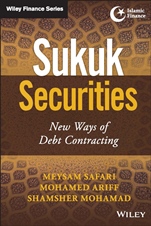
Sukuk Securities: New Ways of Debt Contracting
ISBN 9781118937877
Autor: Meysam Safari, Mohamed Ariff, Shamsher Mohamad
Wydawca: Wiley
Dostępność: 3-6 tygodni
Cena: 422,10 zł
Przed złożeniem zamówienia prosimy o kontakt mailowy celem potwierdzenia ceny.
ISBN13: |
9781118937877 |
ISBN10: |
1118937872 |
Autor: |
Meysam Safari, Mohamed Ariff, Shamsher Mohamad |
Oprawa: |
Hardback |
Rok Wydania: |
2014-11-18 |
Ilość stron: |
240 |
Wymiary: |
237x162 |
Tematy: |
KFFK |
Praise for Sukuk Securities “Sukuk trading has been rapidly growing in the past and has promising growth potential in both Muslim and non–Muslim countries. Providing an overview of the features, size, contracts, practice and regulatory aspects of sukuk, the book is a useful source of reference for those who want to know and understand the intricacies of these new emerging Shari’ah compliant securities.” —Habib Ahmed, Sharjah Chair in Islamic Law & Finance, Durham University Business School, United Kingdom “In the relatively new, yet fast growing sukuk market, the authors have captured and given an in–depth description of all the essential elements of the product and how it can be used effectively in the marketplace. This book is an essential tool for all practitioners and those wishing to understand the sukuk market better.” —Daud Vicary Abdullah, President & CEO, International Center for Education in Islamic Finance “This volume is a notable achievement. Within these covers the reader gains a thorough understanding of this new debt instrument. The authors provide a comprehensive account of how sukuk are designed and structured, their cash flows, pricing and trading, along with the issues involved in how the securities are rated and regulated.” —Mervyn K. Lewis, FASSA, Adjunct Professor, University of South Australia “ Sukuk Securities: New Ways of Debt Contracting is certainly a must–read publication for finance experts and enthusiasts whether they are from industry, regulatory or academia. The authors have succinctly and comprehensively presented the different forms of sukuk structures that have been issued since 1998. They have shown that such debt contracting is pro–growth, able to match different needs and more importantly, an effective solution to the problem of increasing national debts which is helpful to financial stability.” —Datuk Syed Othman Alhabshi, Chief Academic Officer, INCEIF “The authors conceptualize sukuk as a mode of financing based on asset ownership and profit sharing. With this as a benchmark, they assess other sukuk concepts and classifications, structuring and issuing practices, regulations, and pricing methods. Their contribution will certainly enrich academic discussions, and their outline of sukuk structures yet to be issued should inspire practitioners.” —Volker Nienhaus, Visiting Professor, University of Reading, United Kingdom “This book is a must–read for all those interested in capital market innovations, now that sukuk securities are making huge waves in many parts of the world. The authors provide valuable insights into the mechanics and dynamics of sukuks in terms of both theory and practice. The approach taken in this volume is thoroughly analytical and remarkably refreshing.” —Mohamed Ariff Abdul Kareem, Professor of Economics and Governance, INCEIF
Preface xi Acknowledgments xiii List of Tables xv List of Figures xvii About the Authors xix PART ONE The Foundation of Sukuk Securities 1 CHAPTER 1 Introduction to Sukuk Markets 3 Islamic (Participation) Debt Securities 4 The Origin of Sukuk Structures 6 Contemporary Sukuk Securities 9 How Sukuk Securities Are Priced 10 The Structure of This Book 12 CHAPTER 2 Sukuk Securities: Definitions, Classification, and Pricing Issues 13 Fundamental Principles 14 Defi nitions and Regulations 20 Classifi cation Based on Practices 22 Conclusion 29 CHAPTER 3 Pragmatic and Idealistic Approaches to Structuring Sukuk 31 Shariah : The Basic Foundations of Islamic Finance and Sukuk 32 Islamic Financial Principles 35 Three Approaches to Islamic Finance 40 The History of Sukuk 41 Sukuk Structures: Pragmatic and Idealistic Approaches 44 Conclusion 55 CHAPTER 4 Contract Design and the Structure of Common Sukuk Securities Issued to Date 57 Mudarabah (Partnership) 57 Musharakah (Profit Sharing) 59 Murabahah (Markup) 62 Ijarah (Leasing) 64 Salam (Futures) 67 Istisna (Working Capital) 69 Conclusion 70 CHAPTER 5 Samples of Sukuk Issued 71 Sukuk Simpanan Rakyat (Malaysia) 71 Central Bank of Bahrain 73 Khazanah Nasional Berhad (Malaysia) 74 Qatar Central Bank 74 Nakheel Sukuk (UAE) 75 Mahan Airline Company (Iran) 75 Conclusion 76 CHAPTER 6 Contract Design and the Structure of Sukuk Securities Yet Issued 77 Wakalah (Agency) 77 Manfaah (Usufruct) 78 Muzarah (Farmland Leasing) 78 Musaqah (Orchard Leasing) 79 Muqarasah (Tree Leasing) 79 Conclusion 79 CHAPTER 7 Sukuk Securities and Conventional Bonds 81 Comparison of the Yields of Islamic Securities and Bonds 82 Yield Curves 86 The Granger Causality Test for the Yields of Sukuk and Conventional Bonds 90 Conclusion 94 PART TWO Sukuk Securities in Practice 97 CHAPTER 8 Regulations with a Difference 99 Regulating Sukuk 99 Conclusion 105 CHAPTER 9 Securitization, Trading, and Rating 107 Sukuk Trading 107 Sukuk Rating Methodologies 113 Conclusion 123 CHAPTER 10 Worldwide Sukuk Markets 125 The Geographical Location of Sukuk Securities 128 The Effect of Geographical Location on Contract Specifications 137 Conclusion 139 CHAPTER 11 Regulatory Issues for Sukuk Financial Products 141 The Current Sukuk Market 142 Regulation and Shariah Issues in the Current Sukuk Market 143 Current Sukuk Structures 145 Possible Developments and Implications 151 PART THREE Payoff Structures and Sukuk Valuation 161 CHAPTER 12 The Foundation and Principles of Islamic Finance 163 Foundation 163 Principles 164 Conclusion 167 CHAPTER 13 Cash–Flow Identification and Pattern Recognition for Theoretical Valuation Models 169 Zero–Promised Regular–Payment Sukuk 169 Fixed–Promised Regular–Payment Sukuk 171 Variable–Promised Payment Sukuk 172 Undetermined–Promised Payment Sukuk 174 Conclusion 175 CHAPTER 14 A Matter of Choice: Sukuk or Bond? 177 The Economics of Conventional Bond–Based Funding 178 World Markets for Conventional Loans 181 The Case against Interest–Based Debt with No Risk Shared 182 Are Sukuk an Alternative to Bonds? 185 Conclusion 187 CHAPTER 15 Challenges and Future Developments 189 Valuation 189 Liquidity 190 Market Widening and Market Depth 191 Cost of Issuance 191 Variation in Schools of Thought 192 Educating More Experts in Sukuk 193 Regulatory Sufficiency 194 Conclusion 195 Bibliography 197 Index 209
MOHAMED ARIFF, P H D, a professor of finance at Bond University, Australia (and the University Putra Malaysia), is widely considered a specialist on Asian Pacific finance and Islamic finance. Formerly, he served as the elected president of the Asian Finance Association. He is a co–author of Investments and has authored or coauthored 33 other books. His scholarly articles have appeared in leading economics and finance journals. MEYSAM SAFARI, P H D, is a senior lecturer at SEGI University, a private institution in Malaysia. He won a prestigious scholarship from Khazanah Holdings. His scholarly research and teaching is in finance, although he has an engineering background. SHAMSHER MOHAMAD, P H D, is a professor at INCEIF University. After distinguishing himself in professional duties, he served as the dean of the faculty of economics. His teaching includes post–graduate finance subjects and supervising 25 doctoral students to completion.
Koszyk
Książek w koszyku: 0 szt.
Wartość zakupów: 0,00 zł
Informacje


Kontakt
Gambit
Centrum Oprogramowania
i Szkoleń Sp. z o.o.
Al. Pokoju 29b/22-24
31-564 Kraków
Siedziba Księgarni
ul. Kordylewskiego 1
31-542 Kraków
+48 12 410 5991
+48 12 410 5987
+48 12 410 5989
Subskrypcje
Administratorem danych osobowych jest firma Gambit COiS Sp. z o.o. Na podany adres będzie wysyłany wyłącznie biuletyn informacyjny.
Autoryzacja płatności

Informacje na temat autoryzacji płatności poprzez PayU.

© Copyright 2012: GAMBIT COiS Sp. z o.o. Wszelkie prawa zastrzeżone.
Projekt i wykonanie: Alchemia Studio Reklamy